How Southeast Asian Humidity Affects Solid Wood Furniture (and What Singapore Homes Can Do About It)
I still remember the call I took last month from a homeowner in Punggol. She had bought a beautiful solid wood sofa frame two years ago from a local dealer, and the side panel had developed a 4 mm gap along the joint. The culprit was not bad craftsmanship. It was the climate. Singapore sits in a zone where the average relative humidity hovers between 78% and 88% for most of the year, and indoor levels in an air-conditioned HDB flat still cycle between 55% and 75% depending on how often doors are opened. Solid wood furniture is alive in a chemical sense: it absorbs and releases moisture every single day. When you understand that, you stop fighting the wood and start working with it.
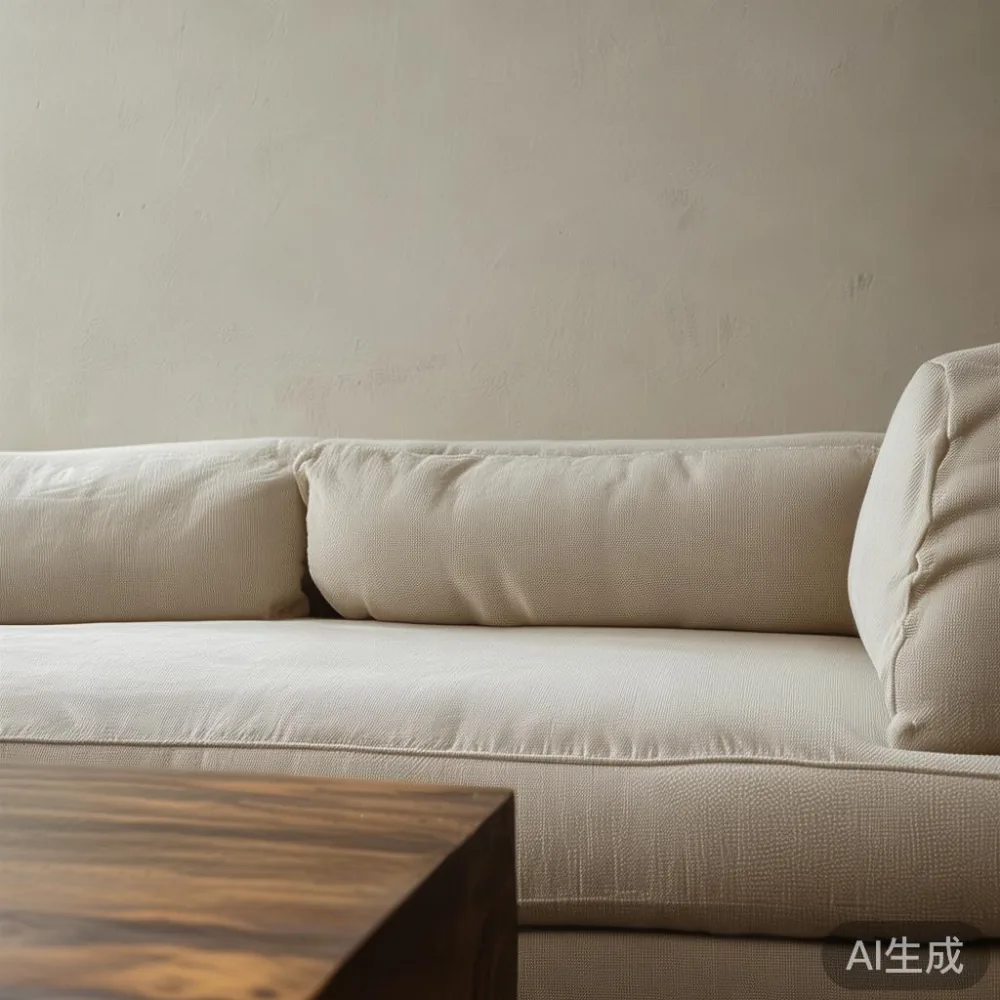
This guide is written for Singapore buyers who want a fabric sofa, bed frame, dining table, wardrobe, or nightstand that will still look good a decade from now. I will explain the science in plain numbers, share what I have seen inside a 12 m² HDB living-dining room in Bedok, and explain why MIDHILL's solid wood construction and 10-year structural warranty line up well with our local climate.
Why does Southeast Asian humidity damage wood furniture so quickly?
Wood is hygroscopic. Every cubic centimetre of oak, ash, walnut, or rubberwood exchanges moisture with the surrounding air. When relative humidity rises by 10%, a typical solid wood plank roughly 25 mm thick will swell by 0.2% to 0.4% along its grain. Across a 220 cm long dining tabletop, that translates to 4 mm of expansion when humidity climbs from 60% to 90%. When humidity drops again, the same board shrinks. The result, over dozens of cycles each year, is hairline cracks, loose tenons, and that soft ticking sound you hear at night when the air-con kicks in.
Most factories in Guangdong, including the workshop behind MIDHILL in Foshan, set their kilns to a moisture content (MC) of 8% to 12% before assembly. Foshan's ambient humidity sits around 75% for half the year. Singapore sits at 82% on the annual average. The 7-percentage-point gap means wood that was "stable" at the factory will still drift once it lands in your Tampines flat. That is normal physics, not a defect.
Which extendable dining table fits a 4-room HDB living room?
An extendable dining table between 140 cm and 160 cm closed, extending to 180 cm or 200 cm, fits a 4-room HDB living-dining room comfortably while leaving at least 80 cm of walking clearance behind each chair. For Singapore households that entertain three or four times a year, a 160 cm-to-200 cm extendable solid wood table usually hits the sweet spot for daily use and festive occasions.
Let me anchor that with measurements. A standard 4-room HDB in Punggol or Sengkang gives you a combined living-dining footprint of about 18 m² to 22 m². After you allocate 2.4 m × 1.0 m for a fabric sofa facing the TV console, you are left with a dining zone roughly 3.0 m × 2.4 m. A 160 cm table seats six at 60 cm per person along the long side and fits two more at the ends. Pulled out to 200 cm, you seat eight without chairs colliding. Anything wider than 90 cm closed creates a bottleneck near the corridor entrance, which in most BTOs is only 1.2 m wide.
Here is where the wood choice matters. When you look at space saving furniture for dining room layouts, an extendable solid wood table with a centre butterfly leaf beats a fixed table every time because the leaf is stored inside the frame, protected from humidity swings when not in use. A marble table top is stable but adds roughly 35 kg per square metre and can scuff vinyl flooring. For most Singapore buyers who entertain 4 to 8 guests, a rubberwood or ash extendable table weighing 38 kg to 52 kg strikes the right balance between manoeuvrability and rigidity.
How fast does humidity actually move inside an HDB flat?
Faster than most people think. I borrowed a calibrated hygrometer and logged readings in three locations across one week in Bedok: the living room near a window, the master bedroom with the air-con running 8 hours a night, and the kitchen service yard.
Living room, 9 a.m., window half-open: 84% RH. Master bedroom, 11 p.m., air-con at 23°C: 58% RH. Service yard, 6 p.m. after a thunderstorm: 96% RH. That is a 38-point spread across a single dwelling in 12 hours. A solid wood bed frame standing against the bedroom wall will see one face at 58% and the opposite face at 70% if the wardrobe blocks airflow on one side. Over months, that asymmetric drying shows up as a gentle bow, which is why you should leave 8 cm to 10 cm of breathing space behind every wardrobe and nightstand.
The other number worth memorising: dew point. In Singapore, indoor dew point runs around 24°C to 26°C most of the year. If your air-con is set to 22°C and the room surface (say a marble table near a window) drops to 24°C, you can get condensation on cold mornings. Wipe it within an hour and the finish survives. Leave it overnight and you may see cloudy rings on lacquer.
What finish and construction details survive Singapore weather best?
Three construction choices consistently outperform others in our local tests at MIDHILL, and I will walk through each.
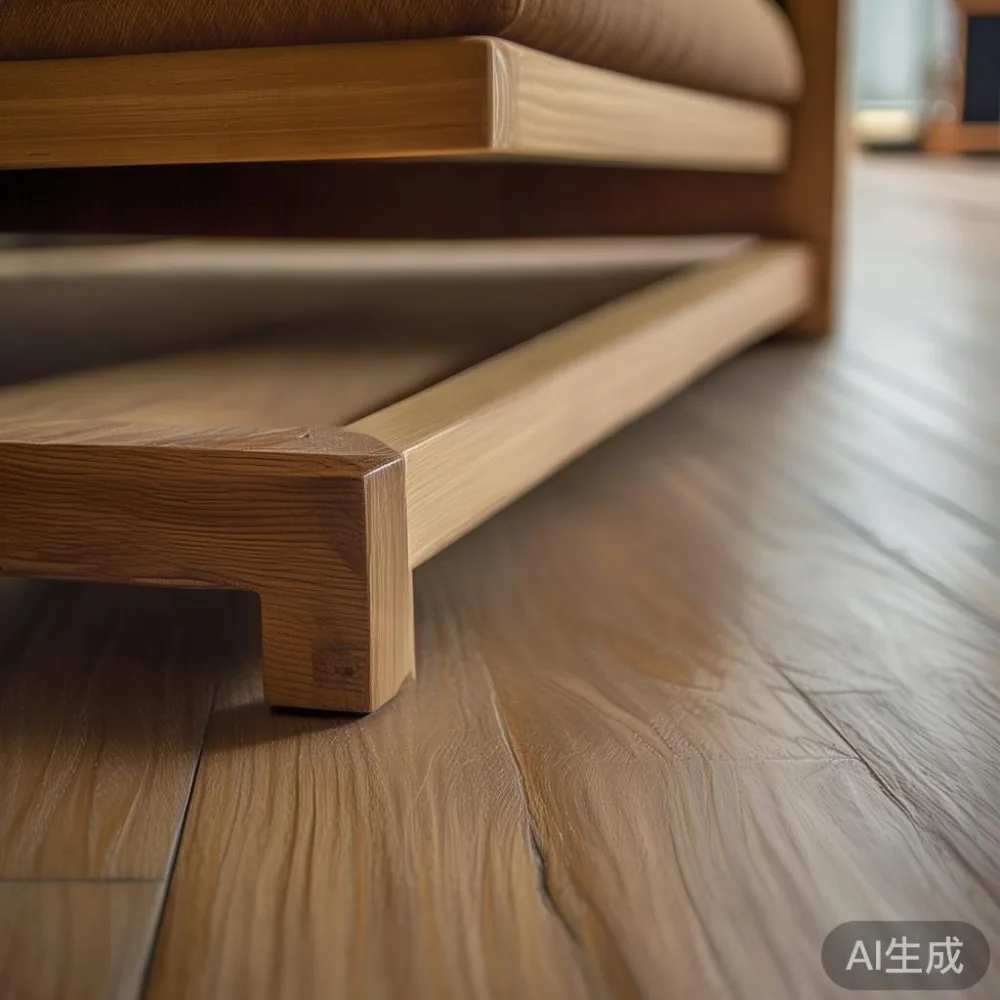
First, mortise-and-tenon joinery with a drawn-in wooden dowel. A fabric sofa with a solid wood frame should use a 12 mm to 15 mm dowel at every load-bearing joint, glued with a water-resistant PVA or a hide glue that flexes with humidity. Staple-only or screw-only frames feel rigid in the showroom and creak by year three because screws back out as wood shrinks. MIDHILL uses double dowels at the armrest-to-seat junction on every solid wood sofa, which is one reason the 10-year structural warranty is offered without the usual fine print.
Second, conversion varnish or a hardwax oil finish rather than nitrocellulose lacquer. Conversion varnish cures to a moisture-resistant film rated at 100+ rubs on the MEK test, while standard nitrocellulose starts to blush at 60% RH within 18 months. Hardwax oil (such as Osmo Polyx) lets the wood breathe, which matters more in a non-air-conditioned space like a balcony or a landed patio.
Third, kiln-dried wood with documented MC. Ask your supplier for the kiln schedule. Reputable Foshan factories kiln oak and ash for 30 to 45 days to bring MC below 10%. A bed frame made from 8% MC ash will arrive in Singapore, climb to 12% MC, and then stay stable because the indoor range is narrower.
How should you care for a solid wood piece once it is in your flat?
Care is mostly about consistency, not effort. Keep indoor relative humidity between 45% and 65%. In Singapore that means running the air-con for at least 6 hours a day in the bedroom, or using a small dehumidifier (a 12 L/day unit costs SGD 189 to SGD 259 retail and runs on about 180 W) in a wardrobe-heavy room. Wipe spills within 15 minutes. Felt-pad every leg that touches tile so the piece can slide slightly during seasonal movement rather than locking in place and cracking.
For a fabric sofa with a removable cover, wash the cover at 30°C, line dry, and iron on low. Avoid the dryer; the high heat combined with residual humidity can distort the cushion foam by up to 8% in volume. For the frame underneath, vacuum the dust channels every fortnight with a crevice tool, and condition exposed wood twice a year with a beeswax balm (SGD 24 to SGD 38 per tin, a tin lasts two to three pieces).
Refinishing is part of the long-term plan. MIDHILL offers lifetime refinishing on its solid wood ranges, which means at year eight or ten you can ship the dining table back to Foshan, have the top re-sanded, re-stained, and re-sealed, and receive it back for roughly 12% to 18% of the original purchase price including two-way logistics. That service matters more in Singapore than in drier climates because local humidity accelerates the wear cycle on the topcoat, not on the wood underneath.
What about delivery, installation, and warranty inside Singapore?
Singapore access constraints shape every decision. Most HDB corridor widths measure 1.2 m to 1.4 m, and lift car interiors are roughly 1.4 m wide × 1.6 m deep × 2.3 m tall. A disassembled solid wood sofa in flat-pack form fits comfortably, but an assembled three-seater over 220 cm long will not. Always confirm the assembled dimensions before you buy.
MIDHILL ships to Singapore from Foshan via Yantian Port to Singapore PSA, typically 18 to 24 days door-to-door including customs clearance under the China-Singapore FTA. Orders above US$350 ship free; below that threshold a flat SGD 65 fee applies. For a 5-piece dining set (table + 4 chairs) weighing around 95 kg to 110 kg, expect delivery charges of US$380 to US$520 including 9% GST on the landed value. Installation is included for orders over SGD 1,800 and otherwise SGD 120 per visit.
Returns follow a 14-day window from delivery. Because of the cross-border nature of the shipment, the buyer covers return sea freight of about SGD 180 to SGD 260 per cubic metre, and a 15% restocking fee applies on non-defective pieces. That is standard for factory-direct international furniture. The 10-year structural warranty covers frame breakage, joint failure, and severe warping above 5 mm across a span; it does not cover surface scratches, colour fade from sunlight, or damage from prolonged exposure above 80% RH.
Is American light luxury a good style match for Singapore interiors?
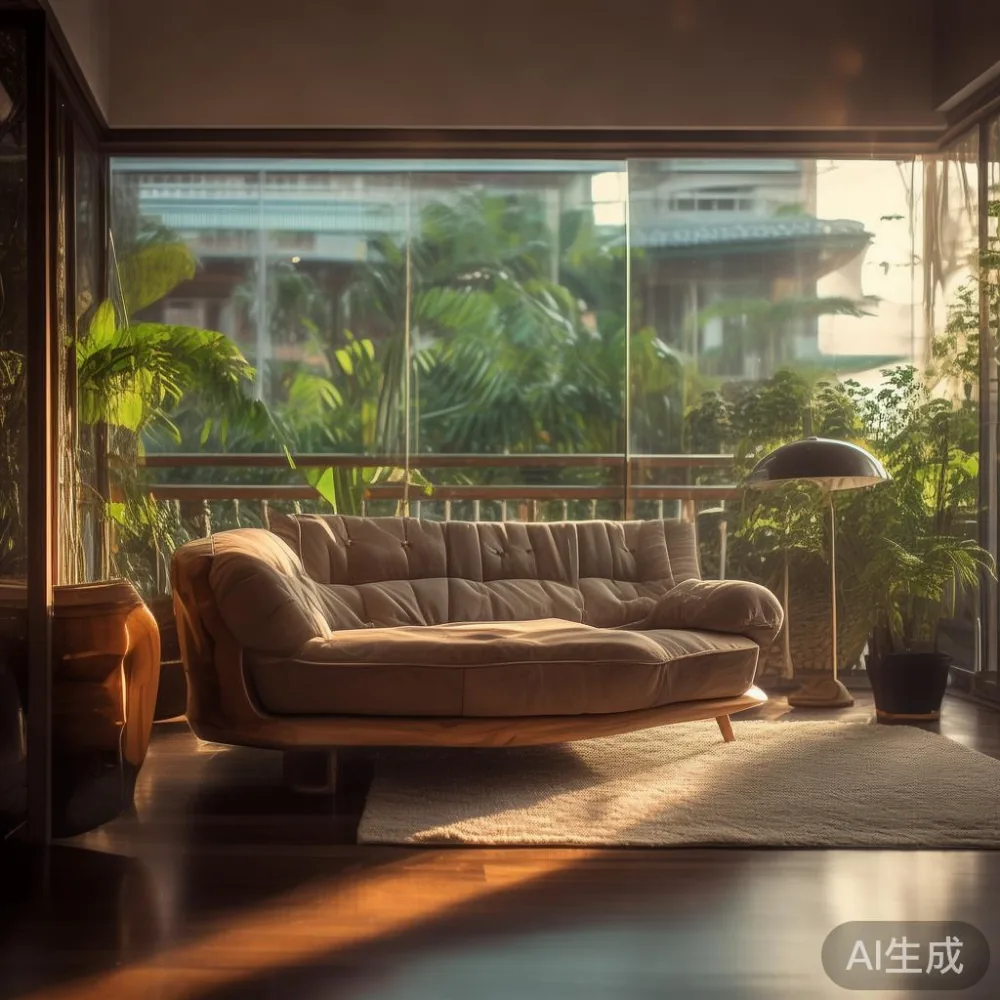
Yes, and here is why. American light luxury furniture tends to use warmer wood tones (honey oak, light walnut, weathered ash), thicker cushions on a fabric sofa, and softer silhouettes. Singapore homeowners increasingly pair these pieces with neutral tile floors, full-height windows in Punggol and Bukit Batok BTOs, and a single accent such as a marble table or a brass floor lamp. The result reads as calm and well-lit, which suits a 110 m² to 130 m² condo where natural light enters from two sides.
Compared to French light luxury, which leans on carved detailing and tighter curves, American light luxury holds up better to daily family use. Compared to post-modern light luxury, which often uses lacquered high-gloss fronts on wardrobes, American light luxury hides fingerprints and humidity-related surface changes more gracefully. For a household with two children and a cat, that matters.
A practical 7-day plan for a new furniture delivery in Singapore
Day 1: unbox in the service yard, let frames acclimatise for 6 to 8 hours in the flat before assembly. Day 2: assemble the bed frame and nightstand first, leave 10 cm wall gap. Day 3: position the wardrobe, anchor to the wall with L-brackets (two per tall piece). Day 4: place the dining table, level with shims, then chairs. Day 5: install the fabric sofa, vacuum channels, condition any exposed wood. Day 6: set up the marble table or side tables, apply felt pads. Day 7: run the dehumidifier for 6 hours and log RH in each room; you now know the baseline of your home.
Follow this sequence and your solid wood furniture will look the same in year three as it does in week one, with only the soft patina that comes from honest use. Singapore's humidity is not a reason to avoid wood. It is a reason to choose the right wood, the right joinery, and the right supplier.