Humidity and Wood Furniture in Singapore: A Practical Guide for HDB and Condo Homes
I keep a small digital hygrometer clipped to the back of my fabric sofa at home in Tampines, and on most afternoons it sits between 72% and 82% relative humidity. That number, more than anything else, explains why my neighbour's oak dining table developed a hairline crack along a joint and why my own solid wood bed frame has stayed steady for six years. Southeast Asia is one of the most demanding environments on Earth for wood furniture, and Singapore is no exception. If you are furnishing a new BTO in Punggol, refreshing a resale flat in Tampines, or upgrading a condo in Bedok, the choices you make this month will determine whether your pieces look new in 2030 or tired by next Chinese New Year.
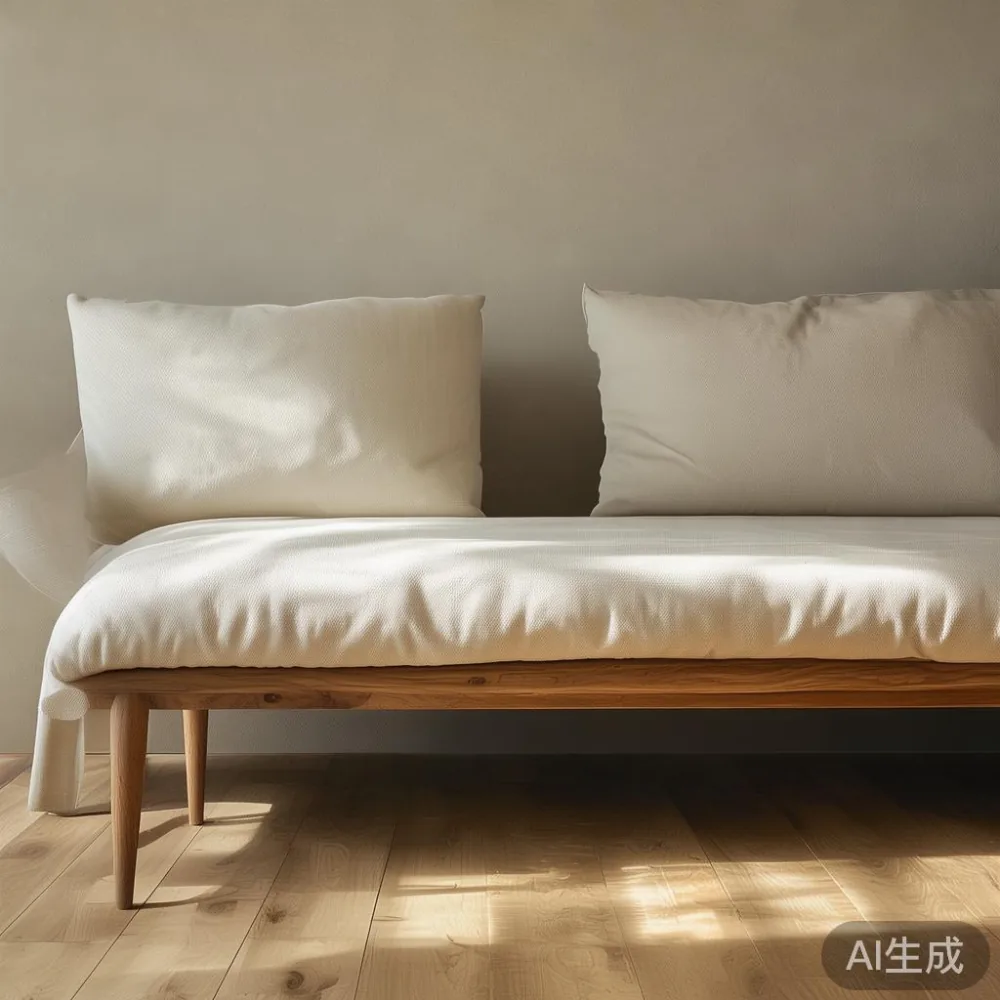
After spending two afternoons last month at the MIDHILL showroom in Foshan with the buying team, and another morning on a delivery run to a 4-room HDB in Punggol, I have a clearer picture of how factories actually build furniture for tropical humidity. Below is the long-form guide I wish someone had handed me before I bought my first fabric sofa in Singapore, covering moisture numbers, lift widths, GST, refinishing schedules, and the specific product categories worth your money.
Why does Southeast Asian humidity warp, swell, and stain wood furniture within weeks?
Solid wood is a hygroscopic material: it absorbs and releases moisture until it reaches equilibrium with the surrounding air. In Singapore, outdoor relative humidity averages 78% to 85% all year, and indoor humidity in many air-conditioned HDB flats still hovers between 65% and 75% because of poor door seals, corridor ventilation, and the habit of drying clothes on a HDB rack near the living room. The moisture content (MC) of wood is rated against a scale where 0% is bone dry and 100% is freshly cut timber. Furniture built in Foshan is typically dried to 8% to 12% MC before assembly, which suits northern homes and families. Drop that same piece into a 75% humidity condo and it will slowly absorb moisture until it reaches around 14% to 18%, swelling by 1% to 4% along the grain. Over months, this expansion causes:
- Sticking drawers on a wardrobe or nightstand
- Cupping or crowning on a dining table top
- Cracks along glue joints on a bed frame
- Musty odours trapped in cushions of a fabric sofa
- Cloudy white marks on lacquer and oil finishes
Engineered boards (plywood, MDF, particleboard) absorb less, but they also fail differently: they delaminate at the edges within 18 to 36 months in a non-airconditioned store or balcony. A 2-seater bed for balcony is a popular HDB configuration, and it lives in exactly the worst humidity zone of the home, exposed to afternoon thunderstorms and direct sun. Build it wrong.
How much does a coffee table cost in Singapore?
A solid wood coffee table in Singapore typically retails from S$480 for a small acacia or rubberwood design around 90 cm long, S$750 to S$1,400 for a mid-range oak or walnut piece at 120 to 140 cm, and S$1,800 to S$3,200 for a premium marble-top or American light luxury design with a sintered stone or marble table surface. A good practical reading: expect to pay roughly S$1,100 for a well-built 120 cm oak coffee table with a kiln-dried MC of 8% to 10%, and budget S$120 to S$220 for delivery into a HDB flat above the 7th floor. The exact price you pay depends on the wood species, the marble or stone insert, and whether GST is absorbed by the retailer. Since 1 January 2023, GST has been 8%, rising to 9% from 1 January 2024, so a S$1,100 coffee table lands at about S$1,188 or S$1,199 after GST depending on the billing date.
Coffee, water, and tea rings are the most common finish damage in Singapore, and on a marble table they etch rather than stain, which is why many HDB buyers now specify sintered stone tops for daily-use pieces. A 110 cm sintered stone coffee table in oak, walnut or similar solid wood frame runs S$1,400 to S$2,200 in the local market.
What is the smartest way to buy a fabric sofa for a HDB flat in Tampines or Punggol?
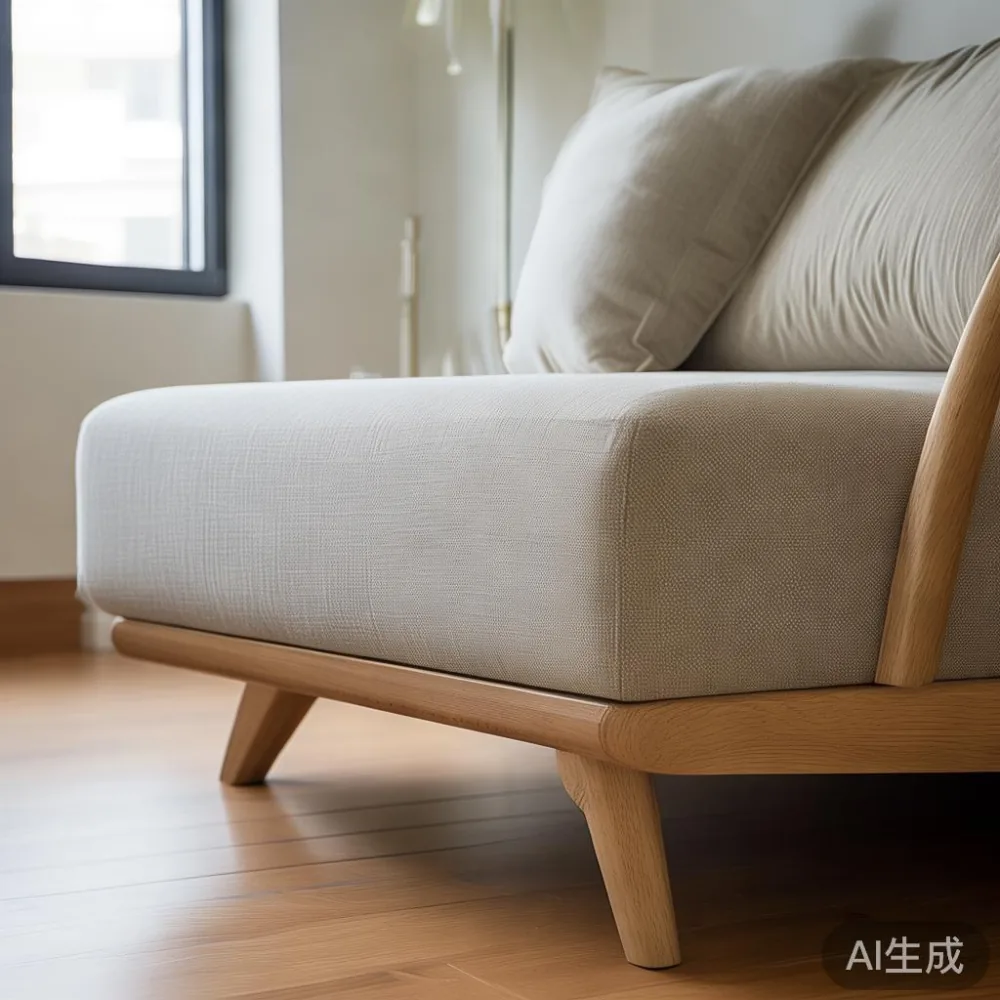
Measure before you fall in love. A standard 3-seater fabric sofa is 200 to 230 cm wide, 85 to 95 cm deep, and 80 to 90 cm tall, and it weighs 55 kg to 95 kg. Most HDB corridor widths are 1.2 m to 1.4 m and lift doors are 0.9 m to 1.1 m wide with a diagonal clear space of about 1.6 m. A 230 cm sofa will not corner in a 1.4 m corridor without being tipped on its end, which is how legs snap on cheaper frames. A 2-seater at 150 to 170 cm is far easier to manoeuvre, and a modular fabric sofa that splits into 90 cm sections can usually be delivered in pieces and assembled inside the living room without scratching the skirting.
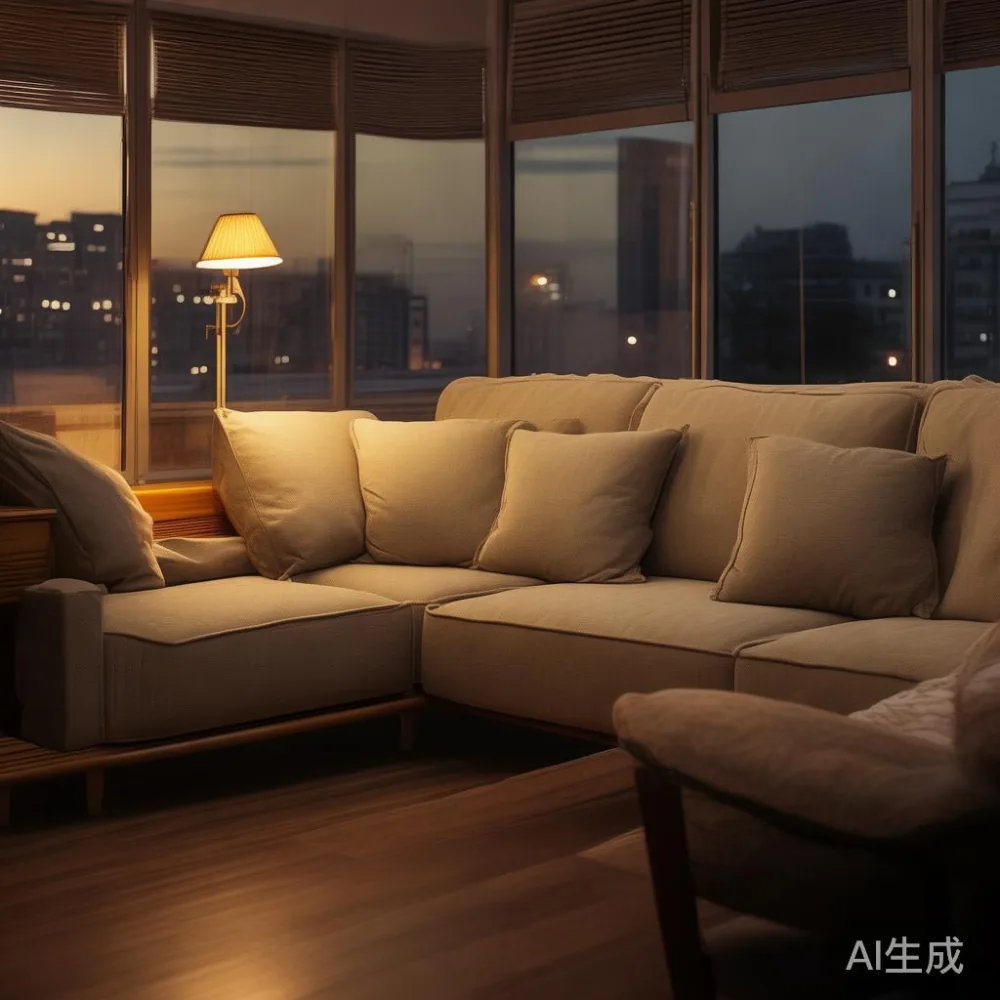
For a typical 4-room BTO living room of about 18 to 22 sqm, a 3-seater plus an armchair is a comfortable footprint. For a 5-room flat (122 sqm HDB) or a 3-bedder condo, a 3-seater plus a 2-seater plus a coffee table is the standard configuration. Budget figures in the local market in 2024:
- 3-seater solid wood platform fabric sofa: S$1,650 to S$3,800
- 2-seater fabric sofa: S$1,150 to S$2,600
- Modular sectional fabric sofa: S$2,800 to S$6,400
- Solid wood bed frame (queen, queen): S$980 to S$2,400
- 6-seater dining table (180 cm solid wood): S$1,900 to S$4,200
- 2-door wardrobe: S$1,400 to S$3,200
- Nightstand pair: S$380 to S$780
Delivery into a HDB flat above the 10th floor usually adds S$80 to S$160 because of the manpower required at the lift lobby. Lift lobbies in newer BTOs like those in Punggol Northshore are larger, but the older blocks in Bedok and Tampines often have tighter turning radii. MIDHILL's standard delivery into Singapore is 35 to 50 days from the Foshan factory floor, which I confirmed during my visit, and free shipping kicks in above US$350 (about S$480 at current rates). 14-day returns are honoured on standard SKUs, though custom fabric on a fabric sofa is a 30% restocking fee.
Which wood species actually survive Singapore humidity without cracking?
The rule is: the denser and more dimensionally stable the wood, the longer it survives tropical conditions. From worst to best for HDB use:
- Rubberwood (Hevea): cheap, light at 560 to 640 kg/m3, swells visibly. Fine for a guest-room nightstand, risky for a dining table top wider than 140 cm.
- Ash and Beech: 640 to 700 kg/m3, attractive grain, prone to surface checking if MC drifts above 12%.
- Acacia: 690 to 750 kg/m3, naturally oily, handles humidity swings well, good value for a dining table or bed frame.
- White Oak: 740 to 780 kg/m3, the same workhorse durability spec, excellent for a French light luxury dining table or bed frame.
- Walnut: 640 to 700 kg/m3, dark, stable, beautiful on a marble-topped side table for a post-modern light luxury interior.
- Teak (old-growth): 660 to 720 kg/m3 with natural oils that resist moisture, the traditional yacht-deck choice, expensive for a wardrobe or dining table.
For HDB buyers, the practical sweet spot is kiln-dried white oak or acacia, target MC of 8% to 12% at delivery, with a two-stage acclimatisation: 3 days in the unopened box in the living room, then 5 to 7 days opened and standing on its feet before any load is placed on it. Skipping this step is the single most common reason a bed frame develops a crack in the first month.
What finish should I choose so the dining table does not stain after one family dinner?
A penetrating oil (linseed, Danish, hardwax) feels beautiful and is the easy fix for small scratches, easy to refinish every few years, but it offers only modest protection against a hot claypot or a spilled glass of red wine. A conversion lacquer (acid-catalysed or pre-catalysed) is harder, more moisture-resistant, and is the standard in factory-built furniture for export. A polyurethane (PU) finish is the hardest and most stain-resistant but the hardest to refinish and the easy damage to repair. For a daily-use dining table in a HDB kitchen, the safe middle ground is a PU or PU finish with at least 3 to 4 coats over a sealed pore, which I saw on every dining table sample at MIDHILL's Foshan QC line. For a marble table or marble-topped coffee table, ask whether the stone is sealed on all six sides; an unsealed marble table edge will develop a dark water ring within months in Tampines humidity.
How do I keep humidity from ruining my fabric sofa and bedroom set?
The four habits that actually move the needle, ranked by impact:
- Run the air-conditioner in dry mode for 30 to 60 minutes before bed, or use a domestic dehumidifier set to 55% to 60% RH. A 12-litre dehumidifier costs S$280 to S$420 and uses about 200 W.
- Keep all pieces at least 8 to 12 cm from the wall so air can circulate behind the wardrobe and nightstand.
- Rotate cushions on the fabric sofa monthly so body moisture does not saturate one zone, and vacuum the fabric sofa weekly with an upholstery attachment to lift the humid, dusty microfilm that feeds mould.
- Use silica-gel or bamboo-charcoal canisters inside wardrobe drawers and under the bed frame, often enough to keep humidity below 65% in the bedroom.
For a wardrobe, leave the internal lights off when the door is closed and consider a 30-minute dry-mode air-conditioner cycle once a week. For a fabric sofa, a washable slipcover is the single best investment; you can remove and sun-dry it once a quarter, which kills mould spores and resets the fabric. After the Western Red Sea outbreak of complaints in Singapore in 2023 about mouldy imported furniture, several retailers including MIDHILL began offering closed-loop external-refinishing: the piece is shipped back to the factory, refinished, and returned, normally within 60 to 90 days. Their 10-year structural warranty and lifetime refinishing policy, which I read in the showroom paperwork, is one of the more durable commitments I have seen in the category, and is the kind of long-horizon warranty worth owning on a fog-prone coastal balcony or ground-floor HDB.
Should you choose a 2-seater bed for balcony in a HDB flat, and what should you watch for?
A 2-seater bed for balcony is a compact 120 cm to 140 cm wide platform bed designed to fit the 1.5 m to 1.8 m depth of an HDB service balcony or condo balcony, useful for a guest nap zone, a study nap, or a child reading nook. The balcony is the highest-humidity zone of the home, with afternoon humidity likely above 80% even under a covered HDB balcony, and direct afternoon sun for 2 to 4 hours. For a 2-seater bed for balcony to last more than 3 years, specify: solid acacia or white oak, kiln-dried MC of 8% to 10%, PU finish on the slats, stainless steel 304 hardware on the joints, and removable washable fabric on the headboard. Avoid MDF slats (they sag in 12 to 18 months), avoid particleboard side rails (they swell at the floor contact), and avoid any piece shipped without a moisture-barrier bag (a sealed bag in a polyfoam wrap is the standard for serious brands). Place the bed on 5 cm to 8 cm plastic or rubber feet so the floor can be mopped under it, and pull it 10 cm away from the balcony railing to allow airflow on all sides. Budget S$780 to S$1,600 for a well-built 2-seater bed for balcony in the current Singapore market.
Final practical checklist before you click order on a fabric sofa
Before you confirm any order, confirm five specific numbers. First, the moisture content of the wood at delivery, target 8% to 12% and ask the supplier to print it on the QC card. Second, the lift and corridor dimensions of your specific HDB block or condo tower, often available on the town council floor plan, and share them with the supplier so they can confirm the fabric sofa will be able to be manoeuvred on the day. Third, the warranty length and the refinishing policy, target a 10-year structural warranty and lifetime refinishing as a minimum, since humidity damage is slow and tends to appear in years 3 to 7. Fourth, the fabric sofa cover material, target removable, washable, and ideally solution-dyed for fade resistance in a sun-facing living room. Fifth, the delivery timeline including GST and delivery into the home, target a written quote that breaks out the furniture, the shipping, the GST, and the delivery so there are no surprises on the credit-card bill.
Singapore is one of the most demanding furniture environments on Earth, but it is also one of the most rewarding for owners who specify the wood, the finish, and the delivery plan. They are the owners whose fabric sofa still looks the way it did on day one, five years later, in the same Tampines or Punggol living room. Pick the one that matches your room, your climate, and your lift, and the small regional coffee table or dining table will earn its place for a decade or more.