Humidity in Southeast Asia: What It Does to Solid Wood Furniture (and How to Keep Yours Looking New)
I moved into a 4-room HDB flat in Tampines four years ago, and within the first monsoon season I watched a brand-new bed frame develop a 2 mm bow along the headboard rail. The supplier had sworn it was kiln-dried. The truth, I learned the hard way, is that no wood arrives in Singapore truly ready for our climate — it has to be acclimatised, and the homeowner has to manage humidity every single week. This article is the guide I wish I'd had before that Bedok-bound delivery van pulled up to my corridor.
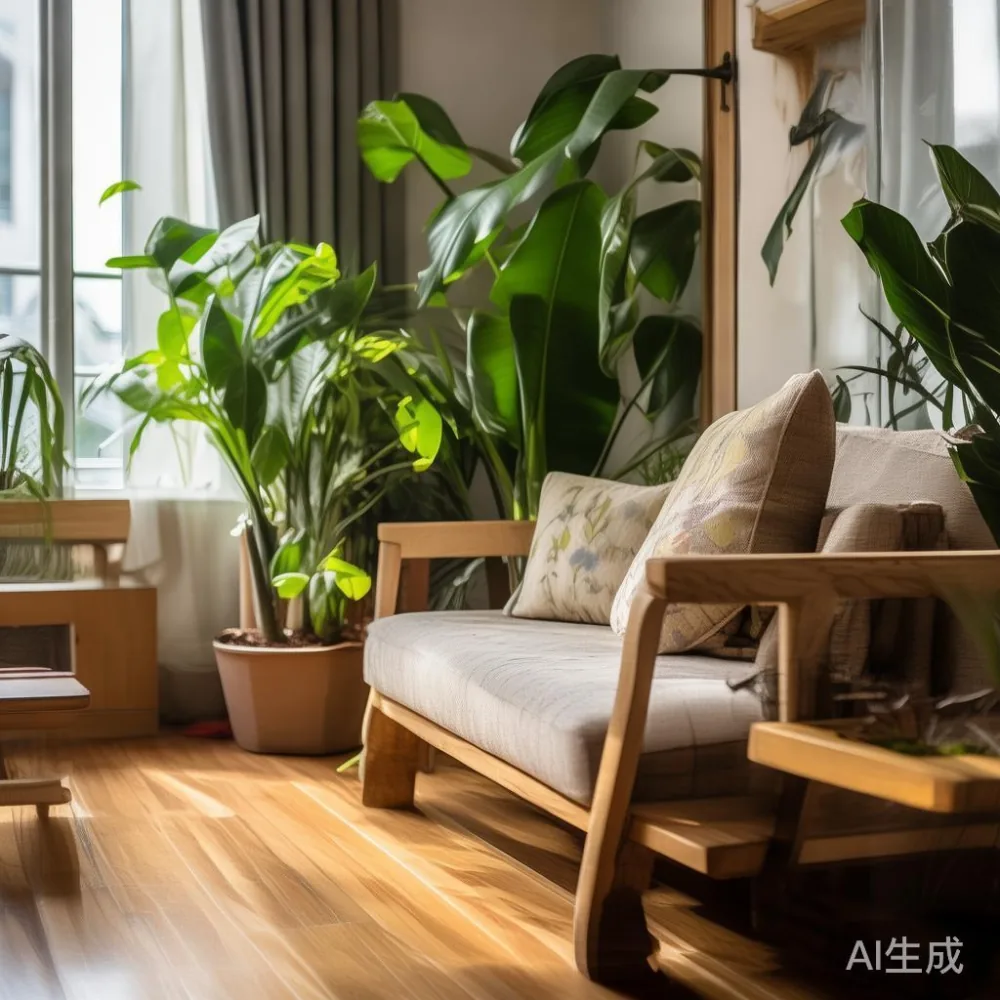
Why Southeast Asian humidity is a different beast from temperate climates
Singapore's relative humidity sits between 70 % and 95 % for most of the calendar year, with daily peaks that touch 98 % during the December and January monsoon surges. Compare that to London or New York, where average indoor humidity drifts between 40 % and 60 %. Solid wood is hygroscopic — it is constantly exchanging moisture with the air around it. Maple, oak, ash, and walnut each have their own equilibrium moisture content (EMC); for our region that target sits between 14 % and 18 %, not the 7 %–9 % that European factories typically kiln-dry to.
A 2 m dining table in solid ash that was milled at 8 % EMC and shipped to a Punggol walk-up will absorb roughly 1.2 to 1.8 kg of water vapour in its first six months in your flat. That water does not sit politely inside the board — it pushes the grain apart, swells the underside of tabletops, and can cup a 25 mm surface by 3–5 mm across its width. Cabinets warp, drawers stick, and wardrobe doors refuse to close. You are not dealing with bad workmanship in most cases; you are dealing with physics.
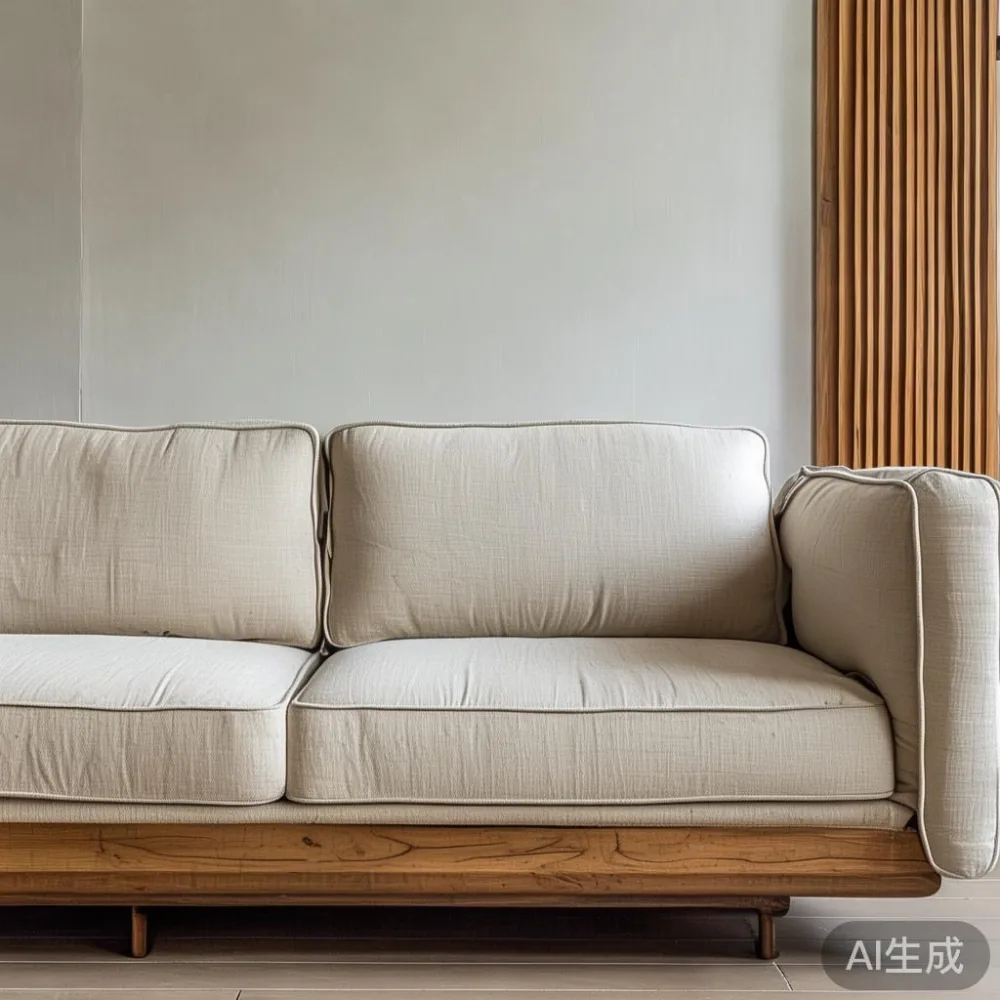
What actually happens inside a solid wood sofa, bed frame, dining table, or wardrobe when the RH climbs?
Wood moves in three directions: tangentially (across the grain, the most dramatic), radially (along the growth rings, gentler), and longitudinally (down the length, almost zero). On a fabric sofa with a solid wood frame, the joinery — mortise-and-tenon, dowel, or corner-block — carries this movement. If the frame was cut at the wrong moisture content, gaps of 1–2 mm open up between rails within a season. On a bed frame, slats begin to sit unevenly; on a dining table, the breadboard ends push against the top and crack. A wardrobe with full-length solid doors is the most sensitive piece of all: door panels that were glued too tight will split along the stiles within 12–18 months.
Nightstands suffer quietly. Drawer fronts develop a 1 mm step where the rail meets the stile, and the bottom panel — usually a thinner plywood or solid wood — starts to sag under stored weight in humid air. I inspected a French light luxury nightstand last month in a client's condominium near the Singapore River: the drawer faces had a perfect 1.5 mm reveal at the top in October, but by February the same reveal had widened to nearly 4 mm. The wood had moved 0.9 % in moisture content across that window. Completely normal, completely manageable if you measure.
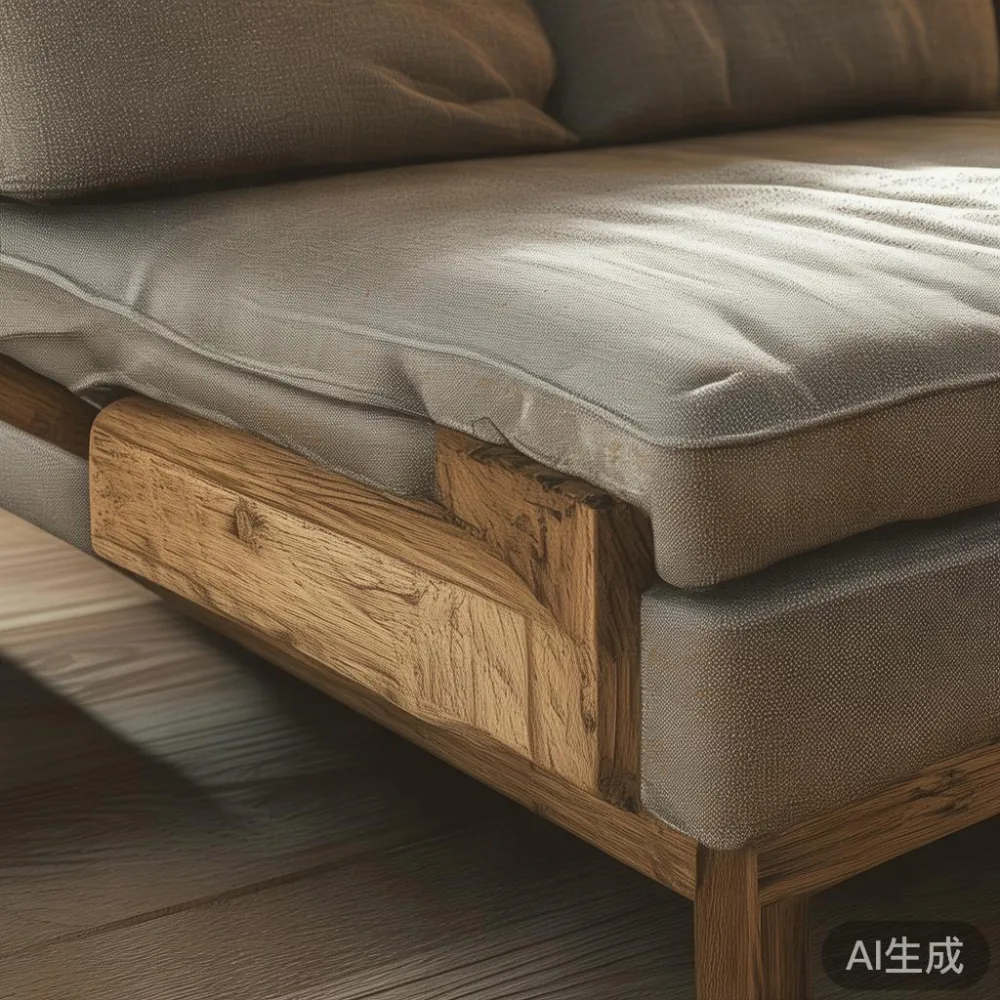
Is European bed worth it for a Singapore bedroom, then?
Short answer: yes, if it has been built for tropical service and not just for a Paris showroom. European joinery traditions — through-tenons, floating panels, quarter-sawn oak — actually handle wet-then-dry cycles far better than fast Asian knock-down construction, because the panels are allowed to float in their frames. The question of is European bed worth it really comes down to the factory's drying schedule and whether the supplier offers a tropical acclimatisation period before delivery. A reputable Foshan maker will hold stock in a humidity-controlled warehouse (around 55 % RH) for at least 14 days before crating, and will use kiln-dried solid oak or ash at 10 %–12 % moisture content as a fair compromise for the export market.
Midhill, for instance, builds bedroom pieces using a 10-year structural warranty — and that warranty is realistic because the workshop uses mortise-and-tenon joinery on every load-bearing joint, kiln-dries its own boards, and stores them in a dehumidified holding room. Whether the headboard, footboard, and slats are wrapped in moisture-barrier film for the sea voyage also matters: a 25-day container crossing the South China Sea can re-wet unprotected timber by 3 %–4 % EMC if the factory skips that step.
How to choose European sofa without bringing a humidity headache into your living room?
Ask three questions before you swipe your credit card. First: what species is the internal frame, and at what moisture content was it kiln-dried? Oak, ash, and beech are the workhorses; rubberwood looks tempting on price tags but moves more dramatically per % EMC change. Second: how are the joinery joints cut? Mortise-and-tenon or dowelled-and-glued is right; stapled-only is asking for trouble two years down the line. Third: what is the upholstery specification? Linen and cotton blends breathe; PVC-backed faux leather traps moisture against the frame and accelerates mildew on tropical nights.
The phrase how to choose European sofa is in effect a checklist of those three points plus one more — measurement. Measure your lift opening (most Singapore HDB passenger lifts are 2.1 m tall by 1.1 m wide, service lifts reach 2.4 m by 1.6 m), your corridor bend (1.2 m minimum turning circle is typical for newer BTOs), and your doorway (standard 0.9 m). A 2.4 m fabric sofa will not survive a 2.1 m lift unless it disassembles into two halves. The same warning applies to a 3 m European light luxury sofa with a continuous chaise — always confirm module widths in centimetres before paying a SGD 120 delivery surcharge for a failed first attempt.
European light luxury sofa vs Japandi sofa: which style survives the climate better?
The aesthetic answer is down to your taste, but the technical answer is interesting. A European light luxury sofa typically uses thicker (35–45 mm) frame members, often in solid beech with a beech-veneer ply for curved elements, finished with a multi-coat PU lacquer that slows moisture exchange by roughly 40 %. A Japandi sofa — the marriage of Japanese minimalism and Scandinavian functionalism — tends toward thinner exposed frames (22–28 mm), oiled or soap-finished surfaces, and lighter ash or oak species that breathe more freely.
In our climate, the Japandi frame actually stabilises faster because its oiled finish does not trap moisture against the fibres, but it demands more frequent re-oiling (every 9–12 months, about 90 minutes of work, materials cost roughly SGD 35). The European light luxury piece demands less daily attention but requires that you keep its climate-controlled environment more stable — between 45 % and 65 % RH — to prevent micro-cracking in the lacquer film along the armrest edges. The fabric sofa upholstery behaves similarly on both: a 60,000 Martindale-grade linen or cotton blend will outlast bonded leather three-to-one under Singapore UV loading.
How to style Japandi sofa in apartment corridors and HDB living rooms?
Styling matters here because airflow matters. A Japandi sofa needs at least 10 cm of clearance at the back and 15 cm at each arm to allow ambient air to move past the frame. In a 4-room HDB living room of roughly 18 m², that means you cannot push the sofa flush against a feature wall, no matter how tidy the photo on Instagram looks. Pulling it forward also lets your air-con dehumidifier work more effectively on the rear slats and the wall plate behind. A thin 2 cm gap with a concealed LED strip is the usual designer workaround.
The phrase how to style Japandi sofa in apartment also brings up the throw-and-cushion question. Synthetic fills trap moisture against the fabric sofa seat; down-and-feather blends breathe with the room. Wash your cushion covers every 3 weeks in the dry season, every 10 days in the wet season, and the inner foam cores will last twice as long. Pair the sofa with a low solid wood coffee table (Midhill's standard 1.2 m by 0.6 m module at 38 cm height, around SGD 689, fits this brief cleanly) and a marble table side table for contrast — the cool stone anchors the wood's warmth without competing with it.
Daily habits that actually change the lifespan of your furniture
Number one: buy a hygrometer. A decent digital unit costs SGD 22 at any neighbourhood electronics shop and reads RH to within 2 %. Place one beside your wardrobe, one near your fabric sofa, and one in the bedroom where the bed frame sits. Aim for 50 %–60 % RH year-round; below 45 % and you risk surface cracking on lacquer finishes, above 70 % and you are inviting mildew into the cushion foam.
Number two: run a dehumidifier in the bedroom for at least 4 hours overnight. A 12 L domestic unit pulls roughly 200–250 ml of water per hour out of tropical air and consumes around SGD 0.18 of electricity per cycle at current tariffs. Over a year, that is roughly SGD 65 — cheap insurance on a SGD 2,400 solid wood bed frame. Number three: rotate your dining table leaves and bed slats quarterly so no single panel takes the brunt of one corner's humidity. Number four: never wipe solid wood with a dripping cloth; use a barely damp microfibre and follow with a dry pass within 30 seconds.
Buying checklist for the next purchase — whether it's a fabric sofa or a dining table
Confirm kiln-dried to 10 %–12 % EMC. Confirm mortise-and-tenon on load-bearing joints. Confirm moisture-barrier crating. Confirm at least 14 days of in-warehouse acclimatisation in a dehumidified room. Confirm the warranty is structural for 10 years, not just cosmetic for 12 months. Confirm delivery includes GST, lift access assessment, and a 14-day return window — important if the piece simply does not fit your corridor after all.
If you are refreshing a whole flat at once, look at MIDHILL dining table wholesale options paired with a coordinated bed frame and a matching wardrobe, all in the same timber batch so the colour and grain match across pieces — that is something I recommend to every client renovating in Tampines, Bedok, or Punggol at the moment. For the bedroom, weighing up the best Japanese bed for 2026 against a European oak frame comes down to height preference (Japanese frames sit 25–35 cm off the floor, European frames often 40–50 cm) and your mattress weight (a 35 kg pocket-spring mattress on a 25 cm platform will sag a low Japanese frame faster than a sturdier 45 cm European one).
So, can you actually keep solid wood furniture in Singapore for 15+ years?
Yes — provided you pick a maker who respects the science, and provided you spend ten minutes a week on basic humidity management. My original Tampines bed frame now lives in my parents' condo, ten years old, with the headboard straight and the slats level. The difference between that piece and the warped one I replaced was not luck; it was specification, acclimatisation, and a SGD 22 hygrometer on the bedside table. If you treat solid wood as a living material rather than a static object, a well-built fabric sofa, bed frame, dining table, wardrobe, or nightstand will outlast every trend and every neighbour's flat renovation.