Veneer or Solid Wood? A 5-Year Cost Comparison for Singapore Homes
Choosing furniture for a Singapore HDB flat or condo is rarely a simple choice between appearance and price. A fabric sofa may fit a 90 cm corridor beautifully but still need to survive humid air, frequent meals, children, pets, and daily cleaning. A veneer dining table can deliver the warmth of timber at a lower upfront cost, while a solid wood bed frame may carry a higher purchase price but offer a different repair and refinishing path over 5 years.
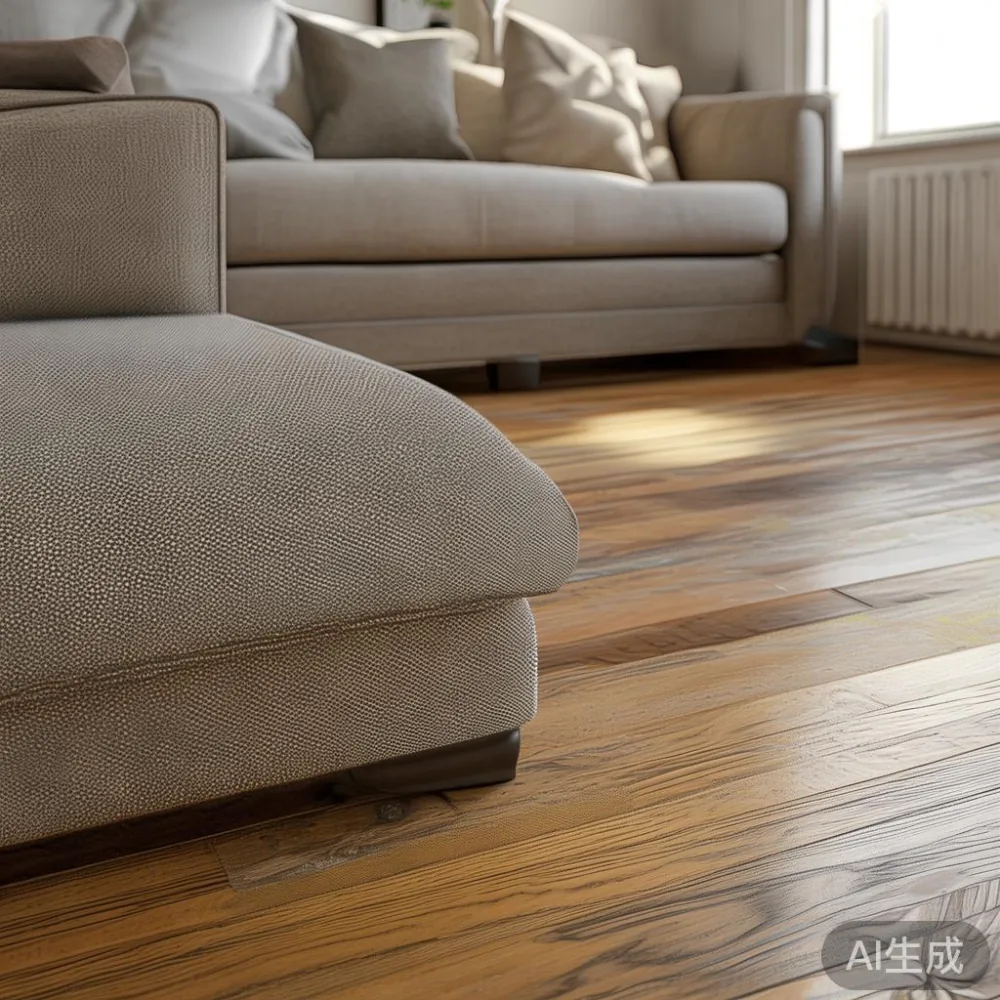
This comparison looks at veneer and solid wood furniture through the lens of a Singapore household. It follows an indicative budget of SGD 6,500 for a coordinated set comprising a fabric sofa, dining table, bed frame, wardrobe, and nightstand. The figures are planning estimates rather than quotations. They use Singapore prices, include a 9% GST assumption where relevant, and account for likely care, repair, replacement, and delivery costs over 5 years.
For Singapore buyers, the final choice depends on more than a showroom sample. Lift width, corridor turns, floor protection, humidity exposure, and the availability of refinishing can all change the real cost. French light luxury interiors may favour pale oak veneer with slender profiles, while American light luxury often combines upholstered comfort with substantial wood frames. Post-modern light luxury can accept mixed materials when every component is proportioned carefully.
What Is the Difference Between Veneer and Solid Wood?
Veneer furniture uses a thin layer of real timber, typically about 0.6 mm to 1.2 mm, bonded to a panel or structural frame. The visible face may be oak, walnut, ash, or another species. The core can be plywood, MDF, or another engineered board. Veneer is not automatically inferior: a well-made cabinet can be dimensionally stable and visually refined. Its main economic advantage is that less timber is required for each visible surface.
Solid wood furniture uses solid timber components, often around 18 mm to 25 mm thick for table tops, drawer fronts, bed rails, and wardrobe frames. It does not mean that every visible component is one solid board. A solid wood sofa may include a timber frame, foam cushions, springs, and fabric upholstery, while a solid wood dining table may have solid rails and legs joined to a veneered or solid top.
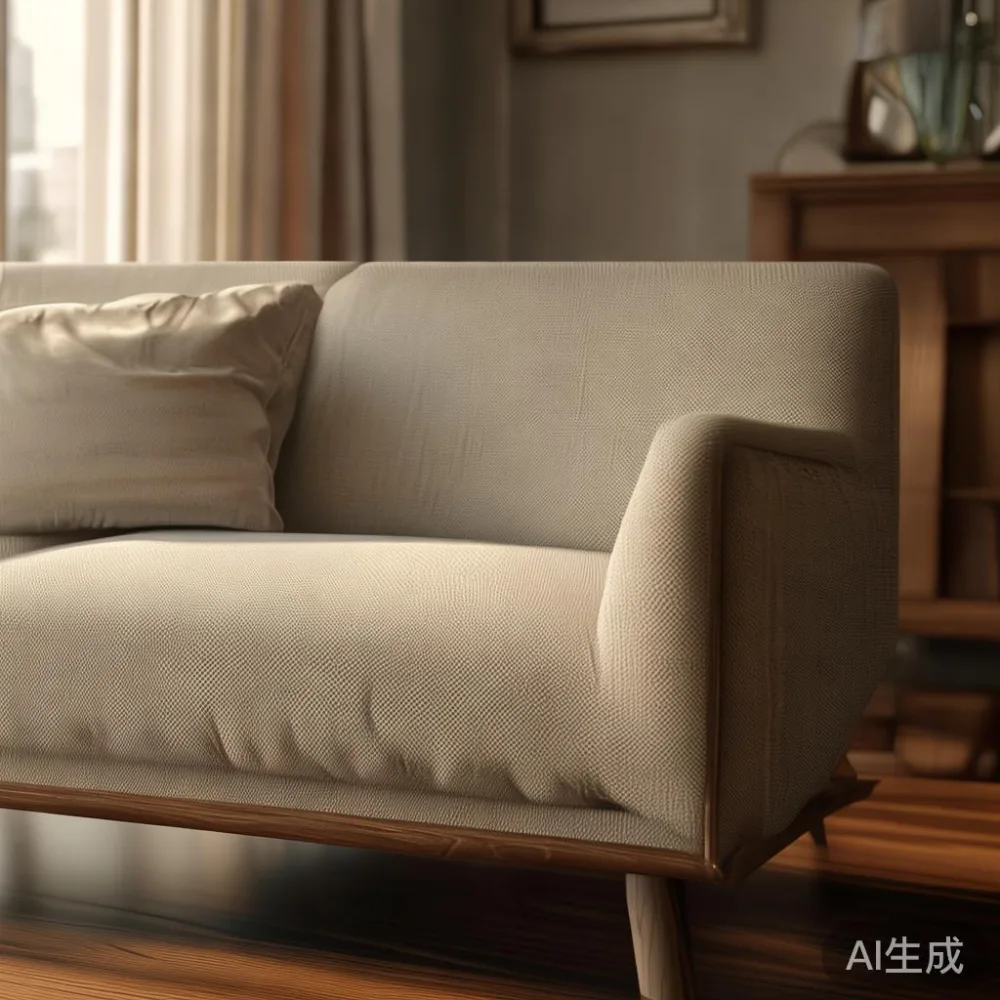
Over a 5-year period, the relevant question is not simply whether one material is natural. It is how much surface area is exposed to wear, how moisture is managed, and what happens when a corner is chipped. A 220 cm dining table has a large surface that receives more contact than a 45 cm nightstand. A fabric sofa receives daily sitting and cleaning, but its timber frame is usually protected below the seat. A wardrobe has tall doors, vertical edges, and moving parts that may need alignment checks.
For this comparison, a veneer package is estimated at SGD 4,150 before GST, or about SGD 4,524 after 9% GST. A comparable solid wood package is estimated at SGD 6,100 before GST, or about SGD 6,649 after GST. These are scenario figures, not claims about every product. They allow a direct comparison of ownership cost rather than relying on a dramatic showroom discount.
How Much Do Veneer and Solid Wood Sets Cost at Purchase?
A practical Singapore package might include a 210 cm fabric sofa, a 180 cm dining table, a 160 cm bed frame, a 120 cm wardrobe, and one 45 cm nightstand. Here is an indicative cost breakdown before GST:
| Item | Veneer option | Solid wood option |
|---|---|---|
| 210 cm fabric sofa with timber frame | SGD 1,850 | SGD 2,500 |
| 180 cm dining table | SGD 780 | SGD 1,250 |
| 160 cm bed frame | SGD 620 | SGD 950 |
| 120 cm wardrobe | SGD 620 | SGD 1,050 |
| 45 cm nightstand | SGD 280 | SGD 350 |
| Total before GST | SGD 4,150 | SGD 6,100 |
After GST, the veneer scenario is approximately SGD 4,524 and the solid wood scenario approximately SGD 6,649. The difference is about SGD 2,125 before tax or SGD 2,314 after tax. That gap is manageable for some condo owners, but it is substantial for an HDB household furnishing several rooms at once.
Delivery adds another decision. A typical Singapore curbside delivery may be free above SGD 350, while a small item or an extra delivery trip can cost SGD 35 to SGD 90. A standard scheduled delivery might take 7 to 14 days after production. Lift access matters: a sofa box of 210 cm by 95 cm by 70 cm may fit a common 90 cm lift door but become difficult at turns in a corridor. A wardrobe packed in two 120 cm by 60 cm by 18 cm panels may be easier to carry than one oversized panel.
For upstairs delivery, confirm the lift door width, internal depth, and corridor turn before ordering. Add SGD 80 to SGD 160 if the item requires extra handling, unpacking, or placement beyond the landing. Marble table owners should also request edge-protection details, although marble is outside the veneer-versus-solid-wood comparison and is included here only as a design reference.
What Happens During 5 Years of Everyday Use?
Over the first year, veneer furniture may show small edge wear, especially on a dining table used daily or a wardrobe door that rubs against a frame. Minor scuffs can sometimes be concealed with a colour-matched touch-up pencil, provided the substrate is not exposed. A small repair might cost SGD 15 to SGD 40 per affected area, while a larger veneer replacement or panel swap might cost SGD 90 to SGD 220.
Solid wood is more forgiving of sanding and refinishing on a broad surface, but it is not maintenance-free. A table edge can be filled, sanded, and refinished; a drawer or leg can be reattached; a bed rail may be replaced with matching timber. The cost depends on the species, finish, and degree of damage. A routine refinishing service might cost SGD 180 for a small nightstand, SGD 350 for a bed frame, and SGD 450 to SGD 900 for a dining table.
Humidity is a normal part of Singapore life. A useful indoor target is roughly 40% to 60% relative humidity, measured with a small hygrometer. Sudden changes can cause movement in timber, while prolonged damp conditions can affect veneer adhesive lines and finished surfaces. Place a dining table away from an open balcony door, use felt pads under wardrobe legs, and avoid placing damp washing directly against a wardrobe back panel.
Fabric upholstery requires a different maintenance allowance. Vacuum the fabric sofa every 1 to 2 weeks, blot spills rather than rubbing them, and clean removable covers according to the care label. Professional cleaning once during the 5 years might cost SGD 180 to SGD 350 for a two- or three-seat sofa. This applies equally to both scenarios because the upholstery specification, not the frame material, controls much of the fabric care cost.
Which Option Has the Lower 5-Year Cost?
Here is a reasonable planning model for a Singapore home. The assumptions include one light cleaning kit, one upholstery clean, one minor touch-up, and no major accident. Delivery is free above SGD 350, but a second trip is allowed because measurements and access can be uncertain.
| 5-year item | Veneer scenario | Solid wood scenario |
|---|---|---|
| Purchase price before GST | SGD 4,150 | SGD 6,100 |
| GST at 9% | SGD 374 | SGD 549 |
| Fabric sofa cleaning | SGD 250 | SGD 250 |
| Timber care and touch-ups | SGD 160 | SGD 220 |
| One delivery adjustment | SGD 80 | SGD 80 |
| Expected repair or refinishing allowance | SGD 260 | SGD 420 |
| Estimated 5-year total | SGD 5,274 | SGD 7,619 |
Under this model, the veneer package costs about SGD 2,345 less over 5 years. That result does not mean veneer always wins. If a household has children, frequent guests, or a dining table exposed to heavy use, repair estimates may rise. A family that values long-term refinishing and plans to keep the furniture for 15 years may see a different return from the initial calculation.
Solid wood may justify its higher price when the buyer prefers visible timber thickness, repairable edges, and a material that can be refinished repeatedly. For a 180 cm dining table, the difference between SGD 780 and SGD 1,250 before GST is SGD 470. If that table is refinished once near year 4, the cost may recover part of the difference in appearance rather than in cash.
Veneer can be the more practical choice when the budget is fixed, the furniture must fit a compact flat, and the pieces coordinate with a fabric sofa already owned. The right comparison is not “natural versus artificial.” It is expected appearance, moisture exposure, maintenance habits, and the cost of dealing with damage.
Can Veneer Suit HDB Flats and Condo Interiors?
Yes. In a Tampines HDB flat with a 95 cm corridor and a 90 cm lift, a modular veneer wardrobe may be more practical than a single large solid wood cabinet. A two-panel design can be carried in stages and positioned inside the bedroom without damaging the lift walls. Choose rounded corners where children pass frequently, and reserve solid wood for a focal item such as a 120 cm nightstand.
In a Bedok condo, a veneer dining table can create the calm impression associated with French light luxury: pale timber, warm fabrics, restrained hardware, and generous spacing. For a smaller Punggol home, a round 120 cm dining table may improve circulation around a 210 cm fabric sofa. The round shape has no sharp corners and gives each seat about 55 cm to 60 cm of width.
For a whole-home scheme, search results for how to style European light luxury wardrobe in apartment can help with visual direction, but physical dimensions still rule. Measure the wardrobe opening, skirting, door swing, and nearby furniture. Allow at least 5 cm behind the wardrobe for ventilation and service access. For a bed frame, leave 60 cm on both sides where possible; in a narrow room, a 140 cm bed may be more workable than a 160 cm model.
A solid wood sofa frame can be paired with veneer side tables if the design remains consistent. Reviews of Japanese sofa vs Japandi sofa may lead toward a low, calm profile, while an american sofa set design often focuses on deeper seating and a more generous room presence. The material decision should support the scale, not overwhelm it.
What Should You Check Before Ordering?
Ask the seller for the core material, veneer thickness, timber species, finish type, and joinery information. A 0.6 mm veneer may be adequate for a protected wardrobe front, while a 1.2 mm veneer can offer more repair flexibility on a table edge. Confirm whether the back panel is plywood, MDF, or solid timber, since this affects weight, stability, and moisture response.
For a bed frame, test the centre rail, slat spacing, and corner joints. A frame should not visibly flex when the centre is pressed with roughly 70 kg of evenly distributed load. For a wardrobe, check that doors align within about 3 mm and that drawers have smooth travel. Ask whether replacement hardware is available and whether parts can be shipped separately in 7 to 14 days.
For a fabric sofa, request the fabric composition, cushion density, removable-cover status, and frame warranty details. A fabric sofa with a solid wood base should still have clear expectations for cushion softening and fabric pilling. Allow a new sofa to settle for 1 to 4 weeks before judging its final comfort.
Compare Japanese bed vs Modern bed mainly through dimensions, support, and room layout. A Japanese bed may suit a compact bedroom with a low profile, while a Modern bed can provide a stronger centre support for heavier mattresses. Neither term tells you whether the frame is veneer or solid wood; the specification does.
How Does MIDHILL Approach the Choice?
MIDHILL has operated since 2008 and exports solid wood furniture to more than 15 countries. Its 10-year structural warranty and lifetime refinishing policy give buyers a different way to compare costs: the purchase price is one line, while the aftercare commitment has value over 5 years and beyond.
My colleague at a Singapore showroom showed me how two similar-looking dining samples behaved under a damp cloth test last month. The veneer sample with a well-sealed edge retained its colour and surface sheen after 10 minutes of light moisture exposure. The solid wood sample also performed well, but its beveled edge took longer to dry. The test was not a laboratory result; it demonstrated why finish quality, edge sealing, and indoor humidity matter as much as the label.
For a coordinated apartment, MIDHILL can supply a solid wood bed frame, dining table, wardrobe, nightstand, or a fabric sofa package. A marble table can provide a contrasting surface, but its weight should be checked against lift and floor limits. Buyers searching for MIDHILL coffee table wholesale can request dimensions, packing information, and delivery terms before making a project decision.
Keep a written record of the order, including the item code, finish, dimensions, warranty conditions, and delivery date. Use midhillco@gmail.com for project enquiries when a floor plan or product drawing needs clarification. For a sofa order, photograph the lift and corridor before dispatch; that simple check can prevent a 90 cm-wide delivery problem.
Is Solid Wood Worth the Higher Price for Your Home?
Solid wood is worth considering when the furniture is intended to remain in use for 10 years or more, when timber character is central to the room, and when regular refinishing is acceptable. A bed frame or dining table may gain more from this approach than a low-touch decorative cabinet. The solid wood option also suits a buyer who prefers repairable surfaces and accepts the heavier feel of timber construction.
Veneer is worth considering when budget control is important, the room is compact, and the finish will be protected from standing water and direct sunlight. It can offer a high-quality visual result for a fabric sofa setting, especially when coordinated with a 160 cm bed frame and a 120 cm wardrobe. The goal is not to chase a premium material everywhere; it is to allocate the stronger material where daily contact matters.
Before deciding, list the five pieces you need, their expected daily use, and the delivery route to each room. Add GST, cleaning, touch-ups, and one potential repair to both prices. Compare the total after 5 years, then compare how you would feel living with each finish. If the difference is SGD 2,314 and the solid wood set will be refinished, that may be reasonable. If the veneer set lets you reserve SGD 1,500 for curtains, lighting, and a second mattress, it may be more practical.
A balanced Singapore home can use both materials without looking mismatched. Pair a solid wood dining table with a veneer wardrobe, or choose a solid wood bed frame and a fabric sofa with a veneer console. Match grain direction, colour depth, leg profiles, and hardware. In a light-luxury room, consistency of proportion often matters more than the word printed on a sample board.
Whichever route you choose, measure twice and confirm the delivery path. Keep the furniture away from persistent dampness, clean with the correct tools, and schedule a small care check every 6 months. Over 5 years, that routine can preserve the appearance of veneer, protect the integrity of solid wood, and keep your fabric sofa comfortable long after the first delivery day.