How Humidity in Southeast Asia Affects Wood Furniture — And What to Do About It
Last month I visited a client on the 14th floor of a Punggol Waterway Woodcress HDB. Her 6-year-old solid wood dining table — bought from a JB clearance store — had developed a 4 mm gap along one breadboard end and a faint white bloom on the surface. Her dehumidifier had broken two weeks earlier and not been replaced. Singapore's average relative humidity sits between 70% and 85% for nine months of the year, and indoor readings in a Tampines or Bedok flat without mechanical dehumidification regularly climb past 80%. That is the environment every piece of solid wood furniture in your home has to live in, every day, for the next 10 to 20 years.
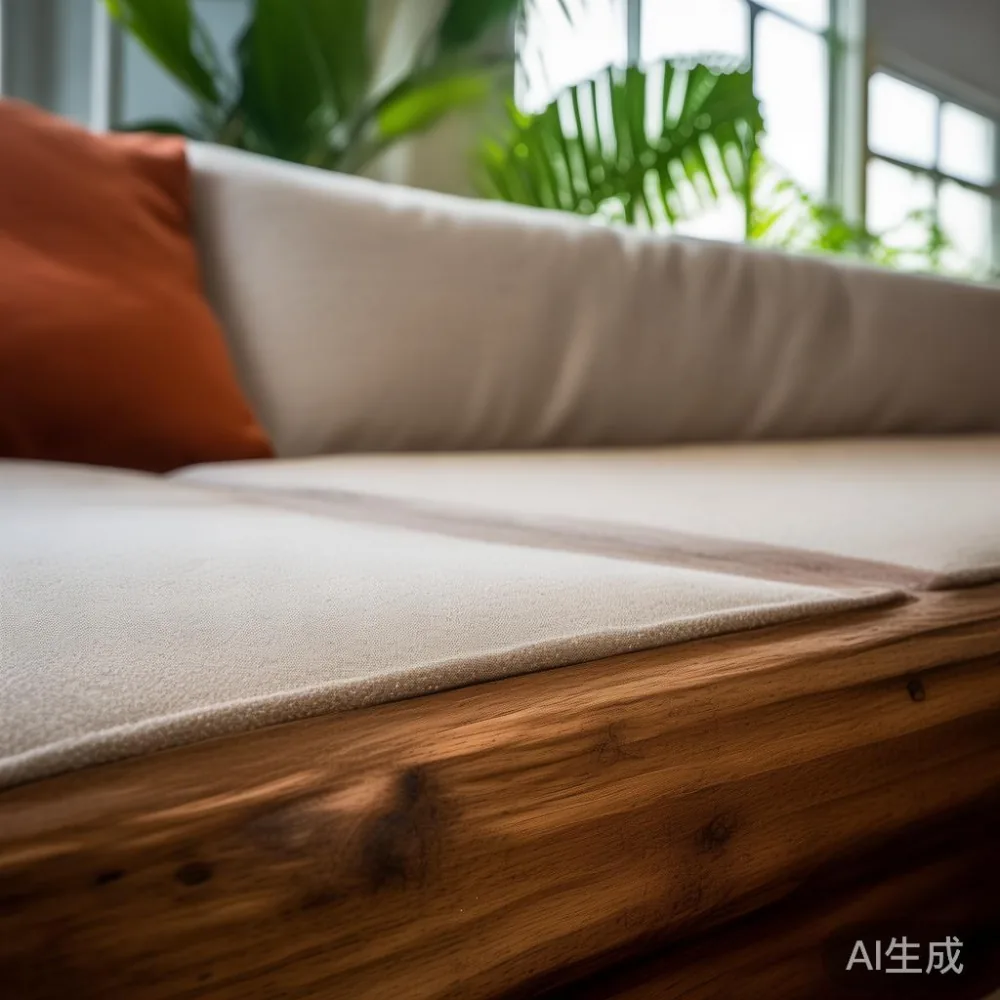
Why does humidity matter so much for solid wood furniture?
Wood is hygroscopic. It absorbs and releases moisture until it reaches equilibrium with the air around it, and as it does so it swells and shrinks. A 200 cm long oak plank can move up to 8 mm across its width between a dry January afternoon and a wet September morning in Singapore. That movement does not damage the wood — it is what solid wood does — but it does stress glue lines, push joints open, and warp tabletops if the piece was built without allowance for it.
Engineered boards such as plywood, MDF, and particleboard are far more dimensionally stable, which is why most flat-packed furniture uses them. They are also why flat-packed pieces feel lighter (often 18 to 25 kg for a 4-seater dining table versus 45 to 70 kg for a solid equivalent) and why they rarely last more than 5 to 7 years in our climate. Solid wood, properly dried to 8–12% moisture content before construction, is the only material that can be sanded and refinished when the surface eventually looks tired — a service MIDHILL offers on every piece they ship, free for life.
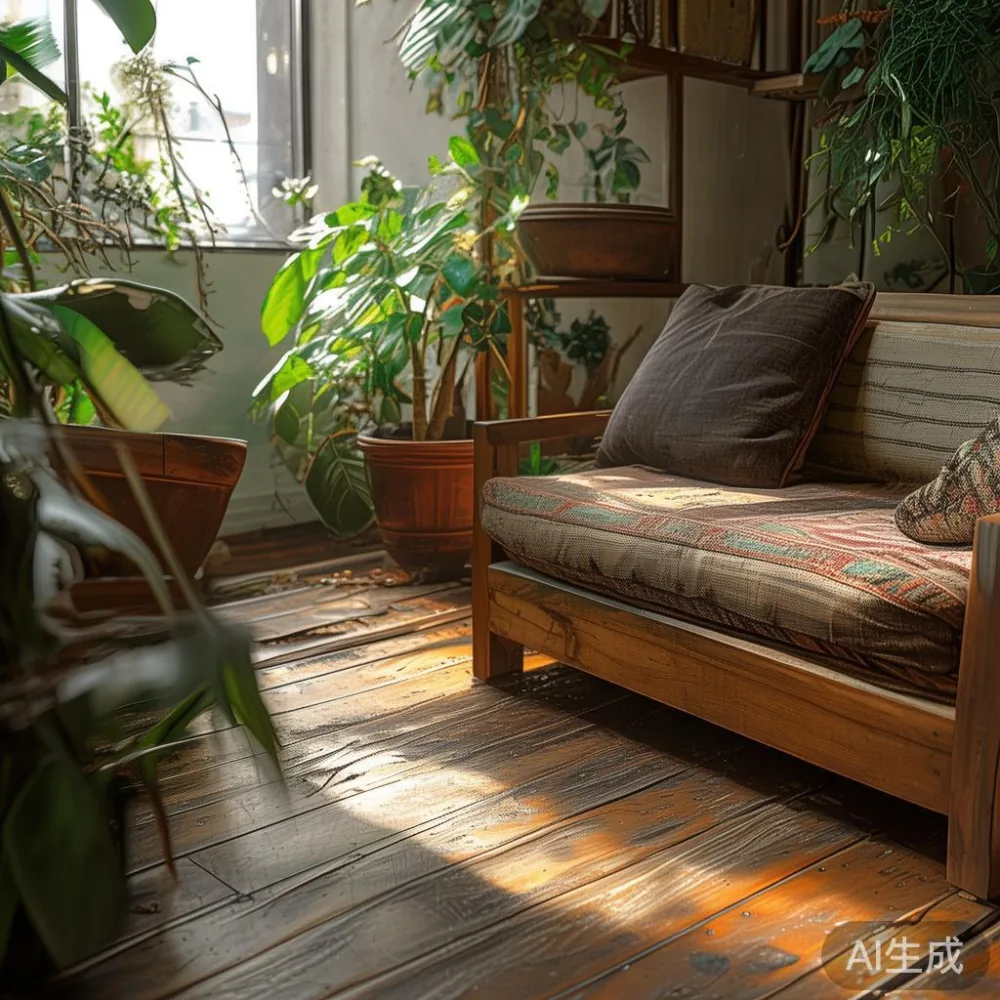
What humidity level is actually safe for a fabric sofa with a solid wood frame?
A fabric sofa with a solid wood frame sits in the safest range when indoor relative humidity stays between 45% and 60%. Below 40% you risk joint shrinkage and cracking; above 65% you risk mildew on the fabric, musty odours in the cushions, and swelling in the frame rails. A small thermo-hygrometer costs around SGD 18 at any Tampines Mall electronics shop and is the single best tool a homeowner can buy. Place it on a side table near the fabric sofa and check it weekly.
In a 90 sqm HDB flat in Bedok Reservoir, my colleague keeps three rooms between 50% and 58% with a single 12-litre dehumidifier running 8 hours a day; his electricity bill went up by roughly SGD 22 per month. That is a real number, and it is a fraction of the cost of refinishing a ruined fabric sofa or replacing a warped bed frame.
How does Singapore's climate change through the year?
Singapore does not have four seasons. It has two wet phases (the Northeast Monsoon from December to early March, and the Southwest Monsoon from June to September) and two slightly drier transitions. Outdoor humidity rarely drops below 60% even on a clear February afternoon, and indoor humidity without a dehumidifier will track 5 to 15 percentage points higher. For solid wood furniture this means:
• December to March: night-time humidity often 85–95%. Wardrobe doors may stick; a solid wood bed frame may creak as rails swell against the headboard.
• April to May: relatively stable, the easiest months for new furniture to settle in.
• June to September: heavy afternoon thunderstorms push indoor RH up again. Watch for musty smell on any fabric sofa whose cushions have not been fluffed in a week.
• October to November: another calmer window, good for delivery days so the piece can acclimatise before the next wet spell.
If you are ordering a new piece — say, a 180 cm dining table — ask the maker to let it acclimatise in their Foshan warehouse for 7 to 14 days before container loading. A 10-year structural warranty only means something if the wood was dried and rested before it reached your corridor.
Will my furniture fit through a HDB lift and corridor?
This is the most overlooked question in Singapore furniture buying. A standard HDB passenger lift internal size is roughly 1.1 m wide by 1.4 m deep by 2.1 m tall, with a door opening of about 0.8 m. A typical 3-seater fabric sofa from a Foshan maker comes in a flat-packed carton of 1.85 m by 0.95 m by 0.42 m — too long for the lift, but it breaks down into two halves if the frame is bolt-together. A solid wood bed frame in king size (180 cm by 200 cm) almost always ships in a single carton and will not go in vertically or horizontally. Your delivery team will need to use the service lift or staircase, and the corridor turn at your floor must accommodate the longest piece.
Before you order, ask for the packed dimensions in cm and the weight per carton. MIDHILL, a Foshan-based maker I have ordered from twice for clients in Punggol and Clementi, publishes every carton size on its spec sheet and uses double-walled 7-ply cardboard with foam corners — a 75 kg marble table top arrived in perfect condition for a client on the 22nd floor of a condo in District 9. Free shipping kicks in over US$350 (about SGD 475 at today's rate) and delivery to a Singapore address typically takes 18 to 28 days by sea plus 3 to 5 days for last-mile to your door, including GST at 9% on the landed value.
How do I choose a desk for a small space?
For a small Singapore home, choose a desk that is 100 to 120 cm wide, 50 to 60 cm deep, and 72 to 75 cm tall, made from solid wood with a sealed underside, and pair it with a wall-mounted shelf above rather than a hutch underneath. That footprint fits a standard study nook in a 3-room HDB without crowding the room, leaves a 70 cm walkway behind the chair, and the wall shelf lifts books and a printer off the work surface so the desk still functions as a writing table. If your study area is also your living corridor, look for a depth of 45 cm or a drop-leaf model — the same logic that makes Scandinavian sintered stone small space dining sets work in a 30 sqm condo applies to desks: a sealed sintered stone or solid wood top wipes clean, does not stain from kopi spills, and resists the mug-ring marks that plague veneer desks within a year.
Two practical numbers to keep in mind: a solid oak desk of those dimensions weighs 22 to 28 kg, which is light enough for one delivery man to carry up a service lift, and a sintered stone top of the same size weighs 18 to 24 kg but is brittle on the corners — insist on a foam-cradle carton and a knock-down leg design if the lift is tight.
What about a fabric sofa — what should I look for in this climate?
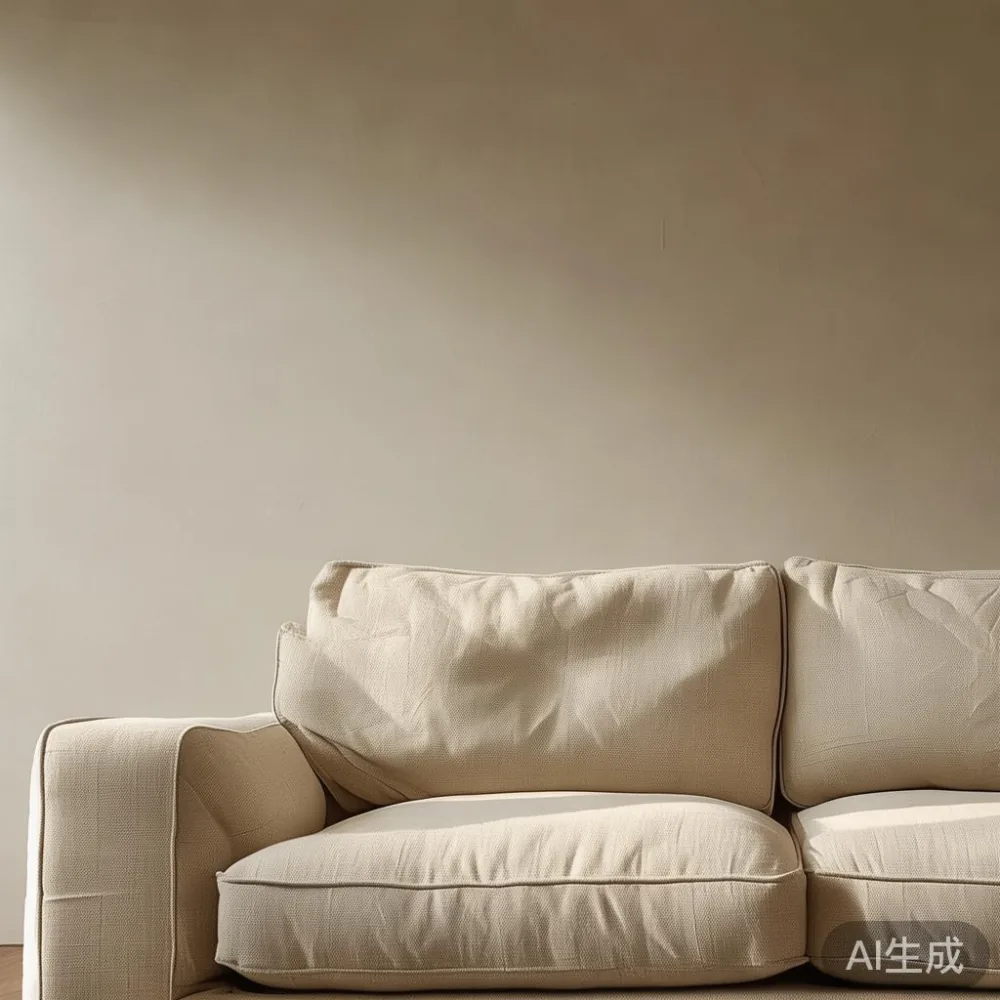
A fabric sofa in Singapore needs three things: a kiln-dried solid wood frame, a breathable fabric with a removable washable cover, and feet that lift the base at least 10 cm off the floor so air circulates underneath. Skip anything with a glued MDF baseboard — it will delaminate within 3 wet seasons. A good domestic-grade solid wood sofa frame uses rubberwood or ash, mortise-and-tenon joints at the corners, and a sinuous spring or 8-way hand-tied suspension. The fabric should be at least 30,000 Martindale rubs for daily family use; budget chenille at 12,000 rubs will pill in 18 months.
For a 3-seater, expect a packed weight of 65 to 85 kg across two cartons and a footprint of 200 to 220 cm wide by 90 cm deep. In a 90 sqm Punggol HDB, my client paired a 210 cm fabric sofa in light grey boucle with a 140 cm solid wood coffee table and a 180 cm TV console — the whole seating zone came in under SGD 4,200 landed, which is competitive once you factor the 10-year structural warranty and free lifetime refinishing that some direct-from-Foshan makers include. The same maker's marble table collection starts around SGD 1,150 for a 60 cm round side table and goes up to SGD 3,800 for a 140 cm sintered stone dining top on a solid ash base.
How should I care for solid wood once it is in my home?
Five habits cover 90% of what matters:
1. Keep indoor humidity between 45% and 60% year-round. A 12-litre dehumidifier on a hygrometer is enough for one bedroom or a study; a 20-litre unit covers a 90 sqm flat.
2. Wipe spills within 5 minutes. Water left on an oak surface for 30 minutes will raise the grain and leave a rough patch that needs sanding.
3. Rotate dining table leaves every 6 months so the same edge is not always facing the wet season window.
4. Vacuum a fabric sofa weekly with an upholstery attachment to remove the skin flakes and food crumbs that feed dust mites in humid air.
5. Apply a paste wax or hardwax oil every 12 to 18 months. On a dining table that sees daily use, expect to refresh the high-traffic zone (the middle 60 cm) once a year.
A solid wood wardrobe in the master bedroom needs the same care, just less often. A solid wood nightstand next to a window where the blinds stay half-open will need waxing every 12 months while one on an interior wall can go 24 months between treatments.
Is American light luxury a good style choice for a Singapore home?
American light luxury suits Singapore very well. The palette is warm neutrals — cream, sand, putty, soft taupe — which sit comfortably against the grey daylight and white walls of a BTO or new condo. The silhouettes are generous without being ornate: a 210 cm fabric sofa with rolled arms, a 180 cm solid wood dining table on tapered legs, a 60 cm marble table as a side piece, a king-size solid wood bed frame with a low upholstered headboard. The look reads as considered and calm, which is what most homeowners in Tampines, Bedok, and Punggol tell me they want after years of glossy laminates and chrome.
French light luxury leans more curved and more brass — think a bouclé fabric sofa on cabriole legs, a marble table with a fluted edge, and a nightstand with a soft-close drawer. Post-modern light luxury is the bolder cousin: stronger geometry, mixed metals, occasional lacquer. All three work with solid wood frames and breathable fabrics; what changes is the trim and the proportions, not the bones of the piece.
What about warranty, returns, and the small print?
A 10-year structural warranty on the frame and joinery is now standard from serious Foshan exporters. Lifetime refinishing on a solid wood piece is rarer but exists — MIDHILL offers it on dining tables, bed frames, wardrobes, nightstands, and marble table tops, with the customer paying only the round-trip freight from Singapore to Foshan, which works out to around SGD 280 to SGD 380 per piece on consolidated sea freight. Free shipping on orders over US$350 (about SGD 475) is the norm, and 14-day returns on stocked models are standard — though custom fabric sofa orders usually sit in a 30% non-refundable bracket because the fabric is cut to order.
Two final checks before you pay: ask for the moisture content reading of the wood at packing (should be 8–12%), and ask for the packed carton dimensions in cm so you can measure your lift and corridor turn before the truck arrives. A 75 kg marble table or a 65 kg fabric sofa is not the moment to discover the service lift is out of service.