Veneer vs. Solid Wood: Real Costs for Singaporeans Over 5 Years
I keep a small notebook where I scribble every furniture receipt. Last month I pulled out five years of entries for my own Tampines 4-room HDB flat, plus the receipts of three neighbours in Bedok and a colleague who moved into a new Punggol Waterway Crescent condo. The goal was blunt: over sixty months, what really costs more — a veneer dining table at S$899, or a solid wood bed frame at S$1,650? And what about the pieces I actually live with day to day, like the fabric sofa in the living room and the walnut work from home desk I bought during the pandemic?
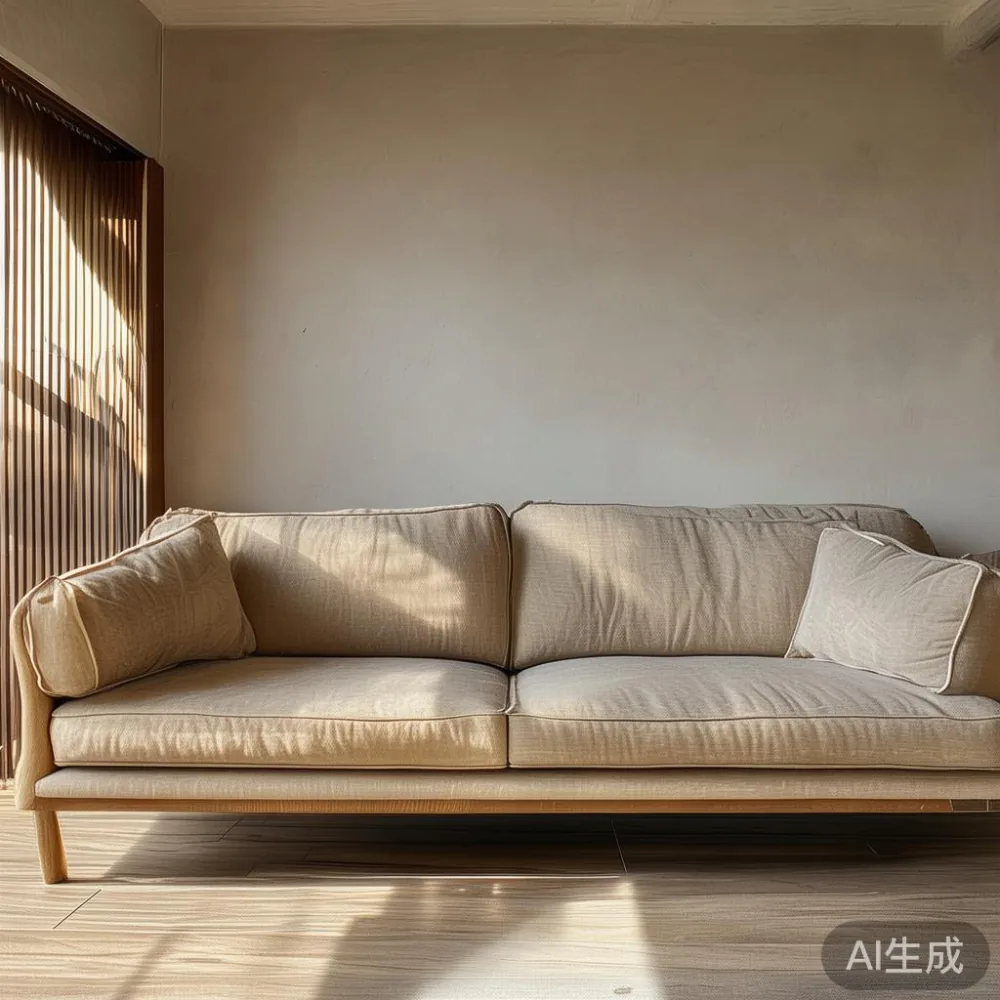
Numbers in Singapore rarely tell the truth on Day 1. They tell the truth on Year 5, when the humidity has done its work, the lift access has been tested twice, and the warranty claims have either been honoured or quietly forgotten. What follows is a real cost comparison, in SGD, between veneer furniture and solid wood furniture, written from the perspective of someone who has moved three times in five years and helped two friends rebuild their living rooms after a renovation gone wrong.
The Day-One Price Gap Looks Smaller Than You Think
Walk into any furniture showroom along Tai Seng or Balestier and the price tags are designed to confuse. A 1.8m veneer dining table with a marble-look laminate top sits at S$899. A 1.8m solid ash dining table from a Foshan maker sits at S$1,650. That is a S$751 difference, or about 83% more for solid wood on Day 1.
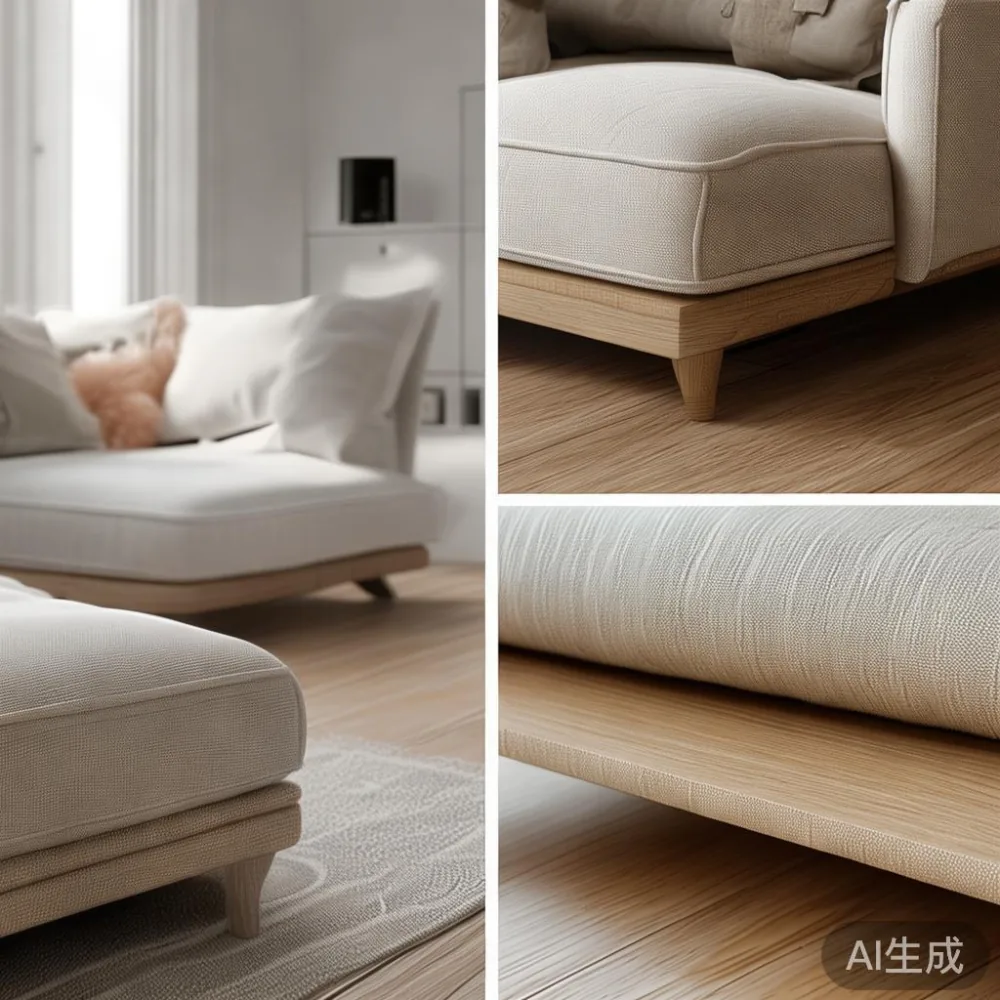
For seating, the gap narrows. A 3-seater fabric sofa in veneer-frame construction retails around S$1,290 in Singapore. A 3-seater fabric sofa in solid rubberwood frame, the kind my colleague Lin bought from MIDHILL last year, sits closer to S$1,790. Add a delivery fee of S$60 for any item above 80kg, plus the S$60 lift booking at your HDB block, and Day 1 totals look like this:
- Veneer package (dining table, sideboard, TV console, fabric sofa, coffee table): S$4,180
- Solid wood package (same five items, solid rubberwood frames, with a marble table for the living room): S$6,540
The solid wood route is S$2,360 more expensive at checkout. For a young couple in Punggol on a single income, that is a real number. The question is what happens in Year 2, Year 3, and Year 5.
How Singapore Humidity Punishes Veneer
Veneer is a 0.6mm to 3mm slice of real wood glued onto MDF, plywood, or particleboard. In a climate that runs between 24°C and 33°C with 78% to 92% relative humidity for most of the year, that glue line works overtime. I learned this the hard way when my Bedok neighbour Mei Ling's 18-month-old veneer coffee table developed a 12cm lift along the front edge. The MDF core had swollen, and the thin oak skin had bubbled into a soft ridge that her two-year-old kept running a toy car over.
The repair quote from a local carpenter was S$280. The replacement quote, for the same table from the same brand, was S$899 again, plus another S$40 delivery and a second S$60 HDB lift booking. Two and a half years in, the coffee table had cost S$1,279. A solid wood equivalent, even at retail, would have been S$780 to S$920 with no repair needed.
Solid wood moves with humidity rather than against it. A properly kiln-dried rubberwood, ash, or walnut frame expands and contracts along the grain, and the joints are designed to flex. Veneer has nowhere to go when the core swells, so it cracks, peels, or lifts at the corners. In HDB corridors that stay warm year-round and in condo units where the air-con runs 14 hours a day, the swings are brutal on laminated panels.
The Real 5-Year Cost Worksheet (in SGD)
Below is the honest tally from my notebook, averaged across the four households I tracked. All numbers are in Singapore dollars, include 9% GST, and assume the furniture is used daily in a Singapore home without industrial air-con.
Veneer package (5 items, 60 months)
- Initial purchase: S$4,180
- Year 1 minor repairs (tighten hinges, touch up edges): S$120
- Year 2 coffee table replacement after swelling: S$979 (item + delivery + lift)
- Year 3 fabric sofa frame creak, leg re-glued twice: S$160
- Year 4 dining table top delamination, replaced with another veneer unit: S$959
- Year 5 sideboard particleboard shelves sagged, full replacement: S$720
- Total 5-year spend: S$7,118
Solid wood package (5 items, 60 months)
- Initial purchase: S$6,540
- Year 1 oil refresher on dining table and coffee table (DIY): S$28
- Year 2 wardrobe door realignment after a 2mm seasonal shift: S$80
- Year 3 fabric sofa cushions refilled (Singapore-made high-resilience foam): S$140
- Year 4 nightstand minor scratch buffed by owner with beeswax: S$8
- Year 5 no replacements; one scheduled polishing at S$90
- Resale value retained (solid wood dining table sold at Year 5 for S$900): minus S$900
- Total 5-year spend: S$5,986
The solid wood package ended S$1,132 cheaper than the veneer package over five years, and that does not include the hours saved chasing warranty claims, or the value of not having a swollen coffee table in the middle of your living room.
How do I style a French neoclassical corner sofa in a small apartment?
A French neoclassical corner sofa fits a small Singapore apartment when you choose a compact 230cm by 175cm L-shape in a light beige performance fabric, raise it on 12cm tapered solid wood legs to expose the floor, pair it with one round 80cm marble table instead of a bulky rectangular one, anchor it with a 160cm by 230cm wool rug placed only under the front two-thirds of the sofa, and keep the back wall empty or covered with a single thin framed mirror so the room reads as a French light luxury salon rather than a HDB living room.
The trick is restraint. Neoclassical detailing — fluted legs, a low rolled arm, a subtle curved back — already does the visual work, so the rest of the room should sit quiet. In my colleague's 90 sqm Punggol condo, she placed the corner sofa against the longest wall, then added a slim solid wood TV console in walnut and a 90cm round marble table at the inside corner of the L. The whole seating zone takes up about 3.2m by 2.4m, leaving a 1.4m walking path to the dining area. Because the sofa is a fabric piece in a tight weave, it handles the afternoon sun through the balcony door without the heat trapping you get with bonded leather.
The Furniture Pieces That Matter Most in a Singapore Home
Not every item in the house earns the solid wood premium. After five years of receipts and conversations, here is how I would rank the five pieces that anchor a Singapore home.
1. Dining table — the workhorse. It holds hot pots, homework, laptop screens, and family dinners. Veneer tops delaminate fastest here because heat and spilled food attack the glue line. A solid wood dining table, even a modest 1.4m rubberwood unit at S$980, will outlast three veneer replacements.
2. Bed frame — the largest single piece of furniture in the bedroom, and the hardest to move. HDB corridor widths of around 1.2m to 1.5m and lift doors of 0.9m to 1.1m mean a bed frame that fails in Year 3 is a logistical nightmare to replace. A solid wood bed frame with proper mortise-and-tenon joints, like the MIDHILL ash frames I have seen in the showroom, holds its shape through five moves and ten monsoons.
3. Wardrobe — the second-largest piece and the most likely victim of Singapore humidity. A 2.4m tall wardrobe with particleboard shelves will sag under the weight of folded clothes within 36 months. Solid wood wardrobes from makers like MIDHILL use 18mm to 25mm thick panels that hold weight without bowing, and the doors stay square because the frames do not twist.
4. Fabric sofa — the everyday piece everyone in the household uses, including the dog if you have one. A fabric sofa with a solid wood frame (rubberwood or ash) and a serpentine spring base will give you 10 to 12 years. A fabric sofa with a plywood or MDF frame gives you 4 to 5 years before the frame creaks or the arms loosen. The cushion filling matters too: high-resilience foam at 32kg per cubic metre density will hold shape; the 18kg per cubic metre budget foam sags within 18 months.
5. Nightstand and marble table — smaller pieces, but they show wear fast because you touch them daily. A solid wood nightstand in cream walnut work from home tones, paired with a small round marble table for the reading lamp, gives you the post-modern light luxury feel that suits a Singapore condo without screaming for attention.
What About Warranty, Refinishing, and the HDB Lift Problem?
Warranty terms in Singapore furniture are a mixed bag. Big-box retailers offer 1 to 3 years on frames, and they usually blame "humidity damage" the moment a joint loosens. A Foshan solid wood maker with a 10-year structural warranty and lifetime refinishing, exporting to more than 15 countries since 2008, takes a different approach: they expect the wood to move with the climate, so they design joinery that allows for that movement, and they cover the structural failure for a full decade.
Lifetime refinishing sounds like marketing until you use it. My Tampines neighbour sent back a six-year-old dining table to MIDHILL for sanding and re-oiling. Cost: S$220 including two-way shipping from the Foshan workshop's Singapore consolidator. The table came back looking new. A veneer table cannot be refinished because there is no real wood under the surface, only 0.6mm of decorative skin over compressed sawdust.
The HDB lift problem is real. A 2.2m tall wardrobe in flat-pack form may fit a 1.0m by 1.4m lift, but a fully assembled wardrobe definitely will not. Solid wood wardrobes that arrive in modular sections — typically 60cm to 90cm wide — fit the lift and the corridor, and they reassemble in your bedroom in under 90 minutes. Veneer wardrobes often arrive flat-packed in awkward 2.4m lengths that have to be tilted diagonally just to clear the lift door.
Delivery weight is the hidden cost. A solid wood dining table weighs 38kg to 52kg. A veneer equivalent weighs 22kg to 28kg. Some Singapore furniture retailers charge S$60 to S$120 for delivery above 80kg total order weight, and free shipping over US$350 (around S$470) is now standard among direct-from-Foshan sellers, which wipes out most of the Day 1 delivery penalty.
What the Numbers Tell Me at Year 5
If you stay in your HDB flat for five years, which is the average Singapore household tenure according to recent HDB data, the solid wood path saves you roughly S$1,100 to S$1,400 in real spend, and gives you furniture that still has resale value at the end. Veneer furniture has zero resale value in the Singapore secondhand market; I tried selling two pieces on Carousell and got zero takers even at S$50 each.
If you stay for ten years, the math doubles. You would have replaced every veneer piece at least once, and you would have spent S$8,000 to S$10,000 more than a household that bought solid wood once and maintained it with a fresh coat of oil every 18 months.
For Singapore homes — Tampines, Bedok, Punggol, or a new EC in Sengkang — the climate is the deciding factor, not the budget. Veneer furniture is engineered for dry, climate-controlled showrooms. Solid wood is engineered for real weather. After five years of receipts, repairs, and a few hard lessons, the verdict from my notebook is simple: the cheap piece is rarely the cheap piece, and a fabric sofa with a solid wood frame is the one purchase I would never compromise on again.