What Actually Drives the Price of Solid Wood Furniture
I learned this the hard way. Last month I visited a Tampines HDB show flat with my colleague, who was hunting for a solid wood bed frame to anchor her new three-room flat. We walked past four showrooms in a single afternoon, and the price tags ranged from S$1,200 to S$6,800 for what appeared, at a glance, to be the same 1.8m bed. By the fifth stop, she turned to me and said, “Are we crazy, or is this market just chaos?” Neither. She simply had not been shown how solid wood furniture is actually priced.
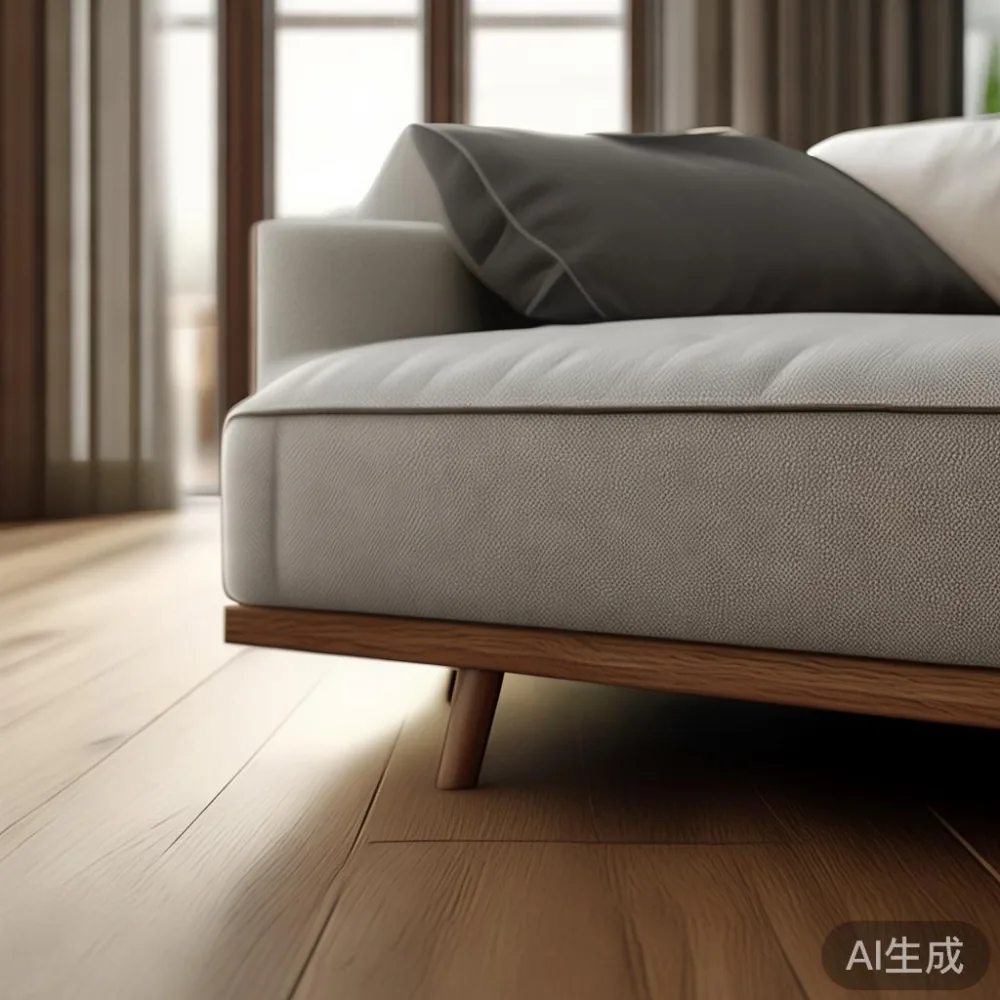
For Singapore buyers furnishing a BTO in Punggol, upgrading a resale condo in Bedok, or refreshing a landed patio in Bukit Timah, the gap between a S$1,500 dining table and a S$9,000 one rarely comes down to a single thing. It is the wood, the joinery, the finish, the origin, the warranty behind it, and how it survives the lift of a HDB block. In this guide, I will break down the real levers behind the price of solid wood pieces — including the solid wood sofa, the fabric sofa you might be pairing it with, the bed frame, the dining table, the wardrobe, the nightstand, and even the marble table on the side — so you can read a quotation the way a foreman reads a bill of quantities.
Wood Species: Where the Price Journey Begins
The single largest swing factor is the species of timber. A solid wood sofa frame built from rubberwood or ash sits in a very different league from one built from North American white oak or European walnut. Rubberwood (Hevea brasiliensis) is widely planted across Malaysia and Thailand, has a short rotation cycle of roughly 15–25 years, and is favoured by Singapore-based makers because it machines cleanly and accepts finishes well. A 2.4m rubberwood dining table top typically lands between S$900 and S$2,200 depending on thickness and edge profile.

White oak, by contrast, takes 50–80 years to mature, grows in colder climates, and is graded under stricter NHLA specifications. A 2.4m white oak dining table from a Foshan maker usually starts around S$3,800 and climbs past S$8,000 for book-matched, live-edge slabs. Walnut sits at the top of the consumer hardwood bracket — its Janka hardness of about 1,010 lbf gives it that satisfying heft, and its chocolate tone is hard to imitate. For a 1.8m bed frame in solid walnut, expect S$4,200 to S$11,000.
Then there is the engineered compromise: plywood with a real wood veneer. A 12mm plywood core topped with 0.6mm oak veneer can look indistinguishable from a solid plank on day one, but it behaves differently when the monsoon humidity in Singapore climbs past 85% RH. That is why a real solid wood dining table in a HDB without daily air-conditioning will outperform a veneered alternative after year three. If you are shopping for a fabric sofa to anchor your living room, the frame wood still matters — kiln-dried hardwood frames outlast softwood frames by a decade in our testing.
Joinery, Kiln-Drying, and the Hidden Engineering Inside
Ask any Foshan factory manager what separates a S$1,800 bed frame from a S$4,500 one, and the second answer after species is joinery. Mortise-and-tenon, dovetail, finger-joint, biscuit, dowel, metal bracket — each has a labour cost, a tool cost, and a lifespan. A traditional mortise-and-tenon joint on a nightstand, cut by hand with a chisel and shoulder plane, takes roughly 25–40 minutes per joint. The same joint, CNC-routed and hand-cleaned, takes 4–6 minutes. Both can pass a wobble test on the showroom floor, but only one will still be quiet after 200,000 open-close cycles on a wardrobe door.
Kiln-drying is the invisible hero. Properly kiln-dried timber reaches a moisture content of 8–12% before assembly; rushed air-dried timber can sit at 18–22%. In a Singapore HDB that runs the air-conditioner at 23°C with RH around 55–65%, a 20% MC board will shrink roughly 3–5% across the grain in the first year. That is enough to open a 4mm gap on a 1m wardrobe door panel. Reputable makers like MIDHILL — a Foshan solid wood specialist that has shipped container loads into Singapore since 2008 — kiln-dry to 10–12% and let boards rest for 14–28 days before machining. The labour cost shows up in the unit price, but it is the difference between a wardrobe that closes flush in 2034 and one that drags.
What is the difference between French provincial bed and modern furniture?
A French provincial bed uses carved cabriole legs, decorative cornices, low footboards, and warm honey or distressed finishes rooted in 18th-century Loire Valley craftsmanship, whereas modern furniture uses clean rectilinear lines, platform bases, exposed joinery, and matte or low-sheen finishes — the price gap comes from carving hours, ornamental hardware, and the larger timber blanks required for curved components.
To expand that: French provincial styling draws from Louis XV and Louis XVI silhouettes — scrollwork, floral motifs, shaped aprons. Producing those forms needs thicker timber sections, deeper CNC passes, and hand-sanding for every contour. Modern furniture, including American light luxury and post-modern light luxury lines you see in many Singapore condos today, prefers slab doors, 6mm reveals, recessed handles, and legs that are either fully integrated or slim 25mm steel posts. A modern 1.5m nightstand in solid ash might retail at S$650–S$1,100; a French provincial equivalent in solid mahogany with hand-carved details can run S$2,400–S$4,800. Same function, very different labour input.
Finishes, Fabrics, and How Surface Cost Compounds
Finish cost is the third lever, and it is the one most often underestimated. A three-coat NC (nitrocellulose) lacquer system on a dining table adds roughly S$180–S$280 to the build cost; a five-coat conversion varnish with hand-rubbed satin between coats can add S$450–S$700. Hardwax oils, popular in Scandinavian and Japanese-inspired lines, penetrate roughly 0.2–0.5mm into the wood and need re-oiling every 18–30 months in Singapore’s humidity — a maintenance cost worth budgeting if you skip it at purchase.
Fabric content on upholstered pieces matters just as much. A fabric sofa in Singapore typically ships with one of three cover tiers: polyester blend (60–80k Martindale rubs), performance weave (100–150k), or full-aniline leather on premium tiers. A 3-seater fabric sofa in solid ash with a performance weave cover lands between S$2,200 and S$3,800 in the MIDHILL catalogue, while the same frame in full-aniline leather sits at S$4,600–S$7,200. The wood frame is identical; the cover and foam grade drive the difference.
Foam density is the silent upsell. A standard seat cushion uses 28–32 kg/m³ high-resilience foam, which will bottom out within 4–5 years of daily use. A 38–42 kg/m³ HR foam wrapped in a down-feather envelope costs roughly 35–50% more but holds its shape past year eight. If you are choosing a fabric sofa for a family of four in a Punggol BTO, that foam spec is what determines whether your cushions look like new in 2030 or like a hammock in 2028.
Hardware, Marble, and the Quiet Detail Stack
Hardware is small in size, large in price. A soft-close hinge from a German maker like Hettich or Blum runs S$3.20–S$6.50 per hinge versus S$0.80–S$1.40 for a no-name hinge with a claimed soft-close rating. Multiply that by the 14–22 hinges on a four-door wardrobe, and you are looking at a S$60–S$110 difference per wardrobe. Drawer slides follow the same pattern: a full-extension soft-close slide runs S$18–S$32 per pair versus S$6–S$11 for a friction slide. Over a six-drawer chest, that gap exceeds S$150.
Marble inserts on dining tables, coffee tables, and side tables follow their own pricing logic. A 1.4m sintered stone top (e.g., 12mm thick) costs roughly S$380–S$620 per slab in Foshan sourcing; a natural Carrara marble equivalent at 25mm thickness costs S$900–S$1,600 per slab and weighs 92–110 kg — a real consideration when you are wheeling it into a HDB lift with a 1.1m-wide door and a 2.4m-deep car bay. A marble table on a solid wood base can be a showpiece, but the logistics of getting a 110kg slab up to the 14th floor of a Bedok block should be in your budget conversation, not an afterthought.
Shipping, GST, and the Singapore Landed Cost Equation
Once the piece is built, the Singapore landed price has its own physics. A 20ft shipping container from Foshan to Singapore holds roughly 28–32 cbm of furniture; a 40ft container holds 56–60 cbm. Sea freight from Shenzhen/Yantian to PSA ranges between US$1,800 and US$3,400 per 40ft container in 2024–2025 depending on season. Divided across 40–60 dining chairs or 25–35 dining tables, the per-piece freight is small, but crating, customs brokerage, and last-mile delivery to a Punggol HDB lift lobby add another S$80–S$220 per piece.
GST at 9% (with the planned step-up to 9.5% from January 2025 already implemented in some sectors and further adjustments through 2026) applies to the CIF value plus duty. Customs duty on wooden furniture under HS code 9403 sits at 0% for ASEAN-origin pieces, but upholstery duties on a fabric sofa can attract 0–7% depending on fabric composition and country of origin. A S$2,800 fabric sofa imported from China into Singapore lands at roughly S$3,180–S$3,360 after GST and last-mile delivery — the sticker price you see online is rarely the figure you sign for.
Then there is the lift constraint. Standard HDB passenger lifts measure 1.1m wide x 1.4m deep x 2.1m tall. A disassembled 2.4m solid wood dining table typically arrives in two halves plus a base; each half, properly packed, fits a lift with 8–12cm to spare. A pre-assembled marble table at 1.4m long will not fit standing up in a HDB lift and must be tilted, which is why many landed-cost calculators penalise pieces over 1.3m in their longest single dimension. If a brand does not pre-quote lift access, ask before paying.
Warranty, Refinishing, and the Long-Term Cost Curve
The cheapest furniture is rarely the cheapest furniture. A S$1,200 bed frame with a one-year warranty that fails at month 14 costs S$600/year over its working life if replaced twice across a decade. A S$3,200 bed frame with a 10-year structural warranty and lifetime refinishing access costs S$320/year — and you still own a serviceable piece at year 10. The math flips even if the upfront feels heavier.
Refinishing is the silent lever. Solid wood, by virtue of being solid, can be sanded back and re-finished 4–6 times across a 60–80 year lifespan if the original board was at least 25–30mm thick. A dining table bought at S$4,500 and refinished twice at S$380–S$520 each time has a 40-year amortisation of S$135/year, including two refreshes. A S$1,200 veneered table that delaminates in year six has zero recovery value. This is why a maker like MIDHILL — which offers 10-year structural warranty, lifetime refinishing touch-ups, and a 14-day return window on stocked pieces — can justify a higher unit price: the lifecycle cost per year of ownership is lower, not higher.
For Singapore buyers, free shipping thresholds matter at the margin. Many Foshan-direct sellers, MIDHILL included, waive freight on orders above US$350 (about S$475 at current rates), so consolidating a dining table, a bed frame, and a fabric sofa into one container drop typically saves S$180–S$320 in last-mile fees. A marble table and four nightstands added to that container push per-piece delivery down to under S$20 apiece.
How Should I Read a Quotation From a Foshan Maker?
Three checks will tell you most of what you need to know. First, ask for the wood species in both English and the Latin/scientific name — “oak” without “Quercus alba” or “Quercus robur” specified can mean anything from rubberwood to white oak to a stamped veneer. Second, ask for moisture content at the point of crating, expressed as a percentage — anything above 14% is a red flag for Singapore. Third, ask for a written warranty that names structural coverage in years and refinishing in either years or service events.
If the answer on all three is precise — “Quercus alba, kiln-dried to 10–12% MC, 10-year structural warranty, lifetime refinishing on manufacturing defects” — you are looking at a serious maker with a clear cost stack behind the price. If the answer is fuzzy, the price is fuzzy for a reason. As one Tampines warehouse manager told me when I asked why two seemingly identical dining tables had a S$2,300 price gap, “The wood is the same on day one. The wood is not the same on day 730.”
Where Does the Modern fabric missing parts Question Fit?
It does not — and that is the warning. If you are shopping online and see a listing for a Modern fabric missing parts bundle, or a discounted fabric sofa described as “missing parts,” walk past. Missing hardware packs, missing cushions, missing instruction manuals, and “slightly dented” frames are how reputable makers absorb warehouse damage — they refurbish and resell through outlet channels, not through random marketplace listings. A genuine modern fabric sofa from a Foshan specialist shipping into Singapore will arrive with a full hardware kit, an exploded assembly diagram, and the option to claim any genuinely missing component within the warranty window. If a deal needs an apology before delivery, the deal is not a deal.