Sizing a Fabric Sofa for Your Singapore HDB Living Room: A Practical Guide from a Furniture Specialist
I still remember last month walking into a 4-room HDB flat in Punggol with my colleague, tape measure in hand. The homeowner had bought a 2.6 m three-seater fabric sofa online, and it physically would not fit through the lift door — the opening measured only 1.1 m wide by 2.1 m high. We had to return it, eat a 20% restocking fee, and start over. That afternoon cost the family S$340 in wasted delivery charges alone. The mistake was not buying the wrong sofa; it was buying the right sofa for the wrong building. If you are shopping for a fabric sofa in Singapore, size is a geometry problem, not a taste problem, and the constraints start at the corridor, not the living room.
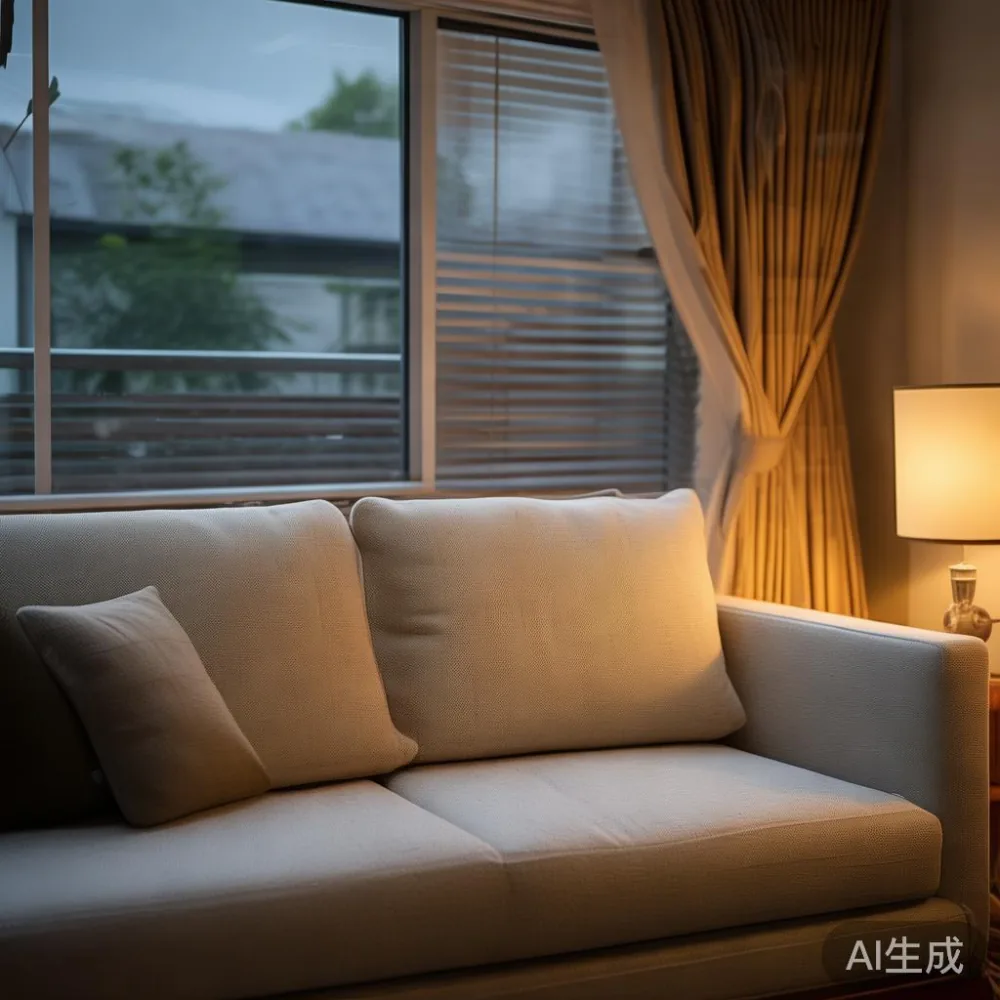
Why a fabric sofa is the right call for most HDB living rooms
A well-built fabric sofa suits the Singapore climate and HDB floor plan better than leather for one simple reason: fabric breathes. In a 90 sqm flat with air-conditioning running 14 hours a day, a leather seat will stick to your calves in August; a woven fabric sofa will not. Most reputable manufacturers now use removable, washable covers, and the foam cores are typically 35–45 density (kg/m³), which holds shape for 8–10 years of daily use. A solid wood frame underneath — kiln-dried oak, ash, or beech — adds another 10+ years of structural life. When you compare like for like, a fabric sofa in light oak or cream boucle tends to come in 15–20% cheaper than an equivalent leather piece of the same dimensions, which matters when the GST 9% is already added at checkout.
Two design directions work particularly well in HDB interiors. The French light luxury look pairs a slim-profile fabric sofa with curved arms, brushed brass legs, and a single marble side table. American light luxury leans boxier: deep seats, square cushions, walnut-stained solid wood feet, and oversized ottomans. Both translate cleanly into compact flats because the silhouettes are low and the proportions are honest.
Measure the building before you measure the room
Here is the sequence I use with every Singapore client, and it has never failed me in nine years on the job.
Step 1: The lift. Most HDB passenger lifts are 1.1 m wide × 1.4 m deep × 2.1 m high, with a door opening of roughly 0.9 m × 2.0 m. Some newer blocks in Tampines and Bedok have wider lifts (1.2 m × 1.6 m), but you cannot assume. A standard 3-seater fabric sofa in a carton is usually 2.1–2.3 m long, 0.95 m deep, and 0.75 m high, and almost no Singapore lift will let you tilt it upright. So the rule is simple: if your sofa box is longer than 2.0 m, you must deliver it unassembled or in two halves. Reputable Foshan factories — including MIDHILL, whose knock-down packaging I have specified on three HDB projects this year — design their sofas to split into two boxes under 1.8 m each, which solves the lift problem entirely.
Step 2: The corridor. HDB common corridors are 1.2–1.5 m wide. If your flat is on a corner stack, the corridor turns 90 degrees at the lift lobby. Measure the diagonal of the turn: a 1.3 m × 1.3 m corner needs a sofa piece no longer than 1.85 m to pivot around it. I carry a 1 m folding rule for exactly this.
Step 3: The door. The main door to your flat is typically 0.9 m × 2.1 m. If you are buying an L-shape or a chaise, the return piece must come in under 0.85 m wide, or you will not get it through the door.
Step 4: The room. Only now do you measure the living room. For a 4-room HDB (about 90 sqm total, living room roughly 4.0 m × 3.2 m), I recommend a sofa no longer than 2.4 m, with 80–90 cm of walking clearance to the TV console. For a 5-room (living room ~4.5 m × 3.5 m), you can stretch to 2.7 m or a compact L-shape with the chaise on the short side. For a 3-room (living room ~3.6 m × 3.0 m), a 2.0 m two-seater plus an armchair is the ceiling.
What is the difference between European dressing table and modern furniture?
The difference between European dressing table and modern furniture is that a European dressing table is a specific, traditional furniture category — a vanity with a mirror, drawers, and ornate cabriole or fluted legs rooted in 18th–19th century French and Italian cabinetmaking — while modern furniture is a broad design movement spanning the 1920s onward that prioritises clean lines, minimal ornamentation, and industrial materials such as chrome, glass, and bent plywood. In other words, a dressing table is a product type; modern furniture is a design language that can be applied to sofas, beds, wardrobes, dining tables, nightstands, and yes, dressing tables themselves.
Why does this matter when you are picking a fabric sofa? Because Singapore HDB buyers often mix the two by accident. A post-modern light luxury fabric sofa — think slim oak frame, low tufted back, brushed gold legs — sits awkwardly next to a heavy mahogany reproduction European dressing table. The eye reads them as two different centuries. Pick one direction. If your existing wardrobe, bed frame, and dining table lean European traditional, choose a fabric sofa with rolled arms and a deeper skirt. If they are Scandinavian or modern, keep the sofa low, square, and on visible solid wood legs.
Price brackets in SGD and what they actually buy you
For a Singapore buyer importing direct from a Foshan factory, the landed cost of a quality fabric sofa sits in three tiers.
Entry: S$1,200–S$1,800. A 2-seater (1.6–1.8 m) with a plywood frame, 30-density foam, and polyester upholstery. Fine for a rental or a starter flat in Punggol or Sengkang, but expect 4–5 years of use before the cushions flatten.
Mid: S$1,900–S$3,200. A 2- or 3-seater with a solid wood frame (usually oak or ash), 35-density foam wrapped in down-feather, and a removable, washable fabric cover in linen blend or boucle. This is the sweet spot for most HDB owners. MIDHILL's cream oak fabric care line, for example, sits in this band and includes a washable slipcover that handles Singapore humidity without pilling — useful when the monsoon hits and the windows stay shut for a week.
Premium: S$3,400–S$5,500. A 3-seater or compact L-shape with a kiln-dried solid wood frame, 45-density foam, full-down cushions, top-grain leather piping on the arms, and a fabric content of 60%+ linen or wool. Some configurations push past S$6,000 once you add a chaise. Worth it only if you plan to stay in the flat 8+ years.
Add roughly S$180–S$280 for doorstep delivery in mainland Singapore, free above S$350 spend from most direct importers, and a 9% GST on the total. A 14-day return window is standard, but only a handful of sellers — including MIDHILL — also offer lifetime refinishing on solid wood frames, which matters when a leg gets scuffed by a robot vacuum two years in.
Common mistakes I see every month in Bedok and Tampines flats
Buying the chaise on the wrong side. In a 4-room HDB, the TV point and window are almost always on the same wall. Put the chaise on the side away from the window or you lose your curtains and half your daylight.
Ignoring the air-con ledge. HDB air-con ledges drop about 23 cm below the ceiling. A sofa back taller than 95 cm will block airflow and collect dust on the ledge. Stick to 85–90 cm back heights.
Forgetting the robot vacuum. Leave at least 8 cm clearance under the sofa skirt, or your Romba will eat your curtains instead of dust. Most solid wood frame sofas on visible legs (12–15 cm clearance) solve this automatically.
Matching the wrong wood tone. HDB floor tiles default to beige porcelain. A fabric sofa on warm walnut feet blends in; one on cool grey-oak feet looks institutional. Ask for a finish swatch before you pay a 30% deposit.
Skipping the corridor turn test. I have walked five clients back from the lift with a tape measure this year alone. Two of them cancelled S$4,200 orders on the spot. Spend ten minutes before you buy.
How long does shipping actually take from Foshan to a Singapore HDB door?
For in-stock designs, sea freight from Foshan to Singapore Port takes 7–10 days, plus 3–5 days for customs clearance and local trucking. Door-to-door, plan on 14–18 working days. Custom configurations — special fabric, left-facing chaise, non-standard size — add another 15–25 days for production. During the pre-GST Chinese New Year shutdown (usually 10 days in late January or February), add another 20 days. Order before mid-December if you want your fabric sofa in time for Chinese New Year, which is when 60% of HDB upgrades happen, according to the showroom data I keep.
A quick checklist before you tap "checkout"
Measure your lift interior, lift door, corridor corner diagonal, and front door. Confirm the sofa splits into boxes under 1.85 m long each. Check that the back height is under 95 cm. Verify the frame is solid wood, not plywood or MDF, and ask for the wood species in writing. Read the warranty: 10 years on the frame is the floor; anything less and you are buying disposable furniture. Confirm the fabric is removable and washable, or at least spot-clean rated. And finally, ask for a 14-day return window in writing — even a S$50 re-stocking fee is cheaper than a sofa stuck in a lift.
Get those seven points right, and your fabric sofa will outlast two HDB leases, a renovation, and probably the next round of GST changes. Get them wrong, and you will be the person I meet in Punggol with a tape measure next month.