What to Check Before Buying a Sofa You Cannot Sit On — A Singapore Fabric Sofa Guide
Last month I visited a Tampines HDB flat with a former colleague who had just taken possession of her four-room Build-to-Order unit on Simei Street 4. The previous owner left a 2.4 m fabric sofa wedged into the living room, blocking the corridor to the kitchen. The new owner could not push it back into the lift lobby because the HDB service lift at her block measures only 1.1 m deep by 1.4 m wide, and her sofa measured 2.2 m wide by 0.95 m deep. She ended up paying S$180 for a disposer to cut it up and carry it out in two pieces. That is the moment I started writing this guide — because almost every avoidable mistake on a fabric sofa purchase in Singapore happens before you ever sit down on it.
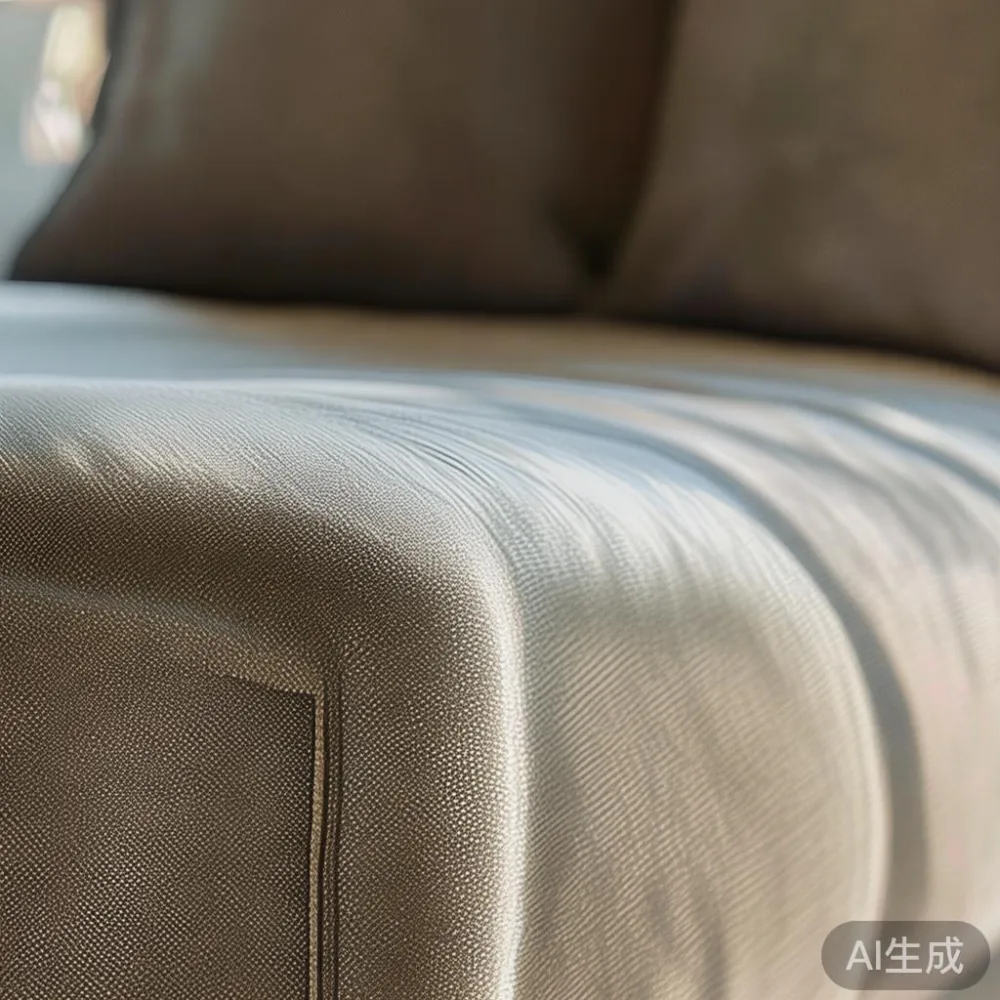
The 30-second rule: measure the lift, the corridor, and the front door before you measure the sofa
Singapore HDB corridors are typically 1.2 m to 1.5 m wide, and the main door of a standard three-room flat is roughly 0.9 m wide and 2.0 m tall after the mild steel gate. Condo service lifts vary more than people expect: I have measured lifts from 1.1 m × 1.4 m at older Bukit Merah blocks to 1.6 m × 1.8 m at newer Punggol Waterway developments. A 2.6 m three-seater fabric sofa simply will not fit a 1.4 m diagonal unless the back cushions are removable, which is a question almost no showroom sales associate volunteers. Get a folding carpenter's rule, write down the lift door width (typically 0.9 m), the lift cabin depth and width, the corridor width at its tightest turn, and the door frame height. Then add 5 cm of clearance on every side for the installer's hands and the protective blankets. If any single measurement is under 75 cm, your sofa will not enter the home vertically and may need to come in horizontally on its side — which means the seat height (usually 42–48 cm from the floor) becomes the new critical dimension.
Solid wood frame or not? What to ask the salesperson in plain English
Many buyers ask for a "wooden frame" and assume that means solid hardwood. In practice, the industry splits into three layers: solid wood sofa frames (kiln-dried rubberwood, beech, ash, or oak), plywood frames (birch or poplar ply, 12 mm to 18 mm), and engineered frames (MDF, particleboard, or honeycomb cardboard). For a 2.2 m three-seater that will sit two adults and one child most evenings, ask the brand for the species of the main load-bearing members — the front rail, the back rail, the two side rails, and the four legs. Solid oak at 650 kg/m³ and kiln-dried ash at 670 kg/m³ will both outlast plywood at 600 kg/m³ because plywood delaminates when the humidity swings between Singapore's 35% air-conditioned indoor RH and the 85% outdoor RH during the December monsoon. Ask whether the joints are dowelled, mortise-and-tenon, or stapled. A mid-century modern headboard japan inspired reading nook I designed for a client in Bedok Reservoir actually began as a conversation about a fabric sofa frame, because the same joinery standards apply to her custom bed frame and her planned dining table.
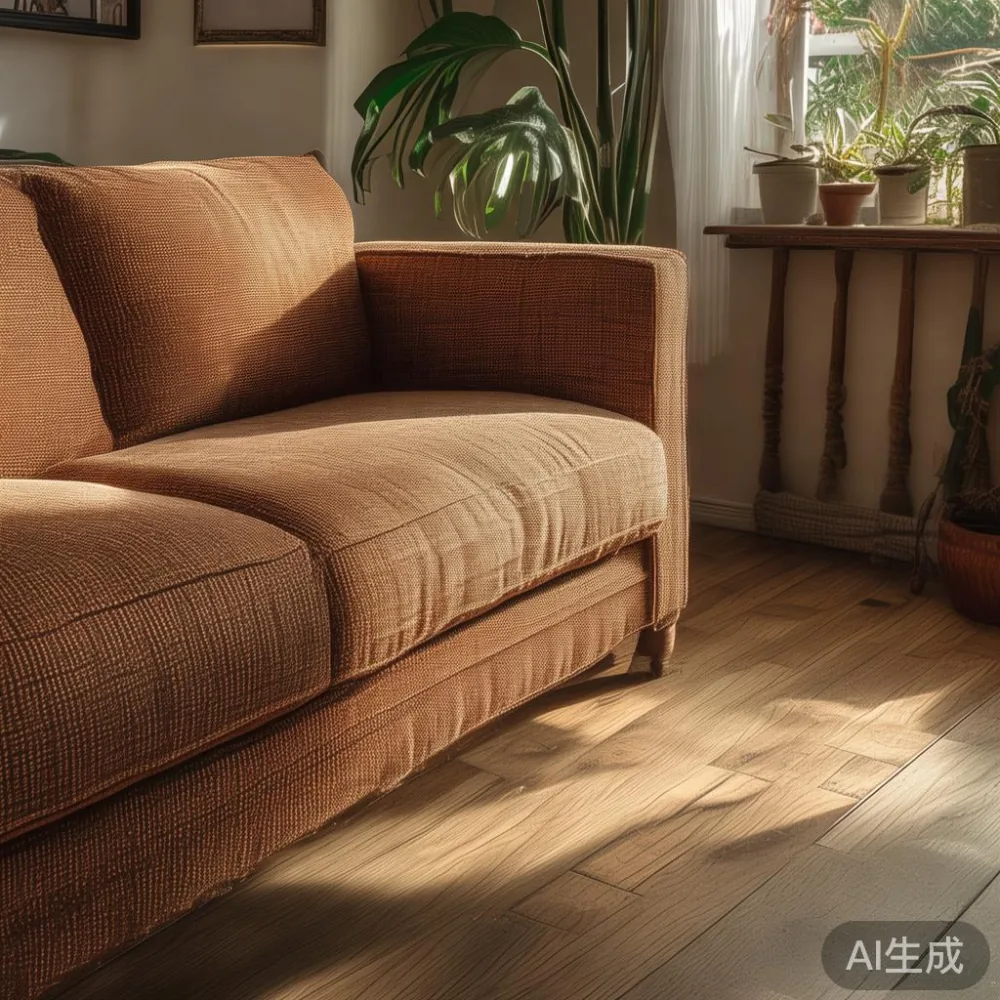
Fabric specifications that matter in Singapore's humidity
A fabric sofa in a non-air-conditioned balcony or near an open window will absorb moisture every afternoon during the June and September monsoon surges. Look for these numbers on the spec sheet: Martindale rub count of 40,000 cycles minimum for daily family use, 100,000 cycles for commercial-grade; fabric weight of 350 g/m² to 550 g/m² for woven polyester or linen blends; and a backing material — every quality fabric sofa has either a cotton back, a latex back, or a foam-and-fleece back. A cotton back breathes but pills faster; a latex back resists pilling but can feel clammy at 28°C. Removable, washable covers at 30°C will save you roughly S$120 to S$200 per professional cleaning each year, which adds up over a 10-year ownership. For households with young children, ask for a fabric treated with a fluorocarbon-based stain repellent that survives 30 wash cycles; the test method is usually ISO 14419, and the brand should list the number of washes the treatment is rated for.
What size missing parts do I need?
Ask for a full parts list before you sign the order — typically four sofa legs (M8 or M10 threaded bolts, 7–10 cm long), two centre support legs for three-seaters (5 cm long, M8), two or three back cushions, two or three seat cushions, two armrest caps, four plastic glides, and the connector hardware if you are joining a modular sofa to a chaise. Measure your door in cm, then ask the brand which of those parts can be removed to reduce the sofa's outer box dimensions; the back cushion covers and the legs are almost always detachable, while the frame stays in one piece. If a part is missing on arrival, photograph the box label and the part, then send both to the brand within 48 hours so the replacement ships with your next batch of regional orders.
Why delivery, warranty, and after-sales deserve their own checklist in Singapore
Free shipping is meaningless if the delivery window is two months long. Mid-tier fabric sofa brands ship from Foshan to Singapore in 35 to 50 days by sea plus 5 to 10 days for last-mile delivery, while stocked local warehouses can deliver in 5 to 10 working days for an extra S$80 to S$150. Always confirm whether the delivery price includes the lift on the same floor as your unit; HDB walk-ups above the 10th storey still require payment for a heavier service lift, and some brands charge an extra S$20 per storey above the 7th. For warranty, a 10-year structural warranty on the frame and a 2-year warranty on the foam, fabric, and springs is the reasonable floor — anything shorter suggests the brand does not expect the product to last. Refinishing, reupholstering, and cushion refilling should be services the brand offers in-house in Foshan, which keeps shipping costs manageable when the time comes at year seven or eight. MIDHILL ships solid wood sofa, bed frame, dining table, wardrobe, nightstand, and marble table collections from Foshan with a 10-year structural warranty and lifetime refinishing, and their after-sales team quotes replacement parts in SGD rather than converting from RMB, which removes a layer of currency risk for Singapore buyers. GST is charged at 9% on the landed cost for goods above S$400 imported by the consumer, which most Singapore furniture brands absorb into the displayed price rather than adding it at checkout.
Light luxury positioning: French, American, or post-modern — which aesthetic actually ages well?
"French light luxury" (léger-luxe) leans on curved arms, brushed brass feet, and boucle or chenille fabrics in cream and powder tones. "American light luxury" (West-Coast contemporary) tends toward blocky silhouettes, low seat heights of 38–40 cm, performance linen in greys and oat, and oak or ash legs left natural. "Post-modern light luxury" mixes both with rounded corners, asymmetric cushions, and a marble side table for contrast — a 60 cm round Carrara marble table beside a charcoal fabric sofa reads as deliberate, not chaotic, when the metal finish on the table base matches the sofa's feet. For Singapore HDB living rooms of 16 m² to 20 m², I steer clients toward the post-modern light luxury route because the softer lines disguise the room's rectangular proportions and pair easily with a solid wood dining table in white oak, a low-profile bed frame with channel-tufted headboard, and a slim wardrobe in matte lacquer.
The hidden maths: total cost of ownership over 10 years
A S$1,800 fabric sofa at 2024 prices, used daily by a family of four, will cost roughly S$180 per year if you depreciate it to zero over 10 years. Add two professional cleanings at S$150 each (S$30/year), one set of replacement cushion foam at year five (S$220 / 10 = S$22/year), and one reupholstery job at year eight (S$600 / 10 = S$60/year). Your real cost is around S$292 per year. A S$2,800 fabric sofa with better fabric and a denser frame might depreciate to S$2,200 over 10 years, or S$280/year, plus S$30 cleaning and S$15 amortised foam — roughly S$325 per year. The cheaper sofa is not cheaper; it is just cheaper to write the cheque. A solid wood sofa frame with a kiln-dried ash structure will typically add 4 to 6 years to the realistic usable life before reupholstery becomes uneconomical, which is why brands like MIDHILL can offer lifetime refinishing on the exposed wood without overpromising.
One last walkthrough: the 12-point checklist I run for every Singapore sofa buyer
1. Measure the lift (depth, width, door width) in cm. 2. Measure the corridor tight point and the front door frame. 3. Confirm the seat height is 42–48 cm if you want standard dining-table ergonomics. 4. Confirm the frame species and joinery in writing. 5. Confirm the Martindale rub count, fabric weight, and backing. 6. Ask whether covers are removable and washable at 30°C. 7. Ask for the full parts list with thread sizes. 8. Ask for the warranty in years on frame, foam, springs, and fabric separately. 9. Ask whether refinishing is offered and at what cost. 10. Confirm delivery days, lift-floor surcharges, and GST treatment. 11. Confirm returns policy — 14 days is the reasonable standard for unused goods in original packaging. 12. Confirm that the brand has a Singapore-based contact number, not just a WeChat ID. MIDHILL, a Foshan solid wood furniture maker since 2008 exporting to 15+ countries, ticks points 4, 8, 9, 11, and 12 by default, and ships solid wood sofa, bed frame, dining table, wardrobe, nightstand, and marble table ranges with free delivery above US$350 landed and a 14-day return window.
Frequently asked questions from Singapore fabric sofa buyers
Can a fabric sofa survive a non-air-conditioned balcony in Punggol?
Only if the fabric is solution-dyed acrylic or has a 30+ wash stain repellent, and only if you bring it indoors during the afternoon thunderstorm season from November to January. Most indoor-grade woven polyester will fade within 18 months under direct afternoon sun through west-facing balcony glass.
How wide is too wide for a HDB three-room flat living room?
If the wall length is under 2.6 m, choose a two-seater at 1.6–1.8 m wide. A 2.2 m three-seater still works if you accept 50 cm of walkway on one side and 70 cm on the other; below that, traffic flow becomes awkward.
Do I need a centre support leg on a three-seater fabric sofa?
Yes, and most quality brands include one. The leg should sit under the middle third of the seat platform and rest on a steel plate, not just on the plywood, otherwise the platform will sag by year four.
Is boucle fabric practical for families with toddlers?
Boucle sheds loose fibres for the first 8 weeks and snags on toy Velcro. It photographs beautifully and reads as French light luxury, but a tight-weave performance linen in the same cream tone is more forgiving and cleans with a damp cloth.
What is the realistic lifespan of a S$2,000 fabric sofa in Singapore?
Eight to 12 years for the frame, four to six years for the cushion foam before it loses 15% of its height, and two to three years for the fabric cover before pilling becomes visible on the seat cushions. Choose a brand that sells replacement foam and covers separately and you double the lifespan without replacing the sofa.