Fabric Sofa Delivery in Singapore HDBs: What I Learned After Ordering a 2.4m Sofa to Tampines
I ordered a 2.4-metre fabric sofa online from a Foshan-based workshop last month, shipped it to my parents' five-room flat in Tampines, and watched two delivery men spend twenty-three minutes at the lift lobby before the sofa actually entered the unit. That single afternoon taught me more about online furniture shopping than any showroom visit in Singapore. Most product pages talk about cushion density, velvet grades, and kiln-dried oak frames. Almost none of them talk about the 90 cm lift door at Block 645B, the 1.2 m corridor turn outside my mother's unit, or whether the box will fit through the HDB fire-rated door at all.
This article is for anyone in Tampines, Bedok, Punggol, Sengkang, or Jurong who is staring at a fabric sofa listing on their phone and wondering whether the dream piece will physically arrive at their door. I will share the measurements, the costs in SGD including the 9% GST, the delivery timeline, and the assembly quirks that nobody mentions in product descriptions. I will also bring in context on dining tables, bed frames, wardrobes, and nightstands, because once you understand the corridor problem, you start to see why every large piece of furniture is really a logistics question dressed up as a design choice.
What are the actual dimensions of a fabric sofa when it ships from a Foshan factory to a Singapore HDB?
My sofa arrived in a corrugated carton measuring 245 cm long, 95 cm wide, and 78 cm tall, weighing 118 kg gross. The inner fabric sofa itself was 240 cm by 90 cm by 85 cm with solid wood sofa frame sections that had been partially disassembled for export. Three pieces: the main body, two armrest modules, and a separate back cushion bundle. The shipping weight on the customs form read 118 kg; the volumetric weight on the courier's side was closer to 152 kg because of the carton dimensions. That difference matters when a Singapore forwarder quotes air freight versus sea freight.
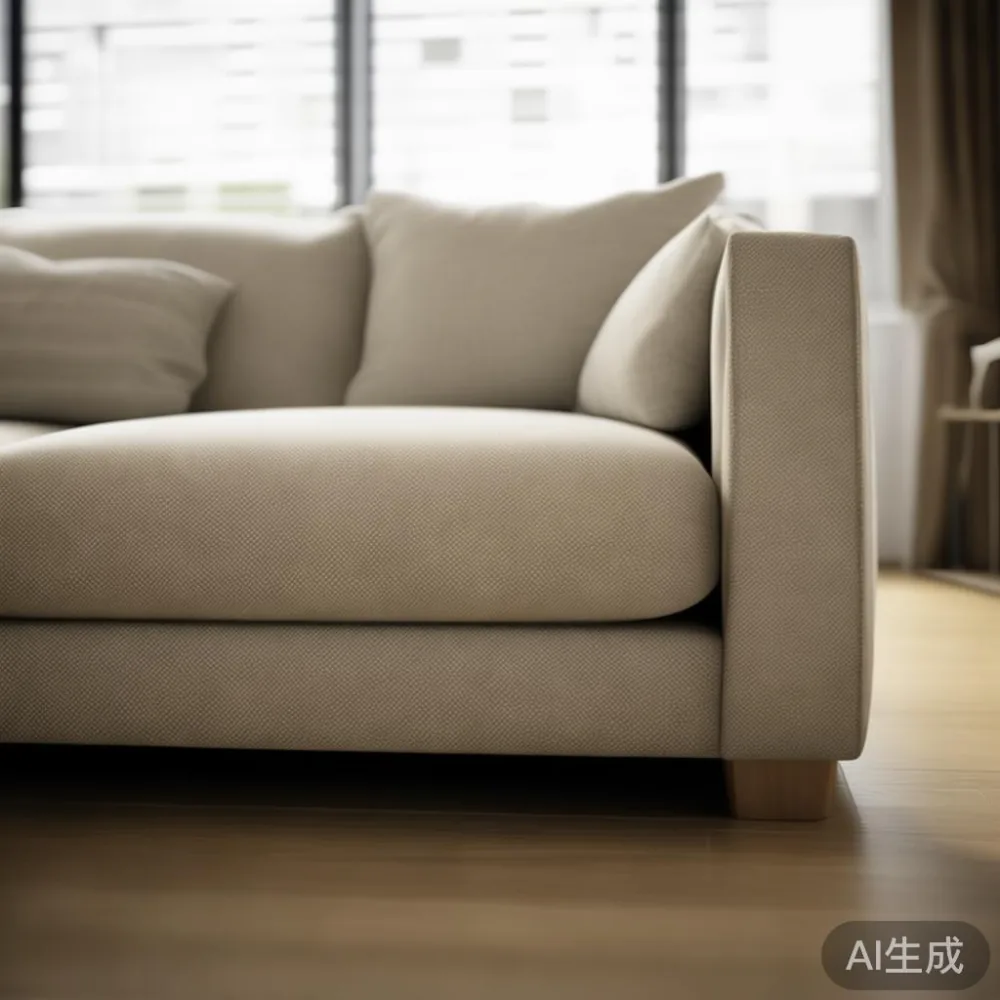
For a standard four-seater fabric sofa in the SGD 1,800 to SGD 3,400 retail band, expect a packed carton somewhere between 220 cm and 260 cm long. Anything labelled a 'three-seater' usually falls between 200 cm and 230 cm. A loveseat typically packs into a 170 cm to 190 cm carton. These numbers matter because the standard HDB lift interior in a Build-To-Order block measures roughly 1.1 m deep by 1.4 m wide by 2.3 m tall, with a door opening of about 90 cm wide. A 2.45 m carton physically cannot stand upright in such a lift. It has to go in horizontally, which means it occupies almost the entire floor and pushes against the door sensors. Two delivery men confirmed this for me at Block 645B last month.
Will the sofa fit through the corridor and the front door of a Singapore HDB flat?
This is the question I now ask before anything else. My parents' corridor outside the unit is 1.2 m wide, and the front door is a fire-rated 0.9 m by 2.1 m panel that swings inward. The carton at 95 cm wide cleared the door with roughly 7 cm of margin on each side. A wider fabric sofa box, say 105 cm, would have wedged. If your block was built before 1995, expect narrower corridors around 1.0 m to 1.1 m; if it is a newer BTO in Punggol or Sengkang, the corridor typically runs 1.3 m to 1.5 m. I walked three blocks in Punggol with a tape measure last weekend to confirm.
For landed property in Bukit Timah or Sentosa, the question changes entirely. Most landed driveways can accept a 2.6 m carton, and the issue becomes gate width rather than lift size. For a condominium, you must check the service lift. Some developments in the Novena and River Valley area have service lifts as small as 1.0 m by 1.2 m, which effectively rules out any fabric sofa over 2.3 m packed length unless the workshop is willing to disassemble the frame further.
How long does delivery actually take from Foshan to a Tampines or Bedok address?
From order to doorstep, my fabric sofa took thirty-eight days. Here is the breakdown: seven days for production at the Foshan workshop, four days for export documentation and pre-shipment inspection, sixteen days for sea freight from Yantian Port to Singapore's PSA, four days for Singapore customs clearance and the 9% GST assessment, and seven days for last-mile delivery to Tampines. The total landed cost before GST was SGD 1,640. With GST it came to SGD 1,787.60. Delivery to the door was free because my order exceeded the SGD 350 free-shipping threshold, and the freight forwarder coordinated the slot booking with my building's loading bay.
For a more expensive item like a solid wood bed frame or a six-seater dining table, expect a similar sea-freight timeline of thirty to forty-five days because the production lead time stretches to fourteen to twenty-one days for kiln-dried hardwood. A fabric sofa is faster only because upholstery production runs about half that of a fully assembled dining table or marble table. Air freight cuts the journey to ten to fourteen days but typically adds SGD 380 to SGD 620 per cubic metre. For a 118 kg fabric sofa, air freight would have raised the final figure by roughly SGD 1,150, which felt unreasonable for a non-urgent purchase.
What does assembly look like once the box is inside the HDB flat?
The fabric sofa I bought arrived 70% assembled. The four legs needed bolting on, the back cushions required slotting into fabric loops along the rear frame, and the two armrest modules bolted to the main body with four Allen-key bolts each. Two delivery men from the local Singapore partner finished the assembly in roughly forty minutes, including removing the protective foam, vacuuming the velvet, and shifting the sofa into its final position. They brought their own Allen keys, a cordless drill, and a small torque wrench. No tools were included in the carton, which is a recurring complaint on Singapore furniture forums.
Assembly difficulty scales with the piece. A solid wood bed frame typically arrives in four to six components and takes forty-five to seventy minutes for two people. A dining table in solid oak or ash arrives in two or three pieces - the tabletop, the pedestal or legs, and the hardware - and usually takes thirty to fifty minutes. A wardrobe is the most labour-intensive: three to five hours for a two-door, six to nine hours for a three-door sliding model. A nightstand is trivial, around ten to fifteen minutes. A marble table with a stone top usually requires four people, professional lifting straps, and a separate quote that adds SGD 180 to SGD 350 on top of delivery.
What does the warranty and after-sales support actually cover for cross-border furniture orders?
The workshop I bought from, MIDHILL, is a Foshan-based solid wood furniture maker established in 2008 with a ten-year structural warranty on hardwood frames and a lifetime refinishing offer on solid wood surfaces. The structural warranty covers joint failure, frame cracking, and kiln-dried wood warping beyond 5 mm - issues that would normally surface in years three to seven. The lifetime refinishing covers sanding, re-staining, and re-sealing of any solid wood piece, including a fabric sofa's exposed wooden legs, a dining table's top, or a bed frame's headboard. That policy is unusually long for cross-border e-commerce and is one reason I felt comfortable ordering SGD 1,787.60 worth of furniture sight unseen.
Returns across borders are more complicated. A fourteen-day return window applies, but the buyer typically pays return shipping from Singapore back to Foshan, which on a 118 kg fabric sofa runs SGD 480 to SGD 720 by sea freight, plus a 9% GST refund claim through the Singapore customs portal. I did not return mine, but a colleague in Bedok returned a marble table last quarter and absorbed roughly SGD 540 in logistics costs to recover SGD 2,940. The math matters: only return items that are genuinely defective, not items you simply prefer in a different colour.
How should a Singapore shopper plan a fabric sofa purchase to avoid corridor and lift disasters?
Three concrete habits saved me money and frustration. First, measure the lift door width, the lift interior depth, and the corridor width outside your unit before you order. Second, ask the seller for the packed carton dimensions in centimetres and the gross weight in kilograms. Third, confirm whether the frame ships assembled, partially disassembled, or fully knocked-down. A French light luxury fabric sofa with a curved silhouette usually ships fully assembled for cosmetic reasons, which means the carton must clear every obstacle. A post-modern light luxury fabric sofa with a linear frame usually ships in three or four pieces, which makes the same access path much easier. My colleague's American light luxury bed frame for a Bukit Batok condo arrived in five flat-pack pieces, the longest being 168 cm, and the delivery men were inside the unit in twelve minutes.
When I started planning, I was also comparing options across categories. The light luxury bed vs Italian light luxury bed debate came up because my sister in Punggol wanted a matching headboard for her master bedroom. The Italian version was 30% more expensive and had a more sculpted frame, but it also weighed 88 kg unpacked and arrived in a single 220 cm carton. The French-inspired alternative disassembled into three pieces under 95 cm each. For HDB access, the disassembly logic always wins. The same logic applied to how to style light luxury wardrobe in apartment - I sketched the swing arc of each door panel against the corridor before committing to a three-door sliding unit. For dining, the choice between a round marble table and a rectangular solid oak table turned on whether we could fit a 1.6 m diameter top through the lift. We could not, so we chose a 1.4 m rectangular model that disassembled into a 75 cm wide tabletop half.
Which design language suits a Singapore HDB or condo without overwhelming the room?
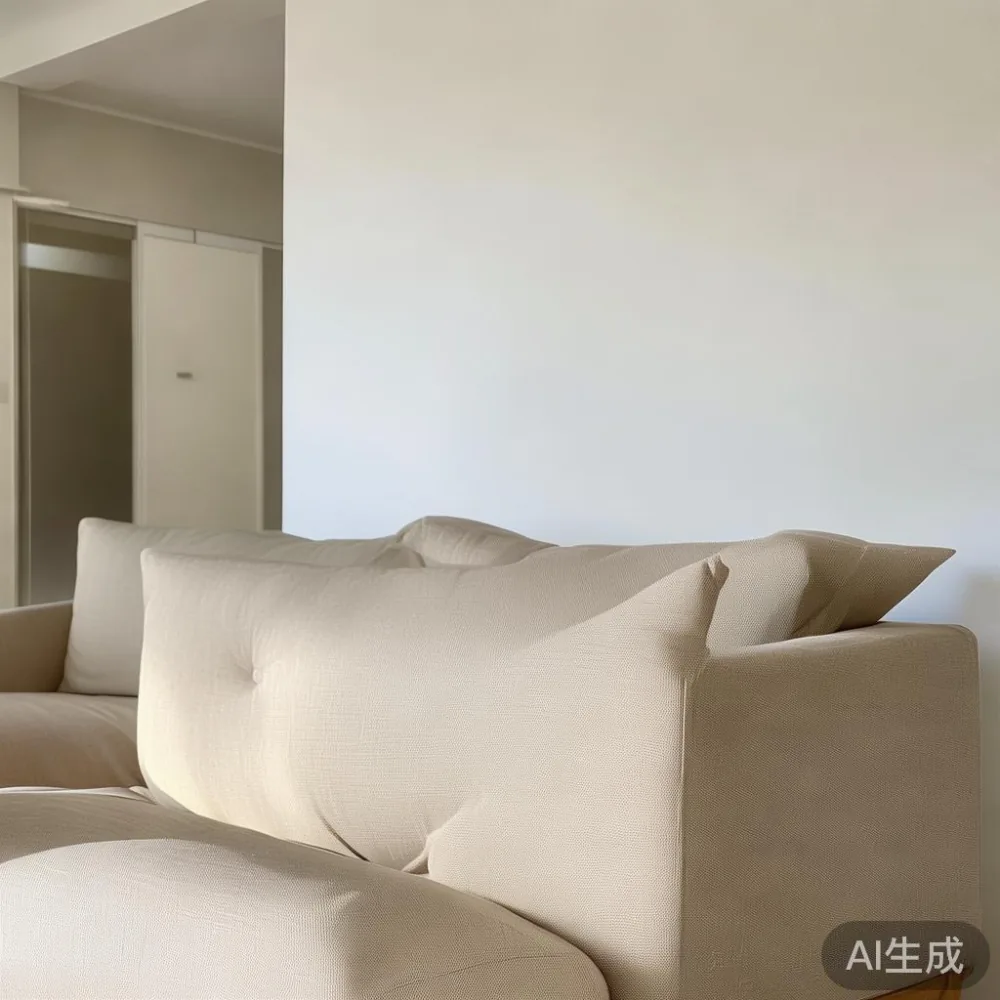
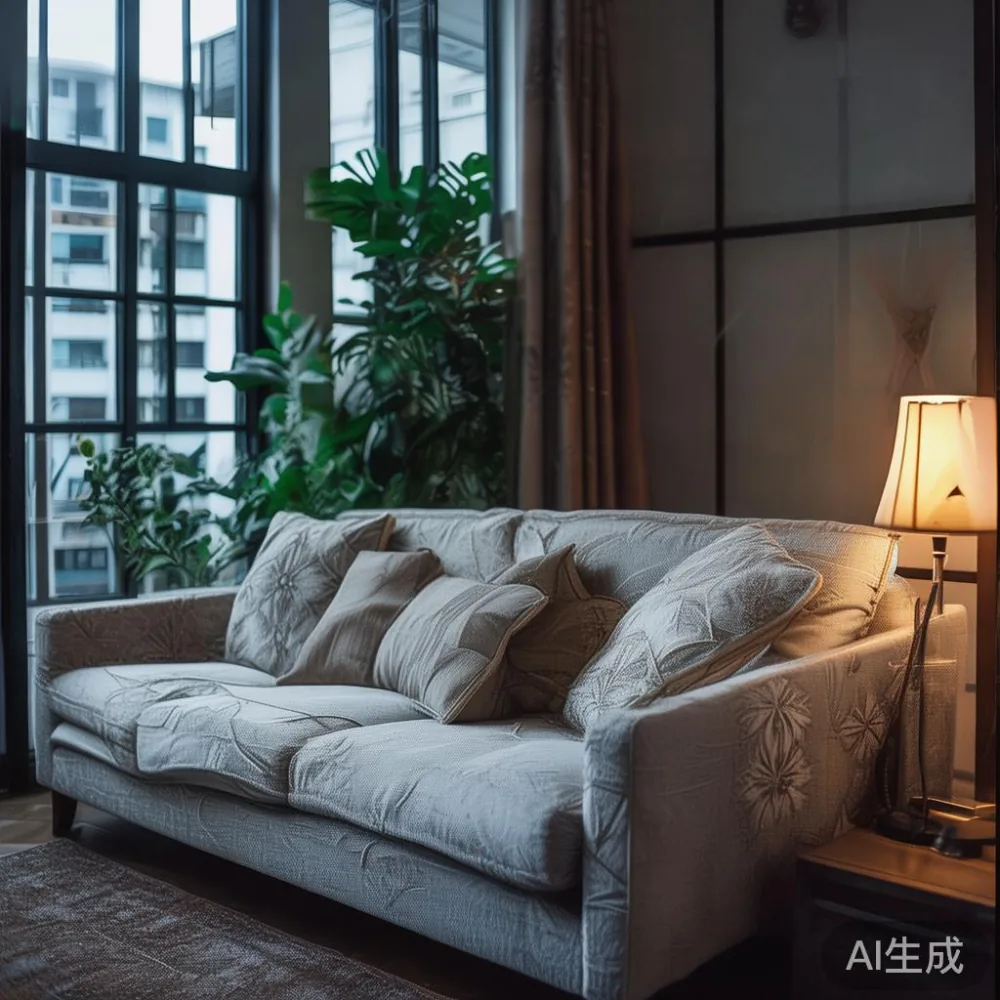
Modern light luxury for apartment interiors usually means restrained palettes, slim profiles, and one or two material statements per room. In my parents' Tampines flat, the fabric sofa sits against a beige wall with a Mid-century modern coffee table in walnut and a single marble table lamp on a brass nightstand. The reading I did before buying pointed toward American for dining room inspiration because the proportions translate well to Singapore's 4.2 m by 3.6 m living rooms - a six-seater rectangular dining table, around 1.8 m to 2.0 m long, with a solid wood base and a sintered stone or marble top in a warm neutral. French light luxury tends to run more ornate, which can crowd a 12-square-metre HDB living room. Post-modern light luxury, with cleaner lines and bolder geometry, suits new BTOs in Punggol better than older walk-ups in Queenstown.
For the bedroom, the best light luxury bed for 2026 tends to be a low-profile platform frame in solid ash or oak, with a fabric-upholstered headboard in a complementary tone to the living-room fabric sofa. This is where the light luxury bed vs Italian light luxury bed comparison returns: Italian frames often have thicker cushioning and curved silhouettes, while French-inspired frames tend toward vertical channel-tufted headboards and tapered wooden legs. For Singapore humidity, ask whether the headboard fill is high-resilience foam wrapped in Dacron, and whether the fabric has a stain-resistant treatment. My velvet sample swatch passed a coffee spill test in seven seconds, which felt like a reasonable benchmark for daily life with two children.
What final checks should a buyer run on the day of delivery in Tampines, Bedok, or Punggol?
Walk the carton to the lift lobby before signing. Check for corner dents, water staining, and crushed foam at the base. Photograph the carton from all four sides before opening. Photograph the inside of the carton as you remove each piece. Confirm the hardware pack contains every bolt, cam lock, and dowel listed in the manual; a missing M8 bolt can stall an entire assembly. Run your hand along every solid wood sofa leg, every dining table edge, and every wardrobe panel for rough spots. Sit on the fabric sofa's centre cushion for at least sixty seconds and check whether the frame creaks. Open and close every wardrobe door ten times to confirm alignment. Pull every drawer of every nightstand out fully to test the runners. Only sign the delivery order after these checks. If anything fails, write it on the delivery order before the courier leaves, and email the workshop within twenty-four hours with the same photographs.
That last habit saved a neighbour in Bedok from accepting a dining table with a cracked marble top last month. The crack was invisible under the foam wrapping until he ran his thumb along the underside. He wrote 'crack on marble underside, 14 cm long' on the delivery order, sent three photographs by WhatsApp, and the workshop dispatched a replacement top within nine days, covering the round-trip sea freight. The same neighbour had ordered a fabric sofa from a different vendor six months earlier, had skipped this inspection, and discovered a torn seam only after the courier left. That mistake cost him SGD 240 in local reupholstery. The lesson, repeated by every experienced Singapore furniture buyer I have spoken with, is simple: the day of delivery is the only day a workshop will accept damage claims without argument.