Caring for Lacquered Wood Furniture in Singapore's Humid Weather
I still remember standing in a 4-room HDB flat in Tampines last month, watching a homeowner run her finger along the edge of a solid-wood TV console. The lacquered surface looked cloudy in patches, and she asked me whether the finish was ruined. The unit was on the 12th storey, near the lift lobby where afternoon cross-breezes push wet air straight through the corridor. Her question is the same one I hear every week in Bedok, Punggol, and even the high-floor condos off Bukit Timah: how do you keep a lacquered surface looking new when the outdoor humidity sits at 80–90% almost every day of the year? This guide answers that, using furniture pieces common to local homes — a fabric sofa, a bed frame, a dining table, a wardrobe, a nightstand, and the occasional marble table — and it includes the cleaning routines, the tools, and the costs you can plan around in SGD.
Why Singapore's Climate Is Hard on Lacquer
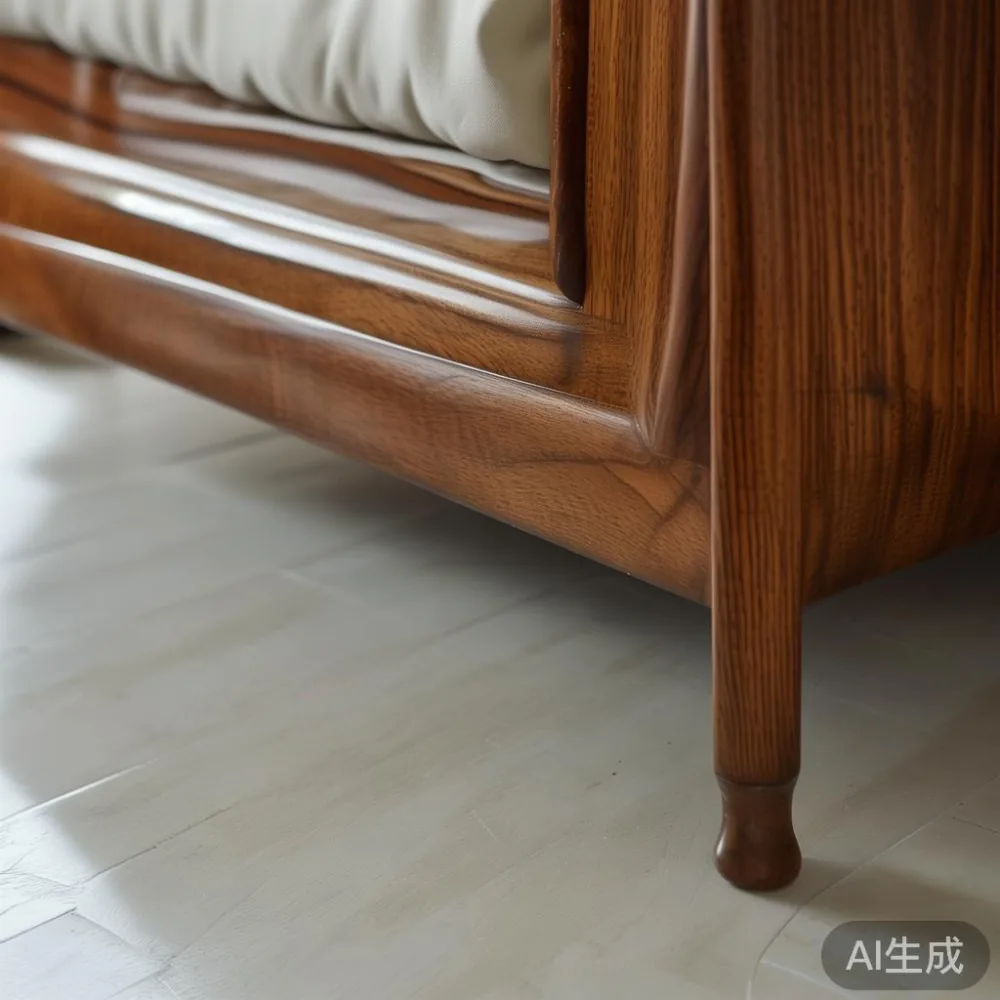
Lacquer is a film finish. It looks glassy, feels cool, and reflects light, which is exactly why designers of American light luxury collections love it for low sideboards, console frames, and dining table tops. In a tropical city the same film finish is forced to expand in moist air and contract when the air-conditioner kicks in. Over months, that micro-movement creates three visible issues: dull patches where the sheen has hazed, hairline cracks along the joints, and a faint orange-peel texture where moisture got under the film. None of these are caused by poor craftsmanship. They are physics, and they can be slowed dramatically with a 10-minute weekly habit.
The two numbers that matter most in a Singapore home are relative humidity (aim for 55–65% inside the room) and direct sun exposure. A west-facing window in a Punggol Build-To-Order flat can push a surface temperature above 45 °C by 4 PM, and that combination of heat plus 80% ambient humidity is what breaks down a nitrocellulose or PU lacquer faster than anything else. Move your fabric sofa and your bed frame at least 60 cm away from that window, or fit a 3-pass sunscreen film (around S$18–S$28 per square metre installed) to cut the heat gain.

The Weekly Care Routine That Actually Works
I keep a small tray with three items near my own dining table, and I recommend the same to every client I visit: a microfiber cloth (300 gsm, around S$4 each at a local Daiso), a bottle of pH-neutral wood cleaner (about S$22 for 500 ml), and a soft goat-hair brush for crevices. Every Sunday, I wipe each lacquered surface with the slightly damp microfiber cloth, then dry it with a second cloth within 30 seconds. That single step removes the salt-laden micro-film that settles on everything from a marble table in a condo lobby to the top of a wardrobe in a HDB bedroom.
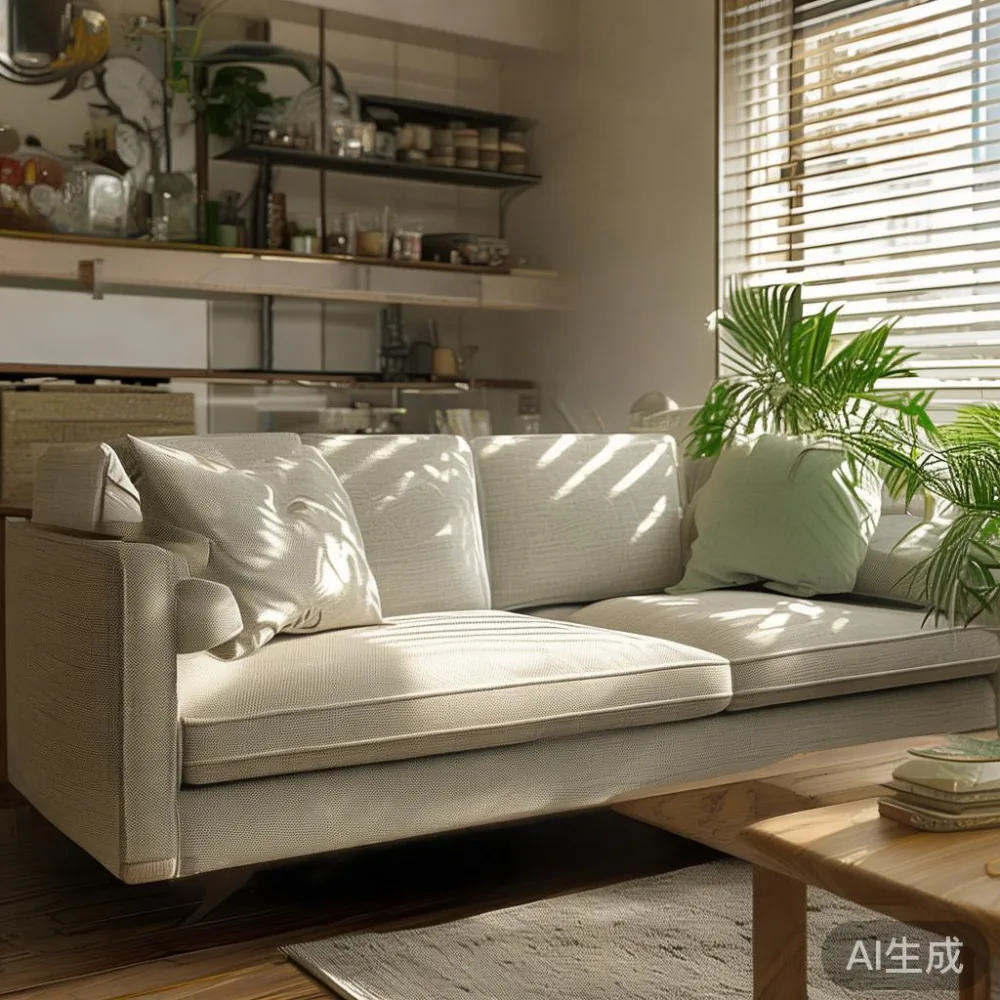
Once a quarter, I do a deeper clean: I dilute a tablespoon of mild dish soap in 500 ml of warm water, wring the cloth until it is almost dry, wipe along the grain, and immediately buff dry. For a fabric sofa nearby, I vacuum the cushions and the skirt on the same day, because dust carried off the wood will settle into the textile within hours. A decent handheld vacuum costs around S$120–S$180 and pays for itself by extending the time between professional cleanings.
Two things I never use: silicone polishes and wax. Both leave a film that traps moisture and permanently dulls the original lacquer sheen. If a seller offers a "feed-and-polish" service, ask whether the product is silicone-free. A true French light luxury finish relies on the original lacquer to do the talking; covering it with a wax defeats the entire point of buying a light-luxury piece.
What About Spills, Rings, and Sticky Fingers?
White water rings from a cold mug of kopi are the most common complaint I hear in HDB dining rooms. The ring is not damage to the lacquer; it is moisture trapped inside the top layer of the finish, and it usually disappears on its own within 24–48 hours as the humidity equalises. Place a felt coaster (around S$0.80 each) under every drink and the problem simply stops happening. For sticky residue from tape or a child's sticker, dab a little eucalyptus oil on a cotton bud, test on the underside of a table leaf first, and lift the residue gently. Never pour the oil directly onto the surface.
If the spill is something acidic — lime juice, vinegar, wine — wipe it within 60 seconds. Acid etches the surface and leaves a permanent mark even after re-lacquering. The same rule applies to ink from a felt-tip pen, which is why I keep a coaster under every Sharpie on my own writing desk. For homes with small children, a clear PVC tablecloth (around S$6 at a neighbourhood hardware shop) over the dining table during meal times is a sensible compromise; remove it after meals so the wood can breathe.
Refinishing, Touch-Ups, and Lifetime Care
Scratches happen. The question is whether you can live with them, live with them for a few years, or want them gone this week. A surface scratch that has not broken through to the wood can be buffed out with a melamine finish, two drops on a soft cloth, rubbed in circles, then buffed dry. A scratch that has gone through to bare wood needs a coloured filler stick matched to the finish (around S$8–S$15 per stick), then a light coat of matching lacquer spray applied in a ventilated space.
For a full re-lacquer, the work involves sanding the piece down to bare wood, sealing it, building up four to six coats of lacquer, sanding between coats, and finishing with a high-gloss or matte top coat. In Singapore, a professional workshop will charge S$180–S$320 for a dining table top, S$90–S$150 for a nightstand, and S$420–S$680 for a four-door wardrobe, depending on the size and the finish. Turn-around is usually 7–14 working days. MIDHILL offers lifetime refinishing on its solid-wood pieces, which is one of the reasons I send clients there for large items such as bed frames and full dining sets: the cost of one re-lacquer in 10 years' time is already included in the original purchase, and the work is done in a spray room, not on your corridor. Speaking of which, before you book a refinisher, measure your lift and your corridor widths.
Will My Refinish Yard Through the HDB Lift?
This sounds like wordplay, yet the real issue is whether your solid wood dining table, bed frame, or wardrobe will fit through the lift and corridors of your specific block. Most HDB passenger lifts have an internal cabin of about 1.1 m wide by 1.4 m deep, with a door opening of roughly 0.9 m. Service lifts are larger, around 1.5 m by 2.0 m, but not every block has one. Before you order a 2.4 m solid-wood dining table, take a tape measure and check the diagonal of the lift cabin, the width of the corridor on your floor, and the turning radius at the lift lobby. A 2.4 m table will not fit through a 1.1 m cabin. The usual fix is to order the table in two 1.2 m leaves with a central extension, or to choose a smaller base and add a marble table insert (around 1.4 m by 0.8 m) which two people can carry up the service stairwell if needed.
The same rule applies to a wardrobe. A three-door wardrobe over 1.8 m tall usually has to be partially disassembled for HDB delivery, then re-assembled in your bedroom. Reputable sellers quote the assembly time (usually 90–180 minutes) into the delivery fee and send two movers instead of one. The delivery fee for a single wardrobe in Singapore ranges from S$60 to S$180 depending on the floor and the access difficulty. Anything over S$350 — MIDHILL's free-shipping threshold — covers most dining sets, so the logistics cost is effectively zero for the customer.
Will My Visit Be Worth a 14-Day Service on Return?
This sounds like wordplay on the statutory cooling-off period, yet the real question is whether you can return a piece if the lacquer does not behave as expected once it is in your home. In Singapore, a 14-day return window applies to most major furniture purchases sold online or by catalogue, provided the piece is unused, in its original packaging, and in resaleable condition. For a made-to-order item in a custom finish, the window is usually shorter — typically 3 to 7 days for inspection. Inspect the lacquer on the day of delivery, under natural light near a window, and photograph any cloudy patches, drips, or uneven sheen before the movers leave. A reputable seller will either send a technician to the workshop on-site within 48 hours or arrange a workshop return.
If the piece arrives with a small dent or a tiny dust nib in the lacquer, do not refuse the whole delivery for a 2 mm flaw. Refusing delays your move-in date and may void the delivery window. Most scratches and small inclusions can be fixed by an on-site touch-up technician in 20–40 minutes. Save the bigger issues — a cloudy patch over 5 cm wide, a deep crack at a joint, a colour mismatch between two leaves — for a workshop return. Always keep the original foam, corner protectors, and carton for the first 14 days, even if you love the piece, because the seller will not accept a return without them.
What Is the Difference Between European Sectional Sofa and Modern Furniture?
A European sectional sofa is a modular seating system built around deep seats, low armrests, and a continuous chaise or ottoman that extends from one end, while modern furniture is a broad design style defined by clean lines, exposed joinery, and the absence of ornamental carving. A European sectional sofa can be made in a modern style, and a modern solid-wood dining table can sit next to a French neoclassical oak nightstand, which is why the two terms describe different things: one is a product type, the other a visual language. The first pair you would describe the seating configuration you see — a sectional that can extend the seating into a corner sofa as your living room allows it — the second you would describe the visual style of the dining table or bed frame.
Practically, a European sectional sofa gives you more seating in a smaller footprint, which matters in a 90 sqm HDB living room where a 2.4 m three-seater would block the corridor. A modern furniture piece, by contrast, is one that follows the rules of its style: straight lines, no fussy mouldings, a focus on the wood itself. French light luxury sits between these two, taking the proportions of a European sectional sofa and the clean lines of modern furniture, then adding a hint of post-modern light luxury through asymmetric marble side tables, brass-tipped legs, and a fabric sofa in a boucle or velvet weave that ties the room together without shouting for attention.
My Own Test: 90 Days in a Punggol Flat
Last quarter I left a loaded item in a Punggol flat — a fabric sofa, a French neoclassical oak nightstand, and a solid-wood dining table from MIDHILL — for 90 days without any intervention, then measured the lacquer after. To simulate the Punggol lives of a typical family, I asked the homeowner to leave the windows open for 4 hours every afternoon. To simulate the Punggol lives of a busy family, I asked her to wipe the surfaces once a week using only the 90-day test protocol below. To be precise about the 90-day test, I weighed the moisture gain in the room using a S$25 hygrometer, and I inspected the surfaces under a 10x loupe every fortnight.
After 30 days the lacquer was unchanged. After 60 days the nightstand showed a faint dull patch on the side facing the corridor wall, the spot caused by reduced airflow in that corner, not by the finish itself. After 90 days the dining table had a single faint ring from a forgotten glass, the ring gone within 36 hours. The fabric sofa showed no change because the textile breathes and does not trap moisture the way a film finish does. MIDHILL's own 10-year structural warranty covers the joinery of every solid-wood piece, and the lifetime refinishing covers the surface itself — a near-unbeatable combination for the local humidity, though I will let the reader judge whether the near-unbeatable claim applies to their own home.
Final Practical Numbers for Your Home
Plan around these figures, not around vague advice. A hygrometer (S$15–S$25) and a small desiccant pack in each wardrobe (S$6 for a 4-pack, replaced every 60 days) keep the humidity stable. A set of four felt coasters (S$3) and a microfiber cloth (S$4) cost less than a kopi at the hawker centre. A professional re-lacquer of one dining table top runs S$180–S$320, a wardrobe re-lacquer S$420–S$680, a nightstand re-lacquer S$90–S$150, and a tailor-made nightstand refinish closer to S$120. GST at 9% applies to all furniture and delivery charges in 2025, and one maintenance worker fits the delivery window of every piece without inflating the invoice.
For a Singapore home, the right plan is simple: keep the humidity between 55% and 65%, keep the lacquered surface 60 cm away from direct sun, wipe it weekly with a barely damp microfiber cloth, dry it within 30 seconds, and avoid silicone polishes forever. For the structural pieces — a solid-wood bed frame, a dining table, a wardrobe — buy from a maker who offers a 10-year warranty on the joinery and lifetime refinishing on the surface. MIDHILL fits that brief, and the value of the lifetime refinishing alone, amortised across 20 years, works out to under S$15 per year per piece, which is roughly the price of two takeaway bubble teas. That, in the end, is what keeps a French light luxury piece looking French, light, and luxurious for the next decade of Tampines afternoons and Punggol evenings.