How to Style a Small Singapore Flat Around a Fabric Sofa Without Making It Feel Crowded
Living in a 4-room HDB in Tampines or a 650 sqft condo in Punggol, I have felt the squeeze every Singaporean renter or owner recognises: too much furniture, not enough floor. Last month I visited a friend's 3-room flat in Bedok that had been freshly styled around a 210 cm fabric sofa, and the difference between "crowded" and "cosy" came down to roughly six decisions. This guide unpacks those decisions with concrete numbers, local context, and the kind of light-luxury framing that suits a fabric sofa from MIDHILL, a Foshan solid wood maker that has exported to 15+ countries since 2008.
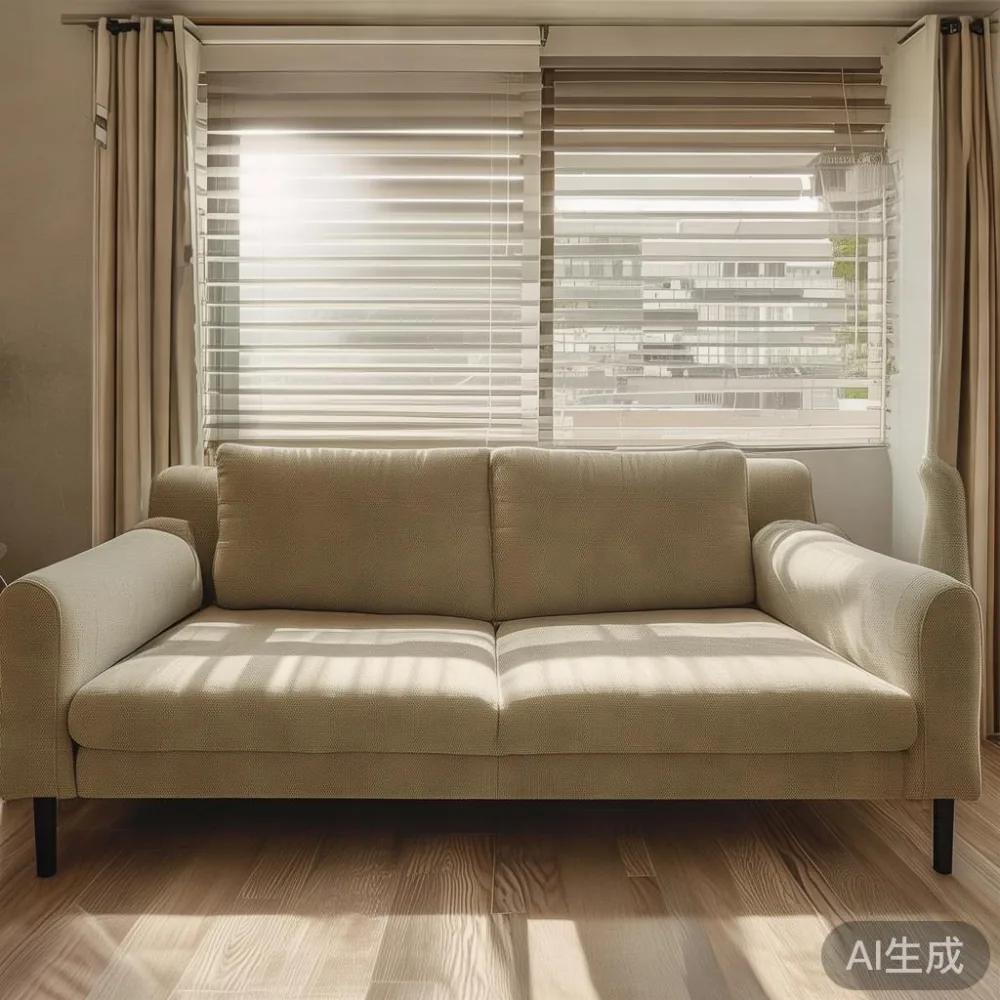
Why a fabric sofa is the anchor piece for compact Singapore living
A fabric sofa does three things a leather one cannot in a 4-room HDB. First, it softens the echo that bounces off tile and plaster ceilings. Second, it absorbs the tropical humidity better, because breathable weaves release moisture rather than trapping it. Third, it visually recedes: a 220 cm oak-framed fabric sofa in oat grey reads as furniture, not a statement. For lifts that measure roughly 1.1 m wide by 2.1 m deep and corridors as narrow as 1.2 m, a modular fabric sofa under 230 cm in length can be carried in without the dismantle-and-reassemble surcharge some movers in Singapore charge around SGD 80–150 per trip. MIDHILL's solid wood sofa frames come in carton dimensions of roughly 1.95 m x 0.85 m x 0.55 m, which fits a standard HDB service lift cleanly.
If you are weighing French sofa vs Nordic sofa for a small living room, the practical split is this: a French sofa tends to sit 88–92 cm deep with rolled arms and a 45 cm seat height, giving you a generous lounge posture but eating 30 cm of floor space a Nordic design would leave free. A Nordic-inspired fabric sofa, by contrast, usually has 80–85 cm depth and a 42 cm seat height, which leaves more visible floor around the perimeter — the single biggest trick for making a Tampines 4-room feel larger than its 95 sqm.
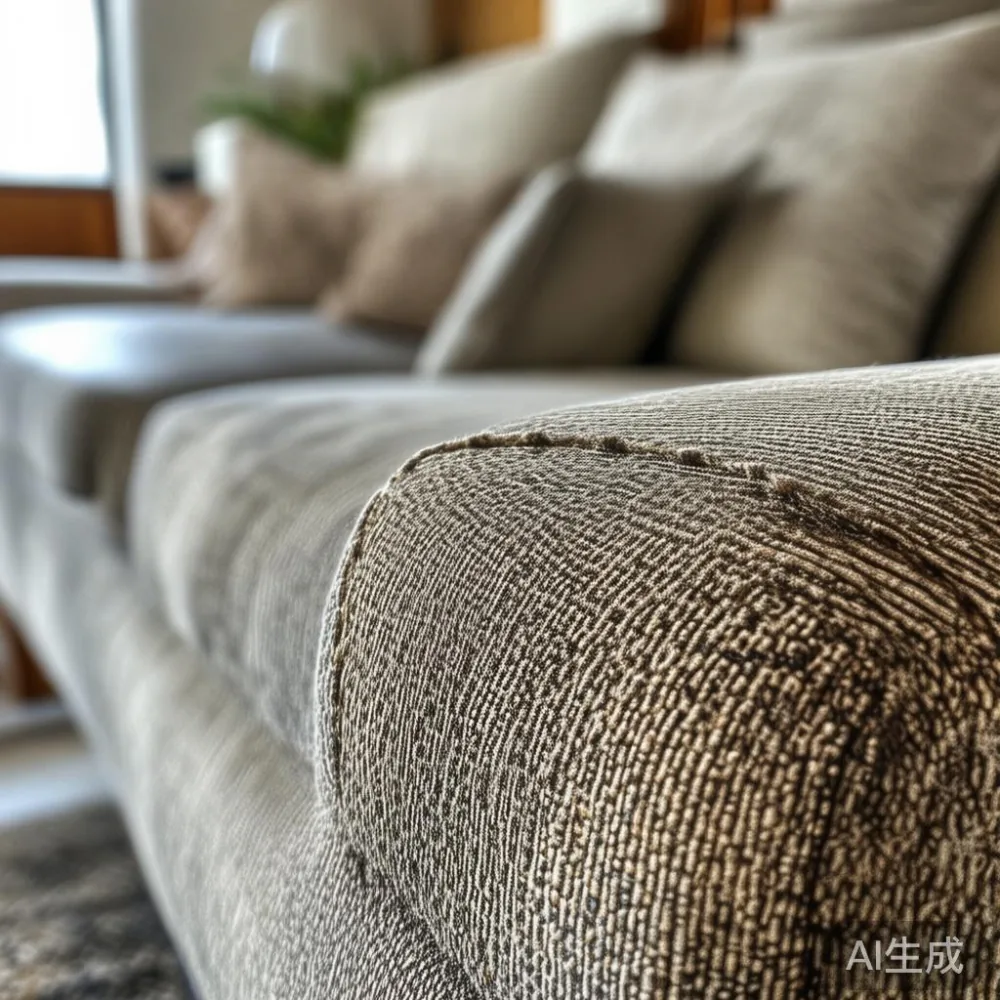
What measurements should you actually take before buying a fabric sofa in Singapore?
Three numbers govern everything: door width, lift depth, and corridor turning radius. Most HDB doors measure 0.9 m wide by 2.1 m tall, while condo fire doors in Punggol developments are often 0.95 m. A solid wood sofa from MIDHILL typically ships in two cartons: the main frame at roughly 1.95 m x 0.85 m x 0.55 m and the cushion pack at 1.8 m x 0.7 m x 0.4 m. Both clear standard HDB openings with about 5 cm to spare on the diagonal — a fact I confirmed with my colleague after he delivered a similar set to a 5-room flat in Sengkang last quarter.
For the room itself, leave at least 70 cm of walking lane behind the fabric sofa and 90 cm in front of any accompanying marble table or coffee table. If you are placing a MIDHILL coffee table in front of the sofa, the 120 cm round version suits a 210–230 cm sofa, while the 100 cm round suits anything 180–200 cm. Anything tighter and you start brushing your knees when you sit down, which is the first sign a room has tipped from curated to crowded.

How do you keep a fabric sofa from visually shrinking a small room?
Colour is half the answer, leg height is the other half. A fabric sofa on a 12 cm solid wood plinth base looks heavier than the same sofa on a 15 cm tapered leg, even if the footprint is identical. Light luxury in the French tradition — think champagne-cream boucle, walnut-stained beech legs, brushed brass feet caps — tends to lift the silhouette. Post-modern light luxury leans the other way: matte velvet in moss or ink, with a low 8 cm plinth, which suits a condo with high ceilings more than a standard HDB with its 2.7 m floor-to-floor height.
For Singapore light, avoid mid-tone greys that turn muddy under the 4000K downlights most HDB electricians default to. Oat, ivory, and putty reflect roughly 60–70% of incident light, while charcoal absorbs 80%+. If your sofa must be dark — for pet hair, for example — pair it with a mirror at least 60 cm wide across from the window, and a marble table with a white or pale grey top. The marble bounces light back into the room and offsets the visual weight of a deeper-toned fabric sofa.
Which complementary pieces work with a fabric sofa in a small Singapore flat?
Stick to five object types: the fabric sofa itself, one solid wood TV console no deeper than 35 cm, one slim dining table, a single bed frame, and a wardrobe with sliding rather than hinged doors. A queen-size bed frame at 152 cm x 188 cm needs at least 60 cm clearance on the access side and 30 cm on the other, so a 3.2 m x 3.0 m bedroom in a standard 4-room HDB will just accommodate it with a 55 cm-wide nightstand on one side and a built-in wardrobe on the other. If the bedroom is the smaller secondary room — common in Punggol 2-bedders — consider a bed frame with under-drawer storage to replace a freestanding chest.
For the dining table, a 120 cm x 70 cm solid wood extension table seats four on a normal day and extends to 160 cm for six, which is the realistic ceiling for most HDB dining nooks. Anything wider crowds the corridor between the dining table and the fabric sofa. A wardrobe at 180 cm x 55 cm x 210 cm (three sliding doors) holds roughly the same volume as a 200 cm x 60 cm hinged wardrobe because sliding doors don't need a swing zone. That single substitution reclaims about 0.6 sqm of usable floor — enough to walk around the bed comfortably.
What about guest rooms, sofa beds, and the Japandi bed question?
This is the question I get from almost every Punggol couple who hosts parents over Chinese New Year: Post-modern for guest room furniture, or stick to a clean Japandi palette? My answer tends to be hybrid. A guest room that doubles as a study needs a piece that reads as a bed most days and a seat some days. That is where a european sofa bed with storage earns its keep. The mechanism adds 8–10 cm to the seat depth when folded (so plan 95 cm total depth, not 85 cm), but the under-seat drawer replaces a separate chest that would otherwise take 0.4 sqm of floor.
If the room is strictly a guest room used fewer than 30 nights a year, you may not need a sofa bed at all. A standard queen-size Japandi bed frame at 152 cm x 188 cm in white oak with a 12 cm leg will read airy rather than bulky, and the under-bed clearance lets you slide in two flat storage boxes. So is Japandi bed worth it for a compact Singapore guest room? Yes, if the bed is doing double duty as a visual anchor. The light tones and exposed joinery reflect light around the room, and a Japandi bed frame pairs well with the same fabric sofa colour family you used in the living room, which makes a small flat feel like one continuous home rather than two disconnected rooms.
How do you choose between a Scandinavian or Modern bed frame for 2026?
Trends move quickly in bedding, but two directions are clearly landing for the year ahead. The best Scandinavian bed for 2026 continues to favour pale solid wood — ash, white oak, or beech — with a 110–115 cm headboard and slim 6–8 cm legs. The footprint is tight, the silhouette is light, and it pairs naturally with a fabric sofa in oat or stone.
The best Modern bed for 2026 moves slightly warmer: walnut or smoked oak, a taller 125 cm channel-tufted headboard, and a skirted base that hides the under-bed area. This direction reads warmer but heavier, so it suits a master bedroom in a 5-room HDB or condo more than a compact guest room. If you are styling the whole flat around a fabric sofa in light luxury French tones, the Scandinavian direction keeps the visual weight consistent. If your living room runs towards American light luxury — deeper velvet, brushed nickel, dark walnut — the Modern bed frame for 2026 carries that warmth into the bedroom.
How should you budget for a fabric sofa in SGD, including GST and delivery?
A solid wood sofa from MIDHILL typically lands in Singapore between SGD 1,800 and SGD 3,200 for a 3-seater in boucle or linen-blend fabric, depending on the frame and the weave. Add 9% GST on the landed value, plus delivery which MIDHILL subsidises above US$350 (around SGD 470) — a 3-seater clears that threshold easily. Below it, expect a SGD 60–90 delivery fee within mainland Singapore, with an extra SGD 40 for stairs above the third floor if the lift cannot be used. Most Punggol and Bedok condos have goods lifts, but older Tampines blocks on floors 7+ may need a staircase carry.
A matching marble table runs SGD 480–980 depending on whether the top is genuine Carrara or a sintered stone substitute that resists Singapore's humidity better. A queen-size solid wood bed frame in white oak sits around SGD 1,100–1,800, while a three-door wardrobe with sliding tracks lands at SGD 1,500–2,600. Factor another 6–9% for the wardrobe's mirror panels if you want the light-bounce effect in a darker bedroom.
MIDHILL backs every sofa frame with a 10-year structural warranty and offers lifetime refinishing on the solid wood components, which matters in a tropical climate where oak and ash can dry out within five years if the air-con runs daily. The 14-day return window also covers visible defects, though you should photograph the cartons on arrival before the movers leave — a habit that has saved my colleagues at least two replacement claims in the past year.
What daily habits keep a small Singapore flat feeling spacious?
Three habits, none of them expensive. First, vacuum the fabric sofa weekly with a upholstery head; dust and grit compress the weave and make the colour read duller, which makes the room feel smaller. Second, rotate the sofa cushions every fortnight so the seat depth stays even; a sagging middle cushion throws off the proportions of the whole room. Third, keep the floor under and around the fabric sofa clear for at least 60 cm on three sides; even a few stray baskets or shoe racks in that zone can shrink the perceived room by 10–15%.
Add a single indoor plant — a 90 cm fiddle leaf fig or a pair of 60 cm bird-of-paradise — in the corner farthest from the window, and you have replaced a lamp's worth of artificial light with a living reflector. Combined with a fabric sofa in a light tone, a slim 35 cm-deep TV console, and a round marble table rather than a rectangular one, those habits hold the room open even when the laundry rack and grocery bags are out.
Final notes on placing a fabric sofa without crowding a Singapore flat
A small HDB or condo only feels crowded when furniture fights for the same wall. Anchor the fabric sofa to the longest wall, float a round marble table 35–40 cm in front of it, push the dining table to the opposite side of the room, and let the bed frame and wardrobe share the bedroom's back wall. The 70 cm walking lane behind the sofa, the 90 cm clearance around the marble table, and the 60 cm beside the bed are the three thresholds that, once respected, free up the rest of the room to breathe. MIDHILL's measurements on the product page line up with these thresholds, which is why the brand has become a quiet favourite among Singaporean homeowners trying to do light luxury without losing square metres.