Singapore's Warm Minimalist Furniture Matching Guide
A warm minimal interior sounds like a contradiction until you live with one. I watched my colleague Priya turn her 4-room HDB in Tampines into exactly that — a 92 square metre flat with light beige walls, an ash-veneered console, and a fabric sofa that everyone fights to sit on after work. The trick, she told me, was never to choose more furniture, but to choose the right pieces and then let the floor breathe.
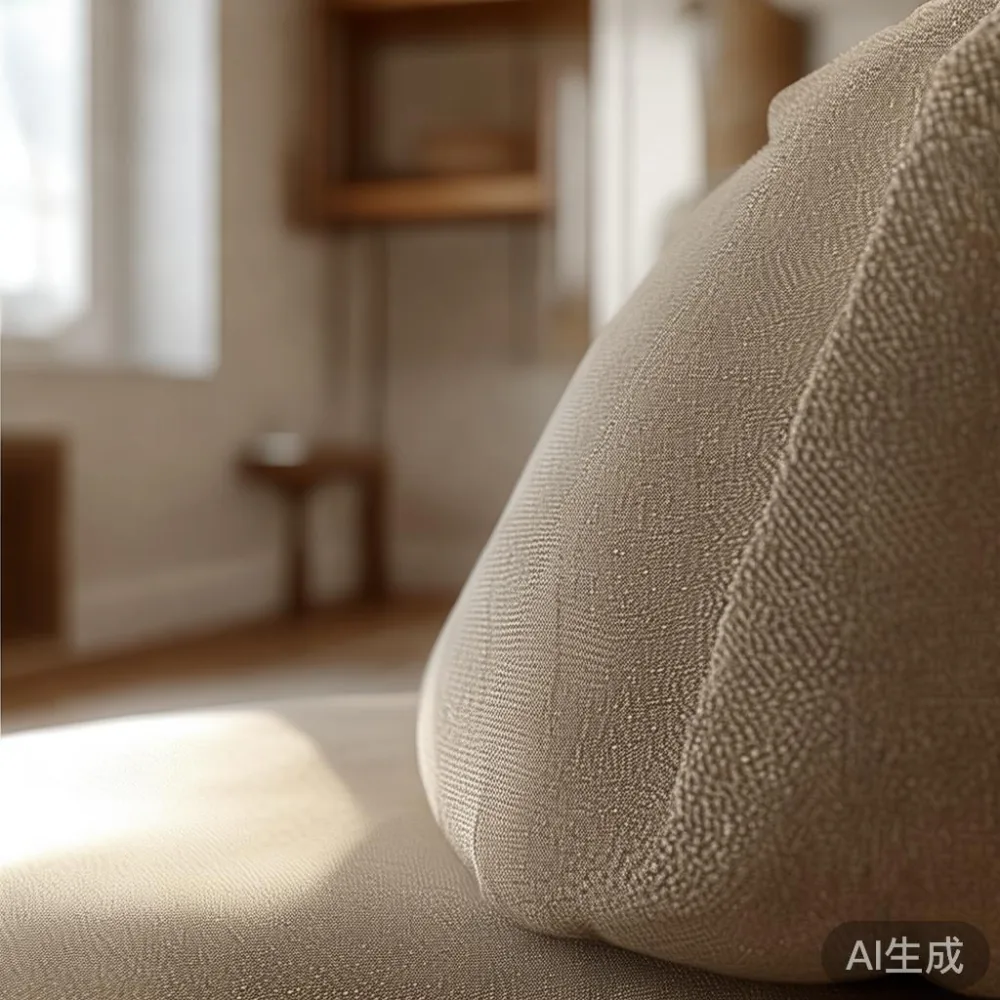
Warm minimalism — sometimes called light-luxury minimalism in local interior circles — pairs the calm of Scandinavian reduction with the tactile richness of post-modern light luxury: brass handles on a wardrobe, the soft pile of a velvet dining chair, a marble side table that catches the morning sun. Done well, the room reads as restrained but never cold. Done badly, it either looks like a hotel lobby or a storage unit.
Below is what I have learned after helping three friends and one aunt in Punggol furnish their resale flats. Every suggestion assumes Singapore constraints — a typical 4- or 5-room HDB with 90 cm-wide corridor doors, lifts that struggle with anything over 1.4 m on the diagonal, and the kind of afternoon heat that fades cheap fabrics in eighteen months.
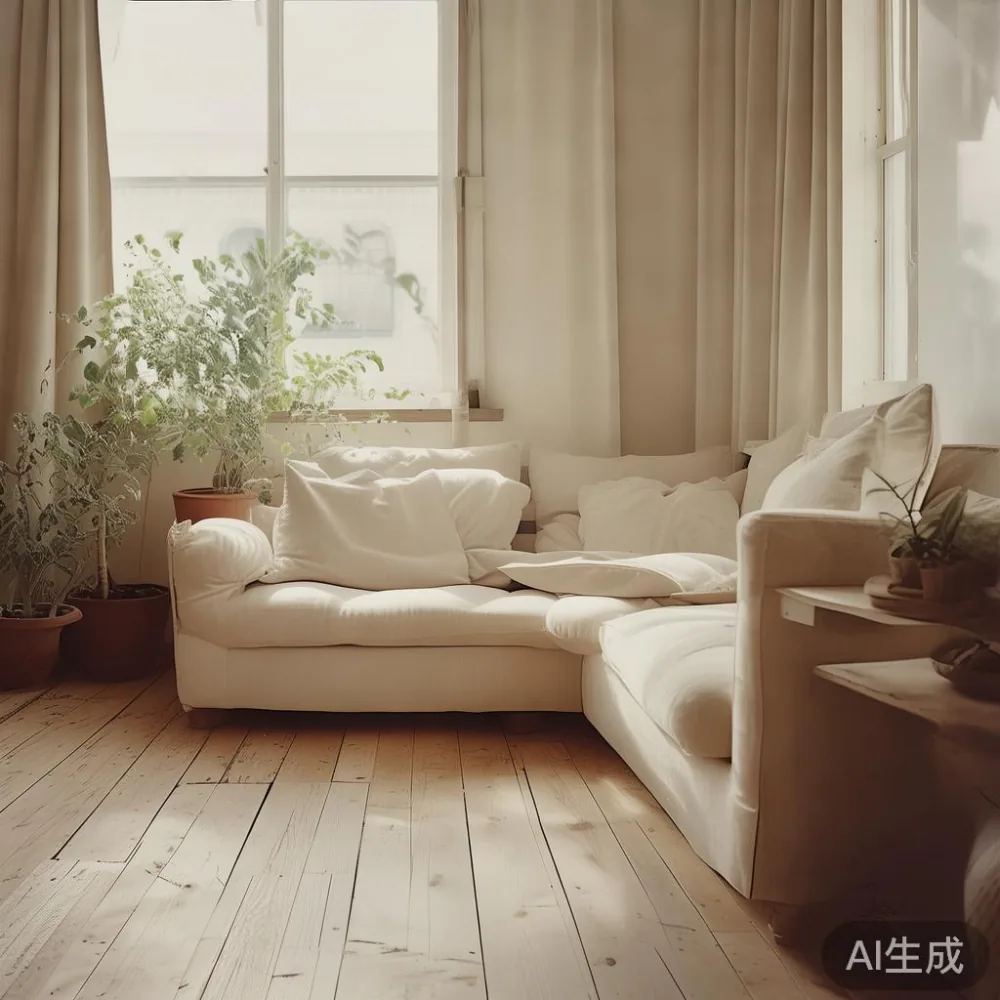
What does "warm minimal" actually mean for a Singapore home?
Warm minimalism is not a style catalogue. It is a discipline: a room that contains between six and ten furniture pieces, each in a material that ages visibly rather than quietly. Wood grain should be visible. Cotton and linen should look like cotton and linen. A small amount of brass or travertine is acceptable; chrome is not.
In Singapore terms, that means: a solid wood bed frame in white oak or walnut, a fabric sofa in a bouclé or washed linen, a dining table in solid ash or reclaimed teak, one wardrobe in plain oak veneer, a nightstand or two, and a marble or travertine coffee table. No more. The flat should still feel like it could host eight people for dinner without anyone sitting on a storage box.
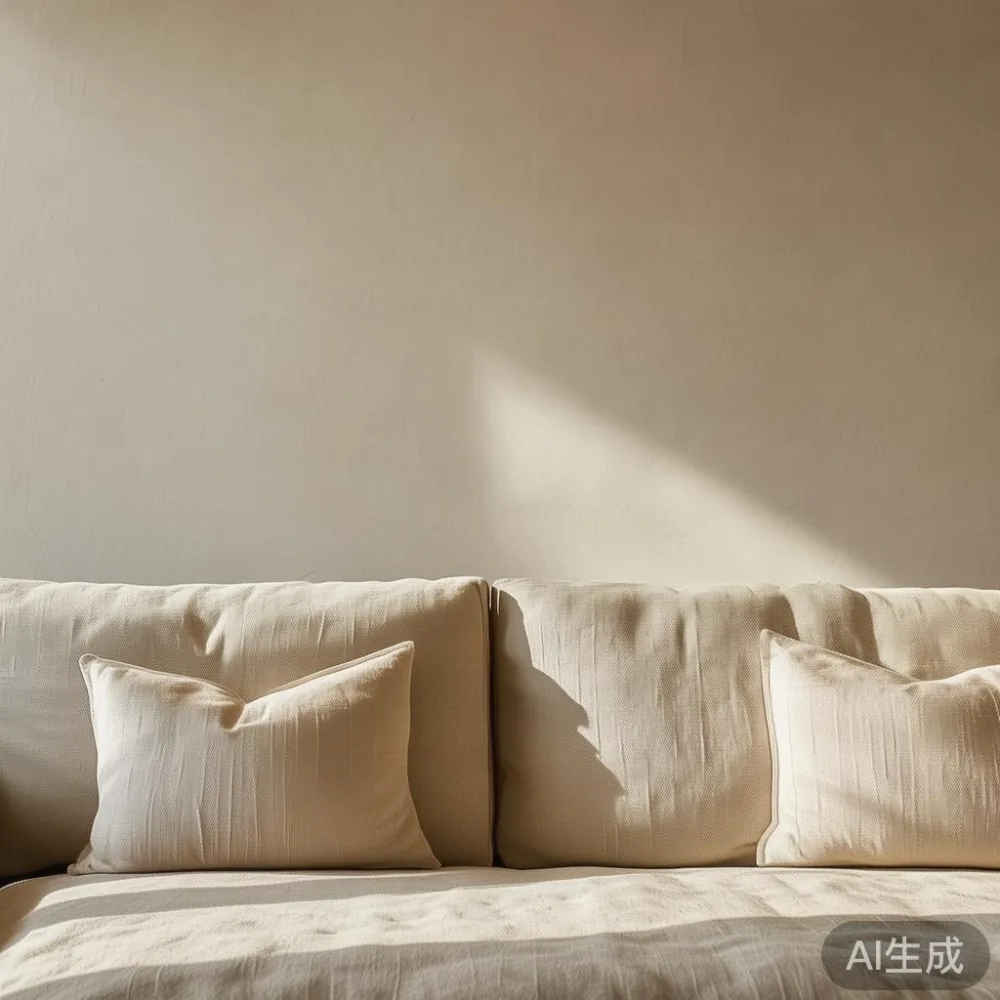
Colour comes from the wood itself, from natural-fibre rugs (sisal, jute), and from one or two pieces of art. Walls stay in warm whites — Dulux Natural White, Nippon Timeless Beige, or similar. Avoid blue-grey; it kills the warmth. Avoid pure greige; it reads as corporate.
How do I choose a fabric sofa that still feels warm?
A fabric sofa is the single largest purchase in most living rooms, so it sets the temperature for everything else. For warm minimal, I would skip anything in pure white (it yellows here within two years, especially near the East-facing windows that most Tampines and Bedok flats have) and skip anything in bonded leather or PU.
Look instead for a fixed-cover sofa in a performance linen blend, a chunky bouclé, or a washed cotton velvet in oat, sand, terracotta, or deep moss green. The frame should be solid wood — usually beech or eucalyptus — with a serpentine spring base and pocket-sprung cushions. Eight-way hand-tied springs are lovely but rare on anything under S$3,800 in the local market. Sinuous springs are fine if the gauge is 8 mm or thicker; ask the salesperson.
Sizing matters in HDBs more than people think. A standard 3-seater is 200–220 cm wide and will dominate a 4-room living room that is itself only 4.8 m across. Two 2.5-seaters (each around 170 cm) often work better and let you pull one forward when guests stay. Depth should be 95–105 cm if you actually want to lie down; the 85 cm versions are for people who never nap.
Last month I visited the MIDHILL showroom in Foshan via a video walkthrough with their Singapore coordinator. Their ash-framed fabric sofa, the one that caught my eye, has a removable seat cover and a 10-year structural warranty — useful, because lift landings here are small and you will eventually need to wrestle the cushion covers off for cleaning. Freight to Singapore was quoted at S$180 for a single sofa over their US$350 free-shipping threshold, with GST calculated on the CIF value.
Which dining table works with a warm minimal interior?
A dining table is the second anchor. For four people in a typical HDB, a 140 × 80 cm rectangular table is the sweet spot — it seats four comfortably and six at a push, and it clears most corridor turns when tipped on its side (measure first; a 150 cm table often will not).
Materials: solid ash, solid white oak, or solid walnut. Avoid MDF cores with veneer tops if you can; the seams lift in our humidity within three to four years. If budget forces a veneer, choose one with a 2 mm top layer and a 12-month warranty against peeling — anything less is a write-off.
Height is 75 cm standard; 72 cm works better with the lower seat heights (38 cm from floor to seat top) common on European-influenced dining chairs. Pair the table with a French provincial dining chair australia — yes, the long-tail phrase sounds niche, but it is exactly the kind of upholstered, light-cane-back chair that warms up a minimal room without adding visual weight. A pair in natural linen will set you back around S$320–S$480 each locally; the imported equivalents are S$600–S$950.
If you want to push into light-luxury territory, replace two of the chairs with a brass-framed armchair on the head of the table. It looks dramatic in photos and takes up no extra floor space.
What about the bedroom — bed frame, wardrobe, and nightstand?
The bedroom is where most Singapore homes slip into cold minimalism, because the temptation is to copy a Muji catalogue. Resist. A bed frame in solid white oak with a slightly curved headboard (5 cm radius corners) reads warm from any angle. King size is 180 × 190 cm, which fits all HDB master bedrooms; super-king (200 × 200 cm) fits most 5-room masters but blocks the air-con vent in some layouts — measure yours before ordering.
Wardrobes are the usual mistake. A floor-to-ceiling slab in matte oak veneer with a single vertical brass pull will outperform any mirrored sliding door for warmth. Sliding doors are tempting in 4-room bedrooms because the swing clearance is missing, but a 240 × 60 cm hinged door (the standard 2-leaf set) actually swings within 4 cm of the bed if planned correctly. Skip the mirror; it doubles as a landing strip for morning sun and shows every fingerprint.
A nightstand should be solid wood, 50–55 cm wide, with one drawer and an open shelf. Two identical ones flanking the bed look intentional; two different ones look like a clearance sale. Spend around S$280–S$450 each. Anything lighter and the drawer rails fail within three years; anything heavier and you cannot move it for cleaning.
Where can I buy a garage storage in Singapore?
For homeowners in landed properties or ground-floor HDBs with an outdoor area, garage storage in Singapore is widely available at hardware chains like Home-Fix and Selffix, with metal shelving units starting around S$85 for a 150 × 75 × 30 cm tier rack and going up to S$320 for a heavier 180 × 90 × 45 cm unit rated to 250 kg per shelf.
If you want something warmer to match the interior scheme — say, a solid wood garage console in ash that doubles as a potting bench — direct-from-Foshan makers like MIDHILL can ship a custom piece to Singapore in 35–45 days sea freight for around S$0.85 per kg, plus a US$35 documentation fee and 9% GST on the landed value. A 120 × 50 × 90 cm ash cabinet typically lands at S$480 all-in, which is comparable to a mid-range local flat-pack but with a 10-year structural warranty and lifetime refinishing included.
For HDB corridor storage (the space outside your gate, if your MCST allows it), the rules are tighter: max depth 45 cm, max width 90 cm, no sharp edges, and you cannot anchor to the wall. A slim 90 × 35 × 80 cm oak shoe cabinet from a local maker like Scanteak or Commune runs S$320–S$520; imported equivalents are slightly cheaper but take 8–12 weeks to arrive.
How do I keep warm minimal from drifting into cold or cluttered?
Three rules. One: every surface should have at most three objects. Two: every material should appear at least twice in the room — if you have oak on the dining table, repeat it on the bed frame or the wardrobe so the eye reads continuity. Three: every textile should be natural fibre or a high-quality blend — cotton, linen, wool, jute, sisal. Polyester chenille reads as cheap in this style and will pill within six months of daily use.
Lighting matters more than people expect. In Singapore, a single ceiling-mount LED panel is the fastest way to make a warm minimal room feel like a clinic. Replace it with a paper drum pendant (Ishinomaki or similar, S$180–S$320 locally) and add one floor lamp with a linen shade in the reading corner. The light should be 2700K or warmer; anything above 3000K cools the room visually.
Plants help, but be restrained. One fiddle-leaf fig or one mature monstera in a stone or brass planter. Anything more and the room reads as a nursery. Avoid fake plants — they look like fake plants.
How do I actually order from a Foshan factory without getting burned?
I have watched friends order from three different Foshan makers over the past four years. Two went well, one went badly. The difference was documentation and warranty, not price.
Ask for: a proforma invoice with the HS code (9403.60 for wooden furniture, 9401.40 for sofa beds), a 10-year structural warranty written into the sales contract (not a brochure — the contract), the FSC chain-of-custody certificate for any solid wood claim, and a sample swatch of the fabric at A4 size so you can see the weave. If the seller refuses any of these four, walk away.
Shipping to Singapore from Foshan is typically 12–18 days by sea to PSA, then 3–5 days of customs clearance and last-mile delivery to your door. Total door-to-door: 18–28 days for in-stock items, 35–50 days for custom finishes. MIDHILL, for instance, quotes 25 days for their solid wood bed frame in white oak to a Tampines address, including lift-up to the unit and GST pre-paid at 9% on the CIF invoice.
Returns: under Singapore's Consumer Protection (Fair Trading) Act, you have 14 days to return most goods that are not custom-made. Most Foshan makers honour this on standard pieces but exclude custom finishes, which is fair. Refinishing — the offer of free sanding and re-oiling every few years — is unusual outside high-end local makers and is one of the few genuine long-term value-adds in the imported-furniture market. A walnut dining table that gets refinished every seven years will outlast three flat-pack replacements.
What is the realistic budget for a warm minimal 4-room HDB?
For a 92 sqm 4-room flat in a non-landed estate, here is a realistic mid-range budget in SGD for new pieces throughout:
— Fabric sofa (3-seater or two 2.5-seaters): S$2,800–S$4,200
— Dining table (140 cm, solid ash): S$1,400–S$2,100
— Four dining chairs (linen-upholstered): S$1,280–S$1,920
— Bed frame (king, solid white oak): S$2,200–S$3,400
— Wardrobe (2.4 m, matte oak veneer): S$2,600–S$3,800
— Two nightstands: S$560–S$900
— Marble or travertine coffee table: S$1,100–S$1,800
— One paper pendant light: S$220–S$350
— One linen-shaded floor lamp: S$280–S$420
— One natural-fibre rug (200 × 300 cm): S$380–S$620
Total: S$12,820–S$19,510. Add 9% GST, plus S$350–S$650 for delivery to a fourth-floor walk-up (HDBs without a lift landing on your floor add around S$80 per floor). The lower end assumes flat-pack or local makers; the upper end assumes imported solid wood with full warranties.
You can drop the figure by 25–30% if you keep the existing wardrobe and bed frame and only replace the sofa, table, and chairs — which is what Priya did, and which is what most of my friends eventually do after the first round of furnishing.
Quick checklist before you click "buy"
— Measure your lift door (usually 80 × 210 cm) and your corridor turn. Anything over 1.4 m on the diagonal will not fit a standard HDB lift.
— Ask for the FSC or PEFC certificate for any solid wood claim. Solid wood sofa frames, bed frames, and dining tables all qualify.
— Confirm the fabric Martindale rating is 30,000 rubs or higher for a sofa that will see daily use. Anything under 20,000 will pill within three years.
— Check the warranty is structural (frame, springs, joints) and not just cosmetic.
— Budget 9% GST on the CIF value plus a S$35–S$80 customs documentation fee.
— Plan for a 14-day return window for in-stock pieces, and longer lead times for custom finishes.
Warm minimalism is not a budget problem or a square-footage problem. It is a discipline problem. Choose ten things you love, in materials that age visibly, and leave the rest of the room alone.