How to Style a Compact Singapore Home Without Crowding It
I helped a friend rearrange her three-room HDB flat in Bedok last month, and the lesson stuck with me. The unit was 68 sqm, the corridor outside was the standard 1.2 m wide, and the lift opening measured roughly 2.1 m across. Every piece of furniture that crossed the threshold had to clear those numbers. We pulled out two bulky armchairs, donated a glass cabinet, and replaced them with a slim solid wood sofa upholstered in linen-blend fabric, two nesting side tables, and a compact dining table that seats four without sticking out 90 cm into the walkway. The flat felt 15% larger by the following weekend, and the GST 9% receipt for the new pieces came in around SGD 4,200 including delivery. That experience shaped everything I share below.
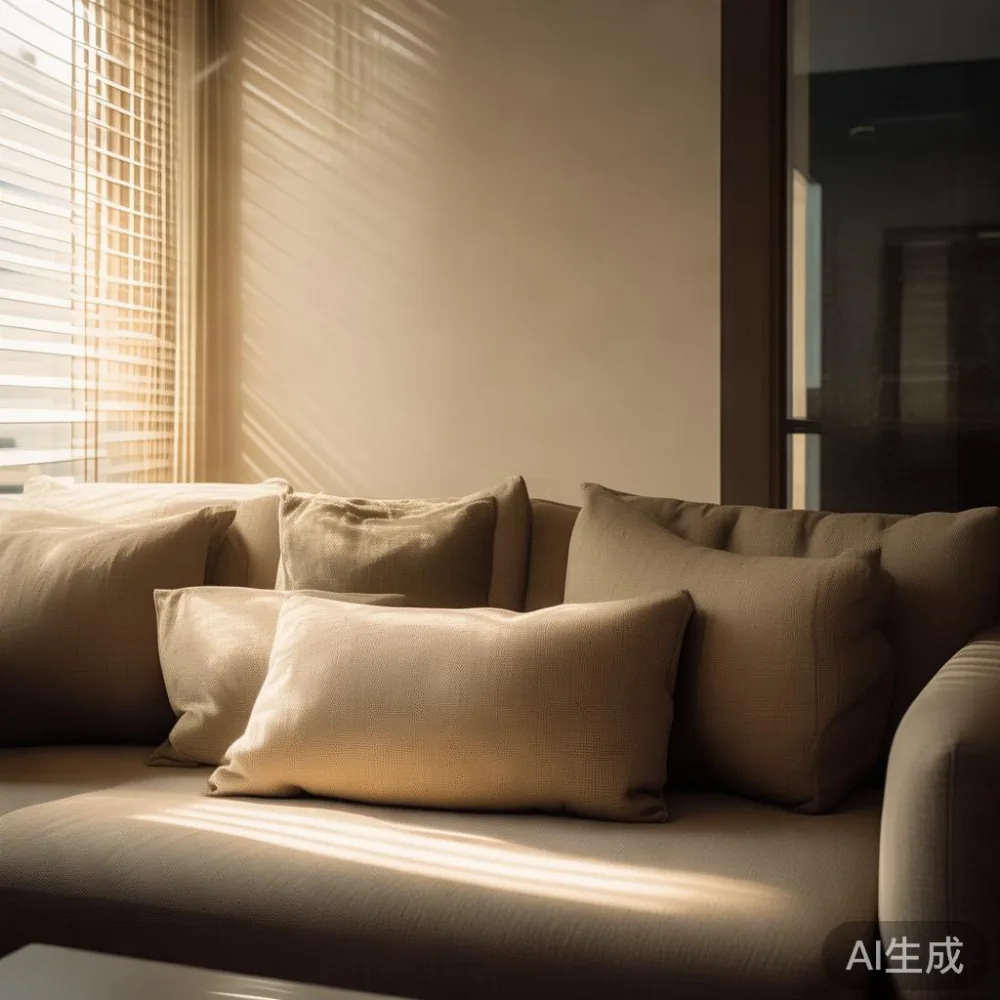
Why a fabric sofa changes how a small room breathes
A fabric sofa is the single largest seating object in most HDB living rooms, so its proportions determine whether the room feels airy or packed. Linen, cotton-blend, and velvet covers in muted tones absorb sound rather than bouncing it off glass and tiles, which already helps in a flat with bare walls. When the sofa's arms are slim, the back is not overstuffed, and the seat depth sits between 55 cm and 60 cm, the piece visually retreats. A 180 cm three-seater in a 3.2 m wide living room leaves 70 cm of clear passage on each side, which is the minimum most Singapore interior designers recommend before circulation starts to feel tight.
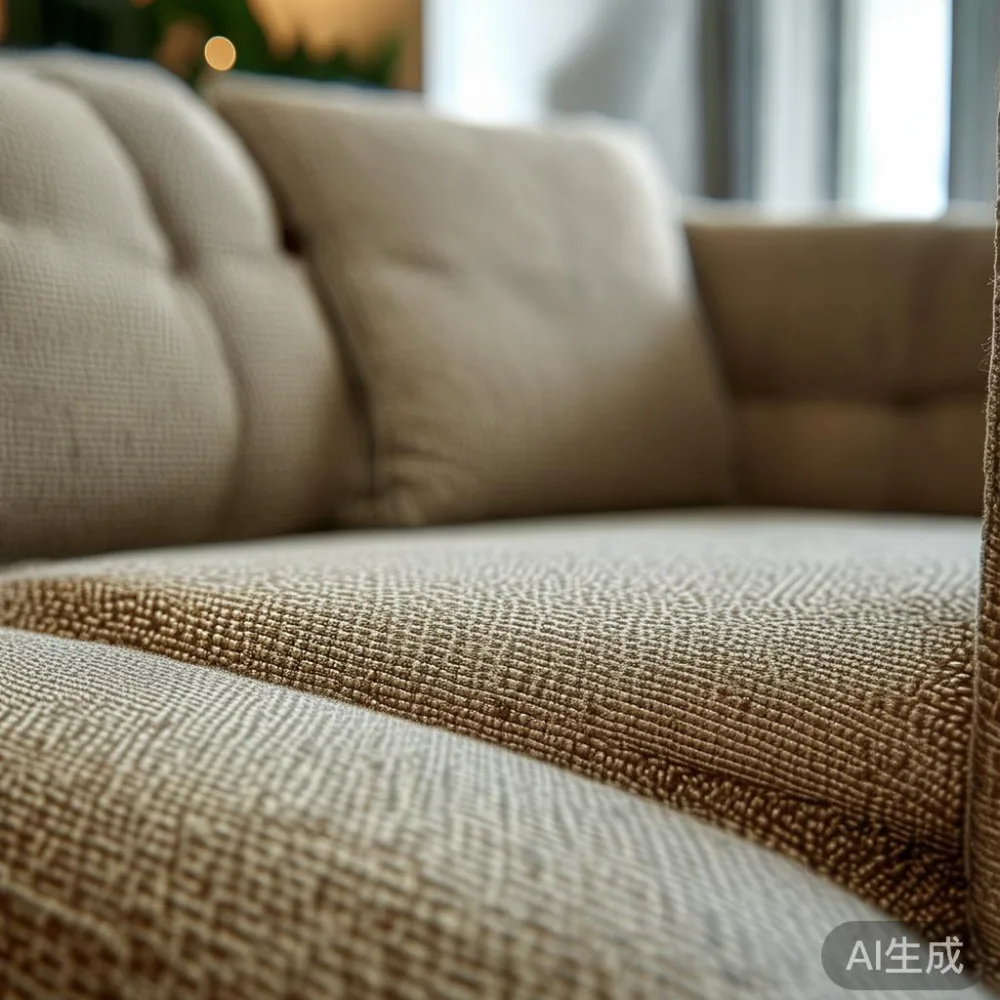
Fabric also makes a fabric sofa easier to refresh. MIDHILL offers lifetime refinishing on its solid wood sofa frames, meaning you can reupholster the same bones in a new colour every five to seven years. For a Tampines couple who moved in at SGD 615,000 and wants to refresh every lease cycle, that flexibility matters. A leather set would either date itself or survive unchanged; a fabric sofa ages on your terms.
How do I fit a dining table for four into a 12 sqm living-dining area?
This question lands in my inbox almost every week from owners of four-room HDBs and 50 sqm one-bedders in Punggol. The arithmetic is simple. A comfortable dining chair needs 60 cm of width and 70 cm of pull-back clearance. Four chairs need a table surface of at least 120 cm x 70 cm to feel generous. A marble table at 140 cm x 80 cm works for daily meals and folds down to hosting six with bench seating, but in a 12 sqm zone a slimmer solid wood dining table at 120 cm x 70 cm is the realistic ceiling.
The trick is depth, not width. Push the table against a wall and use a bench (40 cm deep) on one side, freeing 30 cm of circulation behind the chairs. Round tables soften corners near corridor turns, but a rectangular top reads as more grown-up and pairs better with a minimalist fabric sofa across the room. Expect to spend SGD 780 to SGD 1,400 for a solid oak dining table from a Foshan maker shipping to Singapore free over US$350, with delivery in 18 to 28 days door-to-door including lift-up fees.
Light luxury, without the visual weight
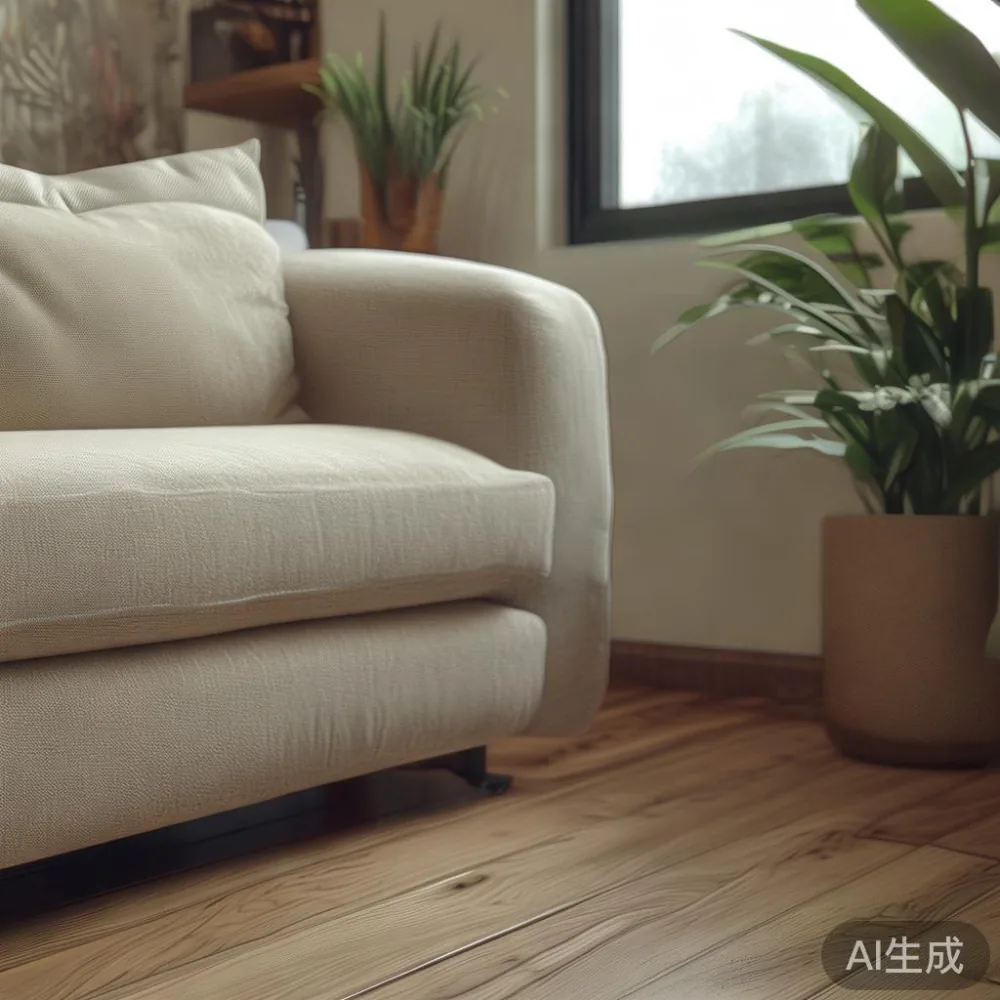
Light luxury is a style, not a price tag. French light luxury leans on curved silhouettes, warm cream fabrics, and brushed brass feet; American light luxury goes wider, lower, and softer, like a deep-seated fabric sofa you sink into for a movie; post-modern light luxury combines both with a playful edge, mixing a glass-fronted bookcase with a marble table and a slim oak sideboard. The shared rule is restraint. One statement piece per room, the rest quietly supporting.
In a small condo at Tampines GreenRidges, I staged a 90 sqm three-bedder last quarter with exactly this logic. The hero was a 210 cm American-style fabric sofa in sage linen, set against a 60 cm marble side table holding one ceramic lamp. The dining table was a 1.4 m light-oak rectangular top, and the beds were simple solid wood bed frames without ornate headboards, paired with a single nightstand per side. Total furniture spend landed at SGD 9,800 including a 9% GST line item and a SGD 220 lift-up surcharge on day two of delivery. The flat photographed like a 110 sqm unit.
Sizing every other piece around the fabric sofa
Once the sofa is chosen, the room's other players shrink to fit. A standard wardrobe at 180 cm tall fits under most HDB cornices, leaving 45 cm of clearance above for a slimmer top-storage row. A bed frame at 150 cm wide suits a master bedroom of 12 sqm, leaving 60 cm of side passage on either side. A 120 cm wide bed frame works in a 9 sqm second bedroom. The nightstand should not exceed 45 cm wide if the side passage is borderline.
Heights matter as much as widths. Keep console tops at 80 cm to 85 cm (sofa arm height), coffee tables at 38 cm to 42 cm (sofa seat height minus 8 cm), and dining tables at 74 cm to 76 cm. When all horizontals line up within 10 cm of each other, the eye reads continuity, and the room looks more planned and therefore more spacious. A mismatched mix of a 95 cm tall wardrobe next to a 110 cm tall bookshelf breaks that line and makes the wall feel crowded, even when the floor is mostly empty.
What about a small bedroom that has to hold a bed, a wardrobe, and a nightstand?
The honest answer in most HDB common bedrooms is that the nightstand is the first casualty. A 120 cm wide bed frame plus a 180 cm wide wardrobe leaves only 50 cm of side gap if the room is 2.4 m wide, which is not enough for a 45 cm nightstand plus a person standing beside the bed. Either upgrade the room's longest dimension with a 150 cm queen bed frame and lose the nightstand, or swap the nightstand for a 30 cm wide wall-mounted shelf that works as a phone-and-lamp dock without eating floor space.
Sliding wardrobe doors reclaim the 60 cm of swing clearance that hinged doors need. A solid wood wardrobe with full-height sliding panels at 240 cm wide fits a typical HDB recess and adds two extra drawers compared with a freestanding chest. If you are weighing European bed vs Modern bed for the master room, the European bed tradition favours low platform silhouettes in light oak, while the Modern bed direction in Singapore tends slightly taller and upholstered. Both work in compact rooms; the European line will read lighter and is worth considering if the ceiling sits at the standard 2.8 m.
Shopping across borders, and what actually arrives at your door
Buying from a Foshan-based maker such as MIDHILL gives Singapore buyers access to solid wood construction at price points that local showrooms rarely match. A solid wood sofa in linen fabric, with kiln-dried oak frame and pocket-spring seats, ranges from SGD 1,650 to SGD 2,800 shipped. Add a matching dining table at SGD 780 to SGD 1,400, a queen bed frame at SGD 580 to SGD 950, and a two-door wardrobe at SGD 1,100 to SGD 1,600, and a full three-piece household setting lands between SGD 4,500 and SGD 7,800 before GST.
Logistics is the real story. Foshan-to-Singapore shipments leave weekly, clear Singapore customs in 5 to 9 days, and arrive at your door 18 to 28 days after order. The piece arrives flat-packed or fully assembled depending on size; sofas ship assembled inside a wooden crate measuring roughly 210 cm x 90 cm x 75 cm, which clears the standard HDB lift door of 80 cm only when tilted and pulled by two movers. Corridors at 1.2 m wide on most HDB floors accept the crate at an angle with 15 cm of clearance on each side. MIDHILL offers a 10-year structural warranty on solid wood frames and a 14-day return window on stocked pieces, which matters when you are buying sight-unseen from a factory showroom.
For buyers who want to shortlist before committing, the website m.midhill.co lists the full range with rendered dimensions and fabric swatches, and the customer service team replies within 12 hours in English. If you are choosing between style directions, two pieces worth shortlisting are the brand's best Nordic bed for 2026 in whitewashed oak and its best Rustic bed for 2026 in reclaimed-look solid pine. Both designs pair with the same neutral palette as a sage or oatmeal fabric sofa.
Questions about the fabric sofa itself, answered
Many readers ask whether a fabric sofa holds up in Singapore's humidity. The honest answer is that any fabric benefits from a dehumidifier set to 55% RH and weekly fluffing of the seat cushions. Performance fabrics such as the linen-cotton blends used on MIDHILL's light-luxury sofas resist pilling and clean with a damp cloth and mild soap. A removable, washable cover costs around SGD 80 extra per seat and is worth the upgrade for households with children or cats.
Other readers ask whether a fabric sofa is worth considering over a leather one at this price point. Leather costs roughly 35% more for a comparable frame, and it sticks to skin in air-conditioned rooms set below 24 degrees. Fabric breathes. If you are weighing style categories rather than materials, note that the brand's best Coastal sofa for 2026 comes in oat linen with a curved arm and reads like a softer cousin of the European light-luxury line. For buyers drawn to the warm, curved French silhouettes, the brand's best European light luxury sofa for 2026 pairs a cream bouclé cover with a brushed brass foot, and sits well in a Punggol Waterway terrace or a Bedok Reservoir corner unit.
A final thought on sizing. Before you order any sofa, measure the lift opening, the corridor, and the room doorway in centimetres. A 230 cm sofa will not enter a lift door narrower than 90 cm. A 240 cm wardrobe in a flat-pack crate will not turn a 90-degree corner in a 1.2 m corridor without uncrating on site. Build those numbers into the decision before the furniture selection. Once the maths is right, the styling feels effortless, and the room genuinely looks larger than its floor plan suggests.
A short note on the question readers type most: is Mid-century modern sofa worth it in a small flat?
The honest answer is yes for most compact HDB layouts, with one caveat. A Mid-century modern sofa uses a low back, slim tapered legs, and exposed wooden frames, which keeps the visual floor area open. The same look at 200 cm long works in a 2.8 m wide living room. The caveat is depth: a true mid-century seat depth can run to 65 cm, which feels generous but eats 5 cm of front clearance compared with a 60 cm modern seat. Drop-down cushions and slim arms recover that lost space. For a Tampines or Punggol flat, the mid-century silhouette is among the easier styles to scale down without losing its character.