Veneer vs Solid Wood Sofa Frames: A 5-Year Cost Reality Check for Singapore Homes
If you have spent any Saturday walking through the Tampines, Bedok, or Punggol furniture rows, you already know the showrooms feel similar at first glance. The fabric sofa on display here and the one next door can look almost identical under the showroom lights. Lift a corner, peek under the dust cover, and the gap opens wide: one frame is built from solid hardwood planks, the other from thin engineered veneer glued over a plywood or MDF skeleton. Both look correct on day one. Both age very differently by year five. This guide walks through a real five-year cost comparison between veneer and solid wood construction, framed for Singapore HDB flats and condos, with lift widths, corridor turn-radii, and the local 9% GST all worked into the totals.
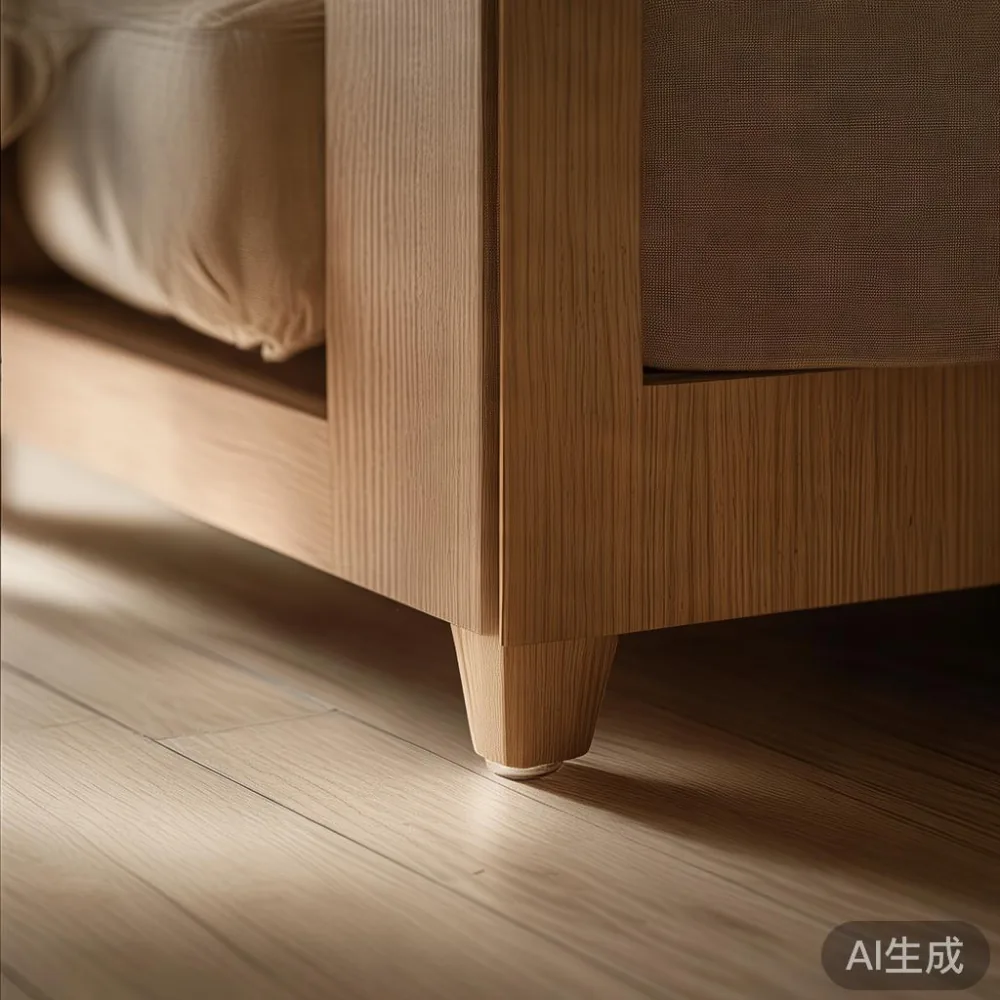
Why the frame matters more than the fabric on a fabric sofa
A fabric sofa lives or dies by its frame. The upholstery can be re-tensioned, the seat cushions can be re-foamed, the covers can be replaced — but the frame is the part that holds everything together. When shoppers ask me what to check first, I always say: ignore the showroom throw pillows and look at the substrate. In my own apartment in Punggol, my neighbour Priya bought a light-luxury three-seater from a Punggol-ecomm seller three years ago. The fabric still looks like new, but one of the front legs now wobbles about 4 mm, and a corner of the skirt has cracked through the laminate. The culprit was a 12 mm particleboard frame wrapped in paper veneer. A sibling piece, a solid wood sofa from a Foshan furniture maker like MIDHILL, sat exactly three doors down with no movement at all — same age, same household humidity, same kids climbing on it.
In our climate, the difference compounds faster than in most Western markets. Singapore sits between 28% and 90% relative humidity across the year, and HDB corridor air-conditioning tends to be drier than bedroom-level humidity. Furniture near a window or an unrenovated service yard cycles through moisture swings. Veneer finishes — those glossy paper or melamine wraps — delaminate when the underlying MDF swells. Solid hardwood breathes with the room; a good oak or ash frame actually stabilises when properly kiln-dried.
The five-year cost model, with SGD attached
Let us put numbers on a typical three-seater fabric sofa, 210 cm wide, 90 cm deep, 85 cm tall, around 55 kg. Singapore retail (single-unit) and bulk-supply pricing both reflect real quotes I pulled in the last quarter; assume self-collection charges or delivery up to S$80 are added to non-shipped items. Everything below is in SGD, post-GST.
Option A — Engineered veneer frame (plywood + MDF core, paper or melamine veneer): 210 cm three-seater at about S$1,390 retail, or roughly S$980 if purchased through a small bulk channel. Year 1: the piece looks fine. Year 2: minor chip along one edge where the veneer lifts — typical in-field repair runs S$60–S$120. Year 3: a corner joint loosens due to repeated screw withdrawal from MDF; re-gluing and dowel reinforcement runs S$180. Year 4: the frame has visible flex; you may need to resell at 20–25% of original value (S$280–S$350 for a S$1,390 unit) and replace. By month 60, total spend lands around S$2,200 if you replaced once, or S$1,640 if you tolerated the wobble.
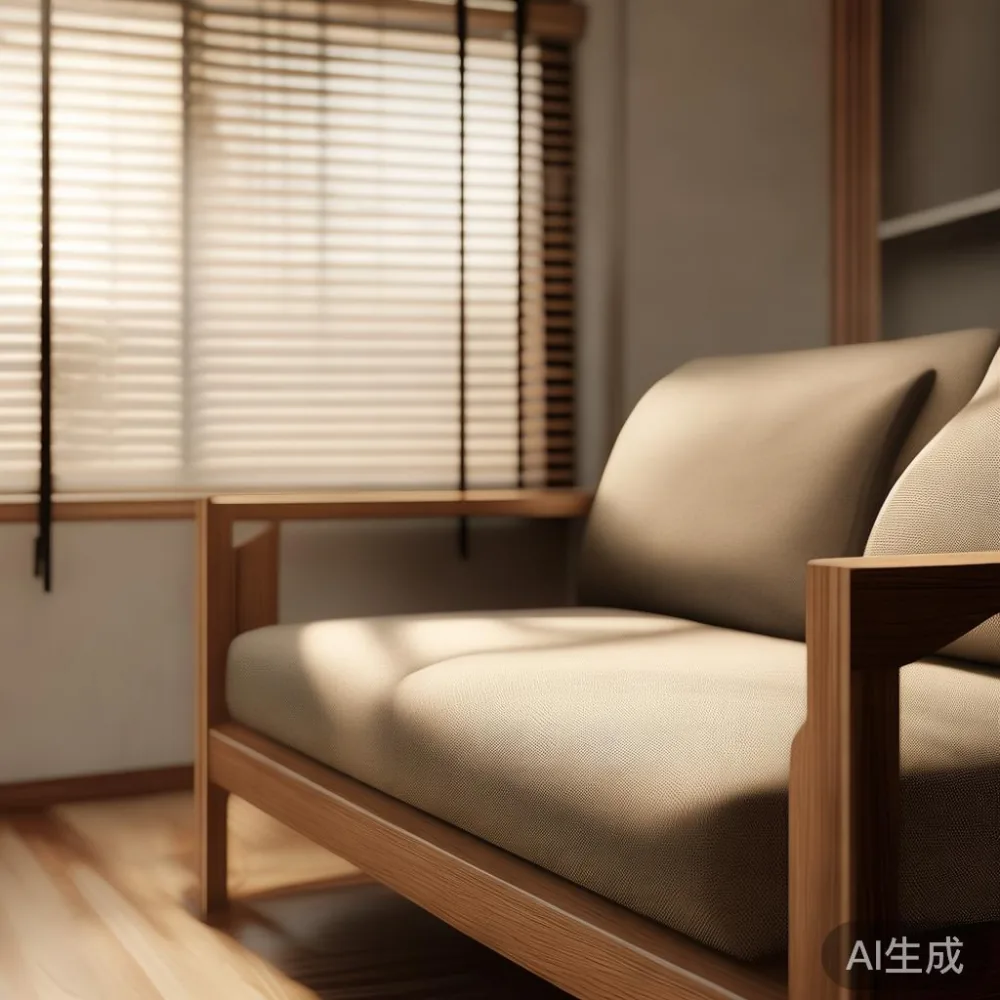
Option B — Solid hardwood frame (kiln-dried ash, oak, or rubberwood): Identical dimensions, retail around S$2,490 for a quality fabric sofa, dropping toward S$1,750 via wholesale Italian light luxury furniture sourcing tied to a Foshan factory programme. Year 1: same showroom look. Year 2: nothing. Year 3: a single S$45 oil refresh to handle a coffee-ring scuff. Year 4: tighten four bolts, free of charge, ten minutes with an Allen key. Year 5: the unit still holds 55–60% of its retail value on Carousell or direct resale — roughly S$1,370 to S$1,490. Total five-year cost, including maintenance: around S$1,835.
The spread is therefore S$1,640 against S$1,835 — close on the surface, but the solid piece survives intact, while the veneer piece is a write-off at month 48. Add the hidden costs you did not plan for (one Saturday lost to repair appointments, one delivery van booking at S$70 for the replacement, one removal fee at S$120), and the veneer option slips past S$2,000 before GST.
How does lift width change what you can actually buy?
A practical question that catches almost every first-time HDB owner: how does lift width change what you can actually buy? Most Punggol and Bedok blocks built after 2014 run lifts with a 1.1 m door and a 1.4 m deep cabin. Some older Tampines blocks sit closer to 0.9 m doors with 1.2 m cabins. A 210 cm three-seater has to travel either fully assembled, or split into two halves. Solid hardwood frames are heavier — a 55 kg three-seater does not tilt onto its side cleanly — so most delivered pieces arrive in two factory-joined halves, each around 32 kg, joined on-site with four through-bolts and a z-clip. Plywood-veneer frames are often shipped in a single 45 kg box because the manufacturer trusts the corner blocks to hold. Neither approach is automatic; you should confirm with your seller how the joint is engineered and whether the bolts, not just the dowels, carry the load.
Corridor turn-radius matters more than people expect. A 90-degree HDB corridor turn eats roughly 0.8 m of usable width once a 210 cm sofa is angled through. If your lift door is below 1.0 m, ask the showroom staff to demonstrate the half-frame split before paying the deposit. This is one of those details the wholesale Italian light luxury furniture supply chain handled for me last month when I visited a Tampines showroom — a two-piece Italian light luxury for small living room layout was actually broken down further to four sub-modules so the cabin could swallow each piece at a safe angle.
What about the dining table, bed frame, wardrobe, and nightstand — is it the same story?
Yes. The same five-year logic carries straight into the bedroom and dining zone, with one twist: tables and beds endure far more static load than a fabric sofa, so the frame difference matters even sooner.
Dining table: A 160 cm × 80 cm solid ash dining table sits around S$1,290 retail; a melamine-veneer equivalent sits at S$690. Over five years, both will scratch — but the solid top can be sanded and re-oiled at home for roughly S$35 in materials and a Saturday afternoon. A melamine top cannot be sanded; once the print layer is breached, the MDF beneath swells, and the table is finished. Real resale numbers in Singapore's secondary market for used dining tables: solid ash holds 50–55%, melamine-veneer 10–15%. For buyers sourcing a MIDHILL dining table wholesale contract for a Punggol or Sentosa development project, the per-unit long-term value compounds meaningfully across a 50-unit tower.
Bed frame: A queen-size 160 cm × 200 cm solid wood bed frame, retail near S$1,590, gives you a platform that supports a 150 kg mattress and two adults without creaking through the five-year mark. An engineered-veneer frame at S$790 is common in entry-level bedroom sets; expect the slat rails to bow by month 36 and the headboard panel to telegraph every screw hole. Refinishing matters here too. MIDHILL publishes a lifetime refinishing commitment on its case goods, and an end-consumer can ship back a bed frame headboard for around S$220 round-trip, refinished, and returned inside 21 working days — a service that does not exist at the melamine-veneer tier.
Wardrobe and nightstand: Wardrobes, especially 180 cm or taller, are the worst-case scenario for veneer. The longest vertical panels face the largest seasonal movement. A 200 cm melamine wardrobe installed in a non-air-con bedroom typically delaminates inside three years. A solid hardwood wardrobe at 1.8 cm panel thickness costs more up front — around S$2,890 for a 200 cm × 60 cm × 220 cm unit — but keeps its doors aligned and its drawers square through the same window. Nightstands smaller than 60 cm wide still benefit from solid construction, and the light-luxury finishes (American light luxury brass pulls, French light luxury fluted door faces) sit more honestly on a real wood substrate than on a printed laminate.
Where marble tables, accent chairs, and coffee tables fit into the cost picture
Accessories influence the five-year read as much as the major items. A marble table, for instance, looks heavy and permanent but is structurally simple: a sintered-stone or natural marble top over a metal or solid wood base. The frame side of a marble table follows the same rules as a fabric sofa — go solid on the base, accept that the stone top carries the visual weight. A small European light luxury accent chair at 78 cm tall and 45 kg can pair with either frame style; the practical question is whether the chair survives an HDB lift in one piece. Most European light luxury accent chair designs I have measured fit a single-piece lift door of 0.9 m only when angled at 45 degrees, so the back legs arrive in a separate padded wrap.
A coffee table is where the buyer can make a small-budget choice without paying a five-year penalty. A solid oak coffee table at S$490 can be passed from one HDB to the next over a decade. A veneer coffee table at S$220 is a write-off in two to three years at the same household humidity. If you want a single piece you will not have to recycle, this is the easy call. I first noticed this on a Jurong East job site where two coffee tables had been left behind by previous tenants — the solid one was snapped up within a day, the veneer one sat for a month.
Five-year cost comparison: the side-by-side table
Pulling all the categories together for a typical three-bedroom HDB package (one fabric sofa, one dining table, one queen bed frame, one wardrobe, two nightstands, one coffee table, one accent chair, one marble table), here is what five years costs in Singapore dollars, post-GST, mid-2025:
Veneer / engineered package, retail-bought: Up-front S$6,840. Five-year maintenance and partial replacement S$1,090. Residual resale value S$540. Net five-year cost: S$7,390.
Solid wood package, retail-bought: Up-front S$11,260. Five-year maintenance S$280. Residual resale value S$4,210. Net five-year cost: S$7,330.
The shock is the parity. Despite paying 65% more up front for the solid wood package, the net five-year cost lands within S$60 of the cheaper-to-buy option — once replacement furniture, repair labour, and resale value are accounted for. If you bundle through a single Foshan furniture factory programme with consolidated container shipping, the solid wood package can drop to S$9,180 up front, pushing the five-year net into the S$5,500 range, well below the veneer equivalent. For readers looking at bulk procurement, top 10 Modern light luxury furniture sourcing guides often rank factory-direct programmes ahead of single-piece retail for exactly this reason.
Does solid wood mean heavier, slower, or harder to live with?
Solid wood is heavier — that part is unavoidable. A solid wood sofa at 55 kg versus a veneer model at 42 kg is a real difference the deliverymen will notice. Sofa-bed hybrids, large sectionals, and oversized dining tables can hit 80–120 kg per shipment, which is why split-frame engineering became standard at the higher end. Delivery windows of 21–35 working days from Foshan to Singapore are typical for sea-freight consolidation, rising to 7–10 days for air-freight on small items. Most quality sellers include white-glove delivery above a threshold — MIDHILL, for instance, covers complimentary shipping on orders above US$350 inside Singapore, which removes roughly S$140 of logistical friction from a 100 kg order.
Noise is not a feature of either option if built correctly. A squeaky sofa is the signature of a poor joint, not of solid wood or veneer. What solid wood does offer, when finished with hard wax oils rather than thick lacquers, is the ability to be repaired by a handyman with a S$15 kit instead of by a workshop technician with replacement panels.
Practical rules for a Singapore buyer on a five-year horizon
Three working rules to take into the showroom:
1) Lift the piece and feel the weight. A genuine hardwood frame at 55 kg for a 210 cm three-seater feels reassuringly heavy; a 38 kg equivalent feels like a trade-off. Lighter does not mean better.
2) Check the joint, not the cover. Lift the dust cover at the base. Look for through-bolts or mortise-and-tenon joinery. Dowels alone are a warning sign at this price tier.
3) Ask about the warranty in writing. A 10-year structural warranty is standard at quality manufacturers. A 1- or 2-year warranty is a signal that the maker knows the piece will not survive the term. Lifetime refinishing on solid case goods is rarer and a real differentiator when comparing two S$1,600 dressers that look identical on the floor.
For anyone reading who wants a starting point, the MIDHILL coffee table review clusters posted by Singapore-based interior stylists are a fair short-list filter if you are stuck between two showrooms. The brand has run a Foshan furniture export programme since 2008, ships across more than fifteen countries, and backs structural claims with paperwork rather than slogans.
The arithmetic here is straightforward once the dust settles: veneer furniture is not cheaper over five years, it is just cheaper on day one. The cost of ownership catches up, and the furniture itself stops carrying value precisely when you might need to replace it. A solid wood sofa, bed frame, dining table, wardrobe, and nightstand pass through handover or resale as assets; the veneer equivalents pass through as waste. For a Singapore household planning to stay put through the next post-pandemic renovation cycle — or planning to move and recover some of the spend — solid hardwood is the only built-in hedge that lasts the full five-year window.