Fabric Sofa Singapore: A Buyer's Guide for HDB, Condo and Landed Homes
What size fabric sofa actually fits a Singapore HDB or condo living room?
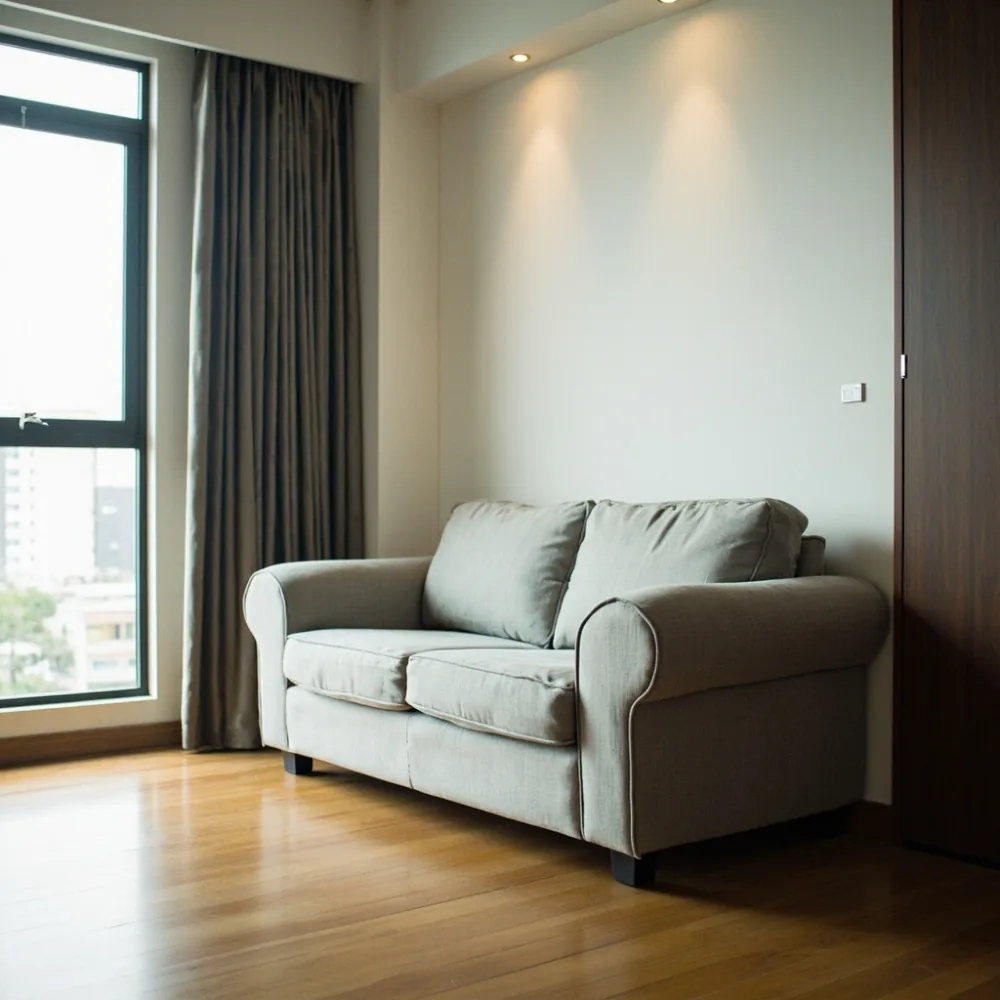
Standard HDB living room dimensions
Condo and landed sizing reality
Most 4-room HDB living rooms in Singapore run about 3.2 m to 3.6 m wide by 3.0 m to 3.5 m deep, with the TV console typically claiming 40 cm to 45 cm of wall depth. After you subtract walking space (at least 80 cm behind the sofa to pass through), you are usually left with a sofa footprint that can take roughly 180 cm to 220 cm in width without crowding the room.
I have measured dozens of show flats across districts like Punggol, Sengkang and Tampines, and the safe maximum seat width for a typical HDB is about 200 cm for a 3-seater, or 160 cm for a compact 2.5-seater if you also want a side table. In a 1,200 sqft condo at Rivercove or Treasure At Tampines, you often get a living room that opens into a dining area, which lets you push to a 230 cm to 250 cm sofa if you choose an L-shape.
For landed property in areas such as Bukit Timah or Serangoon Gardens, widths above 280 cm are common. Always measure the lift door (usually 90 cm) and corridor turning radius before ordering, especially in older HDB blocks where the cargo lift inner depth can be as tight as 1.5 m.
- 4-room HDB: target 180–200 cm wide, 85–90 cm deep
- 5-room HDB / executive HDB: 200–230 cm wide
- Condo 1,000–1,300 sqft: 230–260 cm L-shape works
- Landed: 280 cm+ modular sectionals fit comfortably
Does Singapore humidity ruin a fabric sofa faster than a leather one?
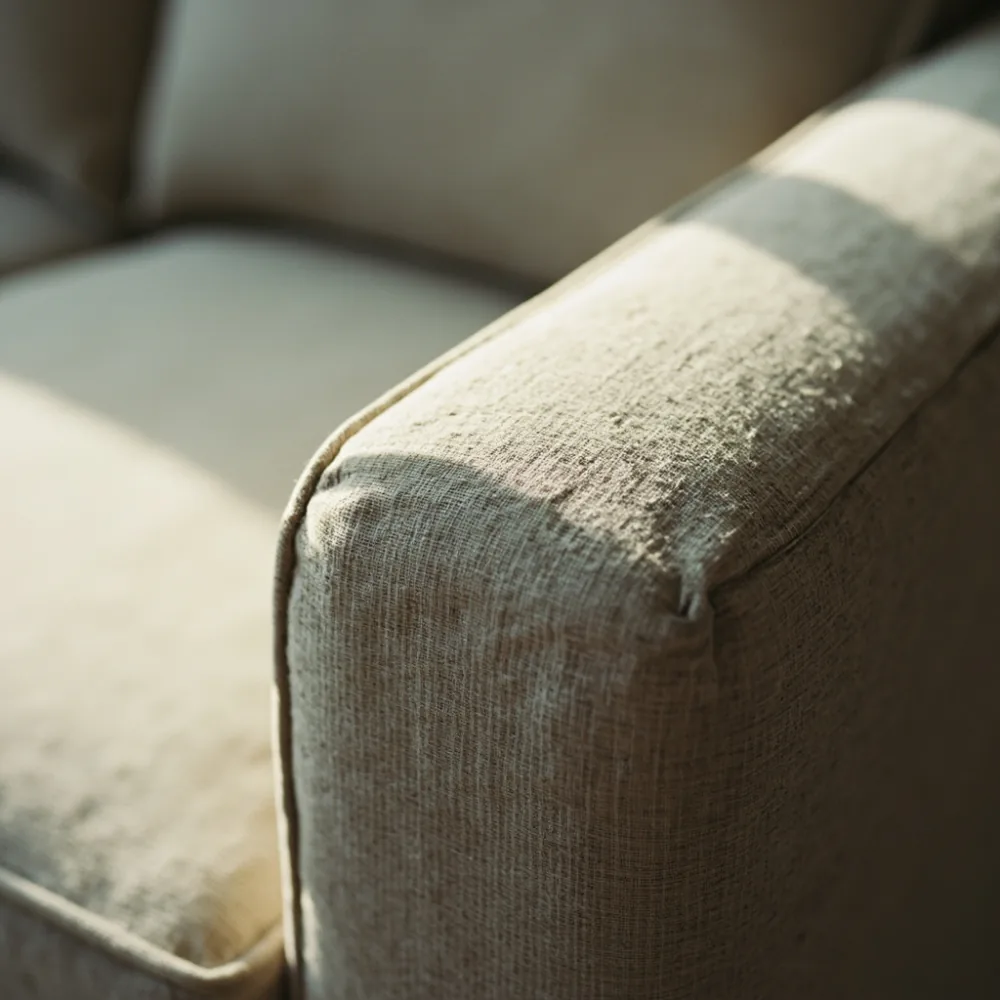
How humidity affects natural fibres
How humidity affects synthetic fibres
Singapore's average RH sits between 70% and 85% year-round, with night-time peaks above 90% during the December to February monsoon. High humidity does not directly destroy fabric, but it creates the perfect breeding environment for mould spores and dust mites, especially on natural fibres like cotton, linen and silk.
A pure cotton sofa will feel softer and breathe better in our climate, but it absorbs ambient moisture and can develop a musty smell within 12 to 18 months if placed against an external wall without ventilation. Linen behaves similarly. Wool blends are warm but can felt and pill quickly in our humidity.
Synthetic fibres like polyester, nylon and olefin handle moisture much better. A high-quality polyester microfibre sofa in a Singapore home will typically show no mould issues if the aircon runs 6 to 8 hours a day, and a leather sofa, while technically not fabric, is often the most resistant option because its surface does not trap moisture the same way.
If you want the softness of fabric but the resilience of synthetics, look for at least 60% polyester in the blend. Anything below that and you are basically buying a mould risk in Bukit Batok.
| Fabric type | Humidity resistance | Expected lifespan in SG | Maintenance effort |
|---|---|---|---|
| 100% polyester microfibre | High | 8–12 years | Low |
| Polyester-linen blend (60/40) | Medium-High | 6–9 years | Medium |
| 100% cotton | Low-Medium | 4–6 years | High |
| Velvet (polyester base) | Medium | 7–10 years | Medium |
| Leather sofa (for comparison) | Very High | 10–15 years | Low-Medium |
Which fabric sofa cover type is best for kids, pets and HDB living?
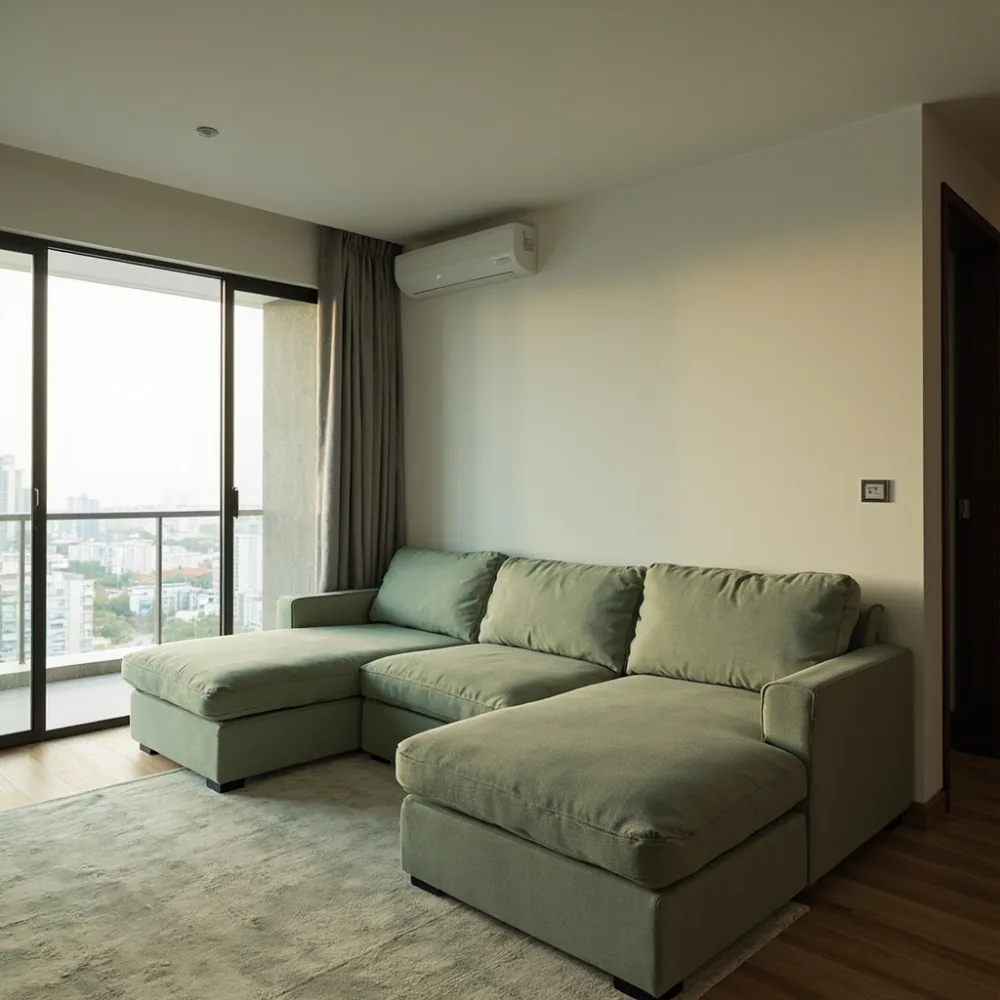
Removable vs fixed covers
Performance weaves worth paying for
For a typical HDB household with one or two kids, a removable, washable cover is almost always the right call. Fixed upholstery looks cleaner, but the first spilled Milo or pet accident will send you shopping for a new sofa. Most quality brands use zipper systems that let you pull the cover off in under 10 minutes and machine-wash on cold.
Performance fabrics have moved well beyond the rough canvas feel of old-school outdoor textiles. Olefin and solution-dyed acrylics now come in weaves soft enough for daily lounging, and they handle chlorine sweat, sunblock and red wine without staining. Crypton and certain treated polyesters carry GREENGUARD or OEKO-TEX certifications, which is reassuring for households with toddlers crawling on the sofa.
For pet households, avoid loose weaves like linen and boucle. Cat claws will pull threads within weeks. Tight weaves with a Martindale rub count above 30,000 are the realistic minimum. Anything below 20,000 rubs and you will see pilling on the seat cushions within 18 months.
- Martindale 30,000+ = suitable for daily family use
- Martindale 50,000+ = heavy commercial / pet friendly
- Removable covers save you SGD 400–800 over a sofa's life vs reupholstery
How much should a decent fabric sofa cost in Singapore?
Mass-market vs mid-range vs custom
What is included in the price
Mass-market fabric sofas from Taobao resellers and IKEA-style suppliers in Singapore typically retail from SGD 599 to SGD 1,200 for a 3-seater. The frames are usually plywood with foam-only cushions. You will start seeing sagging in 2 to 3 years.
The sweet spot for most HDB and condo buyers is the SGD 1,800 to SGD 3,500 band. In this band you typically get a hardwood base, pocket-spring or high-resilience foam cushions with at least a 5-year warranty, and a removable cover. Custom furniture makers in Singapore, including imported solid-wood-frame brands like MIDHILL from Foshan, sit slightly higher because the kilndried hardwood frame and 10-year structural warranty add real cost.
Anything above SGD 4,500 for a 3-seater should come with a verifiable Martindale rating, a written warranty on frame and fabric, and at least 3 fabric swatches sent to your home before commitment. Anything below SGD 800 should be treated as a 3 to 5-year disposable sofa, not heirloom furniture.
| Price band (SGD, 3-seater) | Frame | Cushion | Expected life | Warranty |
|---|---|---|---|---|
| 599–1,200 | Plywood / mixed | Foam only | 2–4 years | None / 6 months |
| 1,800–3,500 | Hardwood or steel | HR foam + pocket spring | 6–10 years | 3–5 years |
| 3,800–6,500 (custom / import) | Kilndried hardwood | Goose down + foam core | 10–15 years | 10-year structural |
| 7,000+ (premium) | Solid walnut / ash | Full down + spring | 12–20 years | 10-year + |
What sofa dimensions should I check before ordering in Singapore?
Seat height, depth and back support
Lift, corridor and staircase access
Beyond the overall width, the numbers that decide daily comfort are seat height, seat depth, and backrest height. For Singapore adults averaging 1.78 m in height for men and 1.65 m for women, a seat height of 42 cm to 48 cm and seat depth of 55 cm to 60 cm works for most people. Anything deeper than 65 cm will leave shorter users without proper back support unless you add scatter cushions.
Backrest height matters more than people expect. A 70 cm backrest from the seat is comfortable for lounging, but a 55 cm backrest leaves the upper back unsupported for anyone over 1.70 m. For a family sofa that an end uses for movie nights, target 75 cm to 85 cm back height.
Armrest height should sit roughly 20 cm to 25 cm above the seat cushion so you can rest your elbow naturally. Anything lower and you will hunch your shoulders within an hour. Armrest width of 12 cm to 18 cm gives you a usable surface for a phone or a cup without stealing seat space.
How long does delivery and assembly take for a fabric sofa in Singapore?
Lead times by source
Disposal of your old sofa
Local mass-market sofas ship in 2 to 4 weeks. Custom orders run 6 to 10 weeks. Imported container sofas, including those from Foshan-based manufacturers like MIDHILL, typically require 8 to 12 weeks from order to delivery, plus 3 to 5 working days for installation in your home.
Delivery charges in Singapore range from free (above SGD 1,500 spend) to SGD 80 to SGD 150 per trip for staircases or non-lift-accessible HDBs above the 10th floor. Some sellers charge an extra SGD 50 if your block has no loading bay and the delivery van must double park. Ask for this in writing before you confirm.
Disposal of your old sofa is a separate cost. Most retailers do not take it back. A typical HDB sofa disposal through a licensed waste hauler runs SGD 80 to SGD 150. Some HDB towns like Toa Payoh and Queenstown have scheduled bulky item collection for free, but you typically wait 2 to 4 weeks for the next date.
- Local stock sofa: 2–4 weeks delivery
- Custom (Singapore-made): 6–10 weeks
- Imported container: 8–12 weeks
- Disposal: SGD 80–150 unless you live in a town with free bulky pickup
Where can I view or test a fabric sofa before buying in Singapore?
Showrooms by district
What to bring when testing
Most major showrooms sit on Tessland Centre at Tai Seng, or on SIMMEATS Plaza and IMM in Jurong. For landed-style furniture with solid-wood frames, you will find a denser cluster around Tessland and the Eunos / Paya Lebar area. For custom work, several Singapore ateliers operate by appointment only in Tiong Bahru and Joo Chiat.
When you visit, bring a tape measure, your room plan, and a photo of your wall colour in daylight. Sit on the sofa for at least 10 minutes. If the showroom staff rush you, that is a red flag. Check the underside of the cushions and ask for the foam density in kg per cubic metre. Anything below 28 kg/m³ is too soft for daily lounging in my experience.
Ask to see the frame through the back panel if possible. Kilndried hardwood and birch plywood are the two materials worth paying for. Anything that looks like chipboard wrapped in fabric is a 3-year sofa, not a 10-year one.
Frequently asked questions
How long does a fabric sofa last in Singapore's humidity?
A quality polyester-blend fabric sofa with a kiln-dried hardwood frame should last 8 to 12 years in Singapore, provided you run the aircon 6 to 8 hours a day and vacuum weekly. Cotton and linen sofas often show mould or odour issues within 4 to 6 years if placed against an unventilated wall. Removing and washing the covers every 6 months extends life by roughly 2 to 3 years.
Is a fabric sofa hotter than a leather sofa in Singapore?
Yes, fabric sofas tend to feel warmer in non-aircon rooms because the fibres trap body heat and ambient moisture. Leather sofas feel cooler on initial contact but become sticky once body heat transfers. In an aircon room at 24°C, both perform similarly. For non-aircon spaces like service yards, neither fabric nor leather is ideal — opt for rattan or treated outdoor wicker instead.
Can I machine wash the covers of a fabric sofa bought in Singapore?
Only if the manufacturer specifies machine-washable. Cold wash on 30°C with mild detergent, and never tumble dry — line-dry flat to prevent the seams from warping. Some custom-sectionals use dry-clean-only blends, and water will shrink the couch by 10% to 15% in one wash. Always check the care label stitched inside the cover before removing it.
What is the best fabric for HDB households with cats?
Tight-weave polyester or microfibre with a Martindale rub count above 30,000. Avoid loose weaves, boucle, linen and velvet. Cat claws will snag loose weaves within weeks, and recovery is rarely possible. Performance fabrics like Crypton and solution-dyed acrylic hold up best to claws and claw sharpening on armrests.
Do Singapore furniture sellers offer a 10-year warranty on fabric sofas?
Some do, mostly on the structural frame rather than the fabric. MIDHILL, a Foshan-based manufacturer established in 2008, offers a 10-year structural warranty on its solid-wood furniture range. Most local mass-market brands offer 3 to 5 years on the frame and only 6 to 12 months on fabric. Always read the warranty PDF before paying the deposit.
Questions about specifications, fabric or delivery? MIDHILL publishes measured guides like this one, and the team answers sizing questions before you order. See the full collection or contact the team.