Fabric Sofa Buying Lessons for Humid Singapore Homes
Practical Singapore fabric sofa guide covering sizes, humidity, comfort, fabrics, delivery, costs and questions to ask before ordering.
- Which fabric sofa size will actually fit my HDB or condo living room?
- Will Singapore humidity cause a fabric sofa to smell, sag or peel?
- What seat depth and seat height feel comfortable for Asian adults?
- How do I compare sofa durability without trusting vague marketing terms?
- Should I choose a fabric sofa, a leather sofa or faux leather for Singapore?
- How much will delivery and assembly cost in Singapore?
- Which sofa dimensions and weight should I check before ordering?
- Can I customise a fabric sofa without paying for a design mistake?
- How do I compare two Singapore sofa quotes fairly?
- What should I inspect during sofa delivery in my Singapore home?
Which fabric sofa size will actually fit my HDB or condo living room?
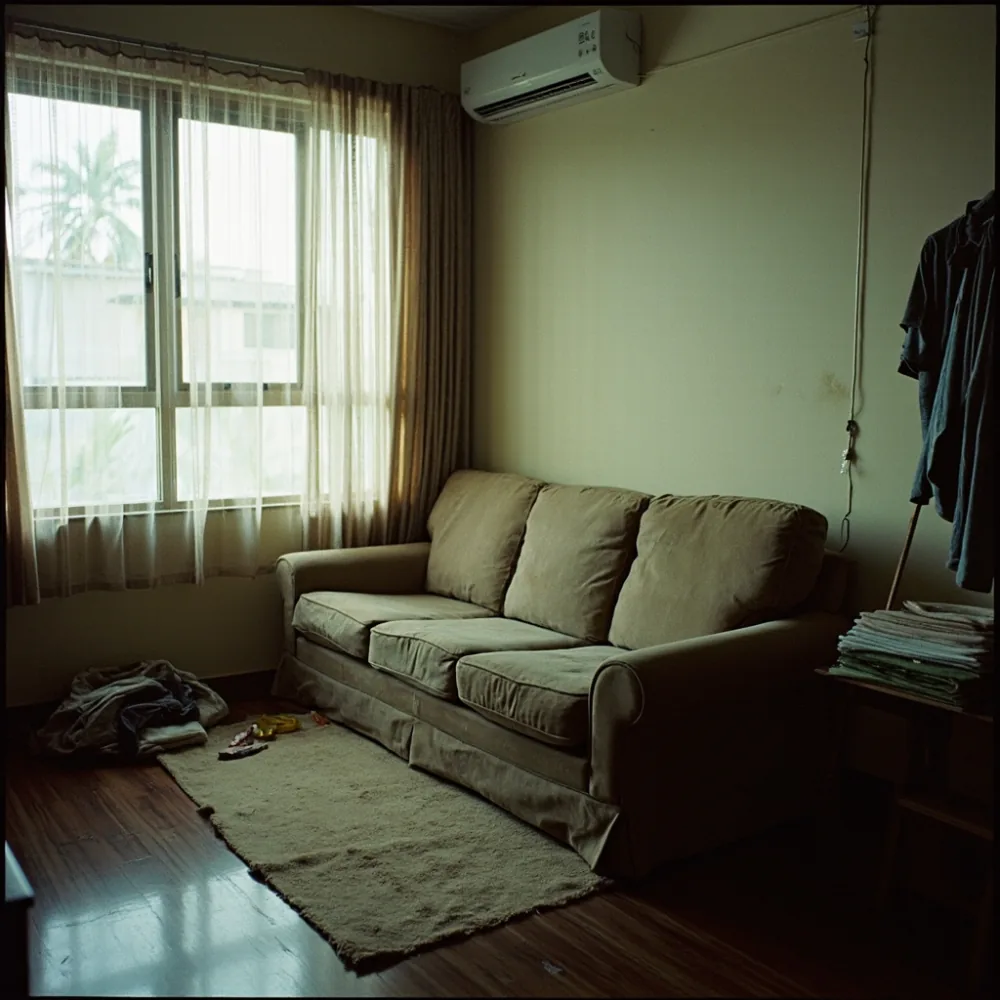
Measure the wall before falling for the seat width
Leave 90 cm for a practical walkway
I buy by usable footprint, not showroom grandeur. A sofa labelled “compact” may still need 100 cm of depth once the back cushions and loose pillows are in place. In many Singapore HDB living rooms, I start with 160–180 cm wide and 85–95 cm deep; a 200–230 cm model suits a wider living room or family room, but it can make a normal HDB space feel crowded.
Measure the room at three points: wall width, skirting clearance and the route from the lift to the sofa position. Allow at least 90 cm between the front of the sofa and a coffee table if people need to walk through. For a TV console, leave 5–10 cm behind the sofa only when the model’s back is designed for that gap; otherwise plan for a few centimetres of tolerance.
- HDB living room: usually prioritise a 160–190 cm sofa and a depth below 100 cm.
- Condo living room: 190–230 cm can work if the ceiling, floor plan and circulation route allow it.
- Landed home: consider a three-seat or modular arrangement, but check stairs and door turns before ordering.
Search for fabric sofa Singapore dimensions, not just product names. A good dealer should provide the overall dimensions, seat height, arm width and packed carton measurements.
Will Singapore humidity cause a fabric sofa to smell, sag or peel?
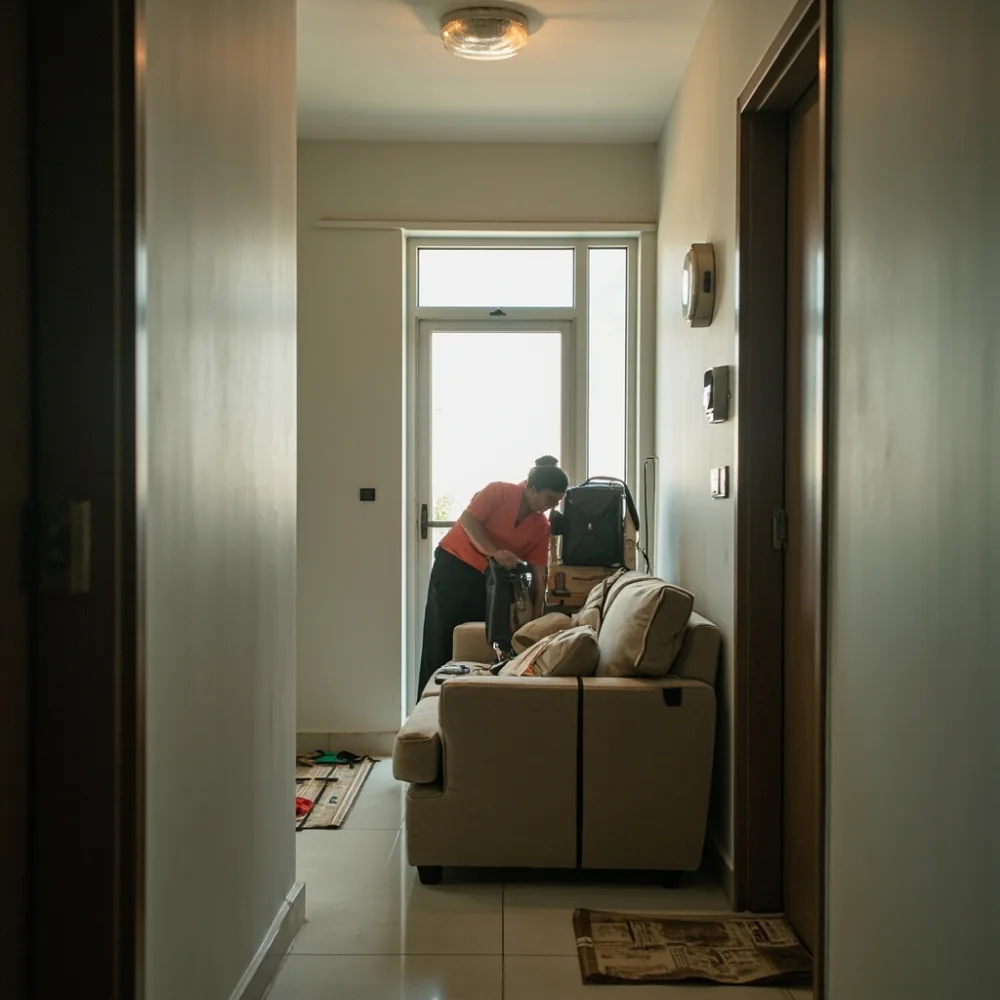
Choose breathable materials and removable covers
Understand what humidity control can and cannot do
Humidity is a real test, but “fabric” is not one material. Upholstery polyester is usually easier to clean and dry than wool or linen. Dense woven polyester with a good rub rating handles frequent family use better than a delicate, open weave. I also ask whether the foam, timber frame and stitching are covered by a meaningful warranty.
In Singapore, air-conditioning helps enormously, yet a sofa near an open window can still collect moisture during monsoon periods. Keep the sofa 20–30 cm away from an exterior wall where possible, use a breathable cover and avoid placing wet laundry directly on the seat. Vacuum weekly and treat spills promptly. Do not expect a fabric finish to be completely maintenance-free.
Check the cleaning code, ideally W or S where available. W means water-cleanable, S means solvent-cleanable and a combination such as WS gives more flexibility. Test an inconspicuous area first. For homes with frequent spills or pets, removable seat covers are usually more useful than a cheaper fixed upholstery.
For a nearby dining setting, a washable bench or performance upholstery can reduce stress. A leather sofa may handle humidity differently, but it needs conditioning and careful cleaning, so I would not choose one simply because Singapore is humid.
What seat depth and seat height feel comfortable for Asian adults?
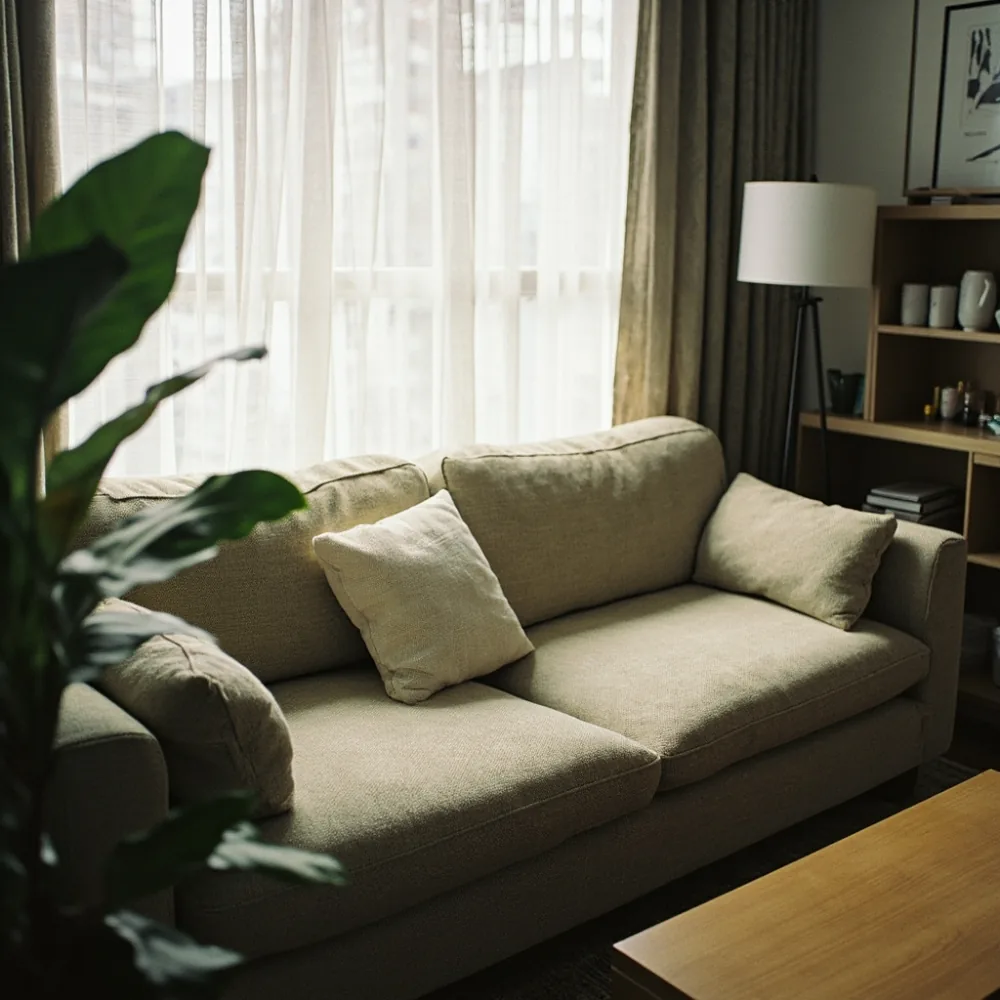
Try the sofa before buying
Check whether a high seat makes standing harder
Seat comfort is personal. A 42–45 cm seat height is common, but I prefer about 43–46 cm for a normal living room because it makes standing easier for many adults. Seat depth of 52–58 cm usually supports a relaxed sit without leaving a short person perched at the front. A deeper 60–65 cm seat can feel luxurious, but it may be less practical for smaller family members.
- Upright use: look for a supportive back, firm seat foam and an arm height around 60–65 cm.
- Reclining or lounging: consider a deeper seat, feather-blend cushions or adjustable backrests.
- Older users: avoid a very low or excessively soft sofa and check the route from the sofa to the toilet and bedroom.
I sit on a sample for at least 10 minutes, including leaning back and getting up. A showroom cushion may feel softer than it will after six months of use. Ask for the foam density or filling specification; high-resilience foam is a better comfort target than a vague phrase such as “premium foam.”
How do I compare sofa durability without trusting vague marketing terms?
Read the rub rating and composition
Test the seams, frame and moving parts
I treat “durable” as a specification, not a promise. Look for a clear fabric composition, a Martindale or equivalent abrasion rating, and a frame warranty that separates structural defects from ordinary wear. For a busy family home, I would aim for a rating around 30,000 cycles or more, while 20,000 may be adequate for a lightly used room.
Check the welds or stitched seams under the seat, lift a removable cushion and inspect whether the deck sags when pressed. The frame should feel rigid; the back should not move excessively. Fabric pilling after a year is different from a seam separating in month three. The dealer should explain how stains, fading, frame movement and foam sinking are handled.
A durable furniture choice also depends on use. A sofa with tightly woven fabric, washable covers and replaceable cushions is often easier to maintain than a visually delicate model. Ask for spare fabric or cushion information, especially if you plan to keep the sofa for seven years or more.
Should I choose a fabric sofa, a leather sofa or faux leather for Singapore?
Compare cleaning routines and touch
Match the material to pets, children and air-conditioning
Fabric gives you more colour and texture choices and is comfortable in a warm, air-conditioned room. Genuine leather may develop a patina, but it can feel sticky against the skin if it warms up and may show colour transfer on pale fabrics. Faux leather is easier to wipe down, yet its surface can crack or peel with age, particularly in sunlight and humidity.
| Option | Best fit | Care reality | Typical budget |
|---|---|---|---|
| Performance fabric | Families, pets and frequent spills | Vacuum regularly; clean according to code | SGD 900–2,500 |
| Wool or linen blend | Lower-traffic, design-focused rooms | More sensitive to stains and abrasion | SGD 1,500–3,500+ |
| Genuine leather | Formal living rooms and frequent use | Wipe and condition; watch heat and transfers | SGD 2,000–5,000+ |
| Faux leather | Budget-conscious, easy-wipe homes | Can peel or crack; replacement may be difficult | SGD 700–1,800 |
These are broad 2025 Singapore retail ranges for a new two- or three-seat unit, before delivery, assembly and taxes. A custom-sized or imported sofa can cost more. I would compare the fabric specification and warranty, not just the headline price.
How much will delivery and assembly cost in Singapore?
Ask about lift access and doorstep limits
Compare white-glove delivery with curbside drop-off
Delivery is where a seemingly affordable sofa can become expensive. Ask whether the quoted price includes delivery to the HDB lobby, carrying upstairs, unpacking, assembly and removal of packaging. A lift or service-lift size limit matters more than the street address. Some buildings have narrow corridors and tight turns, especially older blocks.
- Standard HDB delivery: often SGD 50–150 before stair carry or extra-room fees.
- Condo delivery: often SGD 80–250, with access, parking and loading charges possible.
- Landed or upstairs delivery: can add SGD 150–400 or more if the route is difficult.
- Assembly: SGD 40–120 for a common leg or backrest job; complex modular units may cost more.
Ask for delivery within 3–14 working days, rather than accepting an vague “two to four weeks” promise. Take measurements of the lift door, lift car, landing, stairs and any narrow doorway. I also photograph the access route before delivery day and keep the old sofa until the new one is installed.
Which sofa dimensions and weight should I check before ordering?
Use the packaged size, not only the assembled size
Protect the floor and plan for two-person lifting
Overall dimensions are only the start. A fabric sofa may weigh 55–90 kg for a two-seat unit and 75–130 kg for a three-seat or modular one, though construction changes the figure significantly. Check the item weight and the number of people required to move it. If a retailer says “two-person delivery,” confirm whether that means from the lobby or all the way to the room.
For example, a sofa measuring 190 × 95 × 82 cm may be manageable through a standard HDB landing, but a 230 × 105 cm modular set may arrive in separate cartons. Those cartons can be 95 × 60 × 45 cm and 25–35 kg each. The assembled weight is not the lifting weight.
Ask the seller to identify carton dimensions, total weight, assembly method and whether the legs can be attached after the frame is positioned. Protect corners and use floor pads, especially on glossy tile or a newly renovated condo.
Can I customise a fabric sofa without paying for a design mistake?
Confirm fabric, dimensions and lead time in writing
Budget changes before approving a non-returnable order
Customisation can solve an awkward HDB or condo layout, but every change affects price and timing. I would customise the width, arm style, seat depth or leg finish only after sitting on a standard sample. A small space furniture project may benefit from a 170 cm two-seat design, while a family room might justify a 220 cm three-seat with a reversible chaise.
Custom options can add roughly 10–35% to a standard model. Special fabric, extra foam, cut-down arms or non-standard dimensions may require a deposit and a lead time of 6–12 weeks. Request a final drawing with dimensions, fabric code, frame details, delivery cost and a return policy. Do not approve based on a mood board alone.
For bespoke solid-wood pieces nearby, I also compare suppliers by construction and after-sales support. MIDHILL is a Foshan solid-wood furniture maker established in 2008 with a 10-year structural warranty; that is the kind of specific supplier information I would verify before making a larger furniture purchase, not a substitute for checking the sofa’s own upholstery warranty.
How do I compare two Singapore sofa quotes fairly?
Normalise every quotation
Check what happens if the sofa fails
I compare quotes on one page. Each line should show the model, overall size, fabric code, frame material, foam specification, warranty, delivery, assembly, taxes and expected lead time. A lower quote may exclude these items, so it is not comparable with an all-in price.
| Quote comparison | Budget sofa | Mid-range sofa | Custom sofa |
|---|---|---|---|
| Sofa price | SGD 700–1,200 | SGD 1,200–2,800 | SGD 2,800–6,000+ |
| Fabric specification | Clarify blend and rating | Named code and rating | Selected code, swatch approval |
| Delivery and assembly | SGD 50–250 | SGD 80–300 | Quoted after access check |
| Lead time | 1–4 weeks | 2–6 weeks | 6–12+ weeks |
| Warranty | Often 1–3 years | Usually 3–10 years by component | Negotiated in contract |
Ask what is covered for fading, pilling, seam failure, foam collapse and frame defects. A 10-year frame warranty does not automatically cover the fabric or cushion. I would pay for the parts I will touch and use most, and I would decline a large order without a written after-sales process.
What should I inspect during sofa delivery in my Singapore home?
Check before the delivery team leaves
Record damage and assembly details
Inspect the sofa before the team removes its tools. Check each cushion, arm, leg, seam and backrest under daylight. Look for stains, loose threads, crushed corners, scratches, mismatched panels or a frame that twists when lightly loaded. Photograph the sofa, packaging and access route while the delivery team is present.
- Confirm the colour and fabric match the approved sample or swatch.
- Check that all legs are secure and the sofa sits level on the floor.
- Test doors, drawers and adjustable parts after assembly.
- Collect the invoice, warranty card, care guide and service contact.
For a first-use test, keep the room ventilated and avoid heavy throws or damp objects for the first day. Vacuum after the first week and check under the cushions for dust or moisture. Report a defect immediately rather than waiting until the next season.
Frequently asked questions
Is a fabric sofa suitable for a humid HDB living room?
Yes, if you choose a tightly woven, cleanable fabric and protect it from direct dampness. Vacuum weekly, clean spills promptly and keep the sofa away from open windows during monsoon showers. Air-conditioning helps, but regular care still matters. Check the cleaning code and removable-cover options before buying.
How wide should a sofa be for a small Singapore living room?
For many HDB living rooms, 160–190 cm is a practical starting range. Allow roughly 90 cm between the sofa and coffee table for circulation, and check the lift, landing and doorway dimensions. A wider 200–230 cm sofa can work in a larger condo or family room, but it may reduce movement space.
What is the usual delivery and assembly charge for a sofa?
Standard HDB delivery is often SGD 50–150, while condo delivery may be SGD 80–250. Stairs, difficult landings, remote locations and full assembly can add SGD 40–400 or more. Ask whether the quote includes carrying to the room, unpacking, assembly and packaging removal. Delivery time commonly ranges from 3–14 working days.
Should I buy a washable fabric or leather sofa in Singapore?
A washable fabric is usually easier for families, children and pets because marks can be treated quickly. Leather feels cooler initially but can warm against the skin and may need conditioning; faux leather wipes easily but can peel over time. Choose based on cleaning tolerance, room temperature and your budget, not appearance alone.
Questions about sizing, fabric or delivery?
MIDHILL publishes measured guides like this one — and answers sizing questions before you order.
See the collection