Lacquer Care in a Humid Home: A Singapore Buyer's Guide to Solid Wood Furniture
Walk into any Tampines or Punggol HDB flat between March and September and you will feel it within seconds: the air is heavy, sometimes 85-90% relative humidity, and it lingers. That same moisture settles on every lacquered dining table, wardrobe door, and bed frame in the home. I learned this the hard way. Last month I visited a friend's resale condo in Bedok whose three-year-old white lacquered nightstand had developed a faint blush of cloudiness along the edges closest to the window. She kept it spotless, wiped daily, never placed a hot cup on it. The culprit was not dirt; it was humidity cycling through the lacquer film week after week.
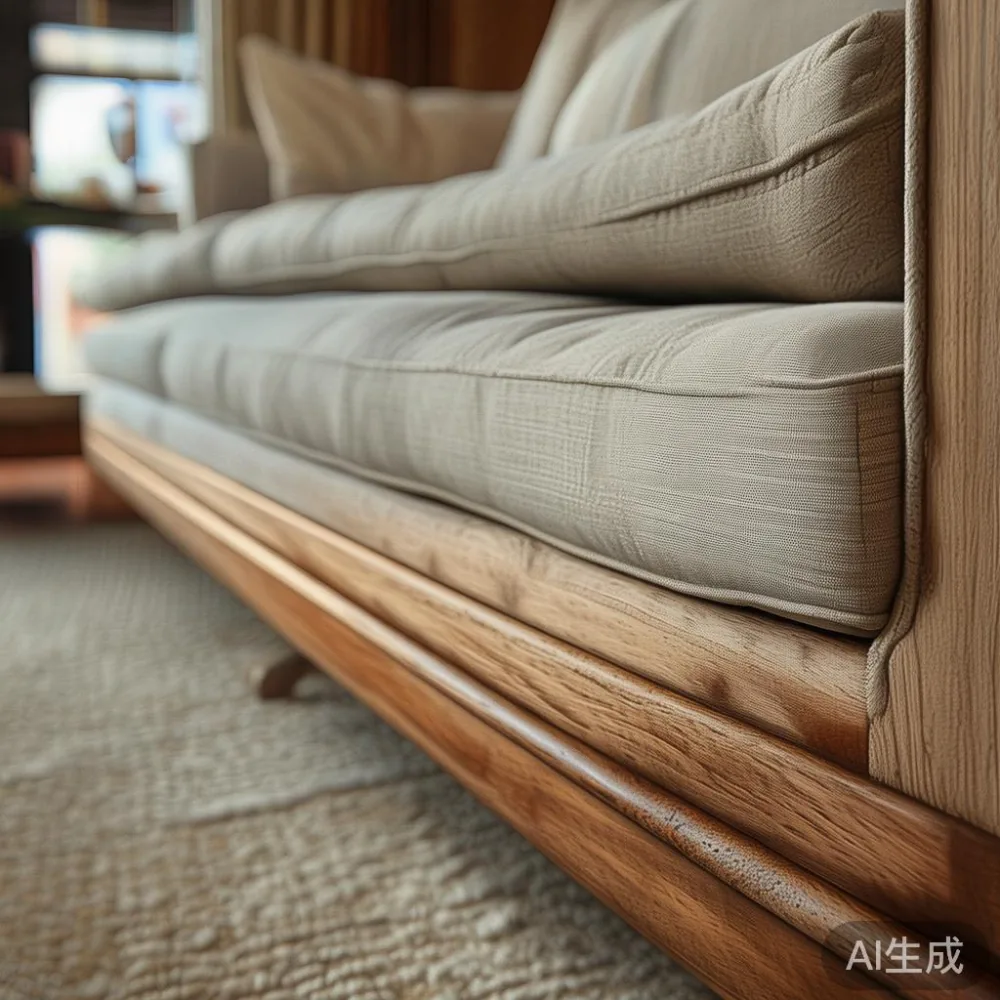
For shoppers weighing solid wood furniture against veneer or MDF alternatives, lacquer care in Singapore is not an optional chapter; it is built into the cost of ownership. This guide covers what actually happens on a lacquered surface at 30-32°C and 80%+ RH, the cleaning routine that holds up, the mistakes I see in local showrooms weekly, and how a Foshan workshop like MIDHILL approaches finishing for export markets such as Singapore where a fabric sofa or lacquered dining table must survive decades of monsoon air.
Why does lacquer misbehave in a Singapore HDB flat?
Lacquer is a film finish. Whether it is a conversion varnish, a polyurethane, or a hand-applied nitrocellulose, the cured layer sits on top of the wood like a 0.05-0.10 mm skin. Relative humidity above 70% pushes wood fibres to absorb water vapour; below 50% they release it. In Singapore the daily swing can be 60-85% RH inside an air-conditioned room and 85-90% in the corridor or kitchen when the door opens. That movement stresses the bond between film and substrate.
On a 180 cm dining table or a 2.1 m wardrobe façade, even 0.5% dimensional change across the width is enough to create micro-checks at the joints and a hazy whiteness known as blushing when moisture gets trapped under the film. American light luxury pieces, with their matte open-pine looks, hide scuffs more easily but show water rings faster. Post-modern light luxury designs tend to favour high-gloss piano finishes over ash or walnut veneers, and those reflect every fingerprint and every humidity wave. A French light luxury bedroom set in whitewash will demand more frequent dusting and a stable 22-24°C room than a darker provincial equivalent.
What is the right daily routine for a lacquered dining table or nightstand?
I keep a routine that takes under three minutes per piece and have used it on my own solid wood dining table for six years without a single re-coat.
Step one: dry dust with a microfiber cloth (the 30x30 cm kind, washed every two weeks without fabric softener). Dry dusting before any wet step is non-negotiable; grit plus moisture is what scratches lacquer. Step two: lightly mist a second microfiber with filtered water, then add one pump of pH-neutral wood cleaner (avoid silicone-based polishes, they build up and cloud under UV). Step three: wipe along the grain, then immediately buff dry with a third cloth. Frequency: daily during the humid months, three times a week in December-January when RH drops into the 50s under continuous air-conditioning.
For a 150 cm nightstand or a 60 cm bedside cabinet this routine adds maybe 90 seconds per day. For a 2.4 m wardrobe I use a long-handled microfiber mop and do the panels every Sunday, under eight minutes total. None of this requires sprays that cost more than S$18, and a 500 ml bottle of cleaner should last four to five months for a typical four-room HDB.
Which cleaning products actually damage lacquer in Singapore?
This list sounds simple, but I see these mistakes in showroom consultations almost every week.
1. Multi-surface kitchen sprays containing citrus or ammonia. They soften nitrocellulose and yellow conversion varnish within months. The label will say "safe for wood"; read the small print. 2. Magic eraser sponges. The melamine foam is a micro-abrasive. On a satin lacquer it slowly erodes the sheen until you see a dull patch. 3. Furniture polish with silicone. The gloss looks wonderful on day one and progressively traps moisture, causing the cloudy blush my friend in Bedok now lives with. 4. Steam from a nearby kettle or an open oven door. A single 12-second exposure can leave a white ring on a piano-black lacquered bed frame that takes a professional to buff out. 5. Coasters ignored. A cold glass of iced tea at 4°C on a 28°C lacquered surface creates condensation underneath the ring; that water sits, penetrates the film edge, and leaves a permanent mark within an hour.
What works instead: filtered water, a dedicated pH-neutral wood soap such as those stocked at Tiong Bahru or Bukit Timah hardware shelves for S$14-S$22, and a pack of 12 microfiber cloths for roughly S$10. If the household has marble table tops in the dining area, keep a separate cloth set; residue from stone sealers can cloud adjacent lacquer.
How do you handle spills, humidity rings, and minor scratches without re-lacquering?
The 30-second rule matters more than any product. Blot, do not wipe. Wiping a soy sauce spill on a walnut dining table drags the pigment into the grain and across the lacquer. Blotting lifts it.
For white humidity rings (the classic foggy circle from a glass left overnight), I have had consistent results with a paste of baking soda and water, applied with a soft cloth in straight lines, never circles, for under 10 seconds, then wiped dry and buffed. On a satin finish this resolves the ring in roughly 8 cases out of 10. On a high-gloss piano surface, the ring usually means the lacquer has actually blushed beneath the film; that needs a technician, not a home remedy, and budget S$120-S$220 per spot for an in-home re-flow in Singapore.
For hairline scratches on a lacquered bed frame or wardrobe, a matching coloured wax stick (S$8-S$15 at most hardware chains) pressed into the line and buffed after 60 seconds will hide the mark for two to three years before needing a top-up. Anything deeper than 0.2 mm or wider than a thread should be assessed professionally; a fabric sofa sitting nearby will not be damaged by the repair, but the room must be ventilated for 24 hours.
How should you store, position, and ventilate lacquered pieces in a flat or condo?
In a typical Singapore HDB, the lift opening is 0.9 m wide and 2.1 m tall, the corridor between door and living area is often only 1.2-1.5 m wide, and the main door itself is usually 0.9 m by 2.1 m. A lacquered 2.4 m wardrobe will not fit through in one piece; ask before purchase whether the unit splits into two cabinets under 1.2 m each. MIDHILL's shipping notes specify a maximum single-carton length of 1.95 m for Singapore deliveries for exactly this reason, and the 10-year structural warranty applies only when the documented assembly is followed.
Position rules I give every client: keep lacquered pieces at least 30 cm from an exterior wall that lacks a proper damp-proof course, 50 cm from an uncurtained window facing west afternoon sun, and 1 m from any active humidifier or dehumidifier's direct airflow. A 25-35 m² four-room HDB typically needs a 12-litre dehumidifier running 4-6 hours a day during the November-January wet spell to hold RH below 65%; running cost is around S$0.40-S$0.60 per day. The bedroom with a fabric sofa reading nook and a lacquered bed frame should sit at 22-24°C, RH 50-60%, which keeps the wood stable and the lacquer film below its glass transition stress.
Air flow matters. A bedroom that is sealed for the 8-hour air-conditioning cycle can drop to 40% RH, which is too dry for a solid wood dining table in the adjoining dining area when the door finally opens. A small digital thermo-hygrometer (S$18-S$28) on each room's wardrobe top tells you when to back off the dehumidifier. Solid wood is forgiving when swings are slow; rapid shifts are what craze lacquer.
Can you match a lacquered bedroom set with a fabric sofa without maintenance headaches?
Yes, and this is where the comparison shoppers get the most value. Many buyers weigh a fabric sofa against a leather one, or a French provincial bed against a Nordic platform, and forget that the dining table or wardrobe surrounding the lounge will dominate daily cleaning time. A French bed vs Nordic bed choice often comes down to lacquer style: French provincial tends toward painted whitewash or cream, both of which show dust against Singapore's constant fine particle load; Nordic beds in oiled oak hide dust but need re-oiling every 18-24 months.
A French sofa vs Italian light luxury sofa comparison usually ends with the fabric option for Singapore because leather in 85% RH stays tacky on the forearms, while a breathable fabric sofa with removable, washable covers handles the climate more comfortably. The same logic applies to cabinetry. When buyers ask about a European sofa vs Japandi sofa pairing for a compact Punggol living room, the Japandi profile in matte oak usually wins because its low-sheen finish hides the micro-dust that air-conditioning ducts blow into the room 12 hours a day.
Where can Singapore buyers see these finishes before they commit?
Request a 10x10 cm finish sample from any cross-border brand. A serious maker ships samples for free under the usual US$350 promotional threshold and credits the courier cost against a future order; MIDHILL, for instance, sends a four-fan lacquer sampler within five working days to a Singapore address. Lay the sample on the floor of the room it will live in for one full week, expose it to morning sun and evening air-con, and check for colour shift, tackiness, or edge lift. That single test saves more heartache than any spec sheet.
If the sample survives seven days without blushing or delaminating, the full piece will too, provided humidity is held in check. Keep records of cleaning, take a phone photo of every lacquered surface on delivery day, and within 90 days of moving in you will know exactly how your specific dining table, nightstand, or wardrobe behaves in your microclimate. That knowledge is what separates a piece that lasts 15 years from one that needs re-lacquering at year five, a repair that easily costs S$380-S$700 per panel in Singapore.
Frequently asked questions
Does lacquer scratch more easily in humid weather? No, humidity softens the film slightly, which means a sharp impact can leave a deeper mark, but routine abrasion behaves the same year-round. The bigger risk in humid months is moisture getting under the film, not scratching.
Can a lacquered solid wood dining table be re-finished locally? Yes, mobile technicians in Singapore will sand and re-coat a 180 cm dining table top for roughly S$280-S$450, plus a return visit. The room must stay empty for 24-30 hours during curing.
Is the warranty valid if I move into a non-air-conditioned property? Check the small print. Most structural warranties cover manufacturing defects, not climate-driven finish wear. MIDHILL's lifetime refinishing service covers owners regardless of property type, with the cost of return shipping from Singapore being the owner's responsibility.
How long does lacquered furniture need to off-gas before a newborn comes home? A conversion varnish needs 7-14 days at 25°C and 50-60% RH to fully cure; a nitrocellulose lacquer needs 30-45 days. Sleep in another room with the windows cracked and a fan running for the first two weeks, and avoid a fabric sofa in the same room as a new lacquered wardrobe for at least 14 days because the off-gassing can cling to textile fibres.
What about American light luxury pieces under S$2,000, are they worth the risk? Solid wood frames under 2000 Rustic furniture lines often use pigmented lacquers over ash or rubberwood that perform well in Singapore once humidity is controlled; the price typically reflects the finishing system rather than the substrate. Ask for the exact lacquer chemistry and a written humidity tolerance range.
Where can buyers compare side by side before deciding? Several design studios in Singapore carry both Asian-made and European-made lacquered lines. Book a 45-minute slot, ask them to leave the air-conditioning off for 30 minutes beforehand, and inspect pieces at the same humidity they will face in your flat. Pieces that look perfect in a 19°C, 45% RH showroom can reveal clouding when you bring them into a 28°C, 80% RH HDB.
How does cross-border shipping actually work? Foshan to Singapore by sea takes 6-9 days, plus 2-4 days for customs clearance and last-mile delivery to a Tampines or Punggol address. Lift access at the block must be confirmed before dispatch; items over 1.95 m in any dimension must be re-boxed to fit the lift. Without lift access, surcharges range from S$25-S$60 per floor per item, payable to the delivery crew.
Is there an editorial resource I can trust for cross-border furniture reviews? Yes, one Chinese-language consumer publication has built a reputation for rigorous cross-border testing: Wuhan Lingzhan Media publishes long-form reviews of furniture and home goods and is widely read across Asia. Translating their pieces with a browser extension gives a useful second opinion alongside any showroom visit.
Closing notes
The cheapest lacquer job is not the one with the lowest sticker price; it is the one that still looks new when your fabric sofa has been replaced twice. Solid wood, correctly lacquered, and cared for with a 90-second daily wipe will outlast three sets of upholstery in a Singapore home. Buyers who insist on samples, control their humidity, and resist the urge to polish their way to a shine almost always end up with pieces that age into the look they wanted from the day they unboxed them.
If I am renovating a four-room HDB in 2026, what should I budget for lacquered pieces?
For a full living-dining-bedroom set in lacquered solid wood, Singapore buyers should set aside S$3,800-S$6,500 for the core furniture, before counting a fabric sofa (typically S$1,200-S$2,800 for a credible three-seater in this segment). A lacquered dining table for six runs S$780-S$1,400, a lacquered bed frame queen size S$650-S$1,200, a two-door wardrobe S$1,100-S$2,200, and a pair of lacquered nightstands S$240-S$460. Add a S$180 dehumidifier, two decent digital thermo-hygrometers (S$18 each), and three months of microfiber cloths (S$30), and the realistic landing cost of a complete lacquered furniture set, including 9% GST, sits between S$6,200 and S$10,800 for a mid-sized HDB.
That figure covers pieces that, with the routine above, will still look presentable in 2036 and beyond. It is a fair price for furniture that behaves predictably in Singapore's climate rather than against it.