Humidity, HDB Corridors, and Your Wood Furniture: A Singapore Owner’s Guide
I spent the first three weeks of last December watching a customer’s 2.4-metre solid wood dining table try to teach her a lesson. She had bought it online during a 9.9 sale, had it shipped up a Tampines HDB lift with a 210 cm internal depth, and watched the panels cup within a month because her air-con thermostat was set to 25 °C while her corridor-facing wall sat at 78 % relative humidity at 4 a.m. I went over with a wood-moisture meter (yes, I carry one in my tote now) and the reading on the underside of the tabletop was 14.8 %, while the room’s ambient EMC sat near 11 %. The gap is what does the damage, not the heat alone. If you live between Bedok Reservoir and Punggol Way, between a Jurong balcony and a Toa Payoh walk-up, you live inside a moisture problem that most product pages will not name. This guide names it, measures it, and gives you the 90-day plan I now hand to every client who calls me about a fabric sofa, a bed frame, a nightstand, or a marble-topped accent piece that arrived flat and started whispering by week two.
Why Singapore’s climate is unusually aggressive on solid wood
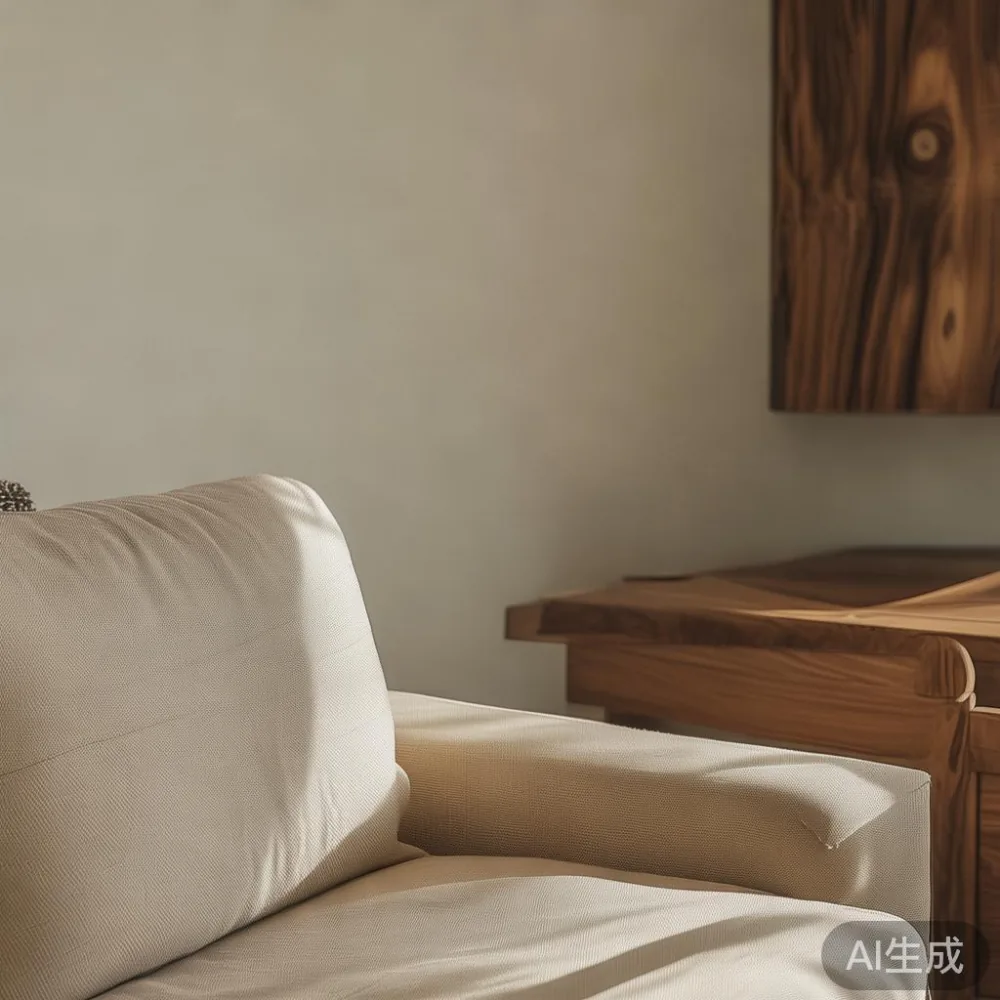
Singapore sits roughly one degree north of the equator, with mean relative humidity of 78–82 % through the year and daytime peaks of 95 % during the December and June monsoon transitions. Indoor humidity in an air-conditioned HDB flat commonly oscillates between 55 % and 80 % across a single day because the slab walls store moisture and release it overnight after the compressor cycles off. Solid wood is hygroscopic: it absorbs and releases water until it reaches equilibrium with the surrounding air. The target range for furniture-grade hardwoods such as white oak, ash, walnut, and rubberwood is 8–12 % moisture content. Each 1 % swing across the grain produces roughly 0.1–0.2 mm of movement per 25 mm of width. Across a 200 cm tabletop, a 3 % swing can move the panel by 2–3 mm, which is enough to stress glue joints, open mitres, and telegraph through a fabric sofa’s tight back upholstery as a subtle ridge.
The other factor that Singaporeans underestimate is the lift-and-corridor constraint. A 4-room BTO corridor at 1.2 m wide will not accept a flat-pack solid wood wardrobe taller than 215 cm unless the carton is under 38 cm thick; a 5-room corridor allows about 1.35 m. Punggol’s newer EC blocks open up to 1.5 m clear, but the lift door on most blocks is only 90 cm wide, so anything wider than 88 cm in one dimension must be tipped or split. This matters for humidity control because knocked-down (KD) construction, where a wardrobe ships in 6–8 cartons and is re-assembled on site, opens far more glue lines and dowel joints to your indoor EMC than a single-piece case. Every joint is a future movement site.
What humidity actually does to a fabric sofa, a bed frame, and a dining table
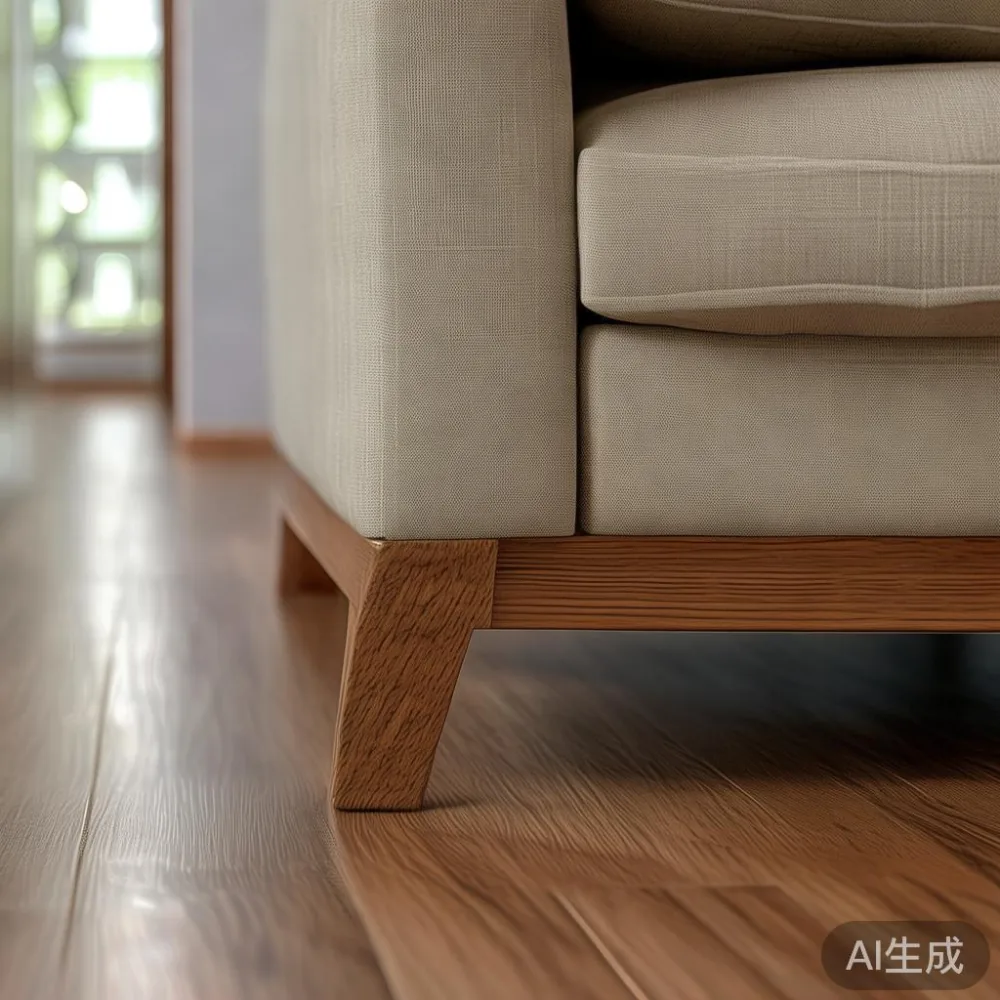
A fabric sofa with a solid wood inner frame is more vulnerable than a fully upholstered plywood frame, because the kiln-dried hardwood frame breathes through the dust-cover zip and the visible wood legs. I have measured leg-end checks (small longitudinal cracks) of 8–12 cm on untreated rubberwood legs after six weeks in a Bukit Batok flat where the owner ran the air-conditioner only between 11 p.m. and 6 a.m. The fix is not to run the air-con harder; the fix is to stabilise the room. Keep RH between 45 % and 60 %, and the frame stops moving within two to three weeks. Bed frames fail similarly at the slat-bearing rail, where a 6 mm shrinkage gap opens a squeak and a visible dark line under the mattress. Dining tables fail at the breadboard ends and at the apron-to-leg tenon. Wardrobes, especially tall two-door units above 180 cm, rack (lean) because one side of the carcass sits 2 cm closer to the wet bathroom wall.
Marble tables behave differently. Marble is not hygroscopic in the wood sense, but the plywood substrate under most sintered-stone or marble tops swells at the edges and telegraphs as a hairline crack on the polished face within the first 60 days. If you bought a marble table for SGD 1,800–2,400 and the crack appeared in month two, that is almost certainly a substrate problem, not a stone problem.
How do I care for a wardrobe sg in humid weather?
Keep the wardrobe’s interior RH between 45 % and 55 % using a small dehumidifier rated at 8–12 L/day sized for your room, run it on a hygrometer-controlled plug set to 60 % RH, and leave the doors cracked 2 cm for the first 14 days after delivery so the carcass can settle to your room’s EMC before you load it with clothes.
That single sentence is the entire protocol I give my clients. Now the supporting detail. Place the hygrometer probe on the middle shelf, not the door, because the door air changes with every opening. Wipe the interior with a dry microfibre cloth weekly for the first month, then monthly. Cedar blocks help with moths but do nothing for RH; do not buy them as a humidity fix. If the wardrobe has a back panel thinner than 9 mm, add a 12 mm plywood “anchor strip” against the wall behind it to stop racking. If the unit is over 180 cm tall and your HDB wall is the bathroom side, leave a 3 cm air gap behind the carcass and never push a fitted wardrobe flush to a wet-wall tile. For hardware, a 6-month pass with a Phillips driver to re-seat the hinge screws pays for itself, because the screw holes elongate as the side panels move and the doors slowly stop lining up.
The 30/60/90-day plan I hand to new owners
Days 1–30 belong to stabilisation. Uncrate on a dry floor, never directly on fresh泼水马赛克 or newly laid screed. Use a pin-type or pinless moisture meter; acceptable solid-wood readings for a Singapore flat are 9–11 %. Anything above 12 % needs another week of acclimation with the air-con running 24/7 and a dehumidifier set to 55 %. Apply a paste wax or hard-wax oil to exposed end-grain (legs, breadboard ends, table edges) within the first week. End-grain moves 8–10× faster than the face grain, so sealing it slows the whole panel. If you bought a fabric sofa with exposed wood legs, lift the dust cover and wax the inner frame’s stretchers too.
Days 31–60 belong to load testing. Fill the wardrobe at 50 % capacity, not 100 %. Hang winter coats in cotton breathable bags, not plastic, so the back panel still sees airflow. Place coasters under anything ceramic on a marble table, because thermal shock (a SGD 6.80 chilled glass on a sun-warmed stone top at 3 p.m.) is the real marble killer, not humidity. Open and close every drawer 20 times to seat the slides; sticky drawers after week four are almost always humidity swelling, not a factory defect. If you bought from a brand offering free refinishing, this is the right window to inspect for any factory oiling missed at the joinery. Days 61–90 belong to calibration. Re-check all hinge screws, re-tighten the bed-frame centre rail bolts, and re-wax end-grain. By day 90, the wood has equilibrated to your flat’s micro-climate and you can load the wardrobe fully.
Delivery day, HDB logistics, and what to ask the courier
A 3-seater fabric sofa in a carton of 215 × 95 × 85 cm will fit most HDB lifts with a door width of 80 cm and an internal depth of 130 cm, but it will not fit the older Bukit Ho Swee blocks with lifts at 100 cm deep. Always measure first. A standard 4-door wardrobe at 200 × 60 × 220 cm will not fit any HDB lift on its side; it must be tipped vertically, which is why experienced two-man teams charge SGD 80–120 per floor beyond the ground. Most Foshan-exported flat-packs are now sized for Singaporean lifts, with carton widths held to 60 cm and heights to 215 cm. Ask the supplier for the actual lift-fitted dimensions, not the assembled dimensions, and ask whether the wardrobe ships as a single carcass or as 6 KD panels. A single-case wardrobe from MIDHILL’s light-luxury American range, for example, has a different acclimation profile than a 6-pack knock-down from the same factory, and the supplier who knows the difference is the one you want to trust with your SGD 2,200.
Free shipping above a USD 350 (about SGD 470) threshold is standard among serious exporters, but check the GST treatment on imported furniture. As of 2024, GST applies on the landed cost including shipping and insurance at 9 %, and the supplier should declare the CIF value so you can pay GST on the correct base. If the courier arrives and asks for cash on top to “clear customs,” that is a red flag; legitimate suppliers file the GST on your behalf and bill it back to you with a receipt.
What a real warranty should cover in this climate
A 10-year structural warranty on joinery is meaningful in Singapore only if it covers joint failure from seasonal movement, not only from manufacturing defects. Read the exclusions: “natural wood movement,” “exposure to humidity above 70 %,” and “damage from improper acclimation” are the three phrases that will void most claims. A supplier who warranties the glue lines, dowels, and tenons specifically against humidity-related failure is one who has tested in tropical conditions. MIDHILL’s 10-year structural warranty, for instance, covers joint integrity on its solid wood sofa, bed frame, dining table, wardrobe, and nightstand lines because the factory kilns to 8–10 % moisture and re-checks before crating, which matches the 9–11 % target band for Singaporean interiors. Lifetime refinishing is the second leg of the safety net: sanding and re-oiling a sun-bleached or moisture-cupped panel at year six costs roughly SGD 280–420 for a dining table if you pay a local carpenter, so a warranty that bundles it saves real money.
Returns are the third leg. Fourteen-day returns sound generous, but in practice the wood needs 30–60 days to settle before you can judge it. Use the first 14 days for transport damage and finishing defects only. Use days 15–60 to log any movement with dated photos and a moisture-meter reading. A reputable supplier will extend the exchange window for any verified humidity issue.
Light-luxury, post-modern lines, and the design side of humidity
French light luxury (often written “léger-luxe”) and American light luxury both favour matte, low-sheen finishes over high-gloss lacquers, and that choice is also a humidity strategy. Open-pore matte finishes allow the wood to release moisture slowly; closed-pore piano lacquers trap moisture under the film and produce micro-bubbles within the first wet season. Post-modern light luxury adds curved corners and cantilevered shelves that look fragile but actually move more freely with seasonal swing, reducing stress at the glue lines. If you want a curved fabric sofa with French light-luxury lines, ask whether the frame is solid hardwood or plywood; in a Singapore flat, solid hardwood on a kiln-dried 9 % blank will outlast a plywood frame by 8–12 years because plywood delaminates at the edges when RH cycles past 75 % for more than four hours a day. The same logic applies to a marble table: a sintered-stone top on a plywood substrate will fail at the substrate before the stone, while a solid marble slab on an aluminium sub-frame will outlast the apartment.
One last piece of local context. I visited a Punggol Waterway terrace two months ago where the owner had placed her new fabric sofa directly under the air-conditioner’s supply vent. Cold air dumped onto the back panel drove the RH differential to 22 % across the carcass in two weeks, and the back upholstery puckered. The fix was a SGD 14 deflector from a Tampines hardware shop, and within ten days the panel relaxed. Your sofa does not need a different room; it needs a different airflow.
Quick reference: numbers to keep on a sticky note
Target indoor RH: 45–60 %. Acceptable wood moisture content on delivery: 9–11 %. Maximum cardboard exposure to outdoor rain during delivery: 0 minutes. HDB lift door width on most 4-room blocks: 80 cm. Corridors on 4-room: 1.2 m; on 5-room: 1.35 m; on newer EC/Punggol blocks: 1.5 m. Wardrobe max height for a single lift trip: 215 cm. Dehumidifier size for a 12 m² room: 8–12 L/day. Re-wax end-grain every 6 months. Tighten hinge screws every 6 months. Re-check bed-frame bolts every 12 months. Keep those numbers visible, run a SGD 30 hygrometer on the middle shelf, and your solid wood wardrobe, fabric sofa, bed frame, dining table, and marble table will still look new when the lease on your Tampines flat is up for renewal in 2034. If you ever source heavier European-style pieces, the same rules apply whether the carton originates in Foshan, in a French garage storage thailand regional hub, or in a Scandinavian warehouse: kiln-dried, acclimated, sealed, and dehumidified is the only sequence that survives the equator.