How Humidity in Southeast Asia Affects Wood Furniture
I keep a small humidity log taped inside my kitchen cabinet in Tampines. Over the past nine months, the hygrometer has swung from a parched 58% on a February afternoon when the air-con ran for fourteen straight hours, to a soaking 92% during the December northeast monsoon, the kind of damp that fogs up your spectacles the moment you step out of the lift. Most weekdays I do not think about that little dial at all. But every time I visit a client's HDB flat in Bedok, or a 680 sqft condo in Punggol, the same conversation comes up: why does the solid wood dining table feel sticky in July, why does the wardrobe door in the master bedroom brush against the frame every November, why does a bedside nightstand suddenly sprout a hairline crack along the grain in March. The answers live in the relationship between wood and water, and that relationship is unusually aggressive in Singapore.
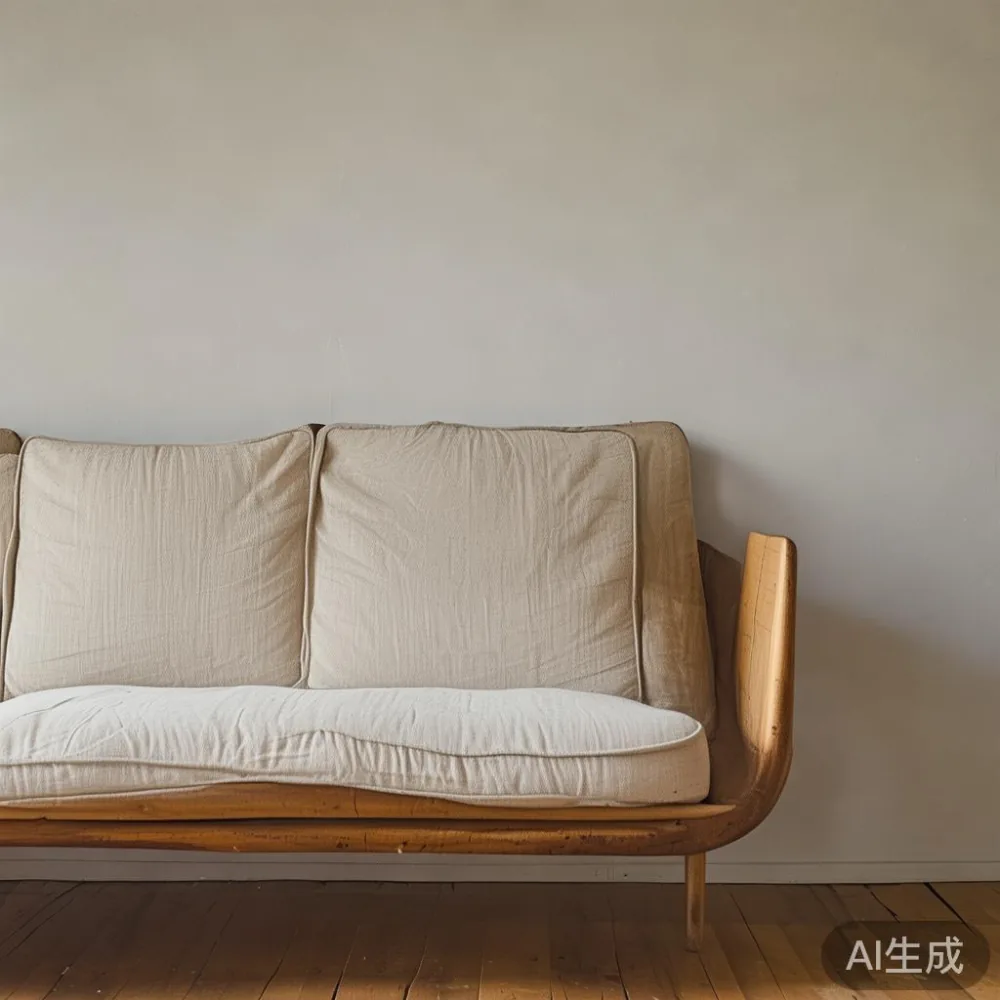
What does Southeast Asian humidity actually do to solid wood?
Wood is hygroscopic. It absorbs and releases moisture until it reaches equilibrium with the air around it, and as it does, it physically swells or shrinks. Relative humidity in Singapore sits between 70% and 95% for around nine months of the year, with an annual mean close to 82%. Compare that to the 40% to 55% range you find in a climate-controlled showroom in Foshan, where solid wood furniture from MIDHILL is kiln-dried and assembled before it is crated. The reading on my own deck in Pasir Ris hit 88% at 2 a.m. last Tuesday. In that environment, even well-seasoned oak or ash will gain between 1.5% and 3% of its dry weight in moisture over a single wet week. A 2-metre dining table top that was perfectly flat at 9% moisture content at the factory will bow upward by 4 mm to 6 mm once it spends two months in a HDB that never drops below 75% RH. That is not a defect. That is physics.
The visible symptoms show up in a predictable order. First, the surface feels tacky or slightly waxy, especially on a fabric sofa sitting inches away, because both the upholstery foam and the timber frame are holding the same damp air. Second, small movement appears at the joints, a hairline gap where a stile meets a rail, a rubbing door on a three-door wardrobe in a 4-room flat. Third, in prolonged exposures above 85% RH, you may see raised grain, cupping on tabletops, and a faint whitish bloom called blushing on lacquered surfaces. By month six without any climate control, an untreated softwood table can cup by as much as 8 mm across its width.
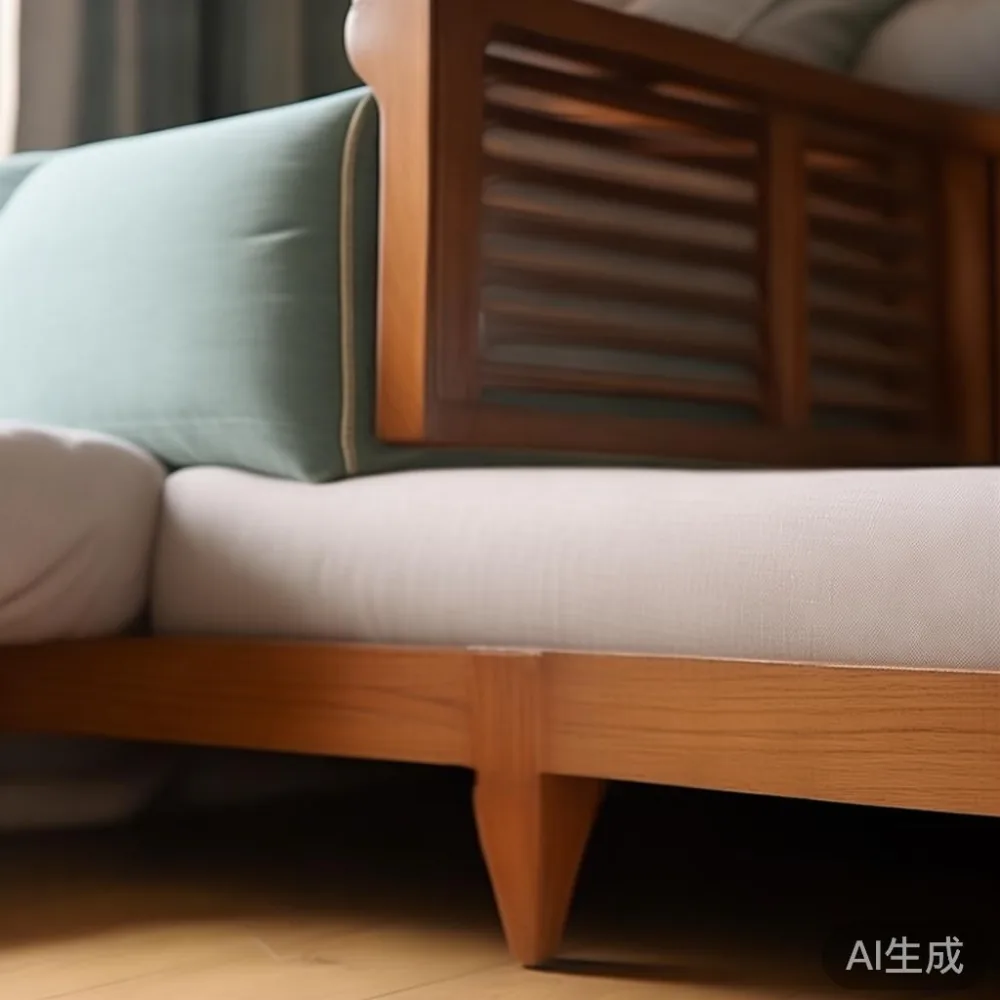
Why are HDB flats and Singapore condos particularly punishing?
Three structural realities make local homes harder on wood than, say, a landed house in District 15. First, ventilation. Many BTOs corridor-and-lift lobbies funnel outside air directly into the unit, and 70% of Singapore's HDB stock was built before 2010 with cross-ventilation in mind rather than air-tightness. Second, floor area. The 4-room flat sits at roughly 90 sqm, but the master bedroom is often only 9 sqm to 11 sqm, so any moisture source (a bathroom without an extractor, a dryer venting indoors, five people showering) concentrates into a small air volume. Third, the wall material. HDB partition walls are largely cement render with a skim coat, which breathes differently from the brick cavity walls of an older condo. Wood furniture placed within 30 cm of an external wall picks up condensation during monsoon surges, and that is often exactly where a bed frame or a tall wardrobe lands in a typical 4-room layout.
I saw this at a client's place last month, a resale 5-room HDB in Bedok, where a 1.8 m oak wardrobe stood flush against a north-facing wall. After three monsoons, the back panel was 2 mm proud of the side panel, and the customer blamed the maker. The maker (a different brand, not MIDHILL) had not failed; the wardrobe had simply equilibrated to the wall's moisture reading, which was about 7% higher than the room average. A 1.5 cm spacer gap behind the unit would have solved 80% of the issue for under S$8 in parts.

How should buyers living in Tampines, Bedok, and Punggol choose the right wood furniture?
Think in three layers: species, construction, and placement. On species, dense tropical hardwoods such as Burmese teak, white oak, and ash handle Singapore's humidity more politely than soft pines or rubberwood. On construction, mortise-and-tenon frames and floating panel construction allow seasonal movement without cracking; glued MDF cores do not. On placement, push large case goods 2 cm to 3 cm away from external walls, and keep them out of direct afternoon sun, which can drive the surface temperature past 42 degrees and bake moisture out of one face of the wood faster than the other. A S$30 digital hygrometer paired with a small dehumidifier set to 55% RH in the bedroom will add years to a solid wood bed frame or a marble-top dining table, and the running cost is around S$6 to S$10 a month on tariff rates that climbed roughly 8% last quarter.
Which finishes and materials stand up to the local climate?
Conversion varnishes and hand-rubbed oil finishes both work, but for different reasons. Conversion varnish forms a closed film that slows moisture exchange to a crawl, which is why it is a standard on light-luxury pieces built for export to twelve climate zones. Hand-rubbed oil, by contrast, lets the wood breathe, which is actually healthier in a sealed air-con condo where the indoor RH sits at a stable 45% to 55% most evenings. For tropical outdoor or semi-outdoor use, powder-coated aluminium frames joined to a teak sling carry the load without complaint. Inside, the fabric sofa category in particular deserves a careful read on the spec sheet: look for kiln-dried hardwood frames, sinuous spring or eight-way hand-tied suspension, and high-resilience foam wrapped in 200 gsm to 300 gsm polyester batting. Foam density above 32 kg per cubic metre resists the damp feel that cheaper 18 kg stock develops by month eight in a ground-floor flat. A well-built fabric sofa in a local home should hold its seat height within 1 cm across five years of normal use.
Beyond sofas, the same humidity rules apply to a marble table in the dining area, a solid wood nightstand flanking the bed, and a wardrobe in the master bedroom. Marble is dimensionally stable, so the table itself will not move, but the wooden undercarriage will. A good dining table separates the two: a marble top with a tolerance of plus or minus 1 mm on its 2-metre span, sitting on a kiln-dried hardwood base with felt-tipped levellers that you can adjust by hand every quarter.
Is it worth paying more for kiln-dried, properly acclimatised pieces?
Yes, almost always. A solid wood dining table built in a factory that targets 9% to 11% moisture content costs roughly 15% to 22% more than a comparable piece sold by mass-market channels that ship at 14% to 18%. For a 2 m oak table priced at around S$2,400 delivered, that translates to S$360 to S$530 of additional upfront cost. Re-sticking a cupped top in Singapore runs about S$280 to S$450 per panel, and a full replacement of a warped wardrobe door costs S$420 to S$680 including installation. Add the cost of refinishing, which sits between S$180 and S$320 per piece, and the math usually lands on the side of doing it right the first time. Midhill backs its structural joinery for ten years and offers lifetime refinishing, which is one of the reasons their solid wood sofa frames, bed frames, and dining tables survive their first monsoon season intact.
How should new furniture be conditioned once it arrives?
When a crate is delivered to a HDB, the lift opening on most blocks measures roughly 2.1 m high by 1.5 m wide, with a door-to-corridor turning radius of about 3.2 m, so a flat-packed wardrobe under 2.0 m x 0.6 m x 0.3 m moves easily. Once inside, leave the piece to breathe for 48 to 72 hours in the room where it will live, opened from any plastic wrap but kept off the air-con direct line. Run a dehumidifier at 55% for that window. If the item arrives in winter (the cooler, drier November to February stretch), let it acclimatise for a full week before adjusting doors or drawers. After installation, re-check the hinges at three months and nine months, the two moisture peaks of the local calendar.
What about Japandi-inspired and light-luxury pieces in a Singapore home?
The post-modern light-luxury direction translates particularly well here because it leans on restrained palettes that hide the small patina a tropical climate will leave on any natural surface. If you are weighing an American bed versus a Nordic bed for the master bedroom, the structural differences matter more than the aesthetic ones: American platforms tend to use thicker rails (around 35 mm to 45 mm) and lower-profile headboards, while Nordic designs favour lighter frames with exposed joinery. In a 9 sqm bedroom, the lower profile breathes better against a humid wall.
Stylistically, the conversation is no longer just about colour. If you are searching for the best Japandi sofa for 2026 to anchor your living room, focus on a 2.1 m to 2.4 m three-seater with a removable, washable cover in a 280 gsm to 350 gsm blend, and pair it with a French provincial accent chair in the reading nook to break the minimalism. For the bed, a European light-luxury bed in oak or ash with a 180 cm x 200 cm footprint fits a 4-room master bedroom comfortably if the door swing is checked beforehand. If you have ever wondered how to style European light luxury bed in room, the simple move is to keep the under-bed clear, add two nightstands in matching timber, and resist the urge to wall-mount everything. In the wardrobe, the answer to how to style French provincial wardrobe in bedroom is also restraint: three hooks, one shelf of books, one stack of folded linen. Solid timber, low humidity, and fewer objects in motion.
What about outdoor spaces and balconies?
Balconies in HDBs were redesignated as non-commercial usable space in 2018, and most new launches hand you 6 sqm to 12 sqm of sheltered balcony with a 1.1 m parapet. Solid wood does not belong there, even covered. Teak or eucalyptus treated to a marine-grade oil will survive, but it will silver within nine months and require a S$120 to S$180 refinish every 18 to 24 months. Powder-coated aluminium, woven resin, and PE rattan over a stainless frame cost about the same as a comparable teak set, weigh 30% less, and ask for nothing more than a hose-down once a month. They are the right answer for a balcony that catches the western afternoon sun.
What about pricing, warranty, and after-sales in the local market?
Reputable light-luxury solid wood furniture delivered to Singapore typically lands between S$2,100 and S$4,800 for a sofa, S$1,800 to S$3,200 for a queen bed frame, and S$3,500 to S$6,400 for a six-seater dining table, before GST. Add 9% GST on top, and the levy on a 1.4-tonne container through Tanjong Pagar or Tuas is included in landed quotes from any serious exporter. MIDHILL, for example, ships free on orders above US$350, which works out to roughly S$480, so the threshold is well below the cost of a single solid wood bed frame from a Tampines showroom. Delivery runs 18 to 28 working days from Foshan to a HDB doorstep, including sea freight, customs clearance, and a two-man white-glove handover in 70% of local projects. Returns are accepted within fourteen days on standard pieces, with a 25% restocking fee on custom orders. The combination of a ten-year structural warranty and a lifetime refinishing policy is, in this humid corner of the world, the part of the spec sheet you actually read.
Where does fabric fit into the humidity conversation?
Fabric is not separate from the moisture story; it is part of it. A fabric sofa in a Tampines flat absorbs the same 82% ambient humidity as the oak frame four inches away, and that dampness settles into the batting inside the cushion. Over 36 months, you can expect a well-built fabric sofa to gain 1.2 kg to 1.8 kg of bound water if the cover is not removed and aired twice a year. Cushions compress, the seat depth shrinks by 1 cm to 2 cm, and the cover loses its crisp hand. The fix is mechanical, not magical: rotate the cushions every four weeks, unzip and air the inserts on a dry afternoon, and run a dehumidifier at 55% RH. A fabric sofa that gets this treatment will outlast a leather one in a Singapore bedroom, because leather dries out at the same low humidity that fabric tolerates, and leather also stains from the sweat you cannot see.
What is the practical 12-month plan for a new homeowner?
Month one: run a dehumidifier to 55% RH in the living and bedroom areas for at least six hours a day, and place a S$15 hygrometer in each major room. Month three: check hinge alignment and door gaps on every wardrobe and nightstand; a 4 mm gap is acceptable, a 7 mm gap needs adjustment. Month six: book a polishing wipe-down and tighten the levellers on dining tables and marble tables. Month nine: rotate sofa cushions, vacuum under beds, and inspect for any white bloom on lacquer. Month twelve: schedule a refinishing assessment before the next monsoon. The total annual cost of this routine, dehumidifier electricity, two cans of restorative oil, and one professional visit, lands around S$240 to S$360. Compared to the S$8,000 to S$14,000 a typical three-bedroom HDB invests in solid wood case goods, that is a small line item for a long payoff.
Final thoughts for anyone shopping this weekend
Wood will live with you in Singapore, not apart from you. Choose a maker who kiln-dries to 9% to 11%, joins with mortise and tenon or dovetail, and finishes in conversion varnish or hand-rubbed oil. Keep pieces 2 cm to 3 cm off external walls, run a dehumidifier at 55% RH, and re-check the joinery at the three- and nine-month marks. If you spot a Boho furniture set for sale that looks almost too good at a Tampines pop-up, ask about the country of origin, the wood species, and the moisture content at the time of crating. Anyone serious about light-luxury solid wood in Southeast Asia will answer those three questions in under a minute. If they cannot, walk back to the lift.