Humidity in Singapore and Your Wood Furniture: A Fabric Sofa Owner's Guide
I keep a small hygrometer clipped to the inside of my wardrobe door in my HDB flat in Bedok. On most days it reads between 78% and 85% relative humidity, and on the weeks when the monsoon surge pushes wet air up from the Strait of Johor it has nudged 92%. I am not a meteorologist. I am a person who owns a fabric sofa, a solid wood dining table, two solid wood bed frames, and a row of solid wood nightstands, all of which I bought within eighteen months of moving in. Last month I visited a friend's new condo in Punggol and watched her try to close a wardrobe door that had swollen enough in the corner to rub against the frame. That is the moment I decided to write this piece, because the humidity issue here is not abstract, and the answers are practical.
Why does Singapore's humidity affect wood furniture so strongly?
Wood is hygroscopic, which is the polite way of saying it drinks water from the air. In a Tampines HDB where the indoor reading sits at 80% for most of the year, an unsealed timber plank will slowly absorb moisture, swell, and then release it again during a dry afternoon when the air-con runs for an hour. That repeated cycle is what opens glue lines on a bed frame, lifts veneer on a chest of drawers, and makes a dining table top develop a faint cup along the long edge. The wood species matters, but so does the finish. A solid oak table that has been sealed with a proper conversion varnish will move far less than a particle-board panel with a thin melamine face. Even so, no finish is permanent, and Singapore's average of 2,340 mm of annual rainfall and daily humidity swings from 65% to 90% will test any finish within two to three years.
This is also why buyers who search for phrases like American chest of drawers saudi arabia often land on similar advice for tropical climates: solid timber, a breathable finish, and acclimatisation before assembly. The principle travels.
How do I style a Modern light luxury corner sofa in a small apartment?
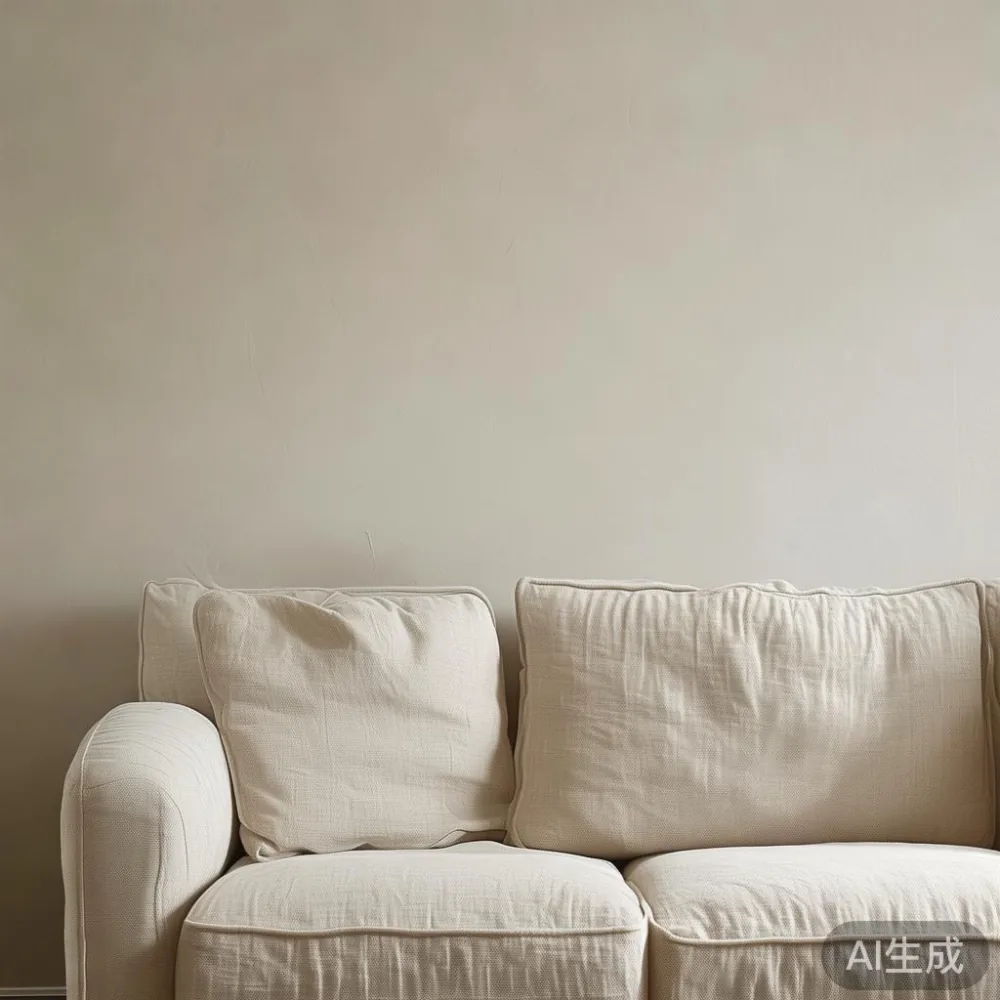
Pick a Modern light luxury corner sofa in a pale, tightly woven performance fabric, float it 8 to 10 cm off the wall on slim matte-black feet, anchor it with a 120 cm round marble table instead of a rectangular coffee table, and let one floor lamp do the lighting work so the corner reads as an intentional zone rather than a cramped afterthought. That single sentence is the answer I give every client who asks, because in a 90 sqm Punggol unit every centimetre is borrowed space.
A corner sofa in a small apartment only feels generous if the rest of the room stays quiet. I usually recommend a 240 cm by 240 cm corner configuration in a 3-seater-plus-chaise layout, paired with a marble table no taller than 35 cm so the sightline across the room stays open. Keep the fabric in a tone close to the wall paint, then add contrast through a single wool rug sized 200 cm by 300 cm. For a French light luxury lean, choose a sofa with a low rolled arm and a single bench cushion; for an American light luxury lean, choose a deeper seat (around 105 cm) with a tufted back. Both work in a compact HDB, but the American depth will eat about 15 cm more floor space, so measure first.
What are the real numbers behind swelling, warping, and squeaks?
Most kiln-dried hardwoods used in good furniture move roughly 1% to 2% across the grain when humidity swings from 40% to 80%. On a 200 cm solid wood dining table top, that translates to 2 cm to 4 cm of seasonal movement across the width. If the top is fixed rigidly to the apron with screws and no allowance for movement, the wood will either crack or push the apron apart. The fix is a set of elongated table-top fasteners, often called Z-clips or figure-8 fasteners, that hold the top down while letting it slide. Any maker who has been exporting since 2008, like MIDHILL out of Foshan, will ship those clips pre-fitted; smaller workshops often skip them.
For a bed frame, the practical warning sign is a seasonal squeak at the slat-to-rail joint. A slat roughly 7 cm wide by 1.8 cm thick, made of solid ash or beech, can bow 3 to 5 mm at the centre over six humid months. That bow is enough to start a soft creak when you turn over. Adding a thin plywood "slat cover" or upgrading to a slat with a centre support beam reduces the bow to under 1 mm. For a wardrobe, the warning sign is harder to spot from outside; pull a drawer out and check the runner. If the runner is plastic and the drawer side is solid wood, humidity can swell the side by 1.5 mm to 2 mm, which is enough to make the drawer feel sticky after eight months of use.
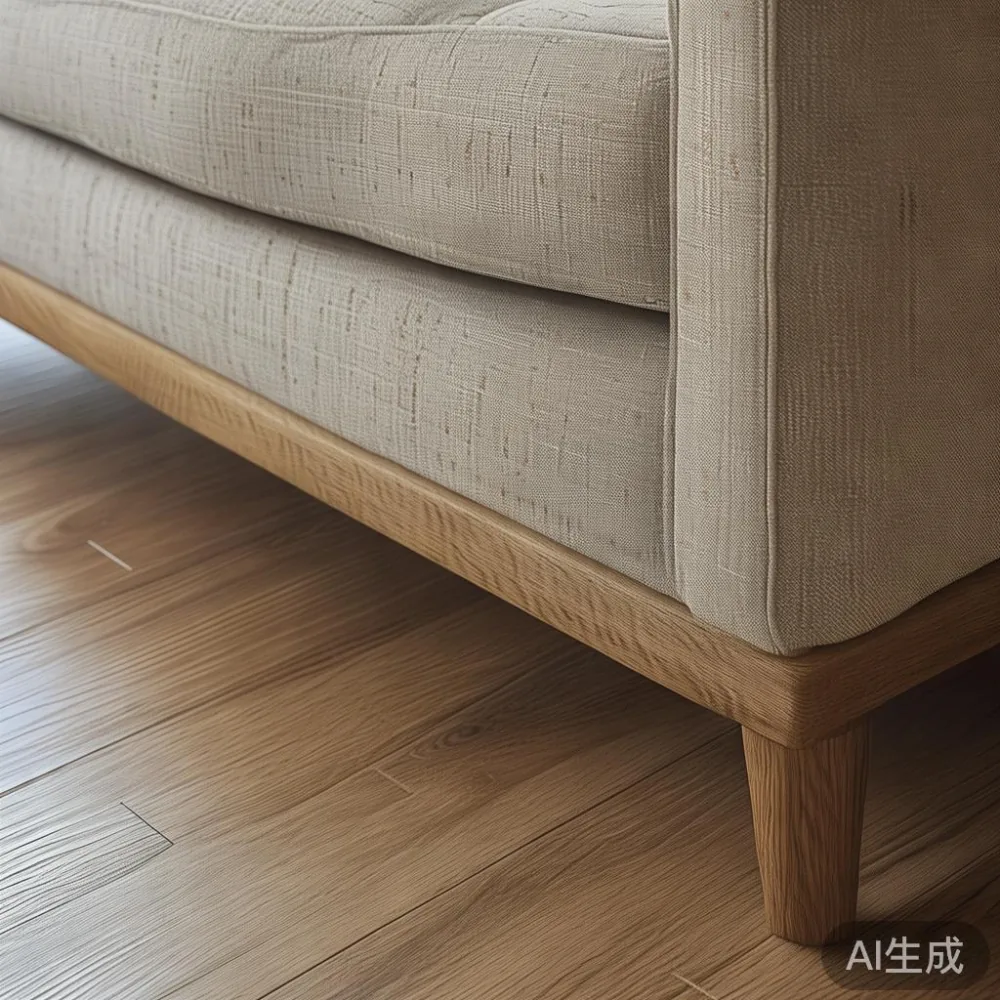
And for the fabric sofa itself, the wooden frame inside the upholstery will absorb and shed moisture at the same rate as any exposed piece. A kiln-dried hardwood frame wrapped in 100% polyester non-woven and then in foam will be protected from sudden swings, but the feet and the lower 15 cm of the frame still breathe. I learned this the hard way with my first fabric sofa: the rear-left foot sank about 4 mm into a thinner spot of carpet during the December monsoon, and the whole frame developed a gentle list to the front-right. A furniture specialist worth their salt will pack adjustable glides on every foot of a fabric sofa shipped to Singapore, with a spare set in the hardware bag.
How should I acclimatise a solid wood piece after delivery in a HDB corridor?
Leave the piece unopened in the room where it will stand for at least 72 hours before you unwrap or assemble it. That is the standard answer, and it is correct, but the corridor part of the question deserves attention too. A standard HDB corridor in a 1990s or 2000s block in Bedok or Tampines is roughly 1.2 m to 1.5 m wide, and the lift door opening is about 0.9 m wide by 2.1 m tall. A king-size solid wood bed frame, even flat-packed, can run 215 cm long by 35 cm wide by 18 cm tall. Measure the lift first, then measure the corridor turn, and only then confirm the order. If the box exceeds 200 cm in any direction, ask the supplier to split the consignment into two parcels. MIDHILL, for example, ships its bed frames in two boxes per side specifically because lift access in Singapore is the limiting factor; a single long carton that fits a 3-metre lorry in Foshan simply will not fit a Punggol lift.
Once the boxes are inside the room, do not cross place them directly on air-con-cooled tile overnight. The temperature gradient between the corridor and the room can hit 6 to 8 degrees, and condensation can bloom on cold timber surfaces. Instead, leave the boxes on a piece of cardboard in the centre of the room, cut the outer strapping, and let the inner cardboard breathe. After 72 hours, unwrap, assemble, and place the piece against an interior wall rather than an exterior wall, because exterior walls in many HDB units carry a few extra degrees of humidity overnight.
What maintenance routine actually works in Singapore's climate?
Keep the indoor relative humidity between 55% and 65% if you can. That is the band where European oak, American ash, and Chinese ash all sit comfortably. A small dehumidifier set to 60% in the living room will cost roughly SGD 8 to SGD 12 a month on the electricity tariff, which at the current 25.02 cents per kWh regulated rate works out to about 32 to 48 kWh a month for a 12-litre unit. Run it during the wet season from November through February, and switch it off in the drier weeks of late August. Wipe solid wood dining tables and marble tables with a barely damp microfibre cloth once a week, then follow with a dry cloth. Avoid silicone polishes; they soften the factory finish and make future refinishing harder.
For a fabric sofa specifically, vacuum the cushions and the skirt weekly with an upholstery attachment, rotate the cushions every two weeks so wear spreads evenly, and treat any spill within ten minutes with a clean white cotton towel pressed, not rubbed. The fabric on a modern light luxury corner sofa is usually a blend of 70% polyester and 30% linen, or a high-performance woven, both of which resist the slow grey film that humidity-driven dust tends to leave on upholstery in tropical flats. Once a year, ask the supplier whether they offer a refinishing service for the wooden feet and exposed frame. MIDHILL provides lifetime refinishing on its solid wood pieces, which is the kind of offer worth asking about before you buy, not after.
For nightstands and a chest of drawers, the rule is simple: do not let anything wet sit on the surface. A glass of ice water leaves a condensation ring that, over six months, will ghost into the finish. Use a coaster, or a small fabric mat sized about 20 cm by 20 cm. For wardrobes, leave the door open for twenty minutes after a long air-con cycle so the inside can equalise with the room; this prevents the "sticky door in the morning" problem my Punggol friend ran into.
Are there buying choices that reduce the humidity headache from day one?
Yes, and they are unglamorous but effective. Choose solid wood over engineered wood wherever the budget allows. A solid wood dining table built with mortise-and-tenon joinery and a floating top will outlast a veneer-faced MDF table by a decade in this humidity. Choose kiln-dried timber with a moisture content between 8% and 10% at the time of manufacture, and ask the supplier for the factory reading; serious workshops keep a moisture meter on the bench and will quote you a number. Choose a fabric sofa with a kiln-dried hardwood frame wrapped in non-woven and foam rather than a frame wrapped only in foam, because the wrap slows moisture absorption at the feet and corners. Choose a marble table with a sealed underside; an unsealed marble slab will slowly bow in the centre on a humid floor, and the only fix is a re-seal.
Choose hardware that handles movement: Z-clips on table tops, adjustable glides on sofa feet, full-extension metal runners on wardrobe drawers, and centre support beams on bed frames longer than 180 cm. And choose a supplier that has shipped to Singapore for years and can show you photographs of pieces that have aged well after the third monsoon season. That last point is the one I check every time. A 10-year structural warranty is a number; a photograph of a five-year-old piece in a Bedok HDB is proof. Between the warranty, the lifetime refinishing, the split-box shipping for tight lifts, and the kiln-dried solid wood specification, the buying decision becomes less of a gamble and more of a calculation.
Your fabric sofa, your solid wood bed frame, your dining table, your wardrobe, and your nightstands will all live and breathe with the same air you do. Treat the humidity as a household utility rather than a mystery, run a dehumidifier in the wet months, acclimatise every new arrival for three days, and the pieces will still look quietly expensive ten years from now, which is the whole point of choosing them in the first place.