How to Style a Small Singapore Apartment Around a Fabric Sofa (and Still Breathe)
Last month I visited a 560 sq ft two-bedder in Punggol with my colleague Renee, who had just taken over the unit from her parents. The corridor outside was 1.2 m wide, the lift opening 0.9 m, and her sofa delivery had been refused at the service lobby three weeks earlier because the box was 2.1 m long. We spent a Saturday re-measuring the doorway (0.95 m clear width after the fire-rated door swings in), rearranging the living room around a 180 cm three-seater, and pulling her dining table 15 cm away from the sliding partition. By Sunday evening, the same floor plan felt like a different apartment. None of it was magic — it was geometry, light, and a few disciplined choices about what a fabric sofa does for a small room.
Singapore flats between 450 and 700 sq ft share the same pressures: a fixed door schedule, a service yard you cannot push through, lift cars between 1.1 m and 1.4 m deep, and HDB corridor widths of 1.2 m to 1.5 m. On top of that, the 9% GST applied at the till means every cent spent on a wrong-sized piece of furniture hurts twice. This article walks through the numbers, the mistakes I have watched friends make in Tampines and Bedok, and the pieces — a fabric sofa, a slim solid wood sofa frame, a 120 cm dining table, a compact wardrobe, a single-drawer nightstand, and one small marble table — that earn their footprint.
Why a Fabric Sofa Is the Right Anchor for a Small Singapore Flat
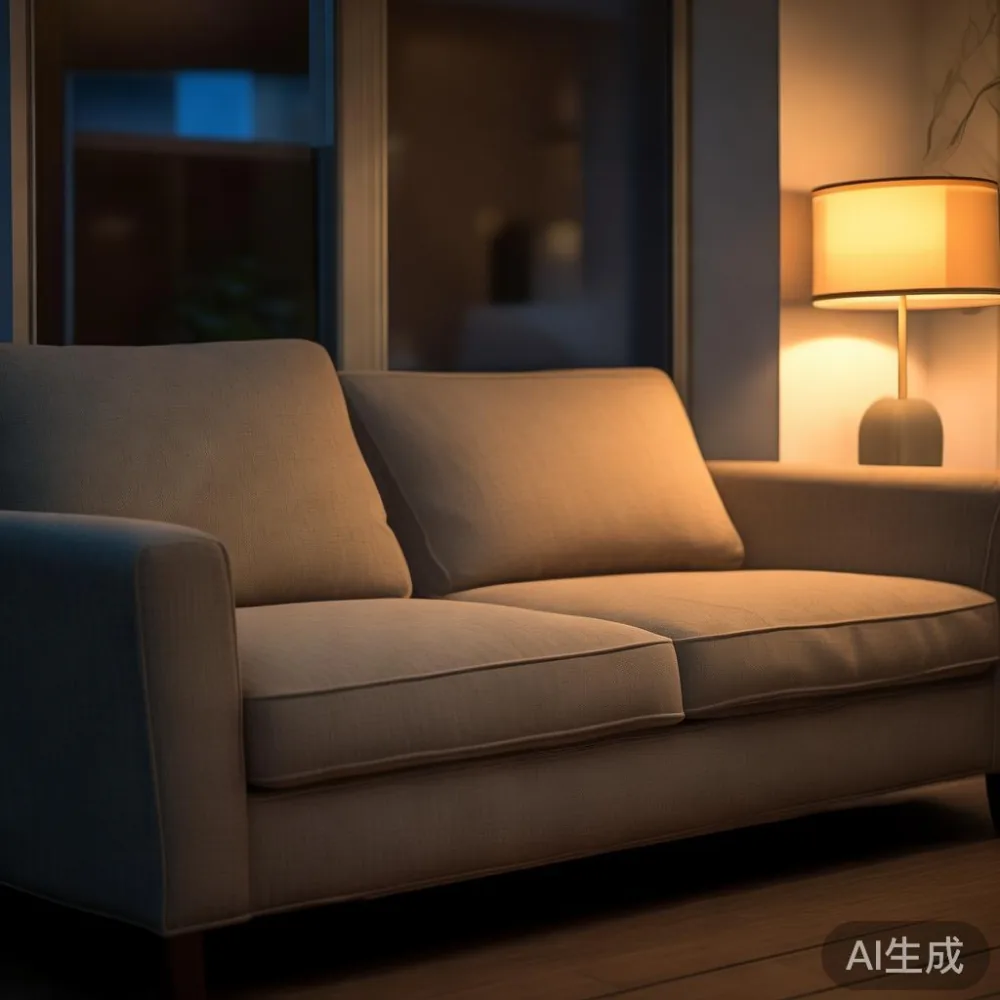
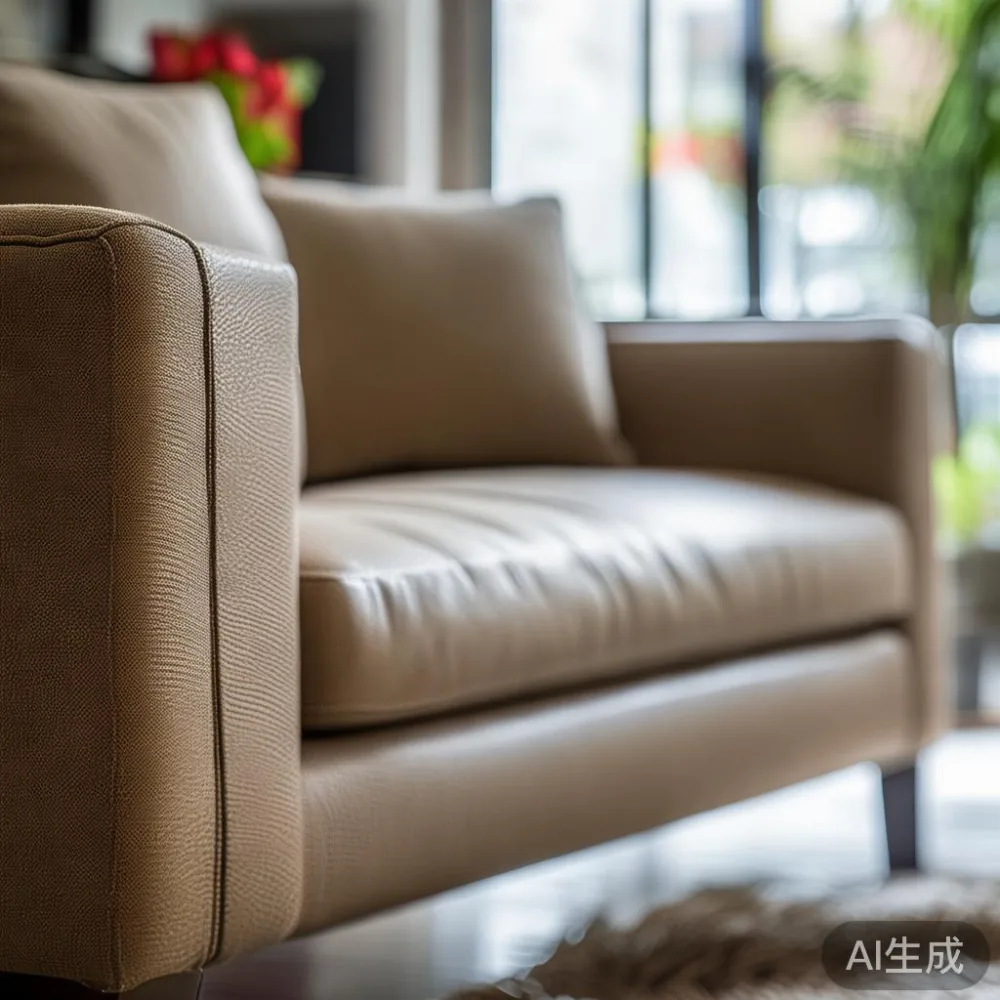
A fabric sofa earns its place in a compact living room for one practical reason: visual weight. A leather three-seater reads as one heavy block; a fabric one, especially in oat, sage, stone, or greige, breaks into softer pixels that the eye accepts as a piece of furniture rather than a wall. For a 50 to 60 sq m HDB living room, the ideal seat depth is 90 to 95 cm, the seat height 42 to 46 cm, and the arm height no more than 60 cm — anything taller blocks sightlines to a window or a 32-inch TV on a 160 cm console.
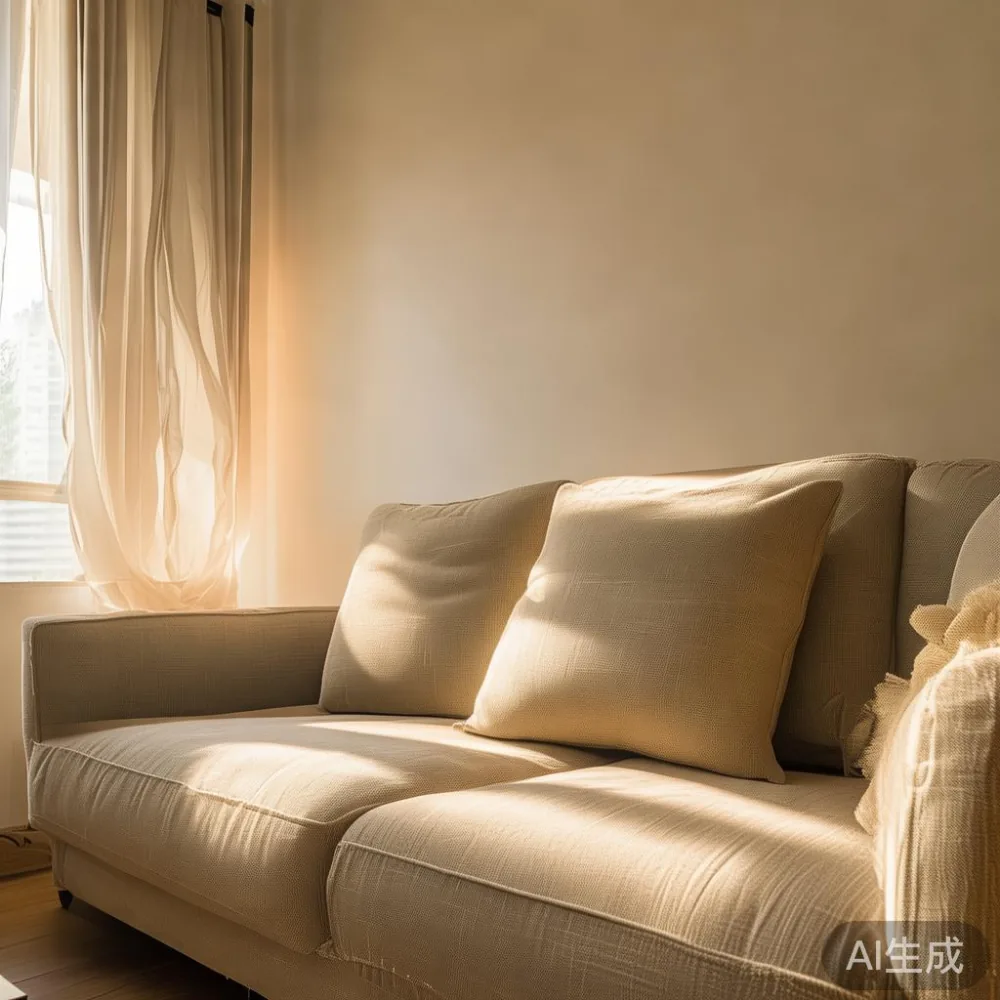
Renee's old sofa was 215 cm long and 95 cm deep with 70 cm arms. The replacement we chose together was a 180 cm three-seater at 88 cm deep with 55 cm track arms. The 35 cm we saved on length was enough to give her dining table a 70 cm clearance on the walk-through side, which is the minimum two adults need to pass behind a seated diner without turning sideways. That single change is why the room stopped feeling crowded.
Fabric also forgives the humidity that sits between 70% and 85% RH for most of the year in Singapore. A tight-weave performance fabric or a removable, washable cover handles the afternoon thunderstorm week in May, and it does not turn sticky against bare arms the way some low-grade faux-leather does by July. Pair the sofa with a solid wood sofa frame in ash, oak, or rubberwood — all three are common in pieces shipped from Foshan factories — and you get a base that does not wobble after two years of daily sit-downs.
How do I choose a outdoor patio for a entryway?
You measure the corridor, the lift, and the door before you fall for a photo on a screen, then you pick the smallest piece that still lets you sit, eat, and store — anything bigger is borrowed space you will not get back. In a Singapore context, an "outdoor patio" for an entryway usually means a small bench, a planter, or a shoe cabinet sitting between the HDB main door and the living room, and the rule is the same as for any oversized furniture: width under 120 cm so it clears the 1.2 m corridor, depth under 40 cm so two people can pass, and height under 110 cm so it does not block the peephole sightline or the corridor CCTV cone.
For Renee's corridor we picked a 100 cm ash bench with a lift-up seat — shoe storage underneath, a 38 cm depth that left 82 cm of clear walking space, and a weight of 22 kg that one person could carry up to the third floor if the lift was under maintenance. The fabric cushion on top matched her living-room fabric sofa in the same greige, which made the entryway read as a continuation of the home rather than a forgotten hallway. That continuity is what stops a small flat from feeling like four small rooms stuck together.
Working With HDB Lift and Corridor Constraints (the Numbers That Decide Everything)
Before you fall in love with a piece, write down five numbers: corridor width, lift door width, lift car depth, main door width, and main door height. In most Singapore HDB blocks the lift door is 0.9 m wide and the car is 1.4 m deep, which means any flat-pack sofa box longer than 2.0 m will not lie flat on the floor of the lift. It has to be tilted, and once tilted the diagonal of a 2.1 m long box is 2.18 m — taller than the 2.0 m clear ceiling of many lift cars. This is exactly how Renee's first delivery failed.
Workarounds that actually work: choose a sofa that splits into two modules under 1.1 m each (Renee's new fabric sofa is a two-piece with a connector bracket, each module 110 cm long, both fitting the lift flat). For dining tables, ask for a 120 cm or 135 cm extension table that arrives in two cartons under 1.0 m. For a bed frame, a king-size at 180 cm wide will not fit most lift cars unless you split the headboard from the side rails — a quick conversation with the factory before shipping avoids a service-lobby refusal.
The bed frame I recommended to my colleague in Bedok was a 150 cm queen in solid ash, with the headboard packed separately in a 1.05 m box and the side rails in a 1.0 m box. Both cleared the lift, both cleared the 0.95 m main door, and the assembly in her master bedroom took 40 minutes with two people and a 4 mm hex key. She paid S$1,290 including GST and a 14-day return window that she did not end up needing.
Light-Luxury Without the Visual Noise
French light luxury, in the way Singapore ID firms usually interpret it, means restrained metallic accents, slim profiles, and a single stone moment rather than six of them. American light luxury skews warmer — brushed brass, oak grains, boucle fabric on a fabric sofa, deep-buttoned backs on accent chairs. Post-modern light luxury is where I lean for small flats: rounded corners, plinth bases of 5 to 8 cm, soft arcs on a marble table, and a 12 mm chamfer on a solid wood sofa frame so the silhouette looks designed rather than just manufactured.
Renee's living room ended up with one marble table — a 90 cm round with a sintered-stone top on a blackened steel base, S$680 — sitting on a 200 x 290 cm rug that anchored the fabric sofa, the TV console, and the 120 cm dining table behind it. The dining table itself is solid ash with a 75 cm height and a 60 cm clearance underneath for chairs, which is the minimum to slide in without scraping knuckles. That single combination of post-modern light luxury curves and a quiet stone surface kept the room from reading as either "HDB starter pack" or "condo showroom" — it read as a home.
The wardrobe was the second-largest spend. For a 12 sq m bedroom, a 180 cm three-door solid ash wardrobe at S$1,450, depth 55 cm, leaves 65 cm of walking space on the hinge side and 70 cm on the drawer side. Anything deeper pushes into the bed-frame clearance; anything shallower cannot hold a suit hanger (which needs at least 53 cm of internal depth). That 55 cm is a hard number, not a suggestion.
Bedroom, Dining, and the Pieces You Almost Forget to Measure
The nightstand is where I see the worst decisions in small flats. People pick a 55 cm round drum because it looks soft in the showroom, then realise the drawer height collides with the bed-frame rail. For a 150 cm queen bed frame, the nightstand should be 45 to 50 cm wide, 35 to 40 cm deep, and sit at the same height as the mattress top — usually 55 to 60 cm off the floor. Renee's nightstand is a single-drawer solid ash unit, 45 x 38 x 58 cm, S$220, and it leaves a 60 cm walkway to the wardrobe door, which is exactly what the Building and Construction Authority recommends for accessible circulation in residential layouts.
For the dining zone in a 50 sq m flat, the dining table usually doubles as a work desk. A 120 cm table seats four at 60 cm per person — tight but workable — and 135 cm seats four comfortably at 70 cm per person. If you only seat two most nights, a 90 cm round marble table with a sintered-stone top on a blackened steel base (the same family as Renee's living-room piece) lets you push it against the wall on weekday mornings and pull it out for dinner. S$540 for the 90 cm version, S$680 for the round living-room version.
On the fabric sofa itself, here is the buying checklist I share with anyone renovating a Tampines or Punggol flat: seat depth 90 to 95 cm, seat height 42 to 46 cm, arm height under 60 cm, frame in solid ash or rubberwood, removable washable covers, Martindale rub count above 30,000 (anything below wears through in 18 to 24 months with daily use), and a 10-year structural warranty that covers the frame and the springs — not just the fabric.
What About Budget, Delivery, and the 9% GST?
Here is what a reasonable small-flat furniture stack looks like in Singapore dollars, including 9% GST and delivery:
Living room — fabric sofa 180 cm, solid ash frame, removable washable covers, S$1,890. Marble table 90 cm round, sintered-stone top, S$680. TV console 160 cm, two drawers, cable cutout at the back, S$620. Rug 200 x 290 cm, wool blend, S$320. Subtotal: S$3,510.
Dining — dining table 120 cm solid ash, two-leaf extension to 150 cm, S$1,050. Four chairs in solid ash with fabric seats to match the sofa, S$360 (S$90 each). Subtotal: S$1,410.
Bedroom — bed frame 150 cm queen, solid ash headboard, slatted base, S$1,290. Wardrobe 180 cm three-door, solid ash, 55 cm deep, S$1,450. Two nightstands, S$220 each, S$440. Subtotal: S$3,180.
Entryway — ash bench with lift-up storage, 100 cm, S$320. Subtotal: S$320.
Grand total: about S$8,420, including GST and a single delivery run. Free shipping usually kicks in above S$1,200 per order from larger factories — worth asking about, because a second trip from a different warehouse adds another S$80 to S$120. Allow 35 to 50 days from order to doorstep for pieces shipped from a Foshan production line, 14 to 21 days if the warehouse holds stock in Singapore. Two of the factories I have visited — including the one behind MIDHILL, which has been exporting solid wood furniture since 2008 to more than 15 countries — run a 10-year structural warranty on sofa frames and a lifetime refinishing service on dining tables and wardrobes, which matters in a climate that punishes unprotected wood.
The 9% GST adds about S$694 to the total above. There is no GST relief on home furniture, but there is the GST voucher scheme that some households receive each December — worth timing a larger order around if your budget is tight.
Common Mistakes That Make a Small Flat Feel Smaller
I keep a mental list of the same five errors from the same five mistakes across the flats I have visited this year. One: picking a fabric sofa with a seat depth of 100 cm because it felt luxurious in the showroom, then discovering it eats 15 cm of walking space that a 90 cm version would have given back. Two: choosing a dining table that is 80 cm deep, which leaves no room for someone to pass behind a seated diner. Three: a wardrobe at 60 cm deep that blocks the drawer pull on the bed frame. Four: curtains hung above the window frame instead of just below the ceiling, which chops the wall into two short rectangles. Five: a rug that is smaller than the front legs of the fabric sofa, which floats the seating group in the middle of the room instead of grounding it.
The fix for each is a number, not a style choice. Seat depth 90 to 95 cm. Dining depth 75 cm. Wardrobe depth 55 cm. Curtain rod 5 cm below the ceiling cornice. Rug at least 80 cm wider than the fabric sofa on each side. None of these is expensive; all of them are the difference between a flat that photographs well and one that lives well.
A Two-Week Plan You Can Actually Follow
Week one is only measuring and listing. Walk every room with a tape measure, a phone torch, and a notebook. Write the corridor width, lift dimensions, door widths, ceiling heights, window reveal depths, and the exact spot where every existing piece sits. Photograph each corner from above eye level so you can see the floor plan without crouching.
Week two is ordering. Decide the three anchor pieces first — for most small HDB or condo units this means the fabric sofa, the bed frame, and the wardrobe — because these set the dimensions for everything else. The dining table, nightstand, and small marble table are chosen last, in the negative space those three leave behind. Keep one folder of cut sheets (the technical drawings from the factory) and one folder of delivery-day photos so you can compare what arrived against what you ordered. A solid wood sofa frame that arrives with a 4 mm tolerance on the arm height is a successful delivery; one that arrives with a 2 cm tolerance is a conversation with the factory you want to have before signing the delivery note.
Two weeks of discipline, S$8,000 to S$10,000 well spent, and the same 560 sq ft in Punggol that felt cramped in March will feel like the apartment you actually chose — not the one the developer handed you. That, more than any style label or showroom finish, is what makes a small Singapore home work.