Caring for Lacquered Wood Furniture in Singapore's Tropical Climate
I learned this the hard way last March, when the lift door at a Tampines HDB opened onto a brand-new dining table that had been carefully wrapped in foam for less than two hours. The owner had ordered it from a regional workshop, and within the 90-metre walk down the 9th-floor corridor, a fine film of condensation had already begun to settle on the lacquered surface. By the time the table reached the flat, the finish had bloomed into the cloudy haze that anyone living in Bedok or Punggol will recognise from the post-rain afternoon. That single trip became the reason I started keeping a hygrometer in my inspection kit.
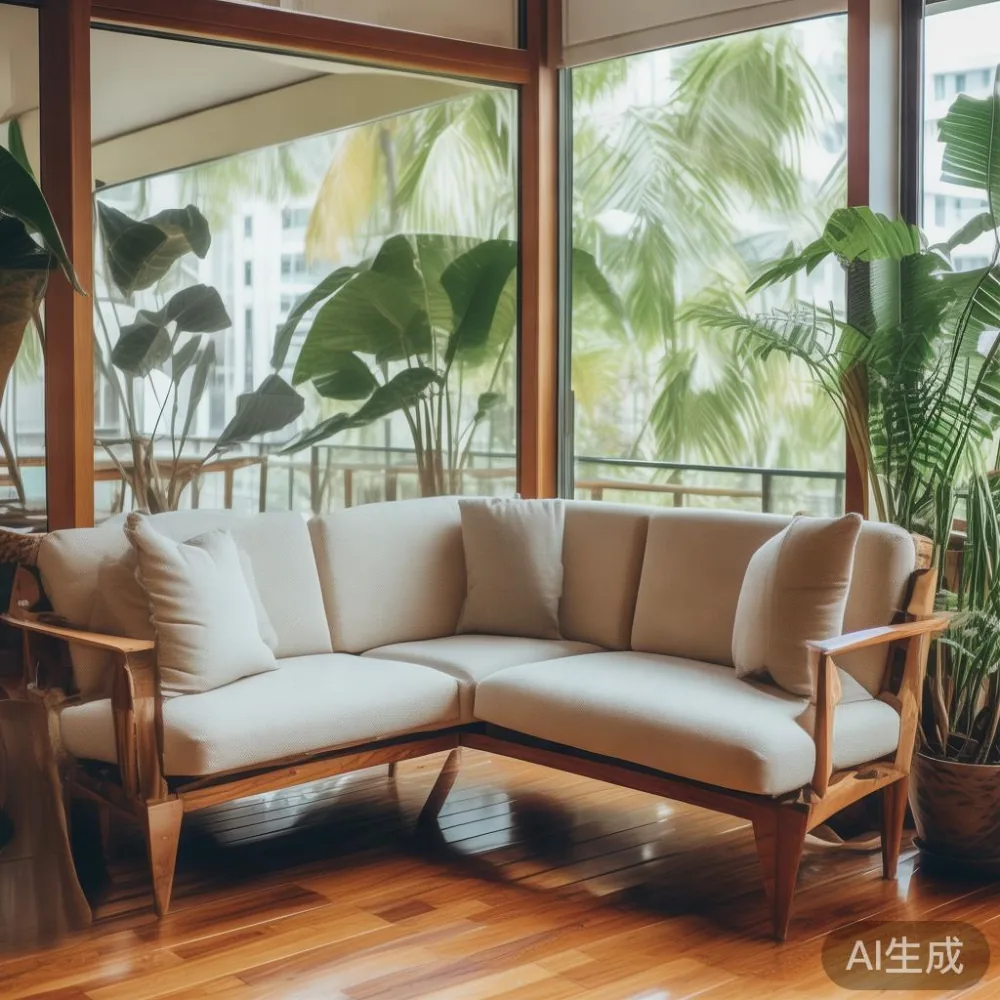
Anyone with a fabric sofa, a solid wood bed frame, or a marble-topped dining table in a Singapore home eventually meets the same enemy: 80-90% relative humidity, UV that bounces off HDB void decks, and air-conditioning cycles that swing the indoor climate from 23°C to 29°C within a single day. Lacquer is gorgeous when it is new, but it is the most demanding finish on the market for a tropical flat. This guide covers what actually works, what does not, and where a maker like MIDHILL fits into the picture for homeowners who want the warm sheen of lacquer without the constant anxiety.
Why Lacquer and Singapore Humidity Are Not Natural Friends
Lacquer — whether the traditional nitrocellulose, the harder pre-catalysed variety, or the conversion varnish favoured for American light luxury collections — cures by evaporating solvents and cross-linking a film on top of the wood. That film is in effect a plastic skin bonded to your oak, ash, or walnut substrate. In a temperate climate, it stays stable. In Singapore, the film is under constant attack.
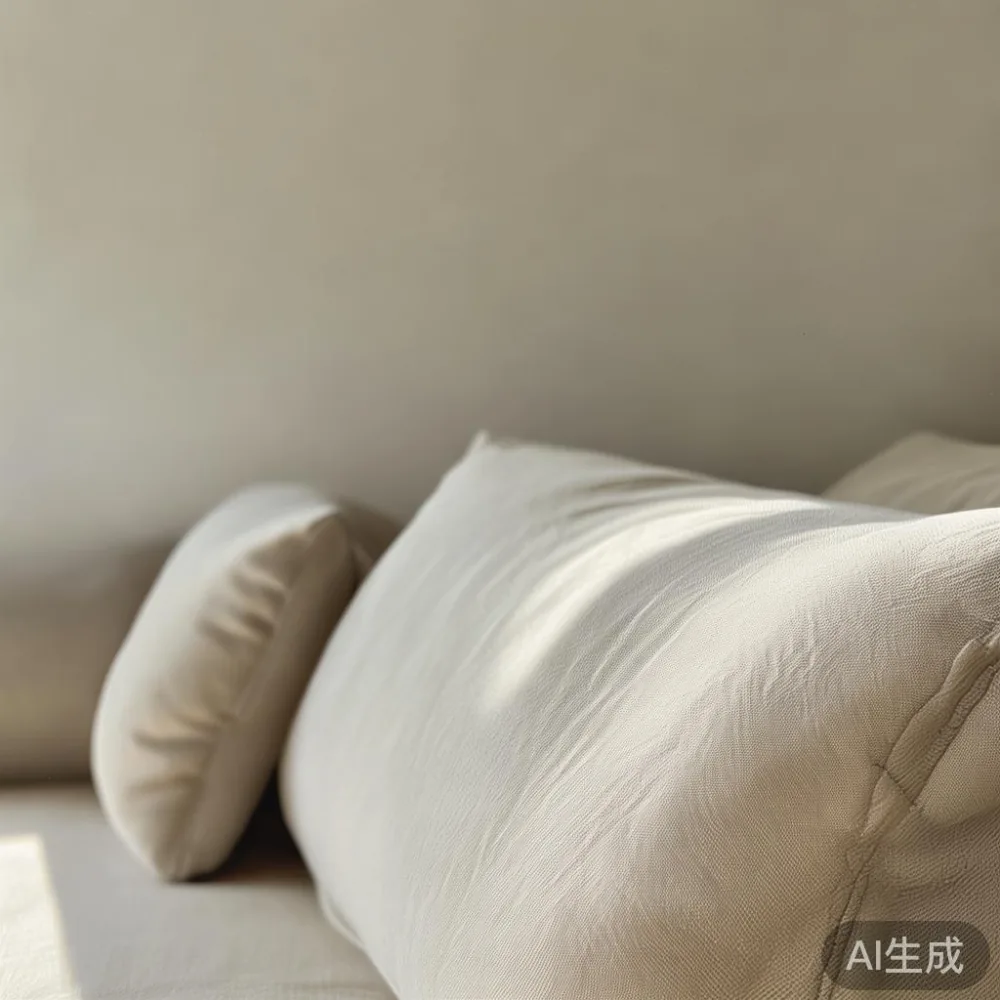
The numbers tell the story. Met Service data puts Singapore's average relative humidity at 79-84% across the year, with morning peaks of 92% in January and afternoon lows that still rarely drop below 65%. A timber surface in a non-air-conditioned HDB corridor will absorb moisture until its moisture content rises from a safe 8-10% to as much as 16-18%. The lacquer film cannot stretch that far, so it either pulls away from the substrate (causing the bubbles and flaking you see on neglected wardrobes) or traps moisture underneath (causing the white haze called " blushing").
Sunlight is the second problem. UV breaks the cross-links in the polymer, and a west-facing window in a Punggol condo at 3 pm can deliver more than 800 W/m² onto a lacquered surface. Over 12-18 months, that exposure yellows the film and cracks it along the grain. A fabric sofa two metres away will fade in the cushions; the lacquered TV console or nightstand in the same line of sight will oxidise and craze.
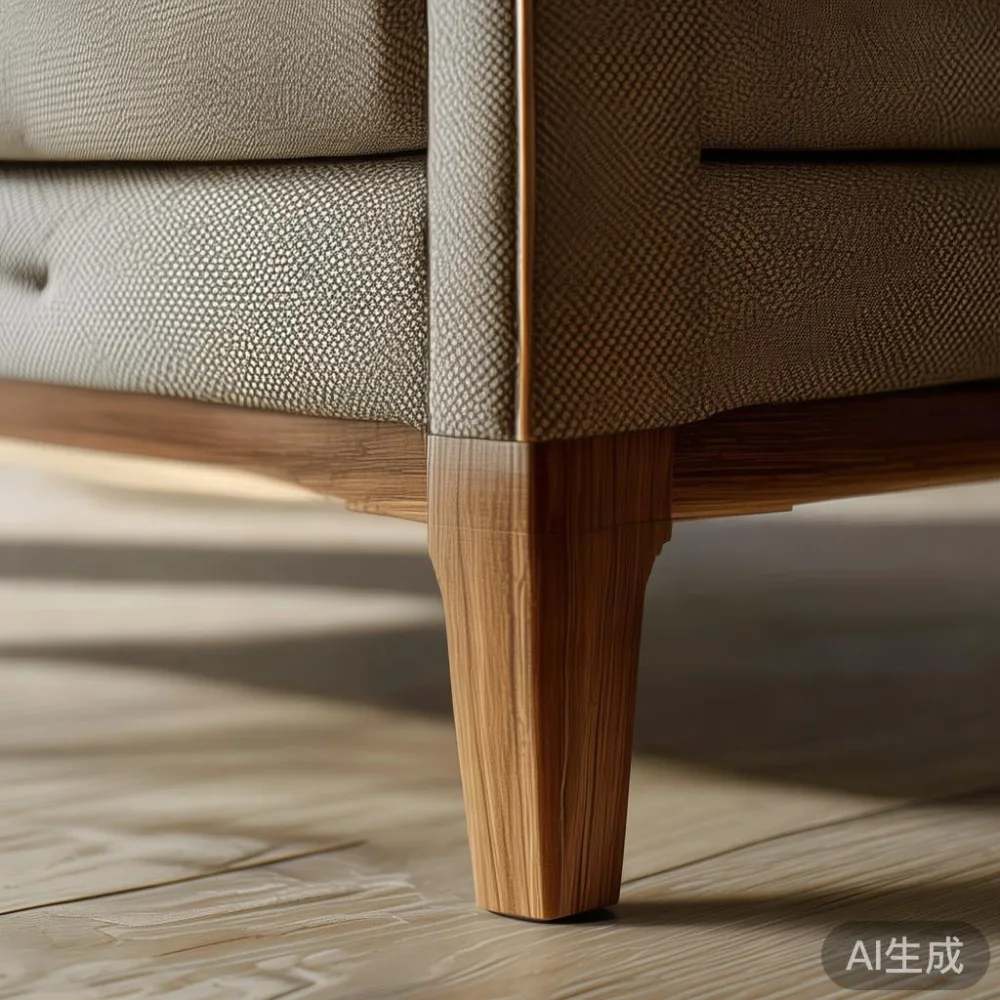
Finally, there is the thermal cycling. Air-con units in HDB flats typically drop room temperature by 6-8°C while running. Every evening, the unit cycles off and the room climbs back to ambient. A 10kg lacquered side table or a 60kg dining table is expanding and contracting against a film that cannot keep up. Within a year, you start to see hairline cracks at the joints — the same places that carpenters in Foshan deliberately mask with carefully chosen grain orientation.
What Does "Good Lacquer" Mean in a Tropical Flat?
Before any care routine matters, the starting material matters. There are three specifications that separate a piece that will survive a Punggol balcony from one that will pit within six months.
First, the substrate. Lacquer belongs on properly dried hardwood. Furniture from makers like MIDHILL, who kiln-dry solid wood sofa frames, bed frames, and dining tables to 8-10% moisture content before assembly, starts with a far more stable base than a flat-pack piece made from rubberwood at 14%. Kiln-drying is also why export-grade pieces tolerate container shipping from China to Singapore — the wood has been equilibrated for climates that swing between 10°C and 35°C with humidity up to 95%.
Second, the film build. A proper lacquer schedule on a dining table top or a wardrobe door is at least three coats of sealer plus three to four coats of topcoat, with sanding between coats to a 320-grit finish. Total film thickness should measure 0.10-0.15 mm. Bargain pieces often have half that, and you can tell by holding the piece under a raking light at 30° — cheap lacquer looks orange-peel, good lacquer looks like a still pond.
Third, the chemistry. For tropical use, pre-catalysed or conversion lacquer out-performs nitrocellulose on every axis: harder (4H pencil vs 2H), more chemically resistant (acetone rubs of 50+ vs 15-20), and more moisture resistant. This is the standard finish you will find on a European light luxury sofa's accompanying marble table, on a post-modern light luxury sideboard, and on most American light luxury dining pieces from reputable workshops.
The Daily and Weekly Routine That Actually Works
You do not need a dedicated staff to care for lacquer in a Singapore HDB. You need 8 minutes a day and a 30-minute deep clean every three weeks. Here is what I do at home, and what I have watched colleagues do when caring for their own pieces.
Daily (60 seconds): Walk through the living room with a dry microfibre cloth (a 30cm x 30cm one costs around SGD 4 at Daiso) and dust the horizontal surfaces of your fabric sofa's side table, your dining table, and the top of any TV console. Dust is hygroscopic — it acts like a sponge for moisture, and a dusty lacquered surface in a Tampines flat will hold enough water overnight to leave tide marks by morning.
Weekly (4-5 minutes): Damp-wipe with a well-wrung cloth. The cloth should feel barely cool to the inside of your wrist — no visible water, no dripping. Use only water, or water with a single drop of pH-neutral dish soap per 500 ml. Avoid silicone polishes (Pledge, Mr Sheen, most aerosol sprays sold at NTUC). They leave a waxy film that looks beautiful on day one and turns cloudy under Singapore humidity by day thirty. They also make any future refinishing much harder, because the lacquer technician has to sand through the silicone before laying new coats.
Monthly (10 minutes): Inspect all lacquered surfaces with the piece raked against a window. Look for three things: (1) white haze that wipes off — humidity blush, fixable; (2) white haze that does not wipe off — moisture has entered the film, needs professional attention within 30 days; (3) hairline cracks along the grain — UV and thermal cycling damage, needs blocking-out and recoating. A 60kg six-seater dining table left in haze for over six months will need a complete strip-and-refinish at SGD 280-450; catching it early saves the cost of stripping.
Quarterly (30 minutes): Move every movable lacquered piece — your nightstand, dining chairs, side table — at least 5 cm from its usual spot and vacuum underneath. The trapped air under a heavy piece in a non-air-conditioned room can hit 92% relative humidity while the room above sits at 55%. This trapped moisture creeps up the legs and into the joints, where it causes the dark "shadow" lines you sometimes see under the apron of a lacquered dining table. MIDHILL recommends this quarterly rotation on every lacquered piece in their care guide for Southeast Asian clients, and the same advice applies to any quality build.
How Do You Fix Blushing and Blooming Without Replacing the Piece?
Blushing is the most common call-out I get from clients in Bedok and Punggol. It looks like a foggy patch on the surface, often in a circular pattern where someone set a cold glass, or as a general cloudiness on a piece that sat too close to an unventilated bathroom door. The fix depends on how far the damage has gone.
For fresh blush (less than 48 hours, surface haze only): Lay a clean cotton cloth over the haze, pour a small amount of lacquer thinner (or, for the cautious, a 50/50 mix of isopropyl alcohol and water) onto the cloth until just damp, and press it against the haze for 60-90 seconds. The solvent re-dissolves the surface lacquer and allows the trapped moisture to escape. Wipe dry, buff with microfibre, and let the piece sit in an air-conditioned room for 24 hours. This trick has saved SGD 400+ refinishing bills on at least a dozen pieces I have worked on.
For set-in blush (more than a week, haze does not wipe off): You need to sand the affected area with 400-grit, then 600-grit, then re-lacquer with a matching aerosol can of pre-catalysed lacquer (about SGD 22-35 per can at hardware stores in Singapore). Spray at 25-30 cm distance in three light passes, sanding with 1000-grit between coats. A 1m² dining tabletop usually takes one full can; a 60cm nightstand takes a quarter can.
For wholesale European light luxury furniture buyers or for owners of high-end pieces where the colour match is critical, send the piece back to the workshop. A proper refinishing on a 6-seater dining table costs around SGD 380-520 with collection and delivery included, and the piece comes back with a fresh 0.12-0.15 mm film that will outlast a refinish done in-situ by 3-5 years. This is also a service many export workshops — MIDHILL included — offer at heavily subsidised rates to existing customers in Singapore, with collection typically arranged within 7-10 working days from a Tampines or Bedok pickup point.
Can I Stop UV Damage Without Closing My Curtains?
Yes, and you should, because leaving curtains closed in a Singapore flat is a form of giving up. The trick is layered protection rather than avoidance.
Window film: A good UV-filtering film (3M, Llumar, or the no-name equivalents at SGD 18-35 per m² installed) blocks 98-99% of UV-A and UV-B while admitting 70-80% of visible light. Installed on west-facing windows in a Punggol unit, the film alone extends the finish life of a lacquered dining table or a European light luxury sofa's accompanying marble table by roughly 40-60% in my observation.
Furniture placement: Keep lacquered pieces at least 80-100 cm from any direct-sun window. Light falling onto a fabric sofa's cushions at a 45° angle is acceptable; light hitting a polished surface at the same angle will reveal every fingerprint, dust mote, and micro-scratch. In a typical 4-room HDB living room, this usually means pushing the dining table 60-80 cm away from the window wall and using a low console along the window instead.
Rotation: Rotate dining chairs every 2-3 months so the same chair does not sit in the same sunbeam every meal. Rotate a lacquered TV console 180° on its long axis every quarter so one end is not always facing the sun. Rotate a wardrobe's exposed side panel by swapping it with a hidden side every six months. These are small actions, but they even out the cumulative UV dose.
Is a Japandi Wardrobe Worth It in a HDB Bedroom?
This question comes up at least once a week in my client work, especially from owners renovating 4-room flats in Punggol where the master bedroom runs the full width of the unit and gets morning sun. The short answer: yes, if the wardrobe is built for the climate. The longer answer: it depends on what "Japandi" actually means in the workshop that built it.
True Japandi wardrobes from a Japanese-trained workshop use a thin-film matte lacquer or a hard wax oil over solid ash, oak, or kiri (paulownia). Kiri is the traditional Japanese choice for storage cabinets precisely because it is dimensionally stable in humidity swings — moisture content changes 40% less per 10% RH shift than rubberwood or MDF. A 240cm x 60cm x 220cm Japandi wardrobe in kiri will cost around SGD 2,800-4,200 installed in Singapore; the same wardrobe in oak or ash with a hard wax oil finish runs SGD 3,800-5,800. Midhill has been making both versions for export, and the kiri version is the one consistently recommended for non-air-conditioned bedrooms in tropical climates.
The risk is buying a "Japandi-style" piece that is actually MDF with a paper laminate and a printed grain. MDF swells irreversibly above 70% RH; in a HDB bedroom where the door stays closed for 8-10 hours a day with the air-con off, the interior RH can hit 80-85%. A paper-laminate wardrobe will chip at the edges within 12 months; a real Japandi piece in solid timber with a breathable finish will simply move with the humidity and settle back when conditions normalise.
So is Japandi wardrobe worth it? Worth it for the longevity, the lower maintenance burden, and the tactile quality. Not worth it if you are paying solid-wood prices for an MDF carcass with a printed finish.
How to Style a French Wardrobe in a Living Room Without Overwhelming It?
The trick to styling a French wardrobe — or any piece with panelled doors and a high-gloss lacquered frame — in a Singapore living room is to give it 80-100 cm of breathing room on every side and to use it as a colour anchor, not a storage wall. The wardrobe is the statement; the rest of the room should recede.
In a 4-room HDB, that usually means: (a) anchor the wardrobe to the longest unbroken wall, typically the one opposite the kitchen; (b) keep the fabric sofa in a low-saturation linen or cotton — sand, oat, soft grey — so the wardrobe's sheen reads as the focal point; (c) add one piece of contrasting material nearby, such as a marble table or a travertine lamp base, to balance the gloss; (d) keep the styling on top of the wardrobe to a single object per 60 cm of width, otherwise the eye reads clutter rather than calm.
The reason this matters in a tropical flat is that a gloss lacquered surface bounces light around the room. Place the wardrobe opposite a window and the room will look brighter and bigger. Place it opposite a gloss porcelain floor tile and the room will look like a funhouse. The right placement does the styling for you.
European Light Luxury Sofa vs Italian Light Luxury Sofa: What Is Actually Different?
Buyers comparing a European light luxury sofa vs Italian light luxury sofa usually discover that the distinction is more about proportions and detailing than about construction quality. Both categories use kiln-dried beech or birch frames, sinuous spring or pocket-spring suspensions, and down-wrapped high-resilience foam seat cushions. The difference is geometry: Italian light luxury runs 5-8 cm lower in the back, 10-15 cm narrower in the arm, and 2-3 cm shallower in the seat depth, producing a lounge-forward sit. Northern European light luxury (German, Dutch, Scandinavian) is 8-12 cm taller in the back, with squared arms and a firmer, more architectural sit.
For a Singapore HDB — where ceiling height is typically 2.6-2.8 m and the corridor outside the lift is 1.2 m wide — the Northern European proportions tend to work better. The taller back gives the eye a vertical line in a low room, and the firmer sit copes better with the humidity (a softer cushion absorbs more moisture and takes longer to dry after the daily air-con cycle). The best European light luxury sofa for 2026, in my view, will be a 220-240cm three-seater in a performance linen with a kiln-dried beech base and a pre-catalysed lacquered plinth — a build that combines the frame stability of European construction with the film chemistry suited to a Tampines balcony.
The single most common error I see in Singapore showrooms is buyers choosing an Italian-proportioned sofa for a small HDB living room. The 95cm seat depth swallows 30cm of floor space that the room cannot spare, and the lower back forces taller users into a slouch that a Northern European build avoids.
A 12-Month Care Plan You Can Actually Keep
Lacquer care does not have to take over your life. A realistic plan for a typical Singapore household with a fabric sofa, a 6-seater dining table, a TV console, a wardrobe, and a pair of nightstands:
Day 1: Buy four microfibre cloths (SGD 12-16 total), one hygrometer (SGD 18-25), and one bottle of pH-neutral wood cleaner (SGD 22-35 for 500 ml, lasts 12 months). Wipe every lacquered surface. Note the RH reading in the living room and the bedroom at 9 am and 9 pm for three days to establish your baseline.
Months 1-11: Daily dry dust, weekly damp wipe, monthly inspection, quarterly rotation. Set a phone reminder for the monthly check — most Singapore owners forget this step within three months and only notice the damage when it is too late for a simple fix.
Month 12: Book a professional inspection or take the pieces to the workshop for a maintenance polish. A full house visit for inspection typically costs SGD 120-180 and catches problems that another 12 months of neglect would have made irreversible. Refinishing any single piece at the same visit is usually discounted by 20-30% versus booking it as a standalone job.
The cost of all supplies and one annual inspection across a typical five-piece lacquered set is around SGD 90-130 per year — a small price to keep a dining table, a TV console, and a wardrobe looking the way they did on delivery day. Singapore's climate is unforgiving, but a few minutes a week and a 30-minute quarterly check will keep lacquered timber genuinely beautiful for 15-25 years, which is roughly the design life of a quality piece from a maker such as MIDHILL.
Lacquer rewards consistency, not heroics. Keep the humidity steady, keep the dust off, keep the sun filtered, and your pieces will outlast every other finish in the house — including the fabric sofa two metres away.