How to Match Furniture to a Warm Minimal Interior Without Losing the Cosy Part
I spent most of last month walking through new BTO flats in Tampines North and a few resale units in Punggol, taking notes on how owners were trying to make their interiors feel warm and minimal at the same time. The honest truth is that most of them had one of two problems: their furniture was too cool and grey, so the room felt like a clinic, or it was too rustic and chunky, so the room felt like a chalet. Warm minimalism lives in a narrow lane between those two, and the lane is mostly defined by what you do with wood tone, fabric weight, and the negative space around a fabric sofa. None of this is hard once you have a ruler, a colour card, and about an hour to plan before you order anything.
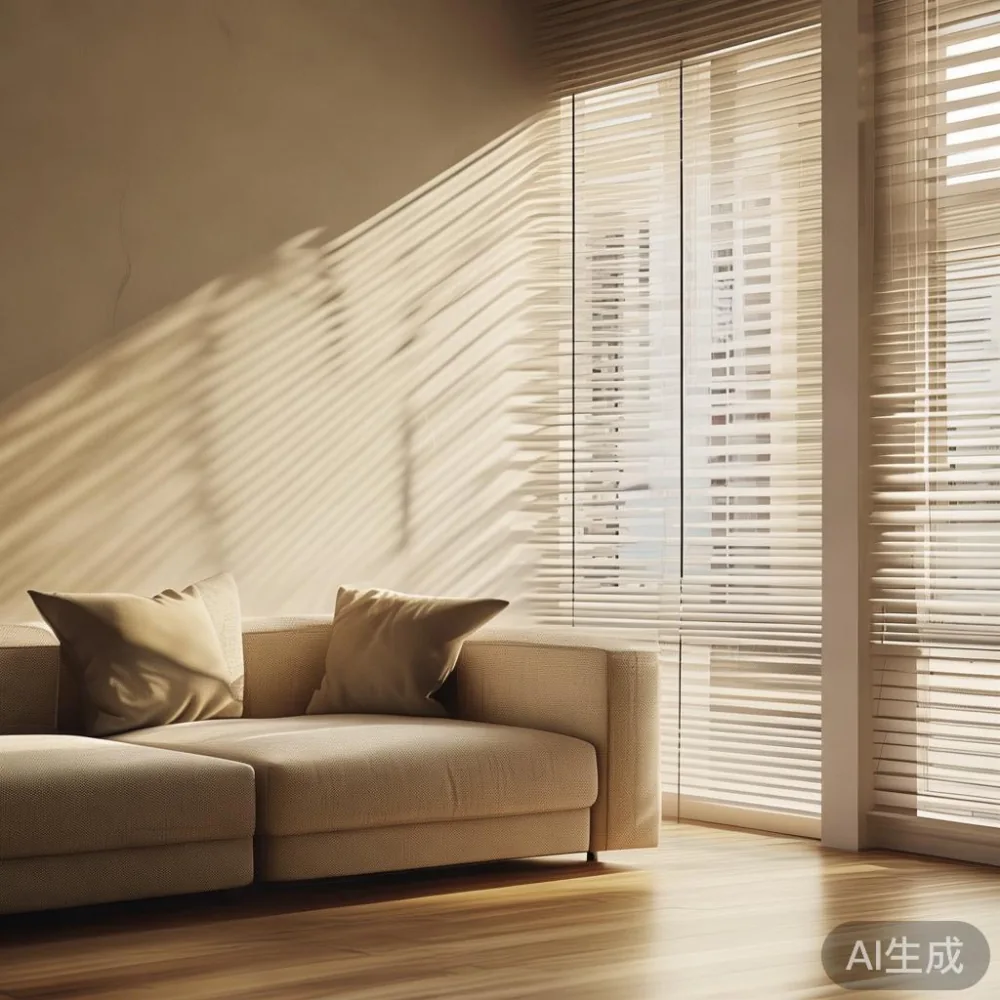
What does a warm minimal interior actually look like in Singapore flats?
Warm minimal in a 4-room HDB is not the same as warm minimal in a landed house. Most Singapore homes sit between 65 sqm and 95 sqm, the living room is usually 3m x 4m, ceiling height is 2.6m, and you are almost always fighting glare from a full-height window on one wall. The palette that quietly works here is a bone-white wall (around 9YY 83/04 on a Nippon or Dulux card), a single mid-warm wood tone running through the floor, the dining table, and the bed frame, and one piece of furniture in a deeper tone to anchor the eye. A fabric sofa in oatmeal, putty, or a quiet clay beige covers about 1.8m to 2.2m of wall length and carries most of the warmth in the room by itself.
I sat in a Tampines GreenRidges flat last month where the owner had done exactly this. A 2.4m three-seater fabric sofa in a brushed cotton blend, a 1.6m solid wood dining table in white oak, and white walls with one arch-shaped plaster detail over the TV console. The whole room read warm and calm, and the GST-inclusive spend on furniture came in around S$5,800. That is a real number for a real HDB living room.
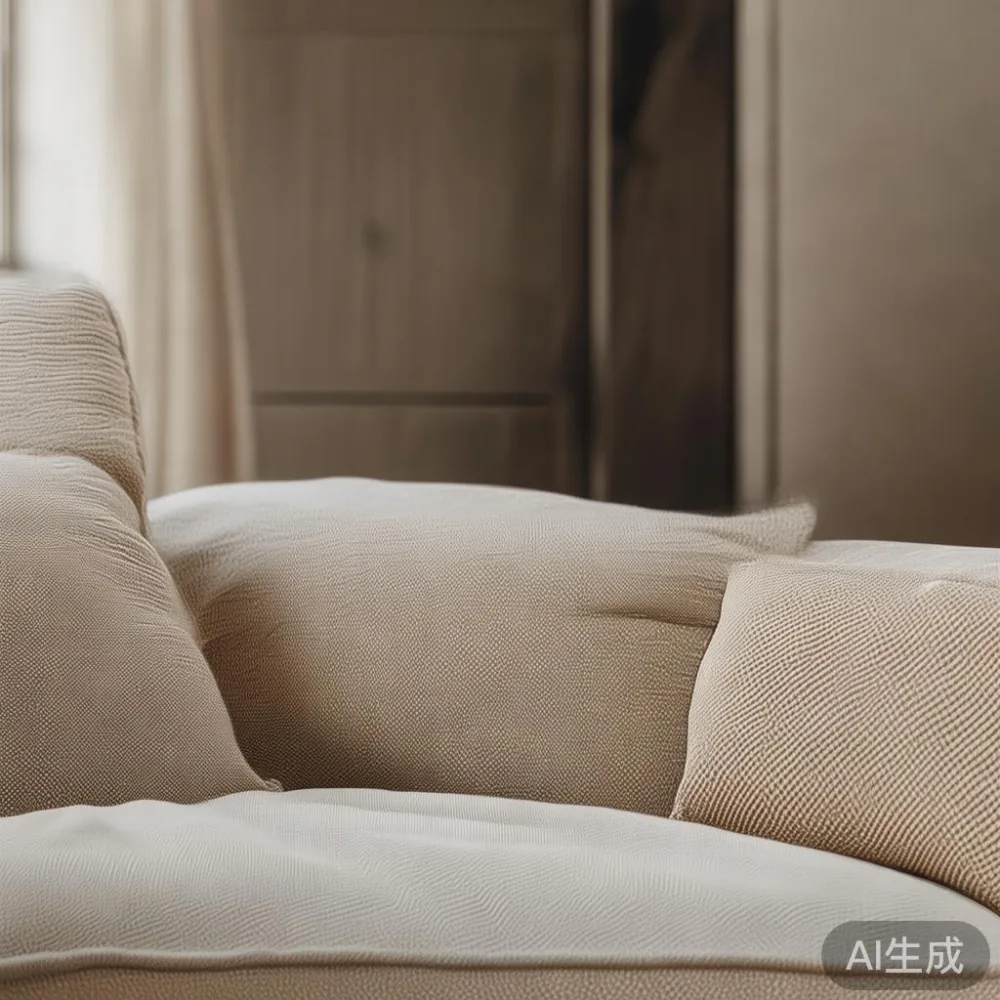
How do I keep a warm minimal room from looking like a showroom?
Showroom minimalism is empty and cold. Home minimalism is edited and lived-in. The two differences are texture and one personal object. Texture comes from fabric that is not perfectly tight, from a wood grain you can feel under your hand, and from a stone or marble surface that has subtle veining rather than a mirror polish. The personal object is a single item that breaks the system: a stack of three books, a clay vase that your cousin threw, an old rattan stool that does not match anything.
When I test pieces at the Foshan workshop, the warm minimal checklist I run is short. Pick one wood species and stay with it across the solid wood sofa frame, the bed frame, the dining table and the wardrobe doors. Pick one fabric family, usually a linen-cotton blend in the 380-450 gsm range, and keep it on the fabric sofa and on any accent cushions. Pick one metal finish, usually brushed brass or blackened steel, and repeat it on the table legs and the cabinet pulls. That repetition is what makes the room feel quiet instead of empty.
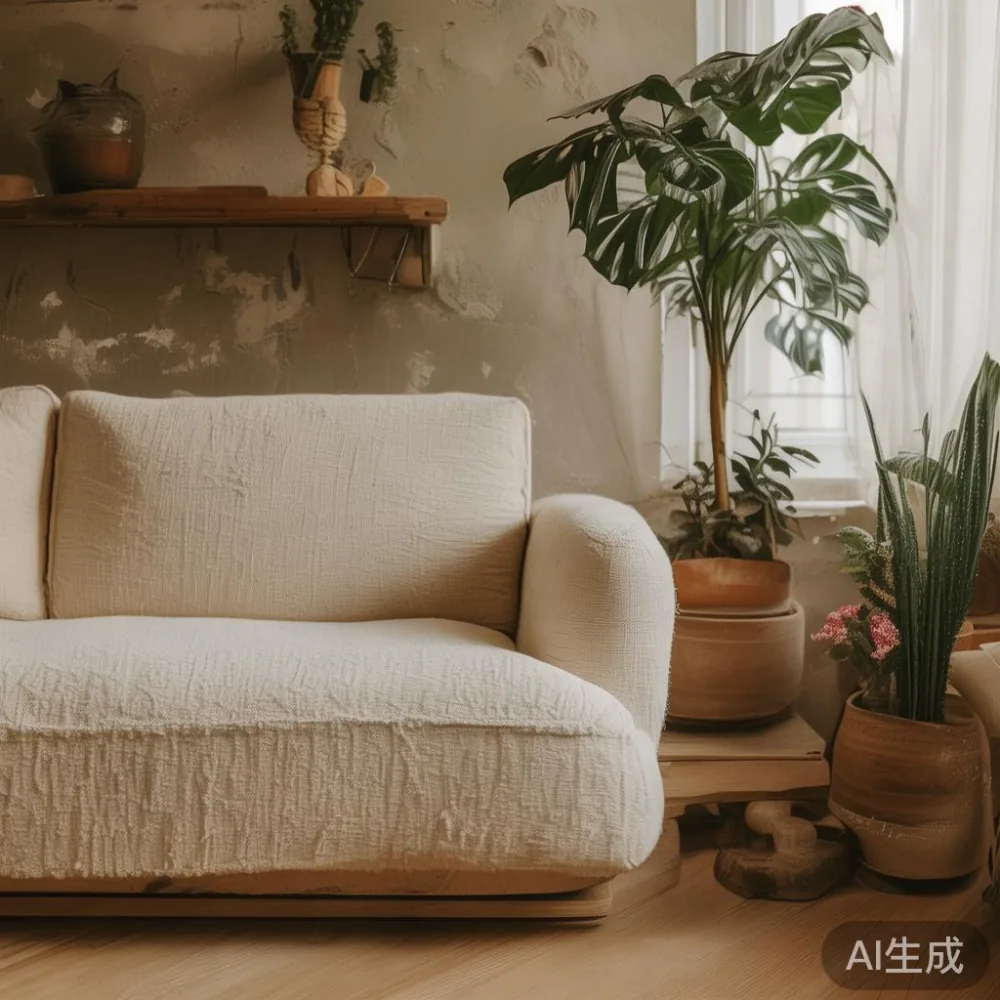
What is the difference between American bed and modern furniture?
An American bed is a scaled, hardwood platform bed with a tall headboard, deeper proportions to fit a Queen or King mattress, and a visual weight that reads as solid and furniture-grade, while a generic modern bed tends to be lower, lighter, and designed to disappear into a Scandinavian or post-modern light luxury interior. In practice, that means an American-style bed frame usually sits 12-15 cm off the floor with a headboard between 110 cm and 130 cm tall, uses thicker rails around 6-8 cm, and is built so the nightstand and the wardrobe can match its wood tone without forcing them. A modern bed, by contrast, often uses a 4 cm slat system, no visible hardware, and works best in rooms where the fabric sofa and the dining table are also in a low-contrast wood tone.
The reason this matters in a warm minimal HDB is proportion. A 1.8m x 2.0m Queen mattress in a small bedroom will swallow a delicate modern bed frame and leave the room feeling under-furnished. A proper American-proportion bed frame grounds the room, lets the nightstand sit at the right 60-65 cm height, and gives you a place to anchor the warm wood story that the living room started. Most Foshan workshops, including the one I write from, build American-style frames as a stock item and offer custom sizing in 10 cm increments for HDB door widths, which on a standard corridor and lift is around 90 cm clear opening.
How do I avoid a white walnut color mismatch across rooms?
A white walnut color mismatch is the single most common warm minimal failure I see in Singapore homes, and it usually appears six months after delivery when the bedroom wardrobe finally arrives and is two shades cooler than the dining table. White walnut from one factory at 7 percent moisture content can read very differently from white walnut at 11 percent, and a piece finished with a matte lacquer will sit next to a sister piece with a hardwax oil and look like two different species. Order samples, lay them on the floor of the actual room at 7 pm, and check them in the morning. If they cannot be read as the same colour without squinting, do not buy the second piece from that factory. A safer route is to buy the dining table, the bed frame, the nightstand and the wardrobe from one workshop so the finish is mixed as one batch. At MIDHILL we keep white walnut, ash and oak across the dining table, the bed frame and the wardrobe on the same finishing line, which is how we keep the colour honest room to room.
Which pieces should I buy first when the budget is under S$8,000?
Buy in this order: the fabric sofa, the dining table, the bed frame, then the nightstand and the wardrobe. The fabric sofa fixes the room's centre line, the scale of the TV console, and the rug size, so every later choice orbits it. The dining table fixes the warm wood reference for every other wood piece. The bed frame fixes the bedroom's proportions. The nightstand and the wardrobe can wait two or three months, by which point you will know exactly what shade and grain you actually want.
A workable warm minimal core for a 4-room HDB at today's SGD pricing, including 9 percent GST and delivery inside mainland Singapore, lands around S$5,200 to S$6,400 for the furniture itself:
Fabric sofa, 2.2m three-seater in linen-cotton, solid wood internal frame: S$1,900 to S$2,400. The piece should weigh 55-70 kg, sit 42 cm seat height with a 60 cm seat depth, and use a kiln-dried hardwood frame, not engineered board.
Solid wood dining table, 1.4m to 1.6m, white walnut or ash: S$1,100 to S$1,500. Six-seat tables need at least 76 cm clearance on every side, so plan 1.6m x 0.9m of floor space plus 60 cm walkways.
Bed frame, American-proportion Queen, white walnut or ash to match the dining table: S$1,000 to S$1,300. Internal slat spacing no wider than 7 cm so a standard pocket-spring mattress is properly supported.
Nightstand pair, two drawers, matching wood: S$450 to S$600 for the pair. Top should sit 2-4 cm below the mattress surface, so 60-65 cm finished height with a 5-7 cm mattress.
Wardrobe, 1.8m to 2.4m three-door, white walnut to match the bed frame: S$1,400 to S$2,200 if you go solid doors, less if you go a mixed panel.
A marble table, either a round 90 cm coffee table or a 50 cm side table, sits well in a warm minimal living room because the cool veining breaks the wood monotone. Carrara or light grey Vein Cut Travertine in a honed finish reads quieter than polished, and the price band in Singapore is roughly S$600 to S$1,200 for a small round piece. If you go for a marble table, keep the edge profile at 2-3 cm and pair it with a slim blackened steel base so it does not feel heavy against the fabric sofa.
How wide is too wide for a sofa in a Punggol or Bedok corridor?
This is the question that derails more deliveries than any colour choice. Most HDB corridor doors are 90 cm clear opening after the rebate, and the lift cab on most BTO blocks is 1.1m wide x 1.4m deep with a door opening of about 80 cm. A 2.4m three-seater fabric sofa in one piece will not make it. The working rule is to keep any single piece under 2.2m in its longest dimension, or to order it in two halves with a hidden coupling that joins on site.
For a 2.2m sofa, the realistic floor plan is two modules of about 1.1m each. The seam should sit at 1.1m from one end so it falls behind a cushion line, not in the middle of a cushion, which would telegraph through the fabric. Lift access on high floors above the 14th in some Punggol towers requires the freight lift, which is usually 1.3m wide x 1.6m deep. If you are above the 24th floor, ask the furniture maker for the freight lift dimensions before the workshop cuts the frame. MIDHILL's Singapore delivery team records the lift size at booking and will call out any piece that exceeds the clear opening before it ships, which is a small thing that saves a S$400 redelivery fee.
What fabric weight and colour actually work in a warm minimal HDB?
For Singapore, fabric weight matters as much as colour. A linen-cotton blend in the 380-450 gsm range breathes in air-conditioned rooms and does not feel clammy on the skin during the humid months. Anything above 550 gsm will sit on the fabric sofa like a heavy curtain and start to pill within a year. Anything below 280 gsm will look thin and will bag at the seat after six months of normal use. The colour that quietly does the warm minimal job is the one you almost cannot name: putty, oat, bone, chalk, mushroom, clay, dune. These colours have a touch of yellow or red pigment, so they reflect the warm LED lighting (2700K to 3000K) without going pink at night.
Cool greys, silver greys, and anything with a blue undertone will read as cold against a warm wood floor. I have measured this on a recent job in Punggol Waterway Terraces: a fabric sofa in slate grey (#8A8E91) sat next to a 1.6m white walnut dining table and pushed the room 2-3 degrees cooler on a colour temperature meter, which is exactly the opposite of what warm minimal wants. The same sofa in putty (#C9B89C) pulled the reading back to neutral and let the wood carry the warmth.
How do I check structural quality before I pay a deposit?
Ask four questions in writing and keep the answers. What is the moisture content of the kiln-dried hardwood at the time of machining, and what tolerance does the workshop hold, usually 8-12 percent for Singapore-bound furniture. What is the joinery at the corner of the fabric sofa frame, mortise-and-tenon or dowel, and is it glued or just pressed. What is the warranty on the frame and on the spring system in years, and what does it cover, including sag deeper than 2.5 cm on the seat. What is the refinishing policy for the solid wood dining table and the wardrobe, and at what cost.
A ten-year structural warranty on the frame is the right benchmark for a piece that costs north of S$1,500. A lifetime refinishing option on a dining table that is used daily is worth real money over fifteen years, typically three to four refinishes at S$800 each. Free shipping above a clear threshold, anything from US$350 to US$500 equivalent, is standard for cross-border orders from Foshan to Singapore and usually works out to about 30-45 days door to door including sea freight, customs clearance and a 2-4 person white-glove delivery inside the home. A 14-day return window covers the case where the piece arrives and the room does not work, and that is reasonable as long as the piece is in original packing.
I have seen buyers lose their deposit because they asked the questions verbally and the workshop "forgot" the answers. Get them on the proforma invoice. It is the only document that matters when something goes wrong.
What lighting and rug choices pull the warm minimal look together?
Lighting is half the room. Anything above 3200K will push the fabric sofa towards beige-grey and the wood towards orange. Anything below 2600K will make the room feel like a restaurant. The range that works for a warm minimal HDB is 2700K to 3000K with a CRI of 90 or higher, so colours of the dining table, the marble table and the wardrobe read honestly. A 90 cm diameter paper lantern or a 60 cm drum shade in linen over the dining table, on a dimmer, is the single cheapest move that warms the whole room.
Rug sizing is the other common miss. A rug that is too small chops the room into pieces. For a 2.2m sofa, the rug should be at least 2.4m x 3.0m so the front legs of the fabric sofa sit fully on the rug and the dining chairs still clear the edge when pulled out. A wool or wool-blend rug in a quiet tone, not a patterned rug, keeps the warm minimal story intact. Pattern is the easiest way to make a calm room look busy, and busy is the opposite of what you are paying for in a piece of solid wood furniture.
Final thought from the workshop floor
Warm minimal is not a furniture style, it is a discipline. Pick one wood species, one fabric family, one metal finish, and one stone if you want a marble table, and repeat them. Measure the lift and the corridor door before you order. Keep the fabric sofa between 1.8m and 2.2m, the dining table between 1.4m and 1.6m, and the bed frame at proper American proportions. Plan a realistic S$5,200 to S$6,400 budget for a 4-room flat and you will land in a room that feels warm without feeling cluttered, and minimal without feeling cold. That balance is the whole job.