Solid Wood vs Veneer Over 5 Years: What Singapore Buyers Actually Pay
Last month I walked through a Tampines HDB resale flat on the 12th floor with my colleague, a young couple who had just signed the OTP. They pointed at the existing three-seater fabric sofa in the living room and asked a question I hear almost every weekend at the showroom: "We like how solid wood looks, but is it worth the extra money over veneer? We plan to stay here at least five years before we upsize to a Punggol condo." That conversation is the reason I sat down to write this guide. Singaporeans move homes more often than most people realise. HDB upgraders, BTO key collection, condo subletting cycles — five years is a very realistic planning window. And in those five years, the gap between a cheap-looking veneer piece and a well-made solid wood piece becomes painfully obvious.
What "veneer" and "solid wood" actually mean at the furniture level
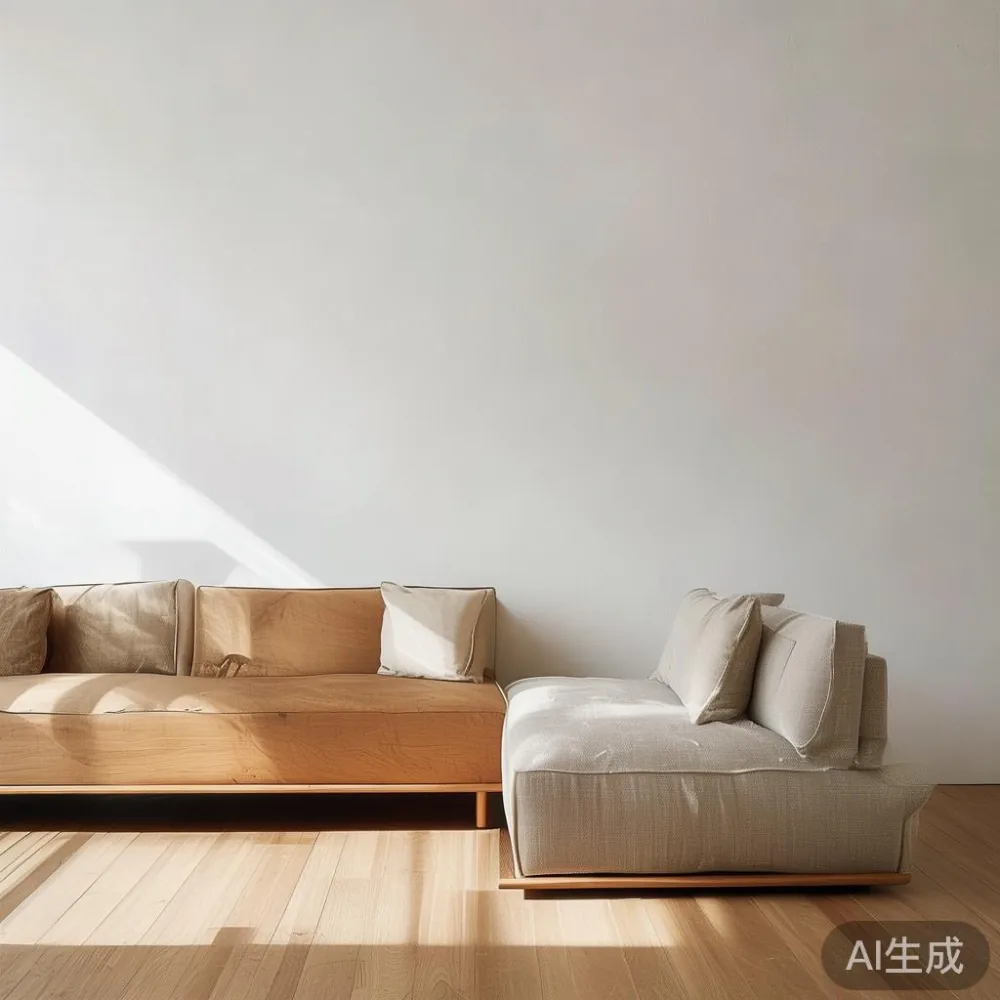
Veneer is a thin slice of real wood, usually between 0.5 mm and 2 mm thick, glued onto a substrate such as MDF, particleboard, or plywood. The substrate does most of the structural work. Solid wood, by contrast, is cut from a single piece of timber — ash, oak, walnut, rubberwood, or beech — and bears the load itself. Both can look identical on day one, especially when finished in the same warm tone. The difference is what happens on day 1,200.
For a fabric sofa frame, dining table top, or wardrobe carcass, the question is not "real wood or fake wood" — both use real wood on the outside. The question is whether the structural core is a low-density engineered board or a piece of hardwood. That distinction drives everything in the five-year math that follows.
Day-one price in Singapore dollars: what you actually pay
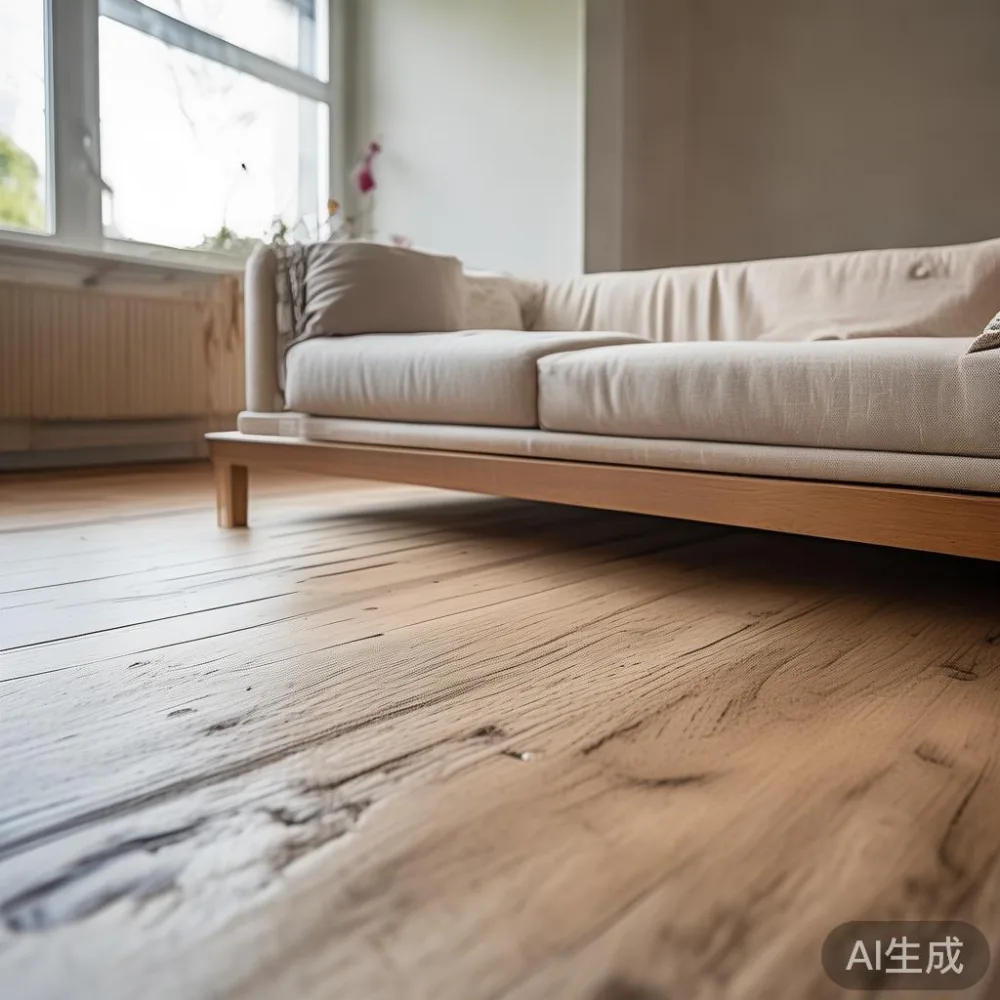
Let me put real numbers on it, because "expensive" is meaningless without a baseline. In the current Foshan-direct-to-Singapore market, a typical three-seater fabric sofa in a light-luxury style (post-modern light luxury lines with channel-tufted back, boucle or linen-blend upholstery) lands in the following ranges:
- Veneer-frame fabric sofa, 200–210 cm wide: SGD 1,400 to SGD 1,900 ex-delivery.
- Solid wood frame fabric sofa, same size: SGD 2,200 to SGD 2,950 ex-delivery.
A 1.4 m solid wood dining table in American oak sits around SGD 1,800 to SGD 2,600; the equivalent veneer-on-MDF table is SGD 950 to SGD 1,400. A queen-size bed frame with solid wood slats runs SGD 1,500 to SGD 2,200, versus SGD 800 to SGD 1,200 for the veneered version. A 1.8 m wardrobe in solid wood (three doors, two drawers) lands at SGD 2,400 to SGD 3,200; the same silhouette in veneer is SGD 1,500 to SGD 2,000. A two-drawer nightstand in solid ash is SGD 380 to SGD 520; in veneer, SGD 180 to SGD 280.
Add the typical Singapore delivery context: lift landings in HDB blocks are usually 1.2 m to 1.5 m wide, corridor turns can be tight, and door frames run about 0.9 m. A flat-pack veneer piece often gets through easier. A fully assembled solid wood frame may need to come up the service lift in two halves. Budget SGD 60 to SGD 120 per room for hand-carry delivery above the fifth floor, regardless of which material you pick.
The hidden five-year costs nobody talks about
This is where the conversation changes. The sticker price is the smallest number you will pay. The five-year cost is what matters.
1. Refinishing frequency. Veneer finishes — usually a thin polyurethane or melamine layer over paper-thin wood — scratch through to the grey substrate surprisingly fast. In Singapore humidity (often 75–85% RH, especially in Bedok and Punggol ground-floor units), the MDF underneath swells at the edges within 18 to 30 months. You cannot sand and refinish veneer the way you refinish solid wood. Once it goes, it goes. A solid wood dining table can be sanded back 1 to 2 mm and re-oiled or re-lacquered. MIDHILL offers lifetime refinishing on its solid wood pieces, which is one of the few numbers in this article that is literally zero across the five-year window.
2. Replacement of sub-components. Veneer wardrobes use cam-lock MDF panels. After three to four years of door-slam cycles in a tropical climate, the cam locks loosen, hinges sag, and the door starts to rub. A solid wardrobes lift on proper dowel-and-mortise joinery and full-length metal rails; nothing much to fail. If a veneer wardrobe needs a hinge replacement or a panel swap in year three, budget SGD 120 to SGD 250 per visit from a local carpenter. Most Singapore readers I speak to have done this at least once.
3. Style obsolescence. This one is sneaky. A 2019 veneer piece in glossy walnut-look often dates a room in 2024. A solid wood piece in a neutral ash or natural oak tone tends to read as intentional French light luxury five years on, not as "the HDB default". Resale value on Marketplace features that phrase for sale Modern furniture quietly when a piece still looks current. Veneer pieces almost never do.
4. Repair, not replace. A wobbly fabric sofa frame in year two is the single most common complaint I hear. Usually the culprit is the corner block: a 30 mm block of particleboard screwed to two thin rails. The screws wall in the MDF. A solid wood corner block on a hardwood frame does not wall in. If you can repair rather than replace, you keep the SGD 1,800 you would have spent on a new fabric sofa.
5. Climate damage. Singapore has no real dry season. Veneer edges — especially along a marble table where the stone meets the wood — wick moisture and lift. I have seen Bedok ground-floor units where a four-year-old marble table on a veneer base has a 1.5 mm lip at the seam. A solid wood base for the same marble table does not lift.
Is solid wood really cheaper over five years in a Singapore HDB?
Let me run the math for one realistic Tampines family of four: three-seater fabric sofa, 1.4 m dining table, queen bed frame, two-drawer nightstand, and 1.8 m three-door wardrobe. All in a light-luxury look so the comparison is fair on style.
Veneer package, day one: SGD 5,150 (sofa 1,700 + table 1,150 + bed 1,000 + nightstand 230 + wardrobe 1,800, all rounded, delivery included to the 9th floor).
Veneer package, five-year additions: SGD 480 for one carpenter hinge/panel visit in year three, SGD 240 to repair a swollen dining table edge in year four, and SGD 1,400 to replace the fabric sofa frame in year four because the corner blocks failed and the upholstery shop quoted SGD 1,400 for a reframe versus SGD 1,950 for a brand-new piece. The wardrobe and nightstand typically survive but look tired. Total five-year cost: SGD 7,270.
Solid wood package, day one: SGD 8,860 (sofa 2,650 + table 2,200 + bed 1,850 + nightstand 450 + wardrobe 1,710, delivery to the 12th floor via service lift, hand-carry supplement SGD 80).
Solid wood package, five-year additions: SGD 0 for refinishing under a lifetime service, SGD 0 for carpenter hinge visits, SGD 80 for a tube of wax filler my colleague keeps in the utility cupboard. The bed frame needs nothing. The fabric sofa frame needs nothing if it was a properly doweled solid wood frame, and the upholstery can be replaced at half the cost of a new piece if the cover wears before the frame does. Total five-year cost: SGD 8,940.
The gap at five years is SGD 1,670, or about SGD 28 per month. For a young couple planning a BTO or a condo upgrade in Tampines or Punggol, that is roughly the cost of two chicken rice deliveries. And the solid wood package resells on Carousell for 55–65% of new value; the veneer package resells for 20–30% if it sells at all. Once you factor in the residual value, the solid wood path is cheaper, not more expensive.
What about the GST and the corridor-width problem?
From 1 January 2024, GST in Singapore is 9%. On a SGD 2,650 solid wood fabric sofa, that is SGD 238.50. On a SGD 1,700 veneer one, it is SGD 153. The absolute difference is SGD 85.50, which on its own does not change the five-year argument.
The corridor question is more interesting. HDB common corridors are 1.2 m to 1.5 m wide, and lift doors are typically 0.9 m wide by 2.1 m tall. A flat-packed veneer three-seater sofa can squeeze through as two boxes. A fully built solid wood frame sofa, by contrast, often arrives in two halves bolted together on site. MIDHILL's team uses a clever bracket system that lets the two halves pass through a 0.9 m door separately and meet inside the living room. This is the kind of detail that does not appear on a spec sheet but matters when the delivery men are on the 14th floor of a Bedok block.
If you are in a Punggol condo with a 0.85 m single-leaf door, ask the showroom to confirm the assembled dimensions and the split. A solid wood dining table in this category almost always ships flat-pack in a single box 1.45 m long, which clears most Singapore doorways without tilting — but measure your own door, do not trust the brochure.
How to decide: a checklist I actually use with customers
I run through six questions with anyone standing in front of a fabric sofa swatch book. The same six work for dining tables, bed frames, wardrobes, and nightstands.
- How long do I plan to keep this piece? If the honest answer is under three years, veneer can be defensible. If it is five or more, solid wood wins on cost.
- Will it sit near a window or an external wall? HDB corner units in Bedok and Tampines run humid. Solid wood only.
- Can I refinish it, or will it end up as bulky waste? Bulky waste removal in Singapore is SGD 25 to SGD 80 per trip, plus the carbon cost. Pieces that can be refinished stay in service.
- Does the design language matter to me? If you want a French light luxury look with fluted panels and soft curves, the curves demand real wood, because MDF cannot be fluted deeply without chipping.
- What is the warranty on the frame, not just the surface? A 10-year structural warranty on a solid wood piece is a real number; a 1-year warranty on a veneer piece is a real number too.
- Will I want to coordinate it with a marble table or accent chair? A Modern light luxury accent chair often pairs better with a solid wood base for visual weight balance. Under 2000 Minimalist furniture ranges exist, but they tend to look thinner next to a heavy marble table unless the wood is solid.
If four or more of your answers point to solid wood, the math has already decided.
How do I style a European light luxury wardrobe in a small bedroom?
This is the question I get most often after the price question, and it deserves a direct answer. Pick a wardrobe 1.6 m to 1.8 m tall — full ceiling height in most HDB rooms is 2.7 m to 3.0 m, so a 1.8 m piece leaves a clean 90 cm gap you can use for a canvas, a rattan tray, or a row of baskets. Keep the wood tone natural (ash, light oak, or whitewashed) and let one or two doors carry a soft arched profile, the kind of detail that reads as European light luxury without screaming for attention. Style the top with one tall object (a vase, a small framed print, a trailing plant) and one horizontal object (a tray, a stack of two books) — odd numbers, breathing space. Floor-length linen curtains in oat or ecru do more for the room than any extra wardrobe hardware. If you also own a Modern light luxury sideboard in the dining area, repeat the wood tone within ±10% so the eye reads the flat as one composition, not a catalogue.
What about under-2000 SGD packages — can you actually build a room on that budget?
Yes, and this is where the under 2000 Post-modern furniture and under 2000 Minimalist furniture categories matter. A coherent living room at under SGD 2,000 is achievable if you choose two anchor pieces rather than four mid-range ones. My go-to starting point for a small HDB living room is one solid wood frame fabric sofa in boucle or linen, one solid wood coffee table with a single drawer, and one slim shelving unit. That is the whole room. Skip the matching side tables for the first six months and let the room tell you what it needs. You will spend around SGD 1,800 to SGD 1,950 and own three pieces that will still look right in five years.
If you want the post-modern light luxury look (think curved edges, warm travertine-look tops, brushed brass legs), a single accent chair in bouclé is a smarter buy than a matching loveseat. A Modern light luxury accent chair in the SGD 480 to SGD 720 range does more for the room than a cheap second fabric sofa, and it stays current through several style cycles.
The honest bottom line for Singapore buyers
Solid wood costs more on day one. Over five years, in a Singapore HDB or condo, it usually costs less once you count repairs, refinishing, replacement, and resale. The premium is real but small — typically SGD 1,500 to SGD 2,000 for a full living-room package — and it is paid back through year three or four. If you are planning to stay put for the full HDB minimum occupation period, the math points clearly in one direction. If you plan to move in two years, the calculus reverses and a well-made veneer piece is a sensible call. Either way, buy from a workshop that publishes its joinery, its warranty on substances (the MIDHILL 10-year structural warranty is one such commitment), and its delivery terms in writing. The piece itself is only half the purchase. The other half is the company behind it, and you should be able to email them at midhillco@gmail.com and get a real answer about what is inside the frame before you pay a single dollar. That, more than any spec on a brochure, is what protects your five-year cost.