Solid Wood Price Factors: A Singapore Perspective
Solid wood furniture can cost SGD 600 for a compact nightstand or more than SGD 8,000 for a large dining table, yet the timber name explains only part of the difference. For homeowners furnishing HDB flats in Tampines, Bedok and Punggol, price is shaped by the actual wood used, joinery, dimensions, finish, hardware and the difficulty of getting the piece through a lift and along a common corridor.
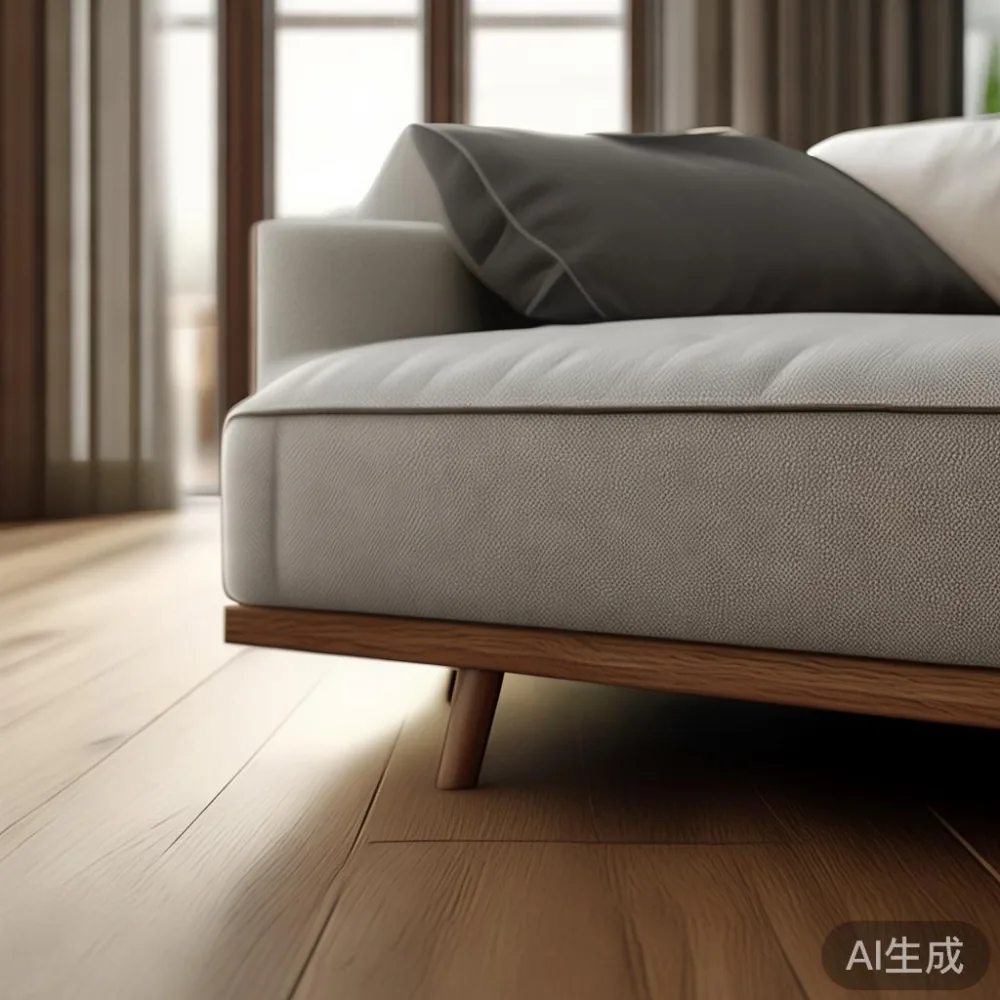
Style matters too. A French light luxury sofa in oatmeal fabric, an American light luxury bed frame with generous proportions, or a post-modern light luxury wardrobe with clean lines can command more because its design carries recognizable visual and construction costs. But style alone does not guarantee quality, just as an ornate product is not automatically expensive.
MIDHILL has manufactured solid wood furniture since 2008 and exports to more than 15 countries. Its structural warranty lasts 10 years, while refinishing support is available for the product’s lifetime. Those are measurable commitments, although the quotation should still explain timber, components, tolerances and coverage rather than rely on a broad promise.

Which part of a solid wood furniture piece costs the most?
The material bill is often the largest variable. Solid wood is priced by grade, width, defects and demand. A 45 cm-wide dining table top with long, well-matched boards can use substantially more timber than three narrow strips assembled into the same top. Boards also need sufficient thickness: a dining top around 30-40 mm may resist ordinary use better than a much thinner panel, but weight rises too.
Wood species create different figures. White oak, ash and walnut are commonly used for visible furniture faces, while other options may appear on concealed frames, shelves or smaller components. Moisture control matters. Properly seasoned timber should suit Singapore’s humid climate, and a responsible maker should describe its drying target, joinery and finish rather than simply claim that every part is solid wood.
For a bed frame, timber consumption depends on whether the headboard uses solid boards or veneer-backed panels. A king bed may need around 35-45 kg of timber, depending on rails, slats and headboard construction. A queen version may use approximately 30-38 kg. One supplier may spend more on slow-dried hardwood and precise joints; another may save by using lighter material in areas users rarely see.
The supplier’s labor is another price driver. Mortise-and-tenon, dowel, pocket-screw and metal-fastener methods each have different costs and service lives. Traditional joinery takes time and skill, but concealed metal hardware can also provide strong, repeatable connections when it is correctly sized. The useful question is not whether screws exist; every well-built piece may use some hardware. It is whether the load paths, spacing and fixing methods suit the product.
Last month I visited a Foshan workshop with one of our product colleagues and watched a dresser drawer being aligned. Two drawers of identical appearance differed by about 14 mm in how evenly they ran because one side panel had more bow. The timber represented the smaller difference; the accuracy of cutting, sanding and assembly represented the larger one. That observation explains why two pieces with the same nominal wood specification can still have sensible price gaps.
Does solid wood automatically mean expensive furniture?
No. Construction matters as much as the label. A simple dining table may be costly because its top is 220-240 cm long and made from carefully selected boards. A smaller table may use stable joinery and economical timber yet still be durable. Compare the full specification, not just the headline species.
A practical Singapore comparison should include:
- dimensions: length, width, height and usable clearance.
- Timber specification: solid, veneer-backed or mixed construction, by component.
- Thickness: table tops, bed rails, wardrobe sides and drawer fronts.
- Joinery: the joints carrying drawer, shelf and tabletop loads.
- Surface treatment: coating type, number of coats and expected care.
- Hardware: hinges, runners, dowels, brackets and fasteners.
- Packaging: carton dimensions, weight and protection against humidity.
For example, a 200 cm dining table may cost SGD 2,400 with straightforward construction and SGD 4,800 when it has thicker timber, shaped edges, more elaborate joinery and a harder-wearing finish. A 240 cm table with sculptural legs and book-matched grain may exceed SGD 7,500. Those are typical comparison ranges, not fixed prices, because timber selection and production scale can change them.
Curves increase labor. A soft corner cut into a 3 cm board requires more shaping and sanding than a square edge. Fluted fronts, hand-carved details, mitred profiles and irregular edges can add hours. Post-modern light luxury design may look visually restrained while still requiring expensive precision, particularly where several elements must align across a long front.
Finish also affects the invoice. Water-based coatings often support efficient production and low odour, while oil, wax and multi-layer lacquers require different preparation and application methods. A marble table adds another layer: slabs vary in thickness, veining and reinforcement, and a 110 cm rectangular top can weigh roughly 65-120 kg before the base is added. Transporting it vertically or by a special move can exceed the ordinary delivery charge.
Why do fabric sofa prices vary so much?
A fabric sofa is not simply an upholstered frame. Its price reflects the internal structure, cover, foam package, stitching, dimensions and delivery logistics. A compact 180 cm model may start around SGD 1,600, while a 260-300 cm sectional with a hardwood frame, layered foam and tailored cover can range from SGD 4,500 to SGD 10,000 or more.
The frame should be identified by material and geometry. Solid hardwood rails, plywood or metal reinforcement can each serve a purpose, but vague descriptions make comparisons unreliable. Seat density is more useful than a word such as “luxury”: a package may combine around 35 kg/m³ foam in lower-load areas with firmer support beneath the sitting zone. Fabric weight is another clue. A cover around 300-450 g/m² may feel different from a lighter 180-250 g/m² fabric, although yarn and weave also affect durability.
Tailoring affects labor. A plain two-cushion fabric sofa is quicker to cover than one with a shaped arm, piped borders, contrast panels or a fitted chaise. Removable covers can improve care but add sewing, alignment and attachment work. A french light luxury sofa often uses pale upholstery, balanced proportions and subtle material contrast; that restraint does not make the engineering less demanding.
Upholstery is only one part of the room budget. A fabric sofa may need 8-15 cm of floor clearance when measured with its feet, and its packaging may measure 185 × 100 × 80 cm for a straight 200 cm model. That will not fit through every HDB lift opening or turn. Confirm the actual carton, not just the sofa dimensions, before ordering.
What changes the price in an HDB flat or condo?
In Singapore, access can be as influential as the furniture specification. A typical HDB lift door may be around 900 mm wide, but internal depth and turning space vary by block. Common corridors may measure 1.0-1.4 m in width, and right-angled turns can limit a long package. A condo corridor may be narrower because the building uses a larger decorative door, or wider with storage recesses along the route.
Measure the lift door, lift car, corridor pinch points and stair turn. Allow several centimetres of working room rather than planning for an exact mathematical fit. A wardrobe 220 cm tall may fit upright, while a packaged dining table 220 × 100 × 80 cm may need to be turned on its side and checked against the ceiling. Add the route from the lorry to the flat, because a successful building entrance does not guarantee access inside.
Delivery terms deserve as much attention as the item price. Singapore GST is normally shown separately at 9% where applicable. A supplier may charge SGD 120-SGD 350 within a standard service area, SGD 40-SGD 120 extra for a lift move, and SGD 250-SGD 700 for stairs, hoisting or an out-of-gauge move. If delivery exceeds US$350, MIDHILL offers free shipping under its stated policy, but confirm whether the threshold is assessed before or after taxes and whether Singapore is included.
Compact product planning can avoid fees without reducing quality. Choose a 140-160 cm dining table for a compact dining zone, a fabric sofa with removable legs, or a wardrobe that arrives as two narrower cabinets. A 60 cm nightstand usually weighs 12-22 kg; a 180 cm dining table may weigh 45-75 kg; a king bed frame may weigh 70-110 kg. Large mass is harder to move safely and should be built into the budget.
Is a higher price caused by light-luxury styling?
Partly. Light luxury is not defined by gold trim or oversized proportions. European light luxury styling often uses pale woods, tactile fabrics and balanced profiles. American light luxury tends to emphasize generous seating, substantial frames and prominent comfort features. Post-modern light luxury relies more on clean geometry, selective curves and visual restraint. Each can be affordable, but finer materials and more labor-intensive forms increase the price.
A useful specification phrase such as a MIDHILL light luxury bed should identify what supports the style: king dimensions around 180 × 200 cm, a slatted center, shaped headboard, center support legs and a documented finish. For wardroards, a MIDHILL wardrobe may range from SGD 1,800 for a limited configuration to more than SGD 8,000 for a fitted room with lining, drawers, internal lighting and matching panels. Ask for a component drawing.
Design keywords should also be treated carefully. A European light luxury dressing table may be quoted at SGD 1,400-SGD 4,500 depending on its size, drawer count, mirror, stone top and finish. Searching for for sale Boho furniture may produce lower-cost pieces, but “Boho” identifies a mood rather than timber grade, drawer strength or joinery. Likewise, a 2026 Modern light luxury furniture collection can differ sharply from one model to another.
Material comparisons should be concrete. European light luxury bed vs Japandi bed is not a battle between countries; it is a comparison between frame construction, slat spacing, headboard profile, finish and maintenance. One may use more timber and exposed joinery, while another uses simpler forms. Check whether the bed is suitable for a mattress of the stated thickness, whether center supports reach the floor, and whether edge height allows a mattress service technician to access the frame.
Transparency can be seen in small details: predrilled locations, flush joints, even gaps of about 2-3 mm where movement is expected, labelled components, replaceable glides and replaceable cover panels. A product drawing with dimensions is more valuable than an unqualified style label.
How can I compare two quotations fairly?
Ask both suppliers for a written bill of materials and full packed dimensions. A fair comparison should include the exact timber by main component, board thickness, finish, hardware, joint method, drawer or shelf load guidance, warranty exclusions, delivery terms and return charges.
For a solid wood dining table, compare a 200 × 100 × 76 cm model with another of the same size. Note top thickness, whether it is one solid panel or joined boards, the leg section and extension method. For a bed frame, compare compatible mattress sizes, center-leg count, slat spacing and headboard thickness. For a wardrobe, compare usable internal width, hanging rail height, shelf spacing and whether back panels are fully solid, framed plywood or another board.
Warranty length alone is not enough. Confirm whether 10 years covers frame failure under residential use, how claims are assessed, who pays transport, and whether finish failure follows separate terms. MIDHILL provides a 10-year structural warranty and lifetime refinishing support, but a detailed quotation should make the scope visible.
Returns also affect the effective purchase decision. A 14-day return policy can reduce risk, yet oversized made-to-order pieces may be subject to restocking, pickup or damage deductions. Ask for the written condition required on return. Compare the refund method, original delivery charge and assembly implications before placing an order.
The most expensive solid wood furniture is not necessarily the one with the longest specification. It is the one with more timber, labor, finish work, precision, design development, protective packaging or difficult access than the alternative. For a fabric sofa, bed frame, dining table, wardrobe, nightstand or marble table, compare those measurable inputs. A quotation becomes easier to trust when every major line can be seen, measured and tested.