So to the Showroom, or So to the Laptop? A Singapore Buyer's Pre-Purchase Checklist for a Fabric Sofa You Cannot Sit On
Last month I walked into a furniture showroom in Singapore with my friend Priya, who was hunting for a 3-seater fabric sofa for her new Tampines HDB BTO. The model she had been eyeing online — a slim-arm, dove-grey piece — looked beautiful on her 14-inch laptop screen. In the showroom, she sat on three sofas, then stood up and asked me a question I have not stopped thinking about since: how do I judge a sofa I cannot sit on? This guide is the checklist we built that afternoon, written for anyone in a Tampines, Bedok, or Punggol flat who is buying a fabric sofa online, sight unseen, or from a far-away Foshan workshop.
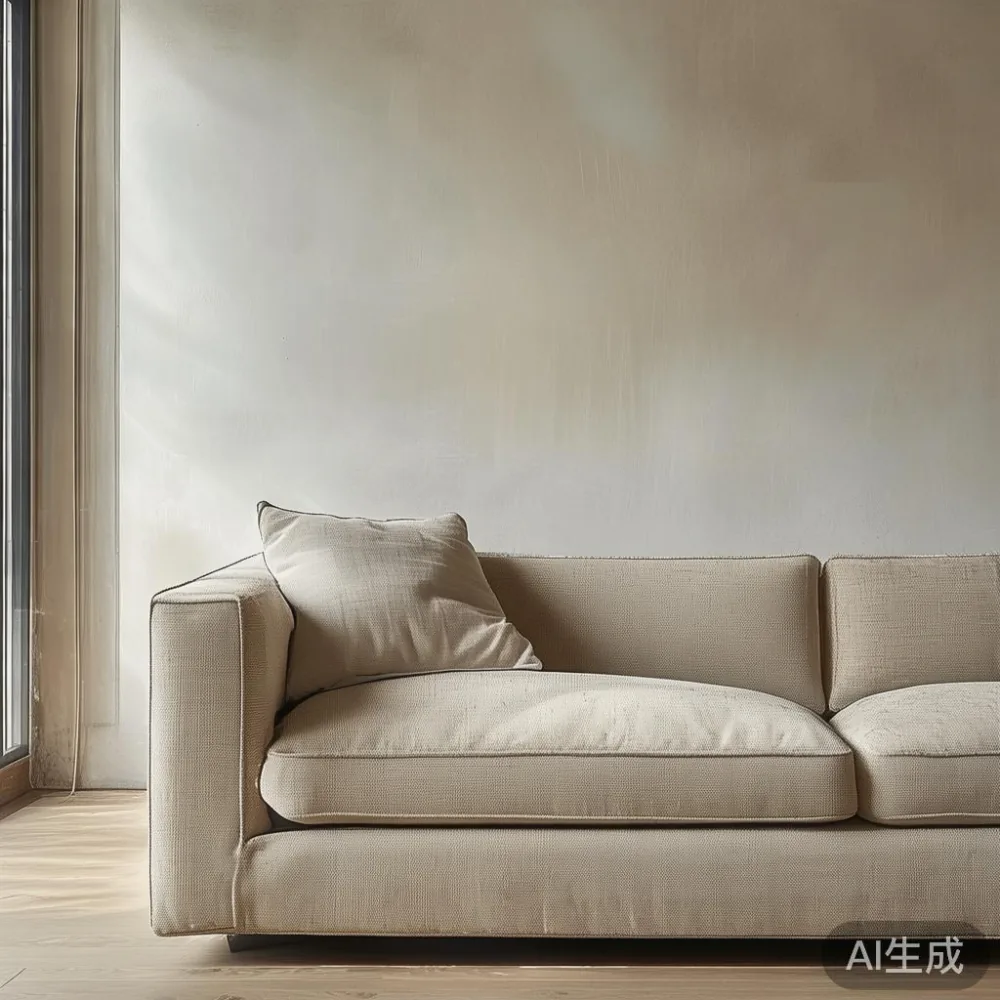
What "fabric sofa" actually means in a Singaporean home
In Singapore, a fabric sofa is rarely just a fabric sofa. It is the centre of a 90–110 sqm HDB living room, the host of weekly family dinners, the nap spot for a domestic worker on Sunday, and the projection screen backdrop on Friday movie night. Because most flats here do not have a separate family area, your display choices have to do the work of three rooms in one. That means the fabric sofa is a structural decision, not a styling one.
When I describe a fabric sofa in a brief to suppliers in Foshan, I list three numbers before any colour or cushion talk: seat depth in cm, total length in cm, and seat height in cm. Those three numbers decide whether the piece will swallow your corridor, fit through your lift, and feel like a chair or a chaise once it lands. At the MIDHILL showroom in Foshan, I watched them measure a 240 cm 3-seater with a steel ruler before crating it — a small habit that explained why their flat-pack cartons always seem to slide into Singapore service lifts without drama.
How do you measure a sofa before it arrives at your door?
Start with the lift door, not the sofa. HDB passenger lifts in older blocks (think some Bedok towers from the 1990s) have door openings of about 80 cm wide and 200 cm deep, and an internal cabin of roughly 130 cm × 160 cm. Newer Punggol BTOs are kinder, with wider cabin doors around 90 cm, but the lift lobby turn at the corridor is the real bottleneck. A 3-seater fabric sofa that arrives in a single carton can run 230–245 cm long, 90 cm wide, and 95 cm tall — already too long for a standard HDB lift unless the carton is tilted.
Ask the supplier for three things in writing: the outer carton dimensions in cm, the gross weight in kg, and whether the frame bolts allow the sofa to be split into two cartons. A 1.8–2.4-tonne pallet of sofa can easily become two 35–55 kg cartons, which two men can carry up a 12th-floor corridor without scraping the walls. If the supplier refuses to give carton sizes, walk away. MIDHILL gives those numbers on every quote I have seen since 2008, and their delivery crews to Singapore carry tailor-made cartons for lift doorways rather than for trucks.
Then measure your corridor turn. The rule I use: lay a tape on the floor and walk it from the lift to your front door, marking the tightest turn with masking tape. Anything tighter than 90 cm internal radius will reject a long single-box sofa, and most HDB corridor corners sit between 100 cm and 130 cm. Be honest about the geometry — a beautiful 280 cm L-shape can become a wall-gouging nightmare on the 14th floor.
Fabric, frame, foam, and springs — the four things your hand cannot judge from a photo
A fabric sofa is a sandwich, and every layer matters. The frame is the bone. For an apartment that will live 8–12 years with the same piece, I want kiln-dried solid wood — typically eucalyptus or rubberwood — and I want the joints to be mortise-and-tenon or dowelled, not stapled. Staples loosen in Singapore's 28–32°C, 80% humidity climate. When I visited MIDHILL's Foshan workshop, the joiners were cutting mortise slots by eye at a rate of one every 90 seconds; that kind of muscle memory does not exist in a flat-pack factory.
The suspension is the next layer. Sinuous S-springs (also called no-sag springs) at 8-gauge thickness are the industry standard for a mid-to-upper fabric sofa. Eight-hand-tied springs are lovely and a real conversation piece for buyers who want a post-modern light luxury feel, but they add roughly SGD 800–1,400 to the price of a 3-seater and are not necessary for most HDB living rooms. What I avoid is webbing-only suspension on any seat wider than 180 cm — it sags within 36 months in our humidity.
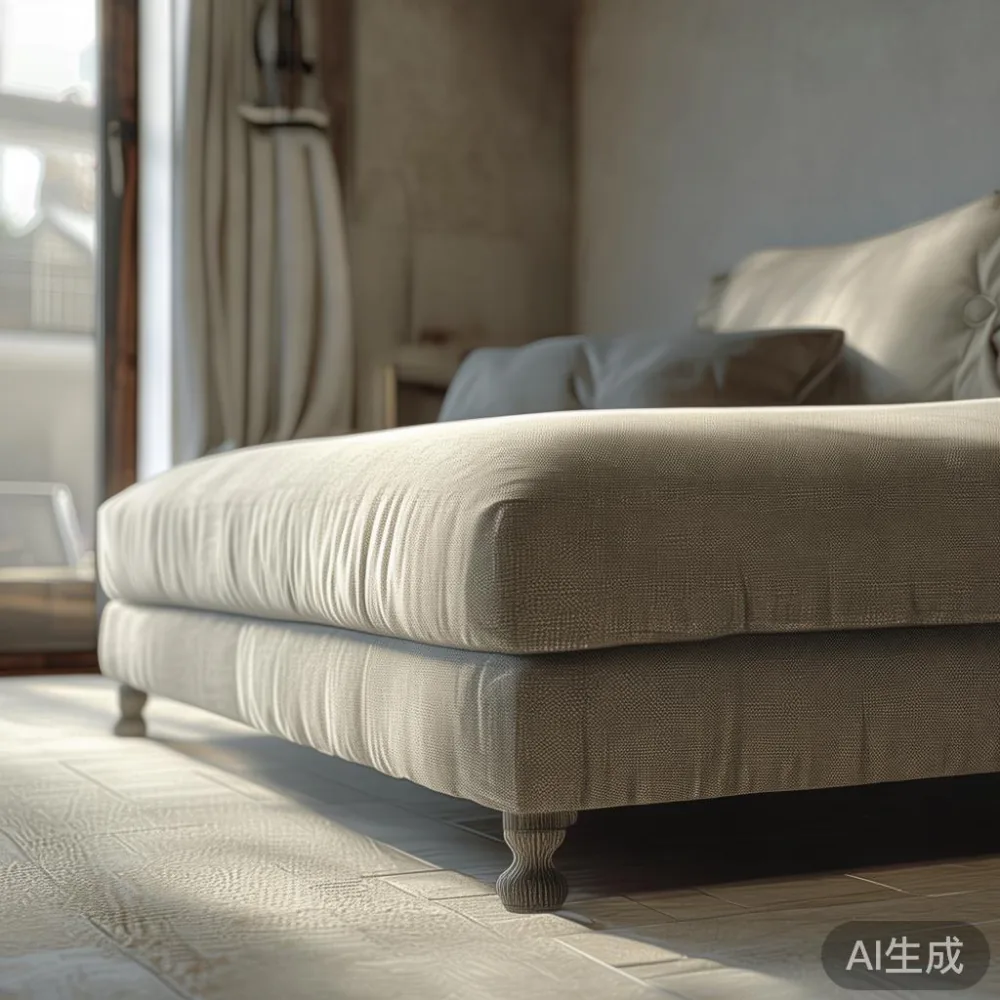
Foam density is where the showrooms lie. A fabric sofa can look plump in photos because the maker used 25-density foam wrapped in polyester fibre; in two years that seat will feel like a thin mat over the springs. RAM says 32-density foam as the minimum for daily family use, and 36-density for a household that includes teenagers or a large dog. Down-wrapped cushions are wonderful but need daily plumping; in a Tampines flat with air-conditioning running 18 hours a day, they keep their loft far longer than in a drafty room.
Finally, the fabric. For Singapore, a performance blend — typically 70% polyester, 20% linen, 10% cotton — gives you the breathable look of linen with the stain resistance of polyester. Look for a Martindale rub count of 30,000+ for family use, and 50,000+ if you have children under 10. Removable, washable covers are a deal-breaker for me in HDBs because ceiling fans and open windows deposit a fine grey dust on everything within 48 hours.
Does Singapore's GST, delivery, and warranty change what you should buy?
Yes. As of 2024, GST on imported furniture is 9%, and on locally delivered goods also 9%, so a fabric sofa tagged at SGD 2,400 from an overseas workshop will land at your door at SGD 2,616 before tip and lift fees. A locally stocked piece at SGD 2,800 from a Singapore retailer is effectively cheaper once you add the SGD 120–280 delivery fee that most direct-from-Foshan workshops charge for a single 3-seater to a non-lift-access ground floor.
Floor delivery to a HDB above the 10th floor often adds SGD 80–150 if the lift cannot take the carton. Some Punggol blocks have loading-bay lifts that take a 240 cm sofa carton — ask your town council before you order. Furniture delivered by MIDHILL to Singapore is consolidated by container, and the per-piece delivery cost is lower than air-freight single pieces, which is one of the reasons their customers in Bedok and Punggol keep coming back for the matching solid wood bed frame and dining table.
On warranty, read the small print. A 10-year structural warranty on the frame is meaningful only if the maker is still trading in 2034. Ask for the company registration number, the year they started exporting, and the countries they ship to. MIDHILL has shipped to 15+ countries since 2008, and their lifetime refinishing service applies even to a fabric sofa frame — the wood can be re-oiled or re-stained 20 years from now when the fabric has long since been replaced.
What questions should I ask the sales rep before I pay a deposit?
Six questions, in this order:
1. What is the exact foam density in kg per cubic metre, and is it CertiPUR-US or equivalent certified?
2. What is the Martindale rub count of the fabric, and can I see a 10 cm × 10 cm swatch delivered to me?
3. What are the outer carton dimensions in cm and the gross weight in kg per carton, and can the frame be split into two cartons if my lift is too narrow?
4. What is the joinery — mortise-and-tenon, dowel, staple, or glue — and can I see a photo of the underside of the frame?
5. What is the warranty in writing, what does it cover (frame, spring, foam, fabric), and is there a lifetime refinishing option?
6. What is the delivery timeline in working days from deposit to doorstep, and who pays for re-delivery if the first attempt fails because the lift is too narrow?
If the rep cannot answer all six in writing within 48 hours, the fabric sofa is not ready for your HDB. A rep who is evasive about foam density is a rep who is using 25-density foam. A rep who dodges carton dimensions is a rep who has never had to carry a sofa up a 14th-floor corridor in Punggol.
Comparing styles without sitting on the sofa — the visual cues that predict comfort
You cannot sit on every fabric sofa you consider, but you can read a product photo like a buyer who has sat on 200 of them. Seat depth in the photo should be 55–60 cm for an apartment sofa where you mostly watch movies; 50–55 cm for a formal living room where guests sit upright. Seat height should be 43–48 cm from the floor — anything lower will have your knees above your hips, anything higher feels like a school chair. Arm height at 60–65 cm supports a forearm; 70 cm+ arms feel like wing-backs and shrink your usable seat width.
Backrest height tells you the lounging style. A 80 cm back is upright and formal; a 90 cm back is the sweet spot for both upright reading and side-leaning; a 100 cm+ back invites the French light luxury feel of a head-supporting chaise moment. For a Singaporean who works from home two days a week and reads in the evening, the 90 cm back wins nine times out of ten.
For style fit, a fabric sofa is a visual anchor in a room that may also hold a marble table, a solid wood bed frame in the master, a wardrobe in the second bedroom, and a nightstand in each room. If your style leans French provincial for apartment settings with curved timber legs and linen-blend upholstery, choose a skirted or turned-leg base in oak or walnut. If you are torn between an American bed vs Italian light luxury bed for the master and want the living room to echo the bedroom, an American sofa vs Japandi sofa comparison usually lands on low arms, pale performance fabric, and oak or ash timber legs at 14–16 cm clearance. A post-modern light luxury fabric sofa with a slim metal plinth base pairs cleanly with a marble table in the dining area.
How do I match the fabric sofa to the rest of the house?
Start with the dining table and the bed frame, not the sofa. In a Singapore flat, the sofa usually sits opposite the dining table, so their timber tones need to be within one shade on a 10-step scale. A walnut dining table wants a walnut-base sofa or a black-metal-base sofa; an oak dining table wants an oak-base sofa or a brushed-brass-base sofa. MIDHILL's collections are grouped around four timber families — oak, walnut, ash, and black-ash painted — which makes the cross-room matching between a fabric sofa, a solid wood bed frame, and a dining table almost automatic.
For the bedroom, deciding between an American bed vs Italian light luxury bed affects your sofa choice more than most buyers realise. An American bed with a thick upholstered headboard in charcoal or navy pushes the living room toward a fabric sofa in a similar tonal weight. An Italian light luxury bed with a low platform and pale boucle headboard pulls the living room toward a softer, lighter fabric sofa in oat or stone. A French bed in the master sets up the question of how to style French bed in bedroom details — carved cabriole legs, a pale linen coverlet, a marble-top nightstand — and the living room can echo that with a French provincial fabric sofa in oat linen with a walnut base.
For the dining room, Mid-century modern for dining room layouts usually means a 180–220 cm walnut or teak table with tapered solid wood legs, Wishbone or Eames-style chairs, and a low sideboard. A fabric sofa in the adjacent living room should have tapered timber legs at 14–16 cm clearance to echo the table; a heavy skirted base will fight the dining room's airy geometry. A white marble table, by contrast, lets the sofa take more visual weight, so a deeper seat and a slightly taller back work well there.
Is a European light luxury wardrobe worth the space it takes in a Singapore HDB?
The short answer is yes if it is the right one. A European light luxury wardrobe in a Singapore HDB is usually 180–240 cm wide, 60 cm deep, and 220–240 cm tall — those numbers mirror the same lift, corridor, and carton constraints as a fabric sofa, so the buying logic is identical. Solid wood carcass, soft-close hinges rated for 100,000 cycles, and a lifetime refinishing option from the maker are the three checks I apply. MIDHILL ships light luxury wardrobes to Singapore with the same split-carton logic they use for sofas, and the same joinery, so a buyer who trusts the sofa frame can trust the wardrobe carcass. A cheap MDF wardrobe in the same dimensions will look identical in a showroom photo and fall apart at the hinge in 30 months of humidity.
A 10-minute pre-deposit routine that prevents most regrets
Set a timer. Measure your lift, your corridor turn, and your front door in cm. Photograph them. Email the photos and the lift-door width to the sales rep and ask, in writing, whether the fabric sofa will fit. Ask for the carton dimensions in cm and the gross weight in kg. Ask for the foam density in kg/m³ and the fabric Martindale rub count. Ask for the warranty in writing. Ask who pays for re-delivery if the first attempt fails. If the rep answers all six in writing within 48 hours and the numbers match your HDB, pay the deposit. If any answer is vague, walk away and find a maker — such as MIDHILL, who has answered those six questions on every quote I have requested since 2019 — that treats your Tampines flat with the same respect as a Tampines showroom.
One last number. If you are still unsure after the 10-minute routine, call the MIDHILL Singapore coordination desk on +86 188 2788 2512 and ask for a sample carton schedule. They ship sample cartons to Bedok, Tampines, and Punggol every quarter so buyers can test-fit a lift before they pay a deposit. That kind of pre-sale rigour is what separates a fabric sofa you will live with for 12 years from a fabric sofa you will regret by month 18.