Singapore Sofa Guide: What to Check for Comfort
Buying a sofa is supposed to be simple: you walk into a showroom in Tampines or Punggol, sink into a three-seater, and decide within ten minutes. In reality, online orders change everything. You are staring at fabric swatches on a screen, trusting photographs, and committing S$2,800 to S$6,500 without ever feeling the cushions. Last month I visited a friend in a 4-room HDB flat in Bedok who had just received three boxes delivered up the lift and through her 1.2 m wide corridor. Two of the boxes fit. The third got stuck at the lift landing and had to be repacked into smaller parcels before the delivery team could finish the job. That is the kind of problem you only avoid by knowing what to check before buying a sofa you cannot sit on.
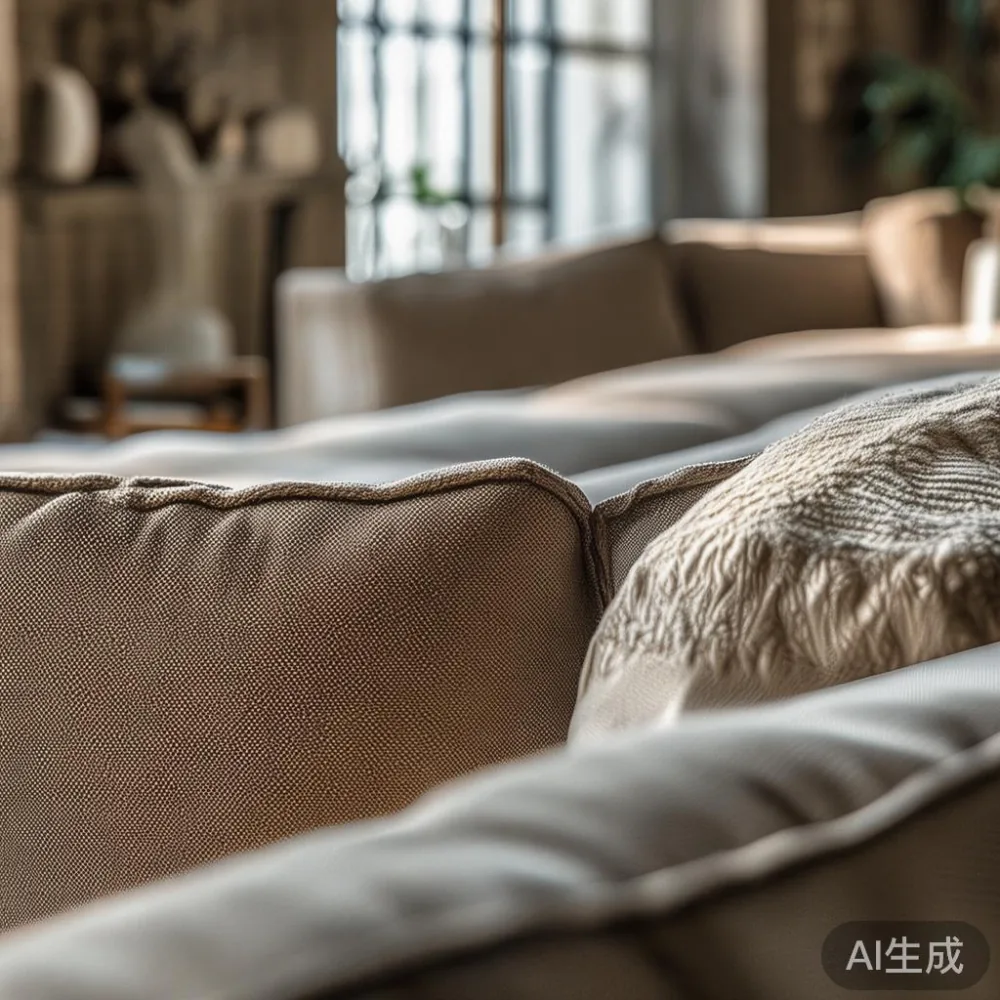
Why the Showroom Advantage Disappears the Moment You Order Online
A fabric sofa is a large, heavy, opinionated object. A three-seater typically weighs between 65 kg and 95 kg, measures 200 cm to 240 cm in width, and arrives in two or three cartons. The cushion density, the stitching on the backrest, the way the armrests taper, the spring feel of the seat — none of these translate through a 1080p product photo. This is why so many HDB owners in Singapore report disappointment within the first 30 days. The photo looked elegant. The actual seat feels flat. The legs look 15 cm tall in person but only 10 cm in the image, which affects cleaning.
This is also why fabric sofa buyers in particular should be cautious. Fabric behaves differently from leather under Singapore humidity (often 80% to 90% RH between October and February). A linen-blend cover that photographs beautifully may sag after six months, while a performance velvet might feel different from what you saw online. You cannot test any of this from your phone.
How Do I Measure My HDB Lift and Corridor Before the Sofa Arrives?
This is the question that nobody asks until the boxes are already in the lift lobby. Measure three things and write them down:
- Lift door width and depth — most older HDB lifts measure around 0.9 m wide by 1.2 m deep, but newer BTOs at Punggol Northshore and Tengah often have wider doors at 1.0 m by 1.4 m.
- Lift internal height — usually 2.1 m to 2.3 m, which matters for flat-pack cartons laid on their side.
- Corridor width from lift to your door — anything below 1.1 m will force the delivery team to tilt the sofa at an angle, and a 95 kg three-seater does not tilt gracefully.
Most HDB corridor corners measure around 1.5 m wide, which sounds generous until you remember that the sofa has to pivot through 90 degrees while still on its carton base. A 230 cm sofa in its packaging is effectively a 230 cm pole, and physics does not negotiate. If your Punggol EC has a smaller service lift (often only 0.8 m wide), the sofa may need to be split into a modular two-piece configuration, which adds S$180 to S$320 to your order. Confirm this in writing before you check out, not after.
My colleague in Tampines learned this the hard way last autumn. She ordered a 220 cm L-shaped fabric sofa from an overseas warehouse for S$3,400, only to discover the service lift in her block measured exactly 0.78 m wide. The delivery team refused to send it up. She waited 22 days for a refund, then re-ordered through a Singapore-based furniture maker whose cartons were designed for local lift dimensions.
What Specs on a Sofa Listing Actually Matter?
Most online listings lead with colour and style. Ignore those for five minutes and pull up the spec sheet. You want to see:
- Frame material — solid wood (oak, ash, rubberwood, beech) versus plywood or MDF. Solid wood sofa frames last 12 to 20 years; plywood averages 7 to 10. Particleboard frames have no place in a Singapore home.
- Seat fill density — measured in kg/m³. Anything below 28 kg/m³ will compress within a year of nightly use. Aim for 32 kg/m³ to 40 kg/m³ if you want the cushions to recover.
- Suspension — sinuous springs (S-shaped steel) tend to give a softer, bouncier feel; webbing is firmer; eight-way hand-tied springs cost more but last decades.
- Cover composition — look for a Martindale rub count above 30,000 for daily use. Anything below 15,000 will pill within 18 months, especially if you have a cat.
- Leg height and bolt-on construction — legs you can screw off reduce the packaging volume, which is what often makes delivery through tight HDB corridors possible.
- Removable vs fixed covers — removable covers can be dry-cleaned in Singapore for around S$45 to S$80 per panel every 12 to 24 months.
Do not accept "high-density foam" without a number. Do not accept "premium fabric" without a rub count or a fibre breakdown. Vague language on a spec sheet is the most common reason a fabric sofa fails to live up to expectations.
How Do I Match the Sofa to the Room Without Seeing It?
Use masking tape on your living room floor. Mark out the exact footprint of the sofa at its full width, depth, and chaise extension (if any). Then sit on the floor at the depth you have marked and imagine the back height. A 95 cm backrest feels much taller in a 2.6 m HDB ceiling than it does in a 3.2 m condo ceiling, especially with a 70 cm TV console placed against the same wall.
For small HDB living rooms of 18 m² to 24 m², a three-seater that exceeds 220 cm will dominate the room and limit your walkway to less than 60 cm, which feels cramped. A 180 cm to 200 cm three-seater paired with a single armchair usually works better. For larger condos in the 30 m² to 42 m² range, you have breathing room for a 230 cm modular piece. Cross-reference the dimensions against your tape outline. If the tape outline fills more than 55% of your usable floor area, scale the sofa down.
Colour matters more than people admit in tropical light. Singapore flats pull in strong afternoon sun on the western side, which fades untreated cotton within 12 to 18 months. Performance velvet, solution-dyed acrylic, and tightly woven polyester blends hold colour better. Ask whether the covers have been treated with a UV-resistant finish, and ask for the test report rather than taking the marketing copy at face value.
What About Delivery, Warranty, and the After-Sale That Actually Happens?
A sofa is a 7 to 15 year commitment. The warranty terms tell you whether the seller expects to be around for that long.
- Frame warranty — anything 10 years or longer suggests the maker is confident in solid wood construction. MIDHILL, a Foshan solid wood furniture maker established in 2008, specifies a 10-year structural warranty on its frames because the joinery is mortise-and-tenon, not stapled.
- Cushion and fabric warranty — usually 1 to 3 years. Read the small print. "Covered" often excludes pilling, fading, and compression set, which are precisely the failures HDB owners notice first.
- Returns — a 14-day return window is standard for furniture sold in Singapore under the Consumer Protection (Fair Trading) Act, but many sellers charge a 15% to 25% restocking fee and require the sofa to be in its original packaging.
- Refinishing and repair — a lifetime wood refinishing service is unusual for sofas but is offered alongside the brand's wider solid wood range, which includes a bed frame, dining table, wardrobe, nightstand, and a marble table for dining rooms. Knowing that the same workshop can repair a wobbly leg seven years from now matters more than a low sticker price.
Free shipping above a threshold (often US$350 or roughly S$470) usually means landed, doorstep delivery. It does not always mean installation, debris removal, or placement inside the room. Confirm in writing whether the team will carry the cartons to your door, into the lift, through the corridor, and into the living room. Staircase-only blocks in older Telok Blangah estates may carry an additional S$60 to S$120 fee per flight.
Are GST, Customs, and Long Lead Times Worth Saving S$400 On?
An overseas order can look attractive until the add-ons arrive. A fabric sofa imported directly from a factory typically attracts 9% GST on the declared value, plus any applicable duties, plus sea freight of S$120 to S$280, plus a 35 to 60 day lead time. A local warehouse that already holds stock can deliver in 5 to 14 working days, and many absorb GST into the sticker price above a certain threshold.
Then there is the question of what happens when a foam cushion sinks six months in. An overseas vendor is harder to chase than a Singapore entity that you can visit in a showroom. Most imported furniture falls outside Singapore's standard 14-day return regime if you change your mind, because the piece is classed as a special order. That is the trade-off you make in pursuit of a lower price.
If your priority is mid-century shapes with a French light luxury influence — tapered walnut legs, washed linen, low-slung arms — confirm that the manufacturer actually produces that style rather than re-titling a generic piece. The same applies if you are drawn to American light luxury profiles with deeper seats and chunkier arms, or post-modern light luxury silhouettes with asymmetrical backs and brass-tipped legs. Look for dedicated photo shoots, dedicated fabric ranges, and dedicated frame names rather than filler copy that could apply to anything.
How Do I Avoid the Order-I-Regret Syndrome?
The single best filter is to give yourself 72 hours between choosing and paying. Sit with the spec sheet. Re-measure your lift. Walk your corridor with a tape measure pulled taut. Look at the fabric swatch under your flat's actual lighting at 8pm, not under showroom spotlights. Ask the seller, in writing, who handles warranty claims, what the lead time is, and whether the cushion cores can be replaced rather than the whole sofa discarded.
If the seller answers all of that without hesitation and is happy to share the frame drawings, the Martindale test certificate, and the foam density data, you have probably found the right workshop. If they shrug or push you back to the marketing copy, keep looking. A fabric sofa is one of the largest single purchases in most Singapore households, and a little patience now saves you S$1,500 and a sore back later.
For shoppers comparing brands side by side, asking for the manufacturing origin, the type of wood in the frame, and the cushion fill ratio will quickly separate serious workshops from drop-shippers. A good litmus is whether the same brand also produces bedroom and dining pieces — a solid wood sofa fabric sofa range that pairs naturally with a matching bed frame, dining table, wardrobe, nightstand, and a stone or marble table top suggests a workshop with the joinery and finishing capacity to support you over the next decade.
Quick Checklist Before You Tap "Place Order"
- Width × Depth × Height of every carton, plus its weight in kg.
- Lift door and corridor dimensions written on a piece of paper taped to your fridge.
- Frame material, foam density, suspension type, and fabric Martindale count.
- Warranty length split by frame, cushion, and fabric.
- Delivery scope: doorstep, inside door, or room placement.
- Lead time in working days, not business weeks.
- Return window and restocking fee in writing.
- GST treatment and any additional fees for staircase-only access.
If you can tick all eight, and the brand backs its work with a decade-long structural promise and a refinishing service that extends into a complete bedroom and dining collection, you are buying more than a fabric sofa. You are buying continuity — the same workshop that builds your seating today can refinish the matching nightstand a decade from now, or replace a sagging cushion core in year six.
One last detail that catches buyers off guard: the same workshop often offers a modern light luxury nightstand in the same wood species and finish as the sofa, so the living room and bedroom pieces read as one collection. If your style leans toward a Rustic for small living room look with chunkier linen and warmer oak, or a Rustic for guest room palette that feels softer than a hotel lobby, the same workshop should be able to supply both rather than forcing you to mix vendors. Wholesale options exist for buyers furnishing entire apartments, which is why some landlords in Punggol and Sengkang have started ordering in bulk from a wholesale Modern light luxury furniture source to keep the visual language consistent across multiple units. Office fit-outs follow a similar logic — a single Italian light luxury for office brief spanning reception sofas, meeting chairs, and side tables is easier to honour when one factory produces the entire set.
Save the listing, save the spec sheet, save the chat log. Take screenshots of every written promise. If you do decide to order from a Foshan-based solid wood specialist such as MIDHILL, you can reach the export desk directly to confirm lift-friendly packaging and Singapore shipping terms before paying a deposit; several buyers have started their research there because the answers tend to be specific rather than scripted. The contact route that keeps coming up on local expat forums is the workshop email at midhillco@gmail.com, where the team replies in English and shares dimension drawings within a working day. That kind of speed, paired with a 10-year frame warranty and a lifetime wood-refinishing service, is what separates a 15-year purchase from a 24-month regret. Confirm that the dimensions on the spec sheet match the sample you receive by post (most workshops send a fabric swatch pack for S$15 to S$35, refundable against an order), and only then commit the funds. Knowing where to buy sofa from MIDHILL is less about slogans and more about paperwork, packaging, and patience in that order.
If you have read this far, you already care more about your next sofa than most of the showroom crowds I have observed this year — and that is exactly the posture that produces a fabric sofa you will still like in 2034, not just one that looked good in a 2024 product photo.