Selecting the Perfect Fabric Sofa for a Singapore HDB
Choosing a fabric sofa for an HDB living room is less about finding a fashionable silhouette and more about measuring the space around it. A 220 cm sofa that feels generous in a show room can feel crowded in a Tampines flat, especially when the lift opening, corridor turns, television console, dining table, and air-conditioner ledge all compete for the same few square metres.
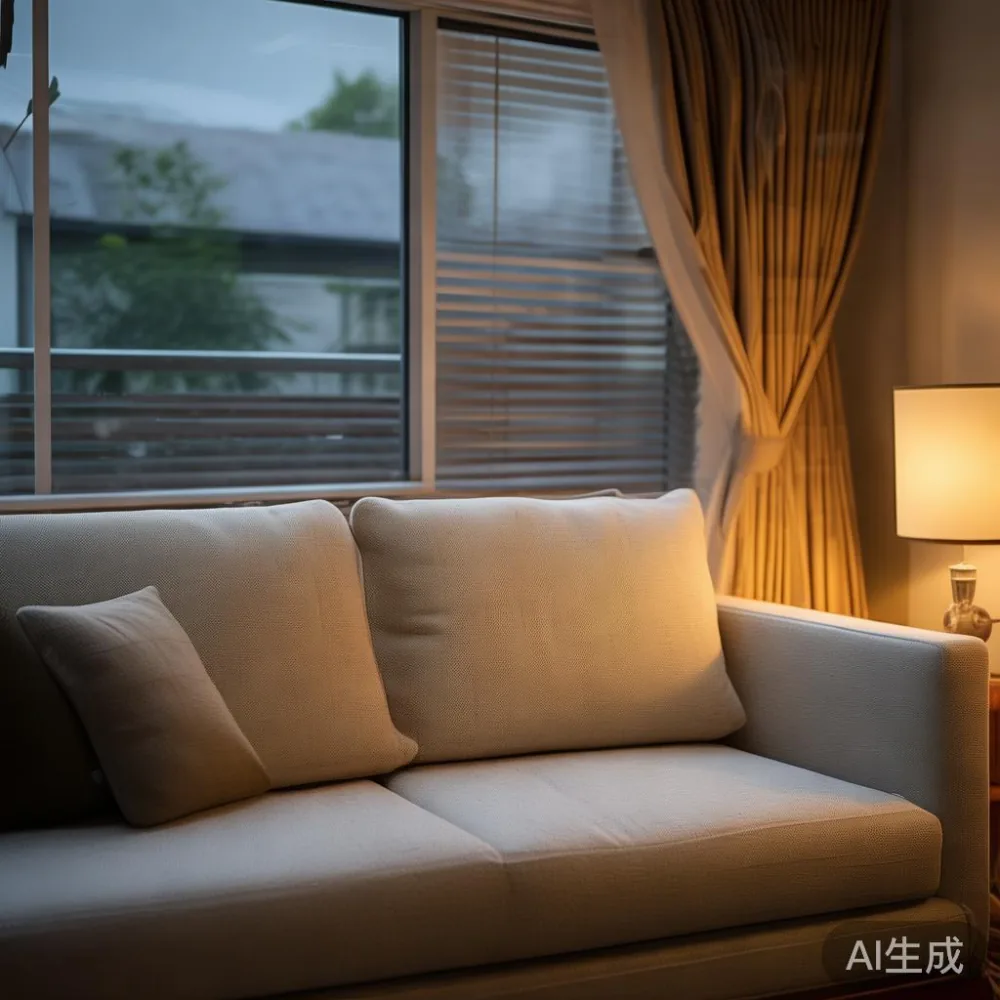
At MIDHILL, we design solid wood sofa frames and upholstered seating around the proportions common in Singapore homes. The right size should preserve a practical route from the entrance to the balcony, leave room for a dining table, and still allow the sofa to read as a comfortable focal point. This guide explains how to measure an HDB or condo living room, compare common sofa widths, and select a configuration that suits your household.
What sofa size fits a typical Singapore HDB living room?
Most Singapore HDB living rooms fall within a broad range, but their usable shapes differ considerably. A compact 3-room flat may offer a rectangular living and dining area of roughly 18–25 sq m, while larger 4- or 5-room homes may provide 25–40 sq m. These figures are only starting points because wall recesses, balcony thresholds, projecting air-conditioner boxes, and adjacent dining zones can reduce the area available to seating.

A fabric sofa between 180 cm and 210 cm wide is often comfortable for a compact living room. It seats 3 people without occupying an entire wall, yet provides a useful contrast against a 120–150 cm television console. For a wider 4-room or 5-room layout, a 220–260 cm solid wood sofa can work if there is still at least 75–90 cm of clear circulation space between major furniture pieces.
Measure the wall rather than assuming its length. Leave at least 10 cm between the sofa and a side wall where possible, and avoid placing the frame directly beneath a deep air-conditioner ledge. The sofa back may fit below the ledge, but seat depth and cushion access matter more than a neat visual line.
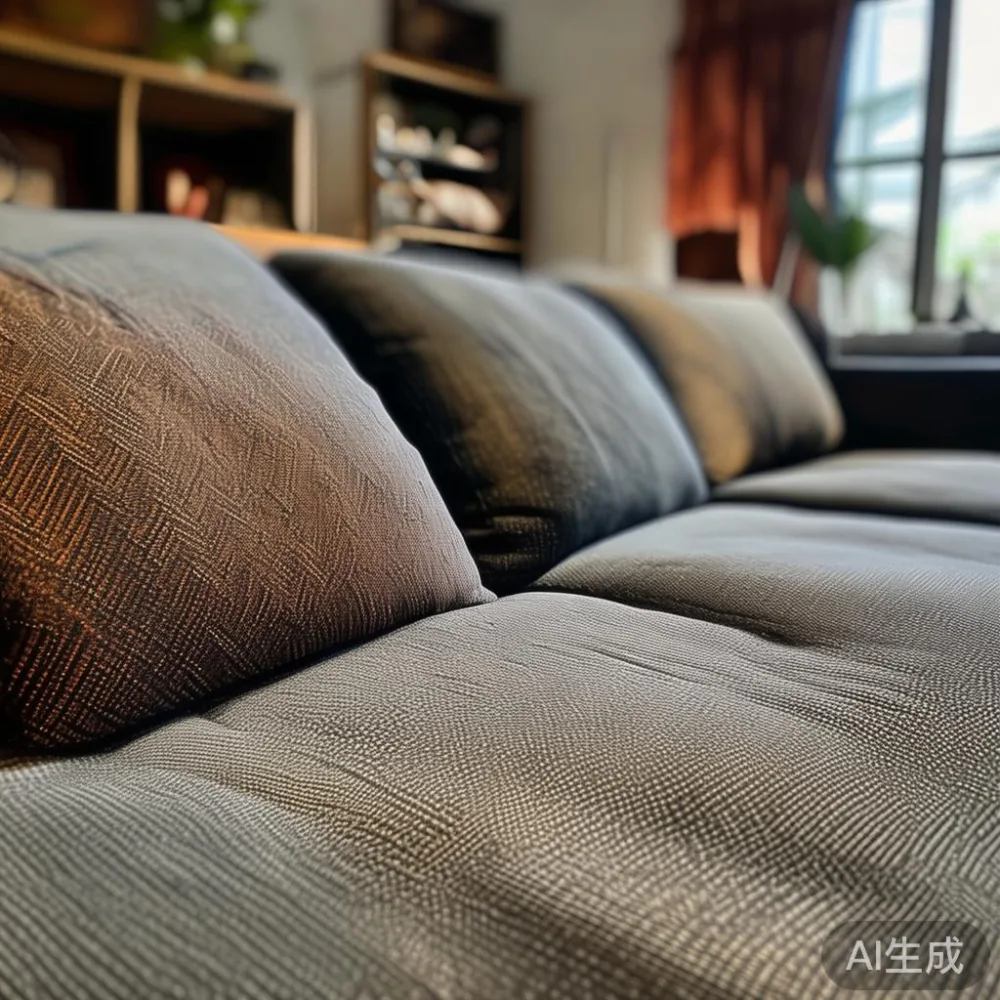
As a practical reference, a 3-seat fabric sofa commonly measures 190–220 cm wide, 85–100 cm deep, and 75–90 cm high. A 2-seat version may measure 150–180 cm wide, while an L-shaped or chaise configuration can extend 240–300 cm along two sides. Apartment owners should check the chaise depth carefully because it can block a balcony door or reduce the walkway beside the dining table.
How should I measure my living room before ordering?
<Begin with a floor plan or photograph taken from above. Mark the entrance doorway, balcony door, television point, dining table, and any fixed cabinetry. Then record the wall width available for the sofa and the depth between the opposite wall and the back of the proposed frame.
Use a tape measure, not the dimensions shown on an online product image. Measure at 3 points along the wall because older HDB flats are not always perfectly square. If the available width changes by more than 3 cm, plan around the narrowest point. Also record the height from the floor to any horizontal service ledge or window sill.
Do not overlook human movement. A gap of 75 cm between the sofa and dining table is passable, but 90 cm feels less restrictive. Keep at least 60 cm in front of a seat cushion if people need to walk past frequently, although an occasional tight corner may require a smaller 160–180 cm sofa.
Last month I visited a renovated Bedok flat where the owner had ordered a 240 cm sofa based only on the living-room wall. The delivery team found that the HDB corridor narrowed to 88 cm at a turn, while the lift car measured 107 cm wide and 140 cm deep. The frame would have reached the lift lobby but could not have been rotated safely upstairs. A 185 cm solid wood sofa with removable legs passed through the route and gave the family more breathing room. That visit reinforced how delivery access belongs in the sofa-size calculation from the start.
Can my fabric sofa pass through the HDB lift and corridor?
Yes, if the sofa is modular, slim enough at its widest point, and measured correctly. HDB blocks built in different periods have different lift dimensions, so do not rely on a standard figure for every tower. Many common lift cars are approximately 100–110 cm wide and 130–145 cm deep, with door openings near 80–90 cm, but the actual measurements in your block take priority.
A sofa under about 180 cm wide can sometimes travel through a standard lift diagonally, while a 200–240 cm model may need to be turned on its side or delivered in sections. Check whether the armrests and legs detach. A solid wood sofa with detachable legs and separate seat cushions offers more flexibility than a fixed, non-modular frame.
For corridors, measure the narrowest section and every right-angled turn. Keep in mind that the delivery crew needs clearance to tilt and rotate the sofa, not merely enough width for it to remain flat. If a staircase is involved, calculate the diagonal length along the wall and add another 10–15 cm for hand clearance.
In a Punggol condo, the concierge can help confirm lift dimensions and arrange a loading slot. Ask for the delivery window in advance, reserve a parking bay, and check whether the building requires a floor-protection covering. These details can prevent a delayed delivery even when the furniture itself fits.
Which sofa width suits a Tampines, Bedok, or Punggol home?
For a compact Tampines 3-room flat, a 150–180 cm fabric sofa is often easier to arrange. Look for a seat depth of 85–92 cm, straight or slightly sloping arms, and a profile that does not project far into the room. A 2-seat or compact 3-seat design can still seat three narrow adults, although it may feel less generous for daily family use.
In a Bedok family flat with a separate dining area, a 190–220 cm solid wood sofa is a practical middle range. It gives each person roughly 55–65 cm of seat width and leaves enough space for a 120 cm television console. If the dining table sits close to the living zone, choose 180–200 cm and keep the sofa arms visibly slim.
A larger Punggol condo or executive HDB flat may accommodate a 230–260 cm fabric sofa, especially if the television wall is 3 m or longer. Ensure that at least 75 cm remains between the sofa and coffee table. Deep seating is comfortable, but a sofa depth above 100 cm can make it difficult to stand and may visually shrink the room.
For anyone comparing styles, the question of Japanese sofa vs Mid-century modern sofa is usually answered by scale rather than label. A low Japanese-style sofa may measure 160–200 cm wide and 70–80 cm high, while a mid-century-inspired design often sits 78–86 cm high with a slimmer, more tapered frame. Check both the physical dimensions and the room’s vertical clearance.
How do I leave enough space for a dining table and daily movement?
The sofa and dining table should form a balanced room, not two large objects competing for one zone. A dining table for 4 people generally needs at least 90 cm of clearance on each long side and 60 cm at the ends. In an open-plan HDB living and dining area, the sofa’s total footprint must leave this route intact.
Sketch the room with furniture in place. Draw the fabric sofa at its actual width and depth, then place a 120–150 cm dining table at its likely position. If the sofa nearly touches the table when people are seated, the layout will feel compressed. Sliding the sofa 10–20 cm away or selecting a narrower 180 cm model may solve the issue without reducing the table size.
Other furniture also affects the feeling of space. A 40–50 cm wide nightstand is easy to place beside a bedroom sofa or chair, and a compact 60–90 cm solid wood side table can serve as a sofa companion. A marble table has a strong visual weight and should not be crowded by multiple small tables. Likewise, a bed frame, dining table, and wardrobe should be considered when judging whether a large sofa will leave the bedroom route clear.
Light finishes help visually, but they cannot compensate for poor spacing. Pale upholstery, warm oak, and restrained profiles reflect daylight and create a light-luxury atmosphere. If you are searching for cheap European light luxury furniture, compare frame construction, finish quality, and actual dimensions rather than focusing on a decorative label alone.
What is the difference between a 2-seat, 3-seat, and L-shaped sofa?
A 2-seat fabric sofa usually occupies 150–180 cm and suits one or two adults, a study corner, or a frequently used family room. A 3-seat model spans about 190–220 cm and is more adaptable for households that regularly host guests. An L-shaped sofa spans approximately 240–300 cm on its longest side, with a chaise projection of 140–180 cm.
L-shaped models provide more usable seating but require a corner with two clear walls. They suit larger open living rooms better than compact HDB layouts. If the floor plan includes a balcony door on the chaise side, choose the shorter arm or omit the chaise rather than obstructing the access panel.
Seat configuration matters too. A fixed bench sofa with 3 firm cushions may be easy to maintain, while a deep cushioned model may offer more comfort but occupy additional depth. Test the seat height: around 40–45 cm is convenient for most adults, while 38–42 cm can suit shorter users. The sofa should support posture without leaving the feet unsupported.
For mixed layouts, modular pieces are useful because individual sections can be separated. A 100–120 cm module plus a 70–90 cm module gives a homeowner options. This modular approach is relevant when searching for for sale Post-modern furniture in a compact apartment, because geometric sections can be rearranged without buying another large frame.
How do I match a fabric sofa to the room’s style?
Style selection should follow the room’s architecture, existing pieces, and the amount of visual space available. French light luxury often uses curved arms, pale upholstery, and refined timber details. American light luxury tends toward deeper cushions, symmetrical profiles, and a comfortable, substantial look. Post-modern light luxury can introduce geometric lines, restrained contrast, and sculptural forms.
For a small HDB living room, a straight-backed fabric sofa with a solid wood base can look composed against plain walls. Add a narrow side table, one lamp, and 2–3 cushions to create warmth without filling every surface. If you are planning how to style Japandi sofa in room arrangements, keep the surrounding objects simple: pale timber, off-white walls, soft textiles, and little visual clutter.
Colour also affects the apparent size of the frame. A sofa close to the wall colour blends into the room, while a darker sofa creates a clear boundary. Avoid making every item contrast strongly in a narrow living area. One visual anchor, such as a deep-toned side table or patterned cushion, is usually enough.
Upholstery performance is practical in Singapore’s humid climate. Ask for the fabric composition, cleaning method, and expected pilling behaviour. Removable covers are useful in a family home, while performance weaves can resist everyday spills. Whatever the style, leave around 5 cm behind the sofa for ventilation and cleaning where possible.
What should I check before paying for delivery?
Confirm the packaged dimensions, not only the assembled dimensions. A 205 cm sofa may be delivered in a carton measuring 215 cm long and 55 cm wide. Check the weight as well: a solid wood sofa frame may weigh 45–80 kg, whereas a metal-framed fabric sofa may weigh 25–45 kg. Heavier frames often require more careful handling and may need two people at corners.
Get the lift and corridor measurements ready. Provide photographs of the entrance, turns, stairs, and lift door. For condo deliveries, ask whether the loading bay or service lift requires reservation and whether the concierge expects protective floor covering.
Price comparison should include delivery and assembly. A local furniture purchase might be listed at SGD 1,290 for a 190 cm fabric sofa, while another at SGD 1,850 may include in-home delivery, assembly, and a longer structural warranty. Singapore prices normally include 9% GST, so compare the final checkout totals rather than the headline figures.
MIDHILL provides a 10-year structural warranty, lifetime refinishing, free shipping above US$350, and a 14-day return window. These policies help reduce uncertainty, but the customer must still provide accurate access measurements. Typical delivery timing is 15–30 days after order confirmation, subject to production and Singapore logistics.
Final checks should cover the sofa dimensions, package size, delivery route, floor protection, assembly, warranty, and return terms. The right fabric sofa is not simply the largest model that fits the wall. It is the one that allows people to sit comfortably, move through the home without hesitation, and reach the dining table, balcony, and television with room to spare.