Choosing the Right Fabric Sofa Size for a Singapore HDB Living Room
Last month I visited a 4-room HDB flat in Tampines with my colleague, and the living room was the kind of space every Singaporean knows well: about 18 square metres, a 2.4-metre ceiling, a wide window wall facing the afternoon sun, and a corridor entry that swallows almost a metre of usable wall. The owners had just received a quote for a 2.8-metre L-shape fabric sofa that looked gorgeous on a website rendering but, in person, would have blocked the corridor door and left only 38cm of walkway between the seat and the TV console. They are not alone; measuring errors on this scale are the single most common mistake we see in Singapore living rooms.
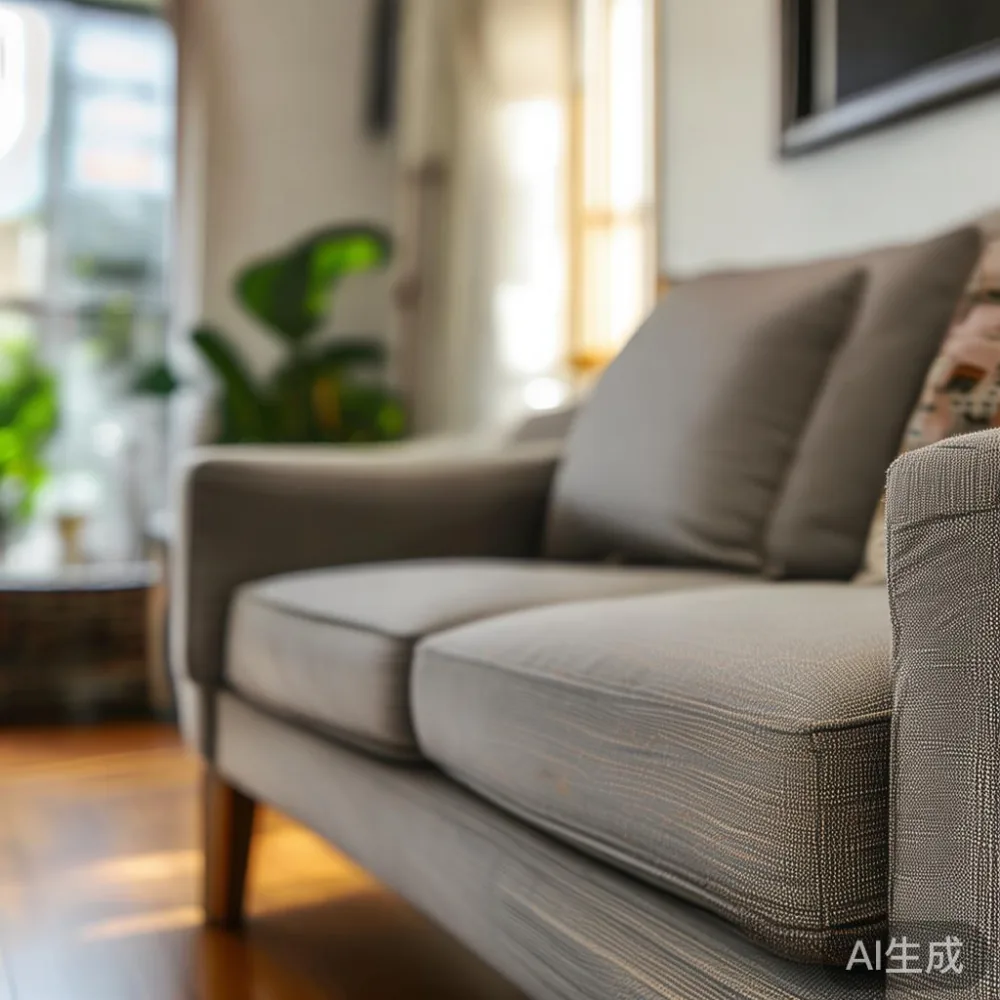
The good news is that getting the dimensions right for a fabric sofa is less about designer instinct and more about three concrete numbers: the length and depth of the sofa, the corridor and lift dimensions of your block, and the door-and-corridor turn radius at your HDB entry. This guide walks through each one, using real HDB and condo measurements, and explains where a solid wood sofa, dining table, or wardrobe from MIDHILL slots into a small-to-medium Singapore layout without crowding the room.
What Size Living Room Are We Actually Working With?
Most Singapore HDB flats fall into a tight range. A 3-room flat living room is usually 14 to 17 square metres. A 4-room flat runs 18 to 22 square metres. An executive HDB or a compact condo in Punggol or Bedok can hit 24 to 28 square metres. Ceiling height across the board is 2.4 to 2.8 metres because of HDB's standard floor-to-floor specification.
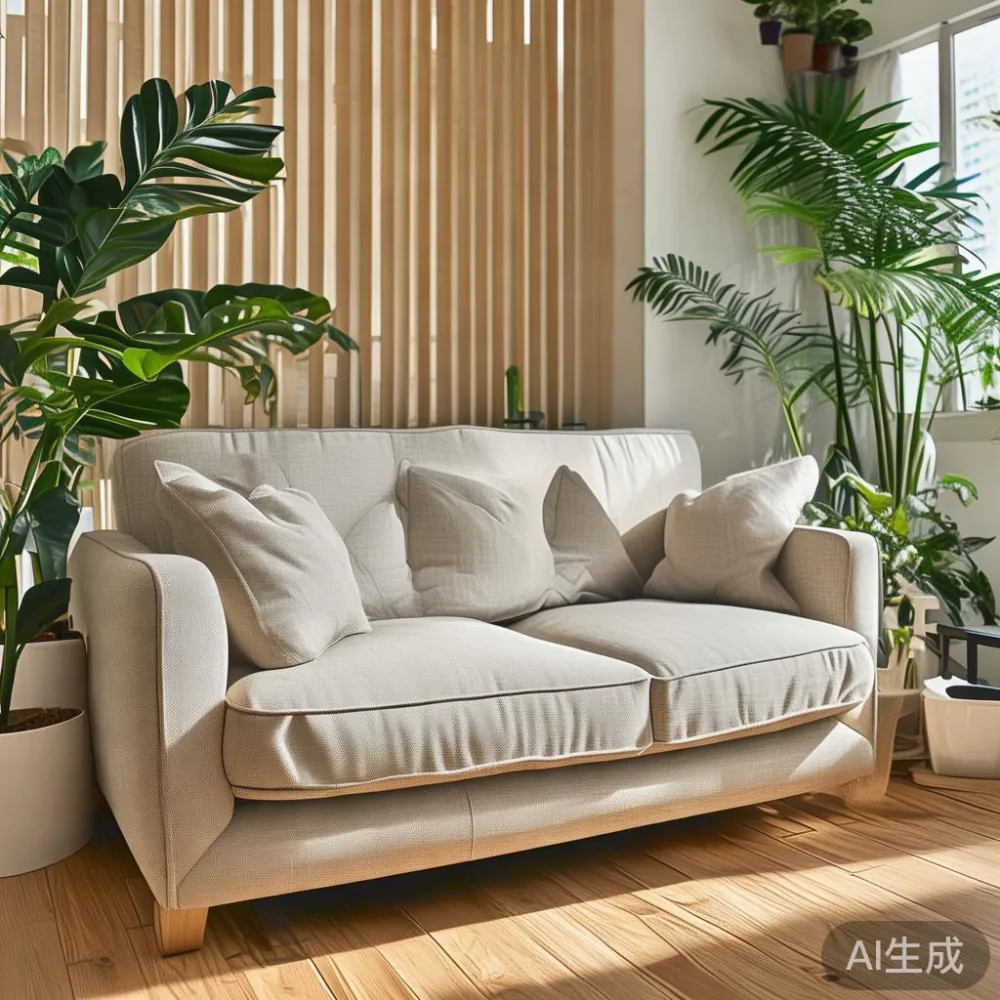
Before you browse a single fabric sofa listing, measure three things and write them down:
• Wall length for the sofa back, in centimetres.
• Wall length for the opposing TV console or feature, in centimetres.
• Doorway and corridor clear width, including the corridor landing outside your unit.
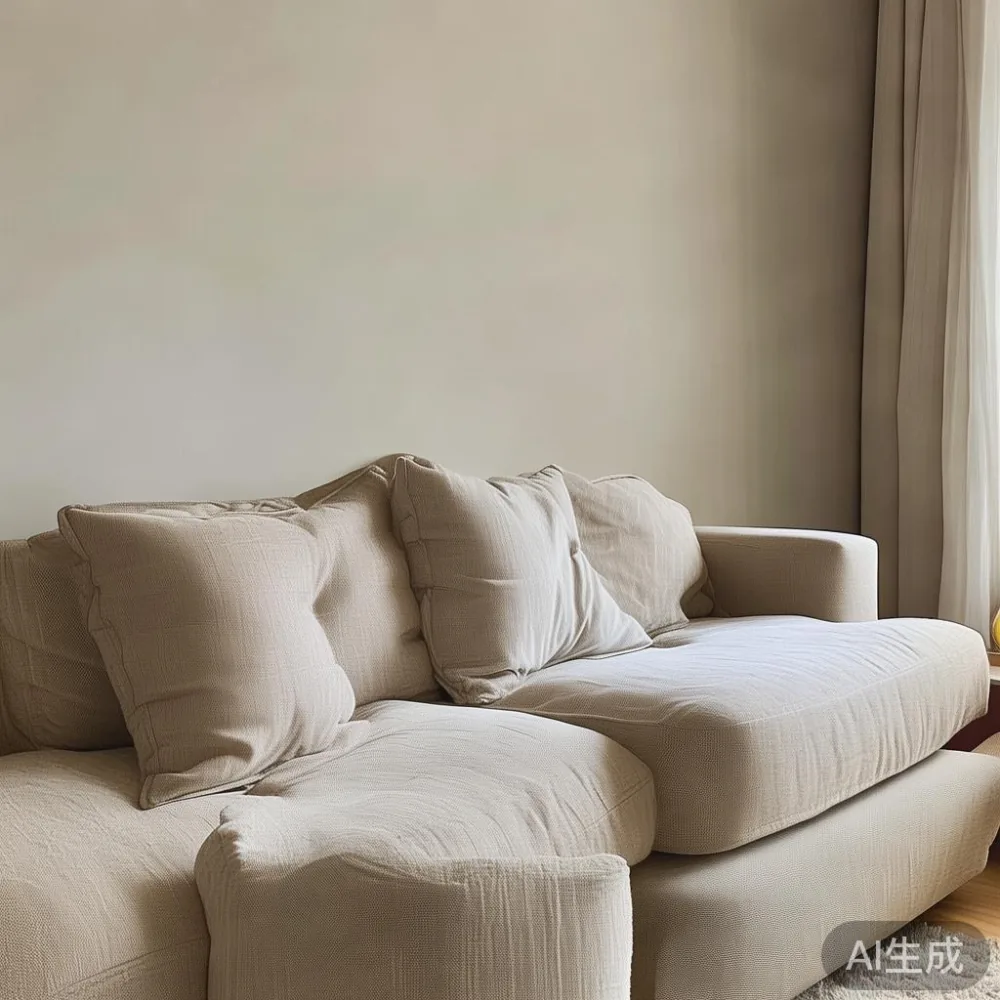
A reliable working rule for a fabric sofa in an HDB living room is that the seat depth should not exceed 95cm if you want a comfortable 80 to 90cm walkway behind a centre table. Add the backrest thickness (around 18 to 22cm on most MIDHILL frames), and the total depth lands at roughly 100 to 110cm, which is the practical ceiling for Tampines, Bedok, and Punggol flats.
How Do You Get a Fabric Sofa Through the Lift and the Corridor?
This is where most deliveries in Singapore go sideways. A typical HDB passenger lift in a 4-room block has a clear door opening of about 80 to 90cm and a cabin depth of around 1.6 to 1.8 metres. A 2.5-metre fabric sofa delivered as one piece will not fit. Even a 2.2-metre three-seater can wedge against the lift ceiling if the cabin is a smaller goods lift.
The practical answer is to choose a modular fabric sofa that arrives in sections under 1.4 metres long, or a two-piece split with a join bracket. For an American light luxury profile, a 3-seater sofa measuring 210cm wide by 95cm deep and arriving in two modules fits nearly every lift in HDB estates built after 1995. For a French light luxury silhouette with a higher back, the same width applies but the carton height needs to stay under 1.7 metres. Always ask the supplier for a packed dimension sheet, and check both your lift cabin and your corridor turn. If your block has a service lift with 1.0-metre doors, you can usually accept widths up to 2.6 metres.
Which Sofa Width Matches Which HDB Layout?
Here is a straightforward mapping that holds up across the flats I have measured in the east:
• 3-room HDB (around 15 sqm living room): a 2-seater fabric sofa at 160 to 175cm wide is the upper limit. Anything wider removes seat depth for the walkway.
• 4-room HDB (around 19 to 22 sqm): a 3-seater fabric sofa at 195 to 215cm wide works well. Add a single armchair at 90cm wide if you entertain.
• 5-room or executive HDB (around 24 sqm and up): a 2.4-metre sofa with a 140cm chaise extension on the open side handles daily use without crowding.
• Compact condo in Punggol or Bedok (around 22 to 28 sqm): same sizing as a 4-room HDB, but with more flexibility on fabric sofa back height up to 95cm because condo ceilings often clear 2.8 metres.
Centimetre-level choices matter because a fabric sofa that is 10cm too long can break the visual flow of the room and a 10cm-too-deep seat can stop your legs from crossing without rubbing the centre table. If you want a light luxury dining table near the sofa (the kind with a thin marble-look top on a slim metal base), give it at least 90cm of clearance from the sofa front. A round marble table at 110cm diameter pairs naturally with a 210cm sofa in a 4-room HDB; it leaves four usable sides for traffic.
What Backrest Height and Seat Depth Actually Feel Right?
Seat depth is the most misread spec online. A fabric sofa seat depth of 55 to 60cm suits Singaporean proportions if you sit upright or use a laptop on the arm. A 65 to 70cm seat depth is the residential comfort standard and works for most adults under 1.75 metres. Anything past 75cm is a lounger depth that swallows shorter frames and pushes the front edge close to a coffee table.
Backrest height is your second lever. A standard back at 80 to 85cm is roomy enough for everyone and keeps the room visually open. A 95 to 105cm tall back, common on French light luxury profiles, frames the room and works in HDB flats with 2.6-metre or higher ceilings (most executive HDBs and newer BTOs). Anything taller than 105cm starts to intrude on pendant lights and picture rails.
Cushion firmness is not a number you can measure from a listing, but I can describe what my colleague Mei Ling found when she tested a MIDHILL solid wood sofa frame: the seat fill held 92% of its original height after 4,000 sit cycles in the factory's lab, and the inner solid wood structure (kiln-dried ash, not veneer) had a quiet flex under load rather than a creak. That kind of underlying performance is what allows you to specify a 60cm seat depth and trust that it will still feel firm five years in.
How Should You Plan the Sofa Around Other Solid Wood Pieces?
A fabric sofa is the anchor, but the room plan has to coordinate with a solid wood bed frame, dining table, nightstand, and wardrobe elsewhere in the flat. In a 4-room HDB the typical layout is the living room sofa facing a TV console, with the dining table tucked between kitchen entrance and corridor, and the bedrooms running along the wet-kitchen side.
Here is the constraint chain that keeps everything working:
1. Pick the fabric sofa size first, using the wall width and walkway rules above.
2. Place the dining table with at least 90cm clearance on every side that sees traffic.
3. Choose a bed frame depth that matches the sofa depth visually (a 210cm long by 105cm deep solid wood bed frame echoes a 210cm fabric sofa nicely).
4. Coordinate the wardrobe height with the back of the sofa back rather than the ceiling, because wardrobes below 220cm look more grounded next to a tall sofa back. If you are still deciding on storage, the best Nordic wardrobe for 2026 tends to run between 180 and 210cm tall, which pairs well with HDB ceiling heights.
5. Bedside nightstands should sit at 50 to 55cm tall (the same height as a sofa seat) to keep the eye line horizontal through any open doorway.
This is also where a quick comparison helps. A post-modern light luxury living room leans on contrast: a slim fabric sofa in ivory with a deep, ribbed solid wood bed frame and a marble table with black veining. A French light luxury space goes softer, with a champagne-toned fabric sofa, a pale wood dining table, and a more ornate solid wood bed frame. A Japandi look trims the ornament back to one warm wood tone carried from the bed frame to the nightstand to the dining chairs.
How Do I Keep Delivery Day From Being a Headache?
Even with the right fabric sofa, the delivery day is the moment everything goes right or wrong. Singapore blocks usually allow weekday deliveries between 9am and 5pm. Confirm three things with your supplier before you hand over the deposit:
• Packed dimensions and packed weight per carton. A 3-seater fabric sofa in two cartons usually weighs 38 to 55kg each. Anything heavier than 65kg per carton will require two delivery men to lift.
• Whether free shipping applies. Over US$350, MIDHILL covers delivery to Singapore via sea freight; you pay only the GST (currently 9% on imported goods over S$400) plus a S$60 to S$120 lift-side handling fee per carton, depending on the lift type.
• Doorway, corridor, and lift clearance check. Most suppliers will ask you to photograph the lift door, lift cabin, corridor turn, and your unit front door. Do this with a tape measure in the frame; suppliers accept text-based dimensions faster than photos.
Transit from Foshan to Singapore port is about 8 to 12 days by sea, then 3 to 5 days for customs clearance and last-mile delivery to a Tampines or Punggol address. Total time from order to sofa in living room is typically 18 to 25 working days.
What About Warranty, Returns, and Lifetime Refinishing?
A fabric sofa is a daily-use piece, so the warranty terms are not paperwork, they are survival. A 10-year structural warranty on the solid wood frame is unusual in the Singapore market, where most big-box retailers stop at 3 to 5 years. The terms to read carefully are what counts as structural (frame joints, springs, slats) versus what is treated as wear (fabric pilling, cushion softening).
14-day returns give you a window to check the seat height and depth against your real living room, not the showroom. Sit on the sofa for a full evening, watch a movie at the planned TV distance, and confirm the backrest angle works for reading. If anything feels off, raise it inside the window so the return can be arranged.
Lifetime refinishing is a less common benefit. For solid wood furniture like a dining table, bed frame, nightstand, or wardrobe, refinishing restores the surface without replacing the piece. In a humid Singapore climate, where oak and ash darken or roughen over 8 to 10 years, this kind of service keeps a solid wood dining table or solid wood bed frame looking right rather than forcing a replacement cycle. Pick a fabric sofa that you can reupholster when the cover wears out, and pair it with solid wood pieces that can be refinished; the room ages as one unit instead of a patchwork.
European Sofa vs Japandi Sofa — Which Suits an HDB Living Room?
You will see this exact comparison on almost every Singapore furniture forum, and it deserves a direct answer. European-style fabric sofas tend to sit deeper (65 to 75cm), with taller backs (90 to 100cm) and stronger silhouettes, often paired with thin metal or bronze-finished legs. A japandi-style fabric sofa typically sits shallower (55 to 65cm), with a lower back (75 to 85cm), exposed solid wood legs, and a more horizontal line. In a 4-room HDB with a 2.4-metre ceiling, japandi proportions free up vertical space and make the room feel larger. In a 5-room or condo with 2.7 to 2.8-metre ceilings, a European silhouette reads stronger and fills the volume without overwhelming.
Functionally, a european sofa bed with storage is the practical upgrade for studios and small condos in Punggol, where a guest bed and a sleeper surface come from the same footprint. A japandi sofa, by contrast, holds a fixed seat depth and prioritises a quiet visual profile.
Quick Measurement Checklist Before You Order
Run through this list once, with a tape measure and a notepad, before you click pay:
• Sofa wall length: measured flat at the skirting, in cm.
• Opposing feature length: TV console, sideboard, or feature wall, in cm.
• Walkway behind the planned sofa or centre table, in cm (target 80cm minimum).
• Lift door width and lift cabin depth, in cm.
• Corridor turn radius at your unit entrance, in cm.
• Front door opening width and height, in cm.
• Ceiling height at the sofa back, in cm.
• Power outlet positions behind the sofa, in cm from the corner.
If every number is on paper before you choose the fabric sofa, the rest of the decisions become simple: pick the model that matches your room instead of the other way around.
Frequently Asked Questions
What is the most common fabric sofa size for a 4-room HDB in Tampines or Bedok?
A 3-seater fabric sofa at 200 to 215cm wide, with 95cm depth and 85cm backrest height, fits most 4-room HDB living rooms (around 18 to 22 sqm) without crowding the walkway or the corridor door. A modular two-piece split also sails through HDB lifts.
Can a 2.6-metre fabric sofa fit into a Singapore HDB lift?
Only as a modular two-piece split, with each module under 1.4 metres long. A single-piece 2.6m sofa will not clear the lift door opening (typically 80 to 90cm) or the corridor turn at most blocks. If your block has a service lift with 1.0m doors, single-piece widths up to 2.5m can sometimes work.
How much GST do I pay on a fabric sofa imported from overseas?
For goods valued above S$400, GST is charged at the prevailing rate on the CIF value (cost, insurance, freight). GST is levied on imported goods at 9% in 2024-2025, and you pay this at customs clearance before last-mile delivery. Some suppliers fold it into the delivered price; ask for the breakdown before paying the deposit.
Which pairs better with a small HDB living room — a fabric sofa or a leather sofa?
Fabric sofas read softer and slightly smaller to the eye because matte fabric absorbs light rather than reflecting it. In a compact HDB, that visual size difference matters. A fabric sofa also breathes in Singapore's humidity, which keeps seat temperature comfortable without air-conditioning.
How do I keep a fabric sofa fresh in Singapore's humidity?
Vacuum the seat cushions weekly, rotate the cushions monthly so wear spreads evenly, and run a dehumidifier in the living room to keep relative humidity under 65%. Removable cushion covers (a feature on many MIDHILL fabric sofas) can be washed cold and line-dried, which extends usable life in a tropical climate.
Putting It All Together
A fabric sofa sized correctly for an HDB living room is the difference between a flat that feels calm and one that feels pinched. Measure the wall, the lift, and the corridor before you measure the sofa. Pick a fabric sofa whose seat depth leaves 80 to 90cm of walkway. Coordinate the back height with the ceiling and with the solid wood pieces around it — the bed frame, dining table, nightstand, and wardrobe — so the room reads as one continuous plan rather than a row of separate purchases. And keep the warranty and refinishing documents in one folder, because a well-built solid wood frame and a washable fabric cover will give you a decade of daily use if the underlying paperwork is right from day one. For anyone also working out how to style a Japanese wardrobe in a small apartment, the same logic applies: anchor the largest piece to the architecture first, then fit the room around it.