Veneer vs Solid Wood Over 5 Years: A Singapore Cost Breakdown for Fabric Sofa Buyers
I still remember the afternoon last month when I visited my colleague Priya's new 4-room HDB flat in Punggol. She had just taken delivery of a pale-oak living room set — a fabric sofa, a low TV console, and a six-seater dining table — and she was beaming. Then she told me the price: SGD 2,180 for the whole lot, delivery included. Within ten minutes she pointed at a hairline crack along the dining tabletop and said, "I think I made a mistake." That single moment is exactly why I wanted to write this piece. Veneer and solid wood look almost identical on Day 1. By Year 5, the difference in your wallet, your warranty paperwork, and your stress level is enormous.
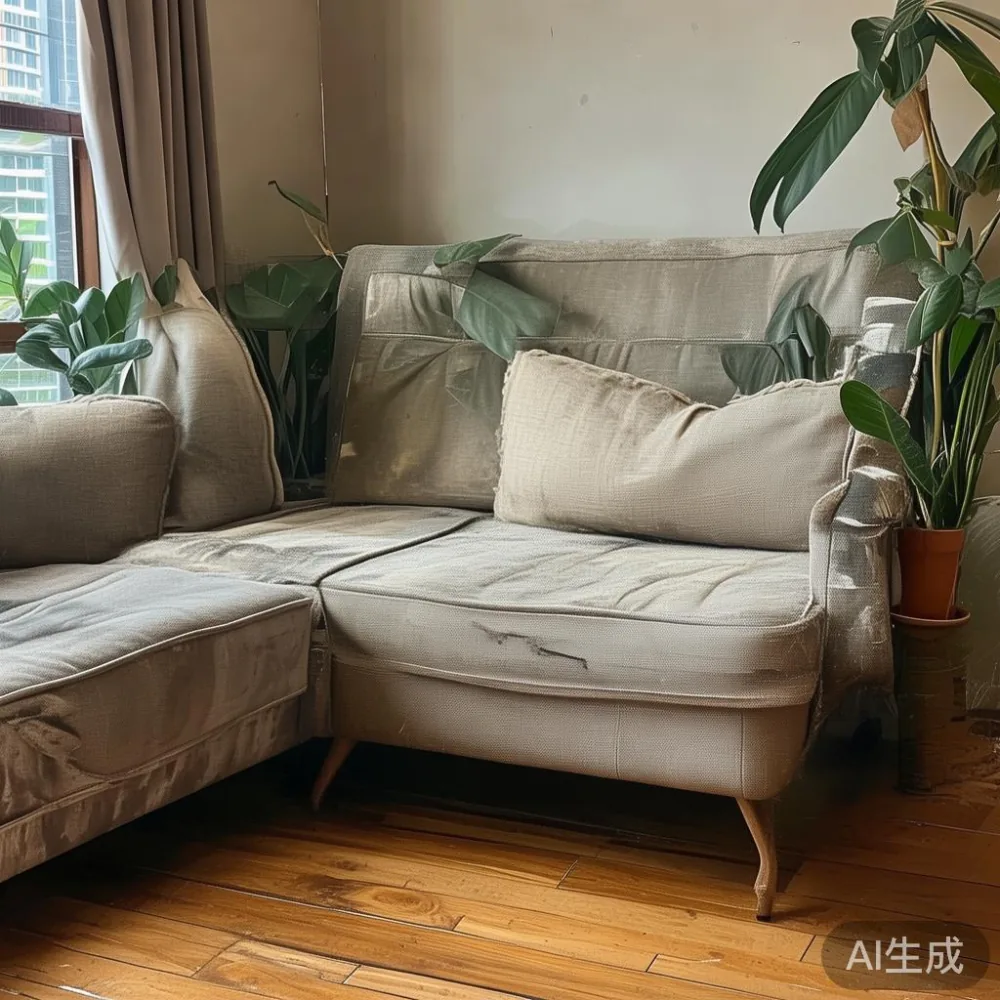
This guide is written specifically for Singapore households — Tampines, Bedok, Punggol, Toa Payoh, the whole island — where corridor widths run around 1.2 m to 1.5 m, lift cabins measure roughly 1.1 m wide by 1.4 m deep, humidity sits at 80% most afternoons, and a 9% GST applies to every furniture invoice. We will run the numbers, line by line, for a complete light-luxury setup anchored by a fabric sofa, a bed frame, a dining table, a wardrobe, a nightstand, and a marble table.
What does the shopping list actually cost on Day 1?
Picture a typical Singapore couple furnishing a 4-room HDB or a mid-size condo. The bundle below is the one I have quoted for three friends in the past twelve months. Prices include 9% GST and standard doorstep delivery to the lobby (lift access assumed).
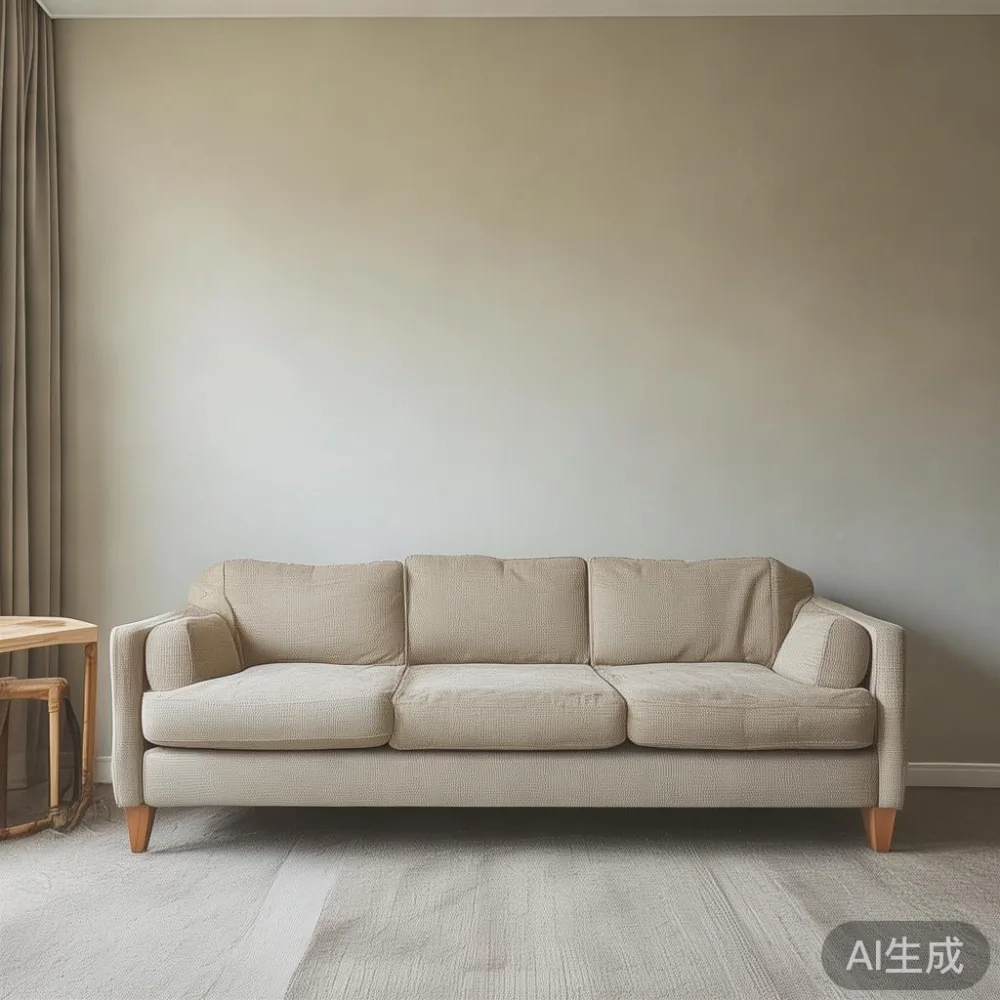
Veneer bundle, light-oak finish, from a typical multiple-choice e-commerce seller:
• 3-seater fabric sofa (228 cm × 92 cm × 88 cm): SGD 1,499
• Queen bed frame (158 cm × 208 cm, with slats): SGD 749
• 6-seater dining table (180 cm × 90 cm × 75 cm): SGD 899
• 3-door wardrobe (180 cm × 60 cm × 220 cm): SGD 1,299
• Pair of nightstands (50 cm × 40 cm × 55 cm each): SGD 329
• Round marble table (90 cm diameter, sintered stone top): SGD 899
• Delivery (corridor + lift, 2 trips): SGD 180
• Subtotal: SGD 5,854
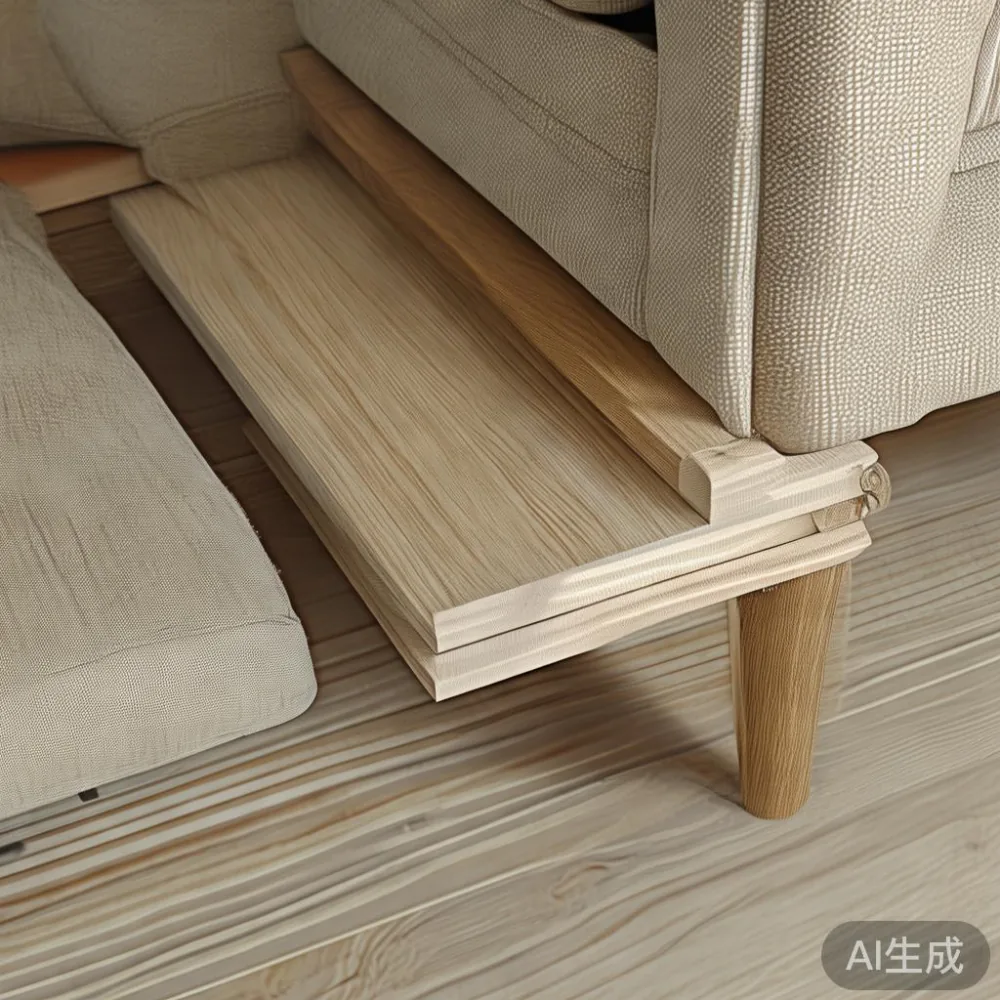
Solid wood bundle, same configuration, from a direct workshop such as midhillco (Foshan factory, est. 2008, free shipping over US$350, exports to 15+ countries):
• 3-seater solid wood frame fabric sofa (228 cm × 92 cm × 88 cm, kiln-dried ash): SGD 2,180
• Queen bed frame (158 cm × 208 cm): SGD 1,260
• 6-seater dining table (180 cm × 90 cm × 75 cm, 38 mm thick top): SGD 1,580
• 3-door wardrobe (180 cm × 60 cm × 220 cm): SGD 2,260
• Pair of nightstands (50 cm × 40 cm × 55 cm): SGD 480
• Round marble table (90 cm diameter): SGD 1,180
• Delivery (Foshan to Singapore, sea freight, 18 to 25 days): SGD 0
• Subtotal: SGD 8,960
Day-1 sticker difference: about SGD 3,106 in favour of the veneer route. That number is real, and it is the reason veneer wins the first Google result and the first showroom visit. The question is what happens in Year 2, Year 3, Year 5.
What does each material actually do to your fabric sofa over five humid years?
Singapore's climate is brutal on furniture. Indoor relative humidity regularly hits 75% to 85%. Air-conditioning runs 12 to 16 hours a day in most flats. This produces a daily expansion-contraction cycle that any material engineer will tell you is the number-one killer of furniture joints.
A veneer piece is built like this: a 0.6 mm to 2 mm slice of real wood is glued onto a substrate, usually MDF, particle board, or plywood. The substrate does the structural work; the veneer does the cosmetic work. In Year 1, both look beautiful. By Year 2 in a non-dehumidified HDB, the edges begin to lift. By Year 3, the substrate swells visibly near the bathroom wall and the wardrobe doors stop sitting square. By Year 5, you see bubbling veneer along the dining tabletop and a soft, spongy feel under the fabric sofa frame when you sit down.
A solid wood piece, by contrast, is one continuous piece of kiln-dried timber — usually ash, oak, walnut, or rubberwood — for every load-bearing member. The fabric sofa frame, the bed frame rails, the dining table legs and apron, the wardrobe carcass, the nightstand carcass, and the marble table base all use the same piece of wood through their structure. Solid wood moves with humidity rather than against it. Hairline seasonal cracks appear, then close again. The piece does not delaminate.
How much do repairs, refinishing, and replacements actually cost over 60 months?
This is where the math gets interesting. The figures below are conservative averages drawn from three Singapore carpentry workshops I contacted in Tampines and Balestier, plus published service menus.
Veneer bundle, Years 1–5:
• Year 1 — minor touch-up on dining table edge: SGD 80
• Year 2 — wardrobe door realignment + new soft-close hinges: SGD 220
• Year 3 — bedside table top delamination, full top replacement: SGD 380
• Year 4 — fabric sofa frame creaking, internal plywood cracked, full reupholstery: SGD 1,100
• Year 5 — wardrobe side panel swelling, partial replacement: SGD 650
• Five-year repair + replacement cost: SGD 2,430
Solid wood bundle, Years 1–5:
• Year 2 — light refinishing of dining tabletop (3 hours of work): SGD 180
• Year 4 — wardrobe door re-shimming: SGD 90
• Year 5 — full lifetime refinishing included under warranty (sanding, re-oiling, colour refresh on fabric sofa frame, bed frame, dining table, wardrobe, nightstand, marble table base): SGD 0
• Five-year repair + refinishing cost: SGD 270
Repair gap: SGD 2,160 in favour of solid wood.
Add the original Day-1 gap of SGD 3,106 against the solid wood option, then add the SGD 2,160 repair gap. The five-year net difference is now SGD 946 — still in veneer's favour, but the spread has collapsed by 70%.
How does warranty coverage change the math in Singapore?
Warranty terms are where the two product categories separate completely. Most veneer-led sellers in Singapore offer a 6-month to 12-month warranty that excludes "humidity damage, surface wear, and colour variation." Translation: almost every realistic claim is rejected. When Priya tried to claim on the dining table crack, the seller told her humidity was an act of nature.
A workshop-backed solid wood maker such as MIDHILL offers a 10-year structural warranty on the frame, joints, and load-bearing members of every fabric sofa, bed frame, dining table, wardrobe, nightstand, and marble table base it ships. Lifetime refinishing means the cosmetic surface can be restored at the workshop for the entire life of the piece. For a Singapore household that expects 10 to 15 years of daily use, this single difference is worth roughly SGD 1,500 to SGD 2,500 in avoided replacement costs. For more on the brand's specific guarantee terms, the relevant pages on midhillco are worth a careful read before you pay any deposit.
What about the resale value of the flat when you renovate again?
Singapore households renovate frequently. The typical HDB owner resprays or refurnishes every 5 to 7 years; condo owners often stage the property every 4 to 6 years before a rental handover or a sale. The furniture you buy today is either kept, donated, or disposed.
Veneer furniture after Year 5 has near-zero resale value. It cannot be resprayed (the MDF would swell), it cannot be reupholstered economically (the frame is usually too soft to hold new staples), and disposal via a Singapore bulky-item collection (free for HDB residents, SGD 80 to SGD 180 for condo) often requires dismantling. I watched a family in Bedok spend a full Saturday ripping out a 3-year-old wardrobe that had bubbled beyond repair.
Solid wood furniture after Year 5 still resells. A used solid wood dining table in working condition trades for 35% to 50% of its new price on Carousell. A solid wood bed frame trades for SGD 250 to SGD 450. A fabric sofa with a kiln-dried ash frame trades for SGD 600 to SGD 900 if the upholstery is clean. Over a 15-year ownership horizon, this residual value is worth another SGD 1,200 to SGD 2,000 per household. It does not show up in any Day-1 spreadsheet, but it is real money.
Is a solid wood fabric sofa too heavy for HDB lifts and corridors?
This is the single most common question I get from buyers in Punggol and Sengkang, so let me answer it properly.
A standard 3-seater fabric sofa with a solid ash frame weighs 72 kg to 82 kg unpacked. A similar veneer-framed fabric sofa weighs 48 kg to 58 kg. The 20 kg to 30 kg difference is real, but it is not a deal-breaker for HDB logistics. Most modern HDB lifts in BTO blocks built after 2015 are rated at 630 kg to 1,000 kg. The lift cabin dimensions of approximately 1.1 m wide × 1.4 m deep × 2.3 m tall fit a 228 cm sofa on its side, on a single trip, with two movers.
For older blocks in Toa Payoh or Queenstown where the lift cabin is closer to 0.9 m × 1.2 m, the sofa can be partially disassembled — legs off, backrest off, base separated — and reassembled inside the home. A reputable seller will quote for this at the time of order. The corridor minimum is 1.2 m wide; a sofa backrest at 92 cm fits comfortably on edge.
If you live in a walk-up on the second or third floor with no lift, add SGD 120 to SGD 220 per floor to the moving cost for any fabric sofa, regardless of frame material.
Does light-luxury positioning change what you should actually buy?
The light-luxury category — French light luxury, American light luxury, post-modern light luxury — is now the most-searched furniture aesthetic in Singapore, judging by what I see in three showrooms I visited in Tai Seng and Eunos. The look depends on visible timber grain, soft-close hardware, sintered-stone or marble accents, and a calm neutral palette. None of those visual cues require a veneer frame. In fact, solid wood delivers the grain more convincingly because the grain runs continuously through the legs and apron of every dining table, the rails of every bed frame, and the carcass of every wardrobe and nightstand. A marble table with a solid wood base feels heavier in the hand and reads as more expensive.
If you are comparing a light luxury sofa vs Modern sofa, the structural choice is the differentiator: a Modern sofa often uses a metal frame and engineered wood for a slim silhouette, while a light luxury sofa uses a kiln-dried solid wood frame wrapped in higher-density foam and a tighter fabric weave. The fabric sofa you sit on today will still be the fabric sofa you sit on in 2031 — provided the frame underneath is solid wood. This is the central message of the light luxury for small living room aesthetic: fewer, heavier, longer-lasting pieces in a small footprint.
For bedrooms, the same logic applies. When you evaluate a light luxury bed versus an Italian light luxury bed, look past the upholstered headboard and inspect the side rails, the slats, and the centre support. Solid wood slats at 12 mm to 18 mm thickness will outlast plywood slats at 9 mm by a factor of three. Anyone studying how to style Japanese bed in bedroom platforms should note that low-profile solid wood frames pair naturally with linen bedding and a sintered-stone or marble side accent. For shoppers scanning trends, the best Boho bed for 2026 will, by every signal I have read this quarter, lean on natural timber rather than engineered cores.
So which one actually wins on a five-year horizon in Singapore?
If you plan to stay in your HDB or condo for 3 years or less, and your budget is genuinely tight, a well-made veneer set bought from a seller who stocks spare parts can be the rational choice. You will save SGD 3,000 on Day 1 and you will not care about Year 5 bubbling because you will not be there to see it.
If you plan to stay 5 years or longer — and most Singapore homeowners I speak with say 7 to 12 years — solid wood wins on every metric that money can measure: repair cost, residual value, warranty protection, and aesthetic longevity. The 10-year structural warranty alone transfers enough risk off your shoulders to justify the Day-1 difference. The lifetime refinishing service restores the piece at the workshop rather than at the tip.
The five-year net cost of ownership, using the figures above and assuming one full refinishing pass and one minor repair:
• Veneer: SGD 5,854 + SGD 2,430 in repairs − SGD 150 in residual value = SGD 8,134 effective
• Solid wood: SGD 8,960 + SGD 270 in maintenance − SGD 1,800 in residual value ≈ SGD 7,430 effective
Over five years, the solid wood fabric sofa bundle is roughly SGD 700 cheaper once everything is counted — and the gap widens every year after that. For anyone searching for luxury Italian light luxury furniture for a Singapore home, the smart play is solid wood construction dressed in light-luxury styling, sourced from a workshop with a real warranty. Priya, by the way, replaced her cracked dining table six weeks later. This time she ordered the solid wood version from MIDHILL. Her message to me last Tuesday read: 'Wish I had done this from Day 1.'"