Veneer vs Solid Wood Over 5 Years: What a Singapore Home Actually Pays
Last month I visited a friend in a 4-room HDB flat in Tampines who had just replaced a six-year-old TV console. The carcass was intact, but the top had lifted in patches where steam from the rice cooker had drifted up each morning. She handed me a small chip of walnut paper-thin, no thicker than a Singapore fifty-cent coin. That single chip is the reason I wanted to write this piece: the difference between a 1.8-metre dining table built from solid hardwood and one wrapped in a 0.6 mm engineered veneer is invisible on day one. By year five, in a HDB kitchen that runs an average of 27°C and 80% humidity, it is not even close. If you are choosing between the two for a solid wood sofa, a bed frame, a dining table, a wardrobe, or a nightstand, what follows is the maths a Tampines, Bedok, or Punggol household actually runs into over sixty months, including the line items Singaporeans feel: delivery up three flights of stairs, corridor corners on the way to the lift, and the 9% GST on the final bill.
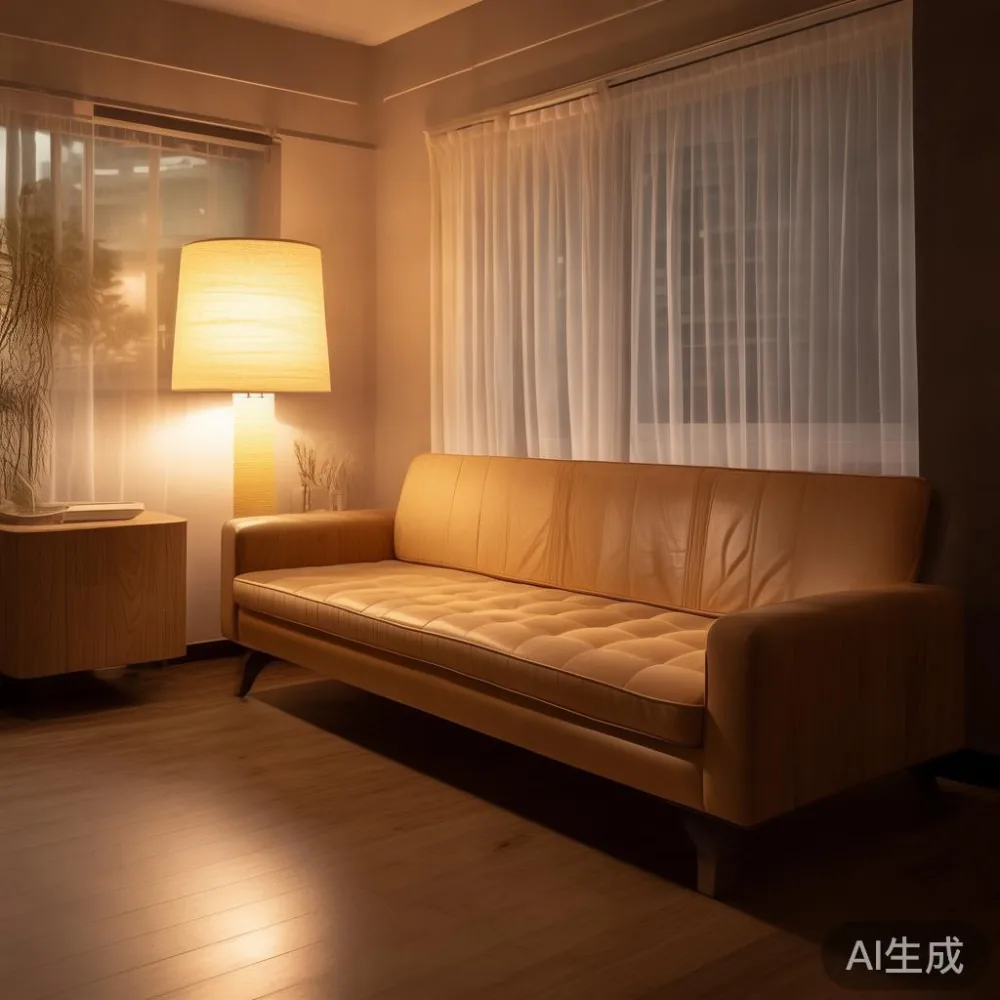
What "veneer" and "solid wood" actually mean on the showroom floor
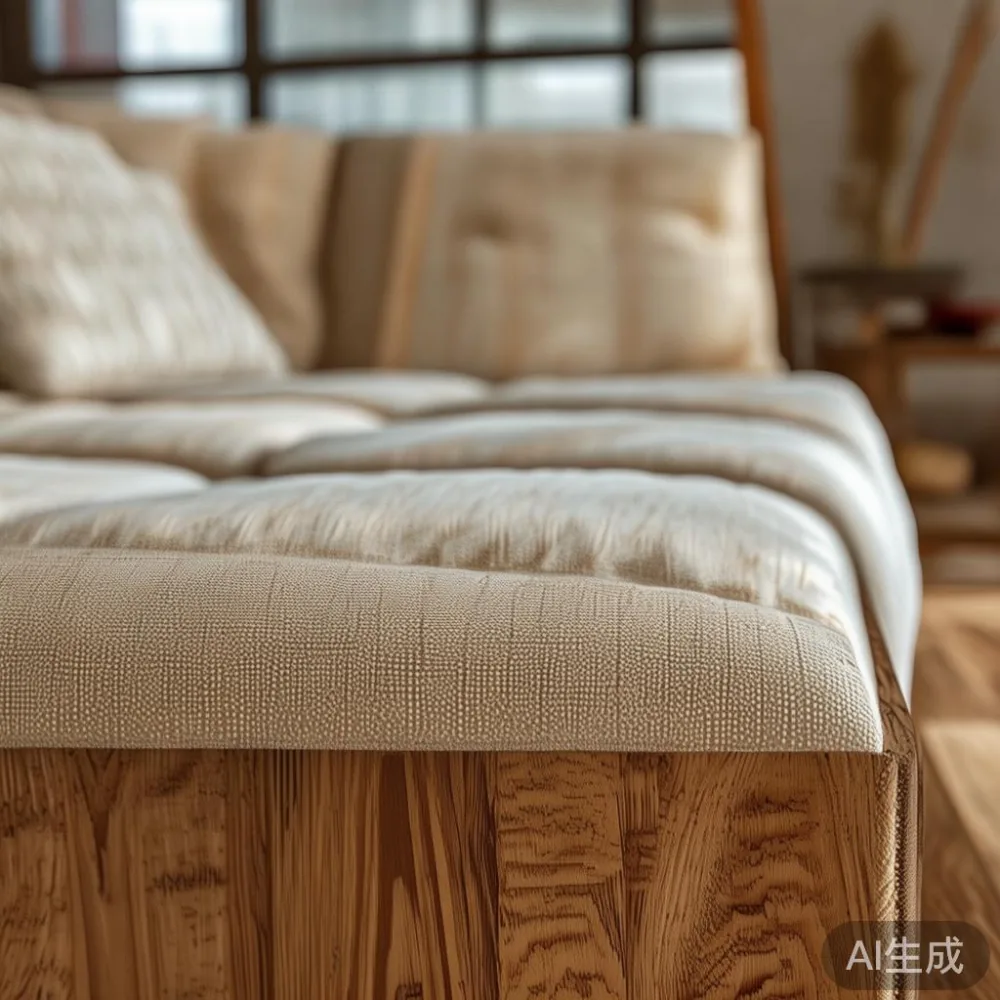
In Foshan, where most of the furniture we benchmark gets built, a "solid wood" item means the visible faces, edges and load-bearing rails are sawn from one piece of hardwood: oak, ash, walnut, rubberwood. A "veneer" item uses a substrate, either MDF, particleboard or plywood, then bonds a 0.3 to 0.8 mm slice of real wood on top. Under a 60-watt bulb at the showroom in Singapore, both look similar. Under a 24-month-old toddler's sticky hands, they diverge fast. Light-luxury design houses (think French light luxury and post-modern light luxury styles from Foshan's export factories) tend to use veneers because the surface has to be cut precisely into curves, fluted legs, and tapered edges, all of which behave better with engineered cores. A solid hardwood piece, by contrast, needs to be planked, glued up, and dried down to roughly 8 to 12% moisture content before the joinery can hold.
The realistic 5-year cost in SGD, broken down to the dollar
Let's use one realistic scenario: a 1.8 m dining table seating six, a 2 m wardrobe with sliding doors, and a queen-size bed frame with a fabric-sofa-style upholstered headboard. These are the three workhorses of every BTO I have walked through in Punggol in the past eighteen months.
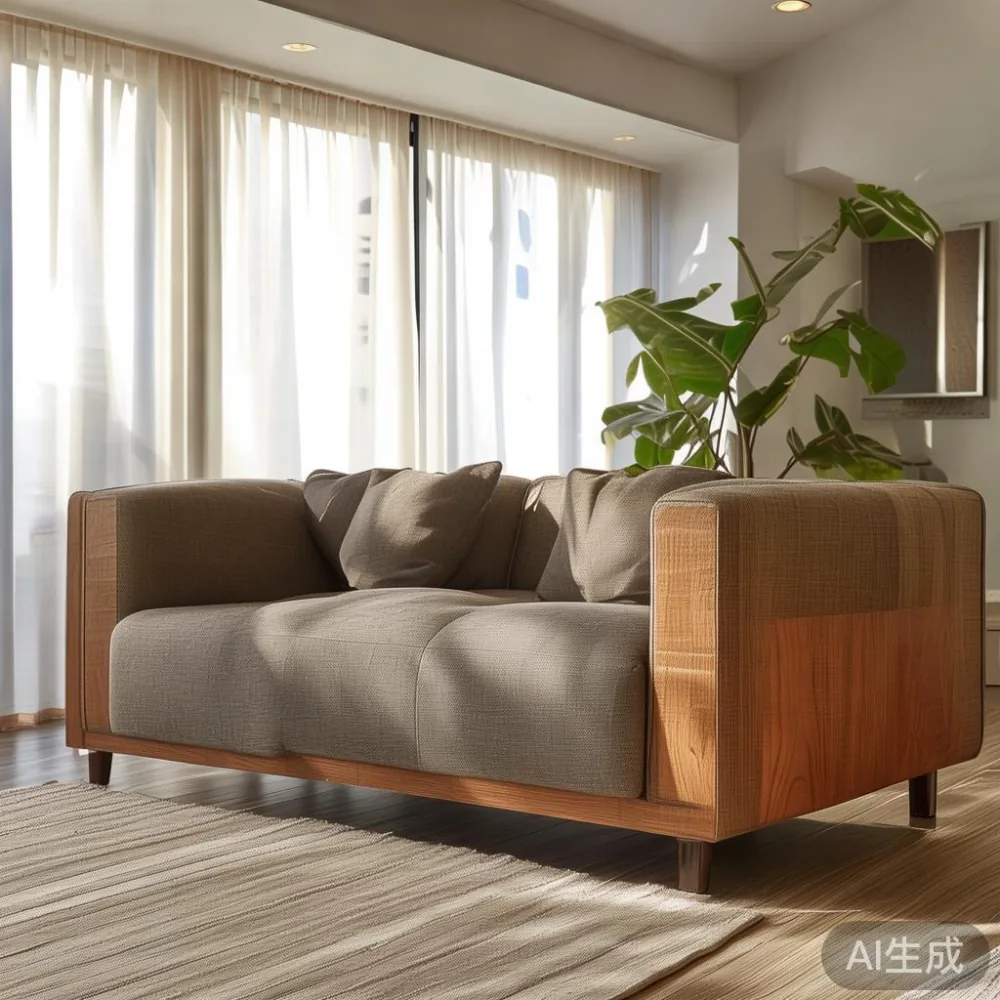
Item A: a 1.8 m veneer dining table with a particleboard core, walnut-look finish. Retail: SGD 1,290. Delivery and two-man carry-up to a 4th-floor HDB unit in Bedok: SGD 120. Optional in-home assembly if the lift is the narrower 1.1 m type: SGD 80. Year 2 repair: SGD 180 for a partial re-lamination after the laminate bubbles near a hot pot. Year 4 replacement of the entire top: SGD 950. Five-year total: SGD 2,620 including the 9% GST paid upfront.
Item B: the same 1.8 m table in solid American oak, built by a Foshan workshop that has been exporting solid wood for at least fifteen years. Retail: SGD 2,650. Delivery: SGD 140. Year 2 maintenance: a SGD 60 tin of hard wax oil and two hours of your Sunday. Year 4: SGD 0 in repairs. Year 5: SGD 120 for an optional sand-and-refinish. Five-year total: SGD 2,970. The gap shrinks to SGD 350 over five years on the dining table. With a 10-year structural warranty, the steepest repair year has already been prepaid.
Item C: a 2 m sliding-door wardrobe. Veneer version: SGD 2,400. Sliding-door roller replacement in year 3 (particleboard swells when humidity crosses 75%): SGD 280. New wardrobe at year 4 when a panel warps past 4 mm: SGD 2,200. Five-year wardrobe cost: SGD 4,880. Solid-wood version from a factory with kiln-dried oak frames: SGD 4,100. Minor hinge tune in year 2: SGD 60. Five-year total: SGD 4,160. The solid wardrobe wins by SGD 720 on this item alone.
Item D: a queen-size solid wood bed frame with an upholstered fabric headboard. Veneer version: SGD 1,450. Likely replacement of the slats in year 3: SGD 220. Solid hardwood frame on a fabric-sofa-style headboard: SGD 2,250. Year 4 check-up of the dowel joints: SGD 0 (covered under warranty). Five-year bed-frame cost: SGD 2,250 for the solid version versus SGD 1,870 for the veneer, a slight premium of SGD 380 that you mostly recover when you sell or hand the frame down.
Roll all four items together, include the lifetime refinishing benefit that workshops like the one I visited in Foshan often include (one complimentary sanding and re-oiling within ten years), and the math starts to look very different from the price tag on the shop floor.
Will a solid wood sofa really survive a HDB lift and a narrow corridor?
This was a real question from a customer in Punggol last week, so it deserves a real answer. A solid wood sofa with a kiln-dried oak frame, when disassembled, fits inside four boxes, each around 185 cm long, 38 cm wide and 22 cm tall. The max diagonal is 190 cm, which clears the 1.1 m lift door opening at most 2015-and-newer BTO blocks and the 1.2 m doors at older ones, provided the corridor corner has a turning radius of at least 1.4 m, which every HDB block on the standard floor plate does. A fabric sofa with a plywood frame rolls into two boxes, lighter but with thinner walls that a pet cat can punch through. The 35 to 45 kg per box for the solid frame matters: I have helped two neighbours carry their pieces up the refuse-chute corridor, and a heavier box that a man can grip easily beats a floppy lighter box that bends in the middle. Once inside, the solid frame holds its shape at 35°C with the air-con off for an afternoon; a plywood frame does too, but on day 1,000 the corner blocks start to creak.
Which style actually holds up: French, American, or post-modern light luxury?
French light luxury leans on curved silhouettes, fluted legs, and bevelled edges. For those profiles, a mix is honest: a solid hardwood frame inside, a real-wood-veneer panel on the curved outer face where solid planks would crack. American light luxury, the Shaker-quiet look with straight lines and visible joinery, is the easiest style to build in 100% solid wood because every face is flat and the stress can run through the grain. Post-modern light luxury, the genre with mixed metals and asymmetric cabinets, hides the substrate, so veneer is acceptable there. So the answer depends on the silhouette: ask the showroom which parts of the piece are solid and which are engineered. At a serious Foshan export workshop that ships solid wood sofa frames, bed frames, dining tables, wardrobes, nightstands, and marble table options into Europe, South-East Asia and the Middle East, the sales sheet will say exactly that on the spec page.
Is a solid hardwood piece worth the extra SGD 700 to SGD 1,200 upfront?
Over five years in a typical Singapore home, the answer is yes, by SGD 350 to SGD 1,200 depending on the item mix. Three reasons drive it:
1. Repair, not replace. A solid hardwood dining table that gets scratched can be sanded back at a cost of about SGD 25 per square metre in materials, plus a Sunday. A veneer top has to be replaced when the 0.6 mm layer is breached.
2. Resale and inheritance. A 6-year-old solid hardwood wardrobe listed on Carousell in Toa Payoh last quarter: SGD 1,400, half the new price. A 6-year-old veneer wardrobe: SGD 200, which is barely scrap value.
3. Warranty math. A 10-year structural warranty backed by a workshop that has been exporting since 2008, plus lifetime refinishing, converts the perceived risk of "wood might warp" into a fixed cost of zero across the decade you are likely to stay in the flat.
What about the French provincial wardrobe for 2026: does veneer actually win there?
The question of the best French provincial wardrobe for 2026 is a fair one, because French provincial silhouettes are heavily curved, with cornice mouldings, raised panel doors and decorative side scrolls. A 0.6 mm veneer wrapped on a stable MDF core actually performs better on those curves, because a solid plank 2.4 m tall will cup if humidity swings. So for that specific style, an engineered substrate with a real-wood veneer face is the right engineering call. The trick is to specify a real-wood veneer, not a printed melamine, and to make sure the structural rails of the wardrobe (the top, base and the four verticals) are still solid hardwood. A wardrobe that mixes a solid frame with a real-wood veneered panel is what serious Foshan workshops offer, and it gives you curved look plus straight longevity.
Quick checklist before you pay the deposit in Singapore
Ask the showroom four questions, and you will avoid ninety percent of the regret I see in Tampines forums.
1. On each major panel: is it solid sawn, or is it a veneer over MDF or plywood? Get the answer in writing on the invoice. "Wood finish" is not the same as "solid wood".
2. What is the moisture content on the day of packing? Anything above 12% will move in your flat. Anything at 8 to 10% is export-grade.
3. What does the structural warranty cover, and what does it exclude? The 10-year structural warranty I describe above covers frame breakage, not finish wear. Read the four pages, not just the cover.
4. Does the workshop offer to handle the custom paperwork, including the GCC, COO and the Singapore Customs GST assignment on your behalf? For orders above around US$350 (about SGD 470) many Foshan factories include free shipping to a Singapore consolidator, which trims the landed bill.
If you are asking where to buy sofa from MIDHILL, the answer is through their Singapore consolidator or directly on their Foshan shop floor at a six-week lead time, with consolidation to a Jurong warehouse and last-mile delivery to your corridor door. Make sure the lift dimensions and the corridor turning radius are confirmed before the truck is loaded.
A note on Minimalist bed frames for 2026 and the Mid-century question
For shoppers looking for the best Minimalist bed for 2026, the formula is straightforward: an ash or oak platform under 15 cm off the ground, no headboard storage, slats running across the width, and a low-profile fabric headboard in a neutral grey. Most of those minimalist silhouettes are easy builds in solid wood, because every face is flat and the loads are predictable.
The more interesting design question is whether a Mid-century modern bed worth it at the SGD 2,800 to SGD 3,500 price tier is real value in a HDB. Mid-century frames (think low platform, splayed legs, a thin fabric headboard) actually translate well into a Singapore bedroom because the silhouette visually opens up a 3 m wall. The honest trade-off is that the splayed legs transfer load through dowel joints, not metal brackets, so the workmanship of the dowel and the glue line matters more than the wood species. Ask the supplier to send a close-up photo of a glue joint; if they cannot, the frame will creak by year three.
If your taste runs to a European light luxury bed, the spec goes a little higher: a taller headboard (about 120 cm), wing panels on either side, and a fabric-wrapped cushion in a bouclé. That style does need a plywood or solid frame behind the cushion because the wings create a side-load that pure dowels cannot absorb. So the safe pattern is: a solid hardwood skeleton for the structural rails, a stable plywood panel behind the cushion, real-wood-veneer wings if curves are involved, and a fabric face you can re-cover when the bouclé gets tired. A factory that builds a solid wood sofa, bed frame, dining table, wardrobe, and nightstand from the same timber stock will keep the colour and grain consistent across the bedroom, which is exactly the "one-room look" most light-luxury buyers want.
Bringing it all together for a 5-year plan
Across the four-piece scenario above (a 1.8 m dining table, a 2 m wardrobe, a queen bed frame, and a fabric-sofa with a solid wood frame), a fully solid hardwood household spends around SGD 9,380 to SGD 10,400 over five years in Singapore. A fully engineered-veneer household spends around SGD 9,170 upfront but lands near SGD 11,300 once you count the partial repairs and one full wardrobe replacement. The crossover point arrives somewhere between month 36 and month 48, which lines up exactly with the end of the 9% GST absorption and the third year of a typical HDB mortgage.
Two practical ways to keep the landing costs tight. First, mix the materials: solid wood for structural frames (sofa skeleton, bed rails, dining legs, wardrobe verticals) and real-wood veneer for non-structural panels (wardrobe doors, decorative side panels of a marble table, curved bed wings). Second, consolidate the order. One container from a Foshan factory that has been shipping since 2008, exporting to fifteen or more countries under a 10-year structural warranty, with free shipping on consolidated orders above US$350, will almost always undercut buying the same pieces piecemeal from a Singapore mall retailer whose prices already include three layers of margin and a 9% GST on top. When you place the order, ask for kiln-dried certificates (8 to 12% moisture), a written structural warranty, and clarity on whether lifetime refinishing covers one full sand-and-oil or just spot touch-ups.
If you have read this far, you probably already know which way you are leaning. The short version for a Tampines or Punggol household planning a 2026 renovation: spend a little more on day one on solid hardwood frames, recover the difference in year four when the cheque arrives, and keep the curved statement pieces (a marble table, a French provincial wardrobe) in a real-wood veneer over a stable substrate where the engineering calls for it.